
Thomas Gilbert (1)
Author of The Subtle Knife [graphic novel]
For other authors named Thomas Gilbert, see the disambiguation page.
Works by Thomas Gilbert
The Daughters of Salem: How We Sent Our Children to Their Deaths - Part 1 (2018) 33 copies, 7 reviews
Associated Works
Tagged
Common Knowledge
There is no Common Knowledge data for this author yet. You can help.
Members
Reviews
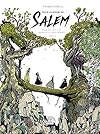
Last year, my partner persuaded me to start appreciating the graphic novel. You see, Stephen King’s The Dark Tower saga is his Bible, so the graphic novels of the series seemed to spring out of nowhere in my house. I still haven’t read those but I found a new love for the genre and after a couple of really successful efforts, I was hooked. Now I try to find (and devour) quality graphic novels with a newly acquired confidence. This one seemed perfect. The Salem Trials is one of my show more favorite topics and Arthur Miller’s The Crucible is one of my most beloved plays, the 1996 film version with Daniel Day-Lewis as John Proctor is one of the best films ever made and I had the fortune to watch the role revived by Richard Armitage at the Old Vic in 2014, a truly profound experience. So, my anticipation was immense.
What I found was an abomination in every sense of the word…
The ‘’writer’’ creates an Author’s Note to informs us that he has taken some ‘’liberties’’ with the ‘’material’’ (because according to him, History is ‘’material’’). He goes on to compare himself to Arthur Miller and this continues for two paragraphs...So, imagine me reading this...Comparing yourself to Miller? We don’t start well, dear ‘’writer’’. In addition, the fact that you’re warning me is worrying. Honest but worrying.
Sneak peek: (''Hey, Abigail. Wait up!'' If this isn't absolutely, totally faithful 1690's dialogue, I don't know what is...)
I won’t tire you. Tell me if you had ever imagined that you would find the phrase ‘’it’s so cute’’ in the USA during the 1690s. No, I didn’t think so. The illustrations are horrible. I mean, they are out of this world ugly, the depictions of the characters and the landscape are unnatural, tasteless. The violence approaches the boundaries of torcher porn and there is an utterly absurd focus on sex. This is a violent adolescent’s wet dream, not the story of the Salem Trials. With the pitiful excuse of bringing women’s persecution over the centuries into focus, the ‘’writer’’ creates a...thing that makes you wish you couldn’t read. A horrible rendition, retelling, you name it, of a terrifying moment that produced a masterpiece.
Congratulations, ‘’writer’’. You managed to turn a fascinating story into a bloodfested, sex-crazed B-movie. You need some kind of a prize for this. NOT. It would be better if ignorants didn’t touch what they cannot understand and respect. This was out of that man’s (restricted) league and it showed. Horribly.
ARC from Europe Comics and NetGalley in exchange for an honest review.
My reviews can also be found on https://theopinionatedreaderblog.wordpress.com show less
What I found was an abomination in every sense of the word…
The ‘’writer’’ creates an Author’s Note to informs us that he has taken some ‘’liberties’’ with the ‘’material’’ (because according to him, History is ‘’material’’). He goes on to compare himself to Arthur Miller and this continues for two paragraphs...So, imagine me reading this...Comparing yourself to Miller? We don’t start well, dear ‘’writer’’. In addition, the fact that you’re warning me is worrying. Honest but worrying.
Sneak peek: (''Hey, Abigail. Wait up!'' If this isn't absolutely, totally faithful 1690's dialogue, I don't know what is...)
I won’t tire you. Tell me if you had ever imagined that you would find the phrase ‘’it’s so cute’’ in the USA during the 1690s. No, I didn’t think so. The illustrations are horrible. I mean, they are out of this world ugly, the depictions of the characters and the landscape are unnatural, tasteless. The violence approaches the boundaries of torcher porn and there is an utterly absurd focus on sex. This is a violent adolescent’s wet dream, not the story of the Salem Trials. With the pitiful excuse of bringing women’s persecution over the centuries into focus, the ‘’writer’’ creates a...thing that makes you wish you couldn’t read. A horrible rendition, retelling, you name it, of a terrifying moment that produced a masterpiece.
Congratulations, ‘’writer’’. You managed to turn a fascinating story into a bloodfested, sex-crazed B-movie. You need some kind of a prize for this. NOT. It would be better if ignorants didn’t touch what they cannot understand and respect. This was out of that man’s (restricted) league and it showed. Horribly.
ARC from Europe Comics and NetGalley in exchange for an honest review.
My reviews can also be found on https://theopinionatedreaderblog.wordpress.com show less
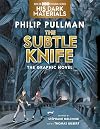
When the summer reading club challenge is to read a book with magic Philip Pullman’s classic series of daemons and dust is an easy choice and an even easier win. It’s also about time that I got back into this series, since the latest installment is set to be published soon and pre-Autumn is a perfect time to dive back into Lyra’s adventures across worlds. In this second installment we see Lyra make her first journey through the thinned veil to meet Will and begin their true journey to show more defeating the Magisterium and discovering the mysteries behind the dust that has guided Lyra far from her home in Jordan College. We had already experienced a world that was just a step away from our own with Lyra’s light magic version of Oxford, but with this tale we get even closer to bringing magic into our reality; in Will’s world science plays a stronger role in their quest, and their companion in this part of the story turns out to be a researcher who uses computers and the i Ching to commune with the dust in her attempt to discover the mysteries of the universe. Of course, little can be simple in Lyra’s tale, and Pullman begins to really build the complexities that underpin the trilogy - setting Will’s father up as a shaman and Lyra’s as a war general, bringing Mrs. Coulter across worlds and into new conspiracies, introducing angelic beings, and being far more forthright about the anti-religious themes that were only a hinted undertone in the first novel. I’m still far less a fan of these graphic novel versions of the tale than I am of the original books (it’s almost impossible to match the perfect narration and style of Pullman’s writing across mediums), but it was interesting to see an artist’s interpretations of the unique visuals that Pullman brings to play on the page. Adapting the angels to physical form, seeing the witches fly, and exploring the abandoned city is a veritable challenge, and while the art style could have gone completely high-brow and fantastical (which I would have loved, honestly, as an adult reader) seeing Lyra’s adventures play out over the pages was still a very fun experience. show less
Received via NetGalley for review.
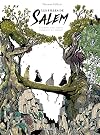
Graphic novels and comics are probably the most subjective to review, since not only is there the plot and the characterization to judge, but the art as well. And, unfortunately, the art didn't do it for me here. The characters were too caricatured (which works for the Reverend and the townspeople - their inner ugliness spills out to their appearance, that's fine, but doesn't really work for the sympathetic characters). The scenes of the woods were show more beautiful, but that's about all I enjoyed.
Gilbert did a fantastic job portraying the terror and shame Abigail went through when she went to Little Mother's house and became a women, as well as how quickly and easily the townspeople turned towards paranoia and misdirected anger when things started going badly, which is easily the strongest part of the story. It's clearly well researched and vivid, and does an excellent job getting the message across.
The whole angle with the Native Americans is interesting. I'm not sure if that's entirely historical or not (I've never heard of their involvement in the Salem Witch trials, but given the time period and the location of the town it makes sense that they'd be there), and I think the romance between Abigail and Mxweh was unnecessary (can't a woman long for freedom without a man involved?).
I'm thankful for the opportunity to review this graphic novel, but won't be seeking out the second part. show less
Graphic novels and comics are probably the most subjective to review, since not only is there the plot and the characterization to judge, but the art as well. And, unfortunately, the art didn't do it for me here. The characters were too caricatured (which works for the Reverend and the townspeople - their inner ugliness spills out to their appearance, that's fine, but doesn't really work for the sympathetic characters). The scenes of the woods were show more beautiful, but that's about all I enjoyed.
Gilbert did a fantastic job portraying the terror and shame Abigail went through when she went to Little Mother's house and became a women, as well as how quickly and easily the townspeople turned towards paranoia and misdirected anger when things started going badly, which is easily the strongest part of the story. It's clearly well researched and vivid, and does an excellent job getting the message across.
The whole angle with the Native Americans is interesting. I'm not sure if that's entirely historical or not (I've never heard of their involvement in the Salem Witch trials, but given the time period and the location of the town it makes sense that they'd be there), and I think the romance between Abigail and Mxweh was unnecessary (can't a woman long for freedom without a man involved?).
I'm thankful for the opportunity to review this graphic novel, but won't be seeking out the second part. show less
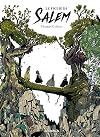
Carino, ma (almeno per me) non un capolavoro. Narrazione un po' didascalica delle vicende di Salem, raccontate da una delle imputate, senza particolari slanci.
I disegni sono tendenzialmente molto piatti, ma di impatto rispetto alla storia: ce ne sono alcune che da sole, effettivamente, valgono da sole il volume.
Quello che viene fuori è quindi il ritratto di un paesino strozzato dell'ipocrisia e delle superstizioni che vengono utilizzate per manipolare le persone e tenerle soggiogate.
I disegni sono tendenzialmente molto piatti, ma di impatto rispetto alla storia: ce ne sono alcune che da sole, effettivamente, valgono da sole il volume.
Quello che viene fuori è quindi il ritratto di un paesino strozzato dell'ipocrisia e delle superstizioni che vengono utilizzate per manipolare le persone e tenerle soggiogate.
You May Also Like
Associated Authors
Statistics
- Works
- 9
- Also by
- 1
- Members
- 110
- Popularity
- #176,728
- Rating
- 3.3
- Reviews
- 12
- ISBNs
- 36
- Languages
- 4