
Thomas Traherne (1637–1674)
Author of Centuries
About the Author
Thomas Traherne was born in Hereford, England in 1637. He was educated at the University of Oxford and was ordained as an Anglican clergyman in 1660. Only one work, Roman Forgeries, was published before his death on September 27, 1674. The majority of his works including Christian Ethicks, Poetical show more Works, Centuries of Mediations, and Traherne's Poems of Felicity were published posthumously, as late as 1910. (Bowker Author Biography) show less
Image credit: Thomas Traherne, depicted by Tom Denny, as part of a series of stained-glass windows at Hereford Cathedral
Series
Works by Thomas Traherne
George Herbert and the Seventeenth-Century Religious Poets [Norton Critical Edition] (1978) — Author — 247 copies, 1 review
The Works of Thomas Traherne II: Commentaries of Heaven, part 1: Abhorrence to Alone (2007) 10 copies
The Works of Thomas Traherne III: Commentaries of Heaven, part 2: Al-Sufficient to Bastard (2007) 9 copies
Thomas Traherne: Centuries, Poems, and Thanksgivings Volume II: Poems and Thanksgivings (1958) 8 copies
The works of Thomas Traherne VI: Poems from the Dobell Folio, Poems of Felicity, The Ceremonial Law, Poems from the Early Notebook (2014) 7 copies
The Poetry Of Thomas Traherne: "More company increases happiness, but does not lighten or diminish misery." (2014) 2 copies
Joys 2 copies
Selected Poems & Prose 1 copy
Izbrane pesmi 1 copy
Associated Works
The Best Poems of the English Language: From Chaucer Through Robert Frost (2004) — Contributor — 1,243 copies, 3 reviews
World Poetry: An Anthology of Verse from Antiquity to Our Time (1998) — Contributor — 496 copies, 2 reviews
The Broadview Anthology of Seventeenth Century Verse & Prose (2000) — Contributor, some editions — 77 copies
Tagged
Common Knowledge
- Birthdate
- 1637
- Date of death
- 1674
- Gender
- male
- Education
- University of Oxford
- Occupations
- clergyman
poet - Nationality
- UK
- Places of residence
- Hereford, England (birth)
Teddington, England (death) - Associated Place (for map)
- England
Members
Reviews
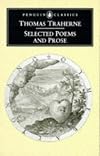
“You never enjoy the world aright until the sea itself floweth in your veins…” “The corn was orient and immortal wheat…” after pages of ecstatic writing like this, you can get a bit high on reading him. Favourites: “News”; “Shadows in the Water”; “On Leaping over the Moon”; “On Christmas Day”, “Wonder”, "Poverty", "To the Same Purpose" and "Hosanna".
A lost original manuscript of Traherne's was plucked off a bonfire in the nick of time as recently as 1967. Like show more Julian of Norwich and Meister Eckhart, Traherne was largely forgotten until the twentieth century, perhaps because their joyful and positive message could not be heard properly till then. We need them to counterbalance the doom and gloom and sheer nastiness that is so often purveyed as "Christianity".
"You never enjoy the world aright, till the sea itself floweth in your veins, till you are clothed with the heavens, and crowned with the stars, and perceive yourself to be the sole heir of the whole world, and more than so, because men are in it who are every one sole heirs as well as you."
He gets a grand write-up in Phil Rickman's novel “The Wine of Angels”. show less
A lost original manuscript of Traherne's was plucked off a bonfire in the nick of time as recently as 1967. Like show more Julian of Norwich and Meister Eckhart, Traherne was largely forgotten until the twentieth century, perhaps because their joyful and positive message could not be heard properly till then. We need them to counterbalance the doom and gloom and sheer nastiness that is so often purveyed as "Christianity".
"You never enjoy the world aright, till the sea itself floweth in your veins, till you are clothed with the heavens, and crowned with the stars, and perceive yourself to be the sole heir of the whole world, and more than so, because men are in it who are every one sole heirs as well as you."
He gets a grand write-up in Phil Rickman's novel “The Wine of Angels”. show less

Overall, I felt this book was very interesting. Traherne provides some very insightful thoughts regarding Christianity, God, man, and man's relationship with God and each other. It can a little difficult to get through at times. The it's written in English vocabulary and style that's very similar to a Shakespeare play or the King James Bible. Additionally, from my understanding, Traherne never completed the work due to his death, so it's a very early draft, and would likely have been edited show more further had he lived longer. It does show at times, since some passages seem like they're early thoughts, and need some degree of editing or refining. However, I do find this to be somewhat interesting, as it helps to give a feeling that these are the author's initial and unfiltered thoughts. Overall, I definitely recommend the work. show less

A difficult book. Enjoyed the third century most, probably because it was the most concrete.
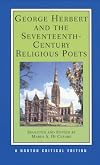
A fine compilation of 17th poets, including George Herbert. I am not a huge fan of 17th century religious poetry, but this was a good book to give one an overview and a starting point for further study.
Lists
Awards


You May Also Like


Associated Authors
Statistics
- Works
- 43
- Also by
- 9
- Members
- 928
- Popularity
- #27,658
- Rating
- 4.0
- Reviews
- 12
- ISBNs
- 69
- Languages
- 2
- Favorited
- 7