
Benjamin Perry (1)
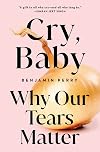
Author of Cry, Baby: Why Our Tears Matter
For other authors named Benjamin Perry, see the disambiguation page.
Works by Benjamin Perry
Tagged
Common Knowledge
- Birthdate
- 20th c.
- Education
- SUNY Genesco (psychology)
Union Theological Seminary (MDiv) - Occupations
- minister
- Places of residence
- Maine, USA
- Associated Place (for map)
- Maine, USA
Members
Reviews
I was fascinated by this wide-ranging and eclectic exploration of tears.
The book considers tears from a range of viewpoints: scientific and physiological, as a social signal (both to inspire empathy and as a form of social control), as used by children, as they appear in art and literature (both religious and secular), and on and on.
This diversity is both the strength and the weakness of the book. On the one hand, it continually made me think. I had never considered why we cry, nor why we show more might have evolved to do so. The author has packed the book with details that build an argument, such as that scientists have found that the protein content of emotional tears is higher than eye-irritant tears, which may slow down how fast they fall on the cheek and increase their signalling to others. The book was also particularly strong when considering who is allowed to cry: men vs women, white vs black - and how the tears of those with more power have sometimes been used as a way to coerce, manipulate or even dehumanize. I found this a nuanced discussion when placed in relation to other writing about race, gender, and power. At the same time, however, the sheer number of topics covered and the range of types of evidence (especially the blending of artistic, religious and social) presented means the book comes across more as a series of vignettes than one central arc of discussion. show less
The book considers tears from a range of viewpoints: scientific and physiological, as a social signal (both to inspire empathy and as a form of social control), as used by children, as they appear in art and literature (both religious and secular), and on and on.
This diversity is both the strength and the weakness of the book. On the one hand, it continually made me think. I had never considered why we cry, nor why we show more might have evolved to do so. The author has packed the book with details that build an argument, such as that scientists have found that the protein content of emotional tears is higher than eye-irritant tears, which may slow down how fast they fall on the cheek and increase their signalling to others. The book was also particularly strong when considering who is allowed to cry: men vs women, white vs black - and how the tears of those with more power have sometimes been used as a way to coerce, manipulate or even dehumanize. I found this a nuanced discussion when placed in relation to other writing about race, gender, and power. At the same time, however, the sheer number of topics covered and the range of types of evidence (especially the blending of artistic, religious and social) presented means the book comes across more as a series of vignettes than one central arc of discussion. show less
 This review was written for LibraryThing Early Reviewers.
I wasn't sure what to make of this book at first. I thought it would be a microhistory, focused mainly on the science of tears and crying. It isn't that - and I think it might even be better. What we have instead is part memoir, part philosophical treatise, and part social commentary - about the way tears function in our society, how they mean different things in different contexts and for different groups of people, and how we can use the power of tears to shape a better world. Definitely show more recommend. show less
This review was written for LibraryThing Early Reviewers.This book is incredible. It tackles complex questions about how and why humans cry. It brings together insights from literature, spirituality, pop culture, and public life with personal stories about people's shifting relationship to crying. It's insightful, complex, and ultimately uplifting, offering real hope about how crying connects us to our shared humanity.
This review was written for LibraryThing Early Reviewers."As we replace more and more of our crying with speech and 'adult' coping mechanisms, we lose something important: the visceral immediacy of wailing at a world that is not as it should be."
How refreshing to read a book that encourages crying as a healthy, NEEDED response to injustice, not something we should hide for ridiculous reasons such as being a boy or showing we're strong employees.
The chapter on the relationship between tears and the LGBTQIA+ community was extremely important as were show more the sections on caste, racism, violence, and climate change. I underlined a lot. The author is a Christian minister, but the book never feels proselytizing.
Some language twists were spot-on and lightened serious moments, but I wish the author had stuck to simpler language. I have nothing against expanding our vocabularies; as a librarian, I'm all for it! However, when you're trying to explain what may be a new take on tears for many, stopping to understand what the author means lessens the impact of what he's trying to convey (e.g., simulacra, hardened artifice, proclivity, "my lacrimal glands had supplanted my frontal cortex," somatic arousal, etc.). As the book goes on, though, Perry seems to relax and relate information without trying so hard to impress.
My favorite chapter tied crying with literature. I loved seeing the effects of tears in a variety of stories.
I'm sure you'll have your favorite chapter(s), too, and will be marking passages and drawing asterisks and hearts in the margins. show less
How refreshing to read a book that encourages crying as a healthy, NEEDED response to injustice, not something we should hide for ridiculous reasons such as being a boy or showing we're strong employees.
The chapter on the relationship between tears and the LGBTQIA+ community was extremely important as were show more the sections on caste, racism, violence, and climate change. I underlined a lot. The author is a Christian minister, but the book never feels proselytizing.
Some language twists were spot-on and lightened serious moments, but I wish the author had stuck to simpler language. I have nothing against expanding our vocabularies; as a librarian, I'm all for it! However, when you're trying to explain what may be a new take on tears for many, stopping to understand what the author means lessens the impact of what he's trying to convey (e.g., simulacra, hardened artifice, proclivity, "my lacrimal glands had supplanted my frontal cortex," somatic arousal, etc.). As the book goes on, though, Perry seems to relax and relate information without trying so hard to impress.
My favorite chapter tied crying with literature. I loved seeing the effects of tears in a variety of stories.
I'm sure you'll have your favorite chapter(s), too, and will be marking passages and drawing asterisks and hearts in the margins. show less
This review was written for LibraryThing Early Reviewers.Lists
Statistics
- Works
- 1
- Members
- 37
- Popularity
- #390,571
- Rating
- 3.3
- Reviews
- 11
- ISBNs
- 4
- Languages
- 1
