
Louise Perry
Author of The Case Against the Sexual Revolution
Works by Louise Perry
Tagged
Common Knowledge
There is no Common Knowledge data for this author yet. You can help.
Members
Reviews
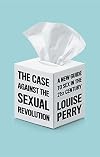
Now that political ideology has replaced traditional religion as the faith system of choice for the educated elites in Western cultures, it is not surprising that a new genre of books has appeared. In it, former communicants of the “progressive” church publish their “95 theses” which declare the church is corrupt and morally bankrupt. Like Luther, the alternative they propose turns out to be a call for a reactionary return to a more regressive, but somehow idealized and purified, show more past.
I first saw a summary of this book as an opinion piece in the Wall Street Journal. I decided to read the whole book because I was interested to see how Perry would develop her arguments and what her alternative approach (only hinted at in the WSJ piece) might be. Sadly, I was greatly disappointed.
First, I do think the book is worth reading and if the author hadn’t made some outrageous, unsupported claims, it might have deserved three stars. Unlike the genre-sharing “Jews Don’t Count,” this book is not a personal screed nor an attempt to gain favor with the church (in this case) mothers. Some of the main points she makes are quite valid. It is maddening that they need to be stated in the first place.
Among her points that are obviously valid if one accepts the principles of Western Enlightenment 101: humans are a product of a million years of evolution that has made male and female representatives of the species behave differently and have different drives, desires and practices regarding sexual relations. Sex is at the center of both our biological and cultural activity and so needs to be taken seriously. Humans need to be treated with respect and dignity, and so sexual practices that demean people should be condemned and discouraged. Consent provides no protection from demeaning behavior. Violence causes suffering and so is always wrong behavior.
Of course, the “progressive” church (like some variants of the “right wing” alternative) reject and attack the ideas of the Western Enlightenment (in the “progressive” case mostly on the grounds that they are a creation of “white, straight, colonialist men”). So the fact that a former self-described disciple of the feminist denomination uses the weapons of the Enlightenment to attack this church, is somewhat amusing and a bit refreshing.
Where the book disappoints is that after having the epiphany that the feminist church is corrupt, Perry’s moral courage and imagination fails her. The only alternative she sees is a reactionary return to “traditional” values, despite her own acknowledgement of the harm and suffering these pre-modern ideas caused. It is not surprising that many of the positive reviews here are written by people who are members of traditionalists communities, who are adept at ignoring the violence and suffering being perpetrated in their own communities in the name of traditional sexual mores.
More disappointing, is Perry’s resort to propaganda instead of reasoned argument, to support both her criticism and call for reaction. All the rhetorical tricks are here - straw person arguments, misuse and abuse of research and statistics, the use of weasel words that without evidence or real justification stretch “might be” into “is”, the (mis)use of anecdotal stories to support her argument when there is no good evidence etc etc etc.
Ultimately what drives her propaganda is a set of alternate beliefs Perry creates for her new church, some implicit, others explicit: because males (on average) are stronger than females, females are overwhelmingly the victims of male violence and so require special protection. The invention of the pill along with male (on average) greater desire for casual sex leads to suppression of female goals and desires, which further encourages and exacerbates violence against females. Sexual liberty inevitably leads to sexual libertarianism, where humans are instrumentalized and commodified.
I deliberately put the “on average” in parenthesis, because Perry mentions repeatedly that normal distributions tell us nothing about any individual’s behavior nor even mass behavior. Yet Perry herself ignores this and repeatedly moves from arguing because some group of males may behave in a certain way (e.g. like casual sex), males in general behave in this way. She very quickly moves down the slippery slope because it’s the only way she can support her arguments.
This review is already getting way too long so I’ll first mention an alternative worth looking at on the topic of taking sex seriously and avoiding demeaning behavior in sexual relations. Specifically, Betty Martin’s “Wheel of Consent” directly addresses, in an intelligent and comprehensive way, how to redefine consent so that it addresses human dignity and respect, without reasserting traditional sex mores as the only reasonable alternative to being instrumentalized by casual sex. Martin’s approach undermines Perry’s argument that sexual liberty inevitably leads to libertarian exploitation, while agreeing with the point that traditional ideas of consent are not sufficient, and that having agency, doesn’t guarantee we act wisely.
I”ll conclude this review with a couple of examples of Perry’s propaganda which I found particularly maddening. To make the argument that females are the overwhelming victims of male violence, Perry attempts to criticize the “feminist” idea that rape is about misogynistic assertion of power not pleasure. In fact Perry notes that it was her epiphany on this point that led to her reappraisal of the “feminist” church. I should note that, as with all complex human behaviors, this is something really hard to prove one way or another, and there is no reason to assume that it might not be both or something else as well.
As part of her criticism, she quotes statistics on rape. While noting these statistics on rape are way under reported, she quotes a statistic of 2-5% for males being raped. She then states that this seems to correlate with the number of homosexual males, thereby proving that males who love males are also doing it for pleasure.
Where to begin? We don’t know how many males are exclusively attracted to other males. When asked how many have engaged in same sex behavior the number (in some studies) is closer to 10%. Again this is almost certainly an underestimate. We know as well that in many male dominated cultures and sub-cultures, a very large number of males engage in male on male sex, and it is considered normative, even desirable (e.g. Athenian elites). From an evolutionary behavioral perspective, it is quite possibly the case that males who are purely heterosexual are on the fringe of the distribution and most males are inherently bi-sexual. We don’t and can’t really know. What we can know is that far, far more males than 3-5% have been raped and that many self-identifying heterosexual males rape other males (cf. prison sexual violence). This doesn’t disprove Perry’s argument that rape is for pleasure, but it illustrates how she plays fast and loose with statistics.
It also illustrates a more important point. Perry seems to have an enormous blind spot about violence against male bodies. In the beginning of her chapter on prostitution, she brings up the appalling fact how modern armies see prostitution as a necessary recreation for conscripts. This serves as a segue into her argument that prostitution is always violence against women and casual sex is ultimately a variant of prostitution. But why is it surprising that the army—an institution that instrumentalizes male bodies, that causes enormous numbers of deaths, injuries and psychological trauma almost exclusively to males, that justifies this violence as part of some greater good—would have no problem setting up brothels? In fact, by bringing up the army Perry is ignoring the elephant in the room: it is quite likely that male on male violence, sexual and otherwise, is far more prevalent in every society than male on female violence. Obviously this doesn’t justify any type of violence, but it does undermine her thesis that females require “special” protection because they are overwhelmingly the victims of male violence.
One last example. In her argument in support of traditional monogamous marriage Perry notes that post the pill and the rise of a culture of sexual liberty, the number of single family households has risen dramatically. She argues that with the availability of casual sex, men are less incentivized to sacrifice freedom for parental responsibility.
The statistics on this are quite interesting. First, in the US at least, single family households have been trending down again for a number of years, and now are once again below 1995 levels although still more than double the numbers in the seventies. But if sexual liberty is the dominant paradigm, one would think that a younger generation of males raised in this paradigm would be even less willing than their fathers to hang around. Moreover, the big difference between the present and 1995 is that a small but still significant increase in these single family households are led by males.
In addition the US and the UK are outliers, with 23 and 21 percent of single family households, as compared to 12% in Germany. Which raises an interesting question: Is sexual liberty the cause of sexual libertarianism as Perry contends, or is sexual libertarianism a reflection of cultures that highly value economic liberalism and individualism, such as the US and the UK? Germany and other countries where fraternity is a value are inherently more family oriented and so have less unwanted babies raised by single mothers. Keep in mind prostitution is legal in Germany, which further undermines Perry’s arguments.
I could go on and on and on. Bottom line: if you read this book, read it critically, and carefully fact check Perry’s arguments. Try to reimagine a way to balance liberty, equality and fraternity in your dealings with others and to live a life of dignity and respect of your own self and others. show less
I first saw a summary of this book as an opinion piece in the Wall Street Journal. I decided to read the whole book because I was interested to see how Perry would develop her arguments and what her alternative approach (only hinted at in the WSJ piece) might be. Sadly, I was greatly disappointed.
First, I do think the book is worth reading and if the author hadn’t made some outrageous, unsupported claims, it might have deserved three stars. Unlike the genre-sharing “Jews Don’t Count,” this book is not a personal screed nor an attempt to gain favor with the church (in this case) mothers. Some of the main points she makes are quite valid. It is maddening that they need to be stated in the first place.
Among her points that are obviously valid if one accepts the principles of Western Enlightenment 101: humans are a product of a million years of evolution that has made male and female representatives of the species behave differently and have different drives, desires and practices regarding sexual relations. Sex is at the center of both our biological and cultural activity and so needs to be taken seriously. Humans need to be treated with respect and dignity, and so sexual practices that demean people should be condemned and discouraged. Consent provides no protection from demeaning behavior. Violence causes suffering and so is always wrong behavior.
Of course, the “progressive” church (like some variants of the “right wing” alternative) reject and attack the ideas of the Western Enlightenment (in the “progressive” case mostly on the grounds that they are a creation of “white, straight, colonialist men”). So the fact that a former self-described disciple of the feminist denomination uses the weapons of the Enlightenment to attack this church, is somewhat amusing and a bit refreshing.
Where the book disappoints is that after having the epiphany that the feminist church is corrupt, Perry’s moral courage and imagination fails her. The only alternative she sees is a reactionary return to “traditional” values, despite her own acknowledgement of the harm and suffering these pre-modern ideas caused. It is not surprising that many of the positive reviews here are written by people who are members of traditionalists communities, who are adept at ignoring the violence and suffering being perpetrated in their own communities in the name of traditional sexual mores.
More disappointing, is Perry’s resort to propaganda instead of reasoned argument, to support both her criticism and call for reaction. All the rhetorical tricks are here - straw person arguments, misuse and abuse of research and statistics, the use of weasel words that without evidence or real justification stretch “might be” into “is”, the (mis)use of anecdotal stories to support her argument when there is no good evidence etc etc etc.
Ultimately what drives her propaganda is a set of alternate beliefs Perry creates for her new church, some implicit, others explicit: because males (on average) are stronger than females, females are overwhelmingly the victims of male violence and so require special protection. The invention of the pill along with male (on average) greater desire for casual sex leads to suppression of female goals and desires, which further encourages and exacerbates violence against females. Sexual liberty inevitably leads to sexual libertarianism, where humans are instrumentalized and commodified.
I deliberately put the “on average” in parenthesis, because Perry mentions repeatedly that normal distributions tell us nothing about any individual’s behavior nor even mass behavior. Yet Perry herself ignores this and repeatedly moves from arguing because some group of males may behave in a certain way (e.g. like casual sex), males in general behave in this way. She very quickly moves down the slippery slope because it’s the only way she can support her arguments.
This review is already getting way too long so I’ll first mention an alternative worth looking at on the topic of taking sex seriously and avoiding demeaning behavior in sexual relations. Specifically, Betty Martin’s “Wheel of Consent” directly addresses, in an intelligent and comprehensive way, how to redefine consent so that it addresses human dignity and respect, without reasserting traditional sex mores as the only reasonable alternative to being instrumentalized by casual sex. Martin’s approach undermines Perry’s argument that sexual liberty inevitably leads to libertarian exploitation, while agreeing with the point that traditional ideas of consent are not sufficient, and that having agency, doesn’t guarantee we act wisely.
I”ll conclude this review with a couple of examples of Perry’s propaganda which I found particularly maddening. To make the argument that females are the overwhelming victims of male violence, Perry attempts to criticize the “feminist” idea that rape is about misogynistic assertion of power not pleasure. In fact Perry notes that it was her epiphany on this point that led to her reappraisal of the “feminist” church. I should note that, as with all complex human behaviors, this is something really hard to prove one way or another, and there is no reason to assume that it might not be both or something else as well.
As part of her criticism, she quotes statistics on rape. While noting these statistics on rape are way under reported, she quotes a statistic of 2-5% for males being raped. She then states that this seems to correlate with the number of homosexual males, thereby proving that males who love males are also doing it for pleasure.
Where to begin? We don’t know how many males are exclusively attracted to other males. When asked how many have engaged in same sex behavior the number (in some studies) is closer to 10%. Again this is almost certainly an underestimate. We know as well that in many male dominated cultures and sub-cultures, a very large number of males engage in male on male sex, and it is considered normative, even desirable (e.g. Athenian elites). From an evolutionary behavioral perspective, it is quite possibly the case that males who are purely heterosexual are on the fringe of the distribution and most males are inherently bi-sexual. We don’t and can’t really know. What we can know is that far, far more males than 3-5% have been raped and that many self-identifying heterosexual males rape other males (cf. prison sexual violence). This doesn’t disprove Perry’s argument that rape is for pleasure, but it illustrates how she plays fast and loose with statistics.
It also illustrates a more important point. Perry seems to have an enormous blind spot about violence against male bodies. In the beginning of her chapter on prostitution, she brings up the appalling fact how modern armies see prostitution as a necessary recreation for conscripts. This serves as a segue into her argument that prostitution is always violence against women and casual sex is ultimately a variant of prostitution. But why is it surprising that the army—an institution that instrumentalizes male bodies, that causes enormous numbers of deaths, injuries and psychological trauma almost exclusively to males, that justifies this violence as part of some greater good—would have no problem setting up brothels? In fact, by bringing up the army Perry is ignoring the elephant in the room: it is quite likely that male on male violence, sexual and otherwise, is far more prevalent in every society than male on female violence. Obviously this doesn’t justify any type of violence, but it does undermine her thesis that females require “special” protection because they are overwhelmingly the victims of male violence.
One last example. In her argument in support of traditional monogamous marriage Perry notes that post the pill and the rise of a culture of sexual liberty, the number of single family households has risen dramatically. She argues that with the availability of casual sex, men are less incentivized to sacrifice freedom for parental responsibility.
The statistics on this are quite interesting. First, in the US at least, single family households have been trending down again for a number of years, and now are once again below 1995 levels although still more than double the numbers in the seventies. But if sexual liberty is the dominant paradigm, one would think that a younger generation of males raised in this paradigm would be even less willing than their fathers to hang around. Moreover, the big difference between the present and 1995 is that a small but still significant increase in these single family households are led by males.
In addition the US and the UK are outliers, with 23 and 21 percent of single family households, as compared to 12% in Germany. Which raises an interesting question: Is sexual liberty the cause of sexual libertarianism as Perry contends, or is sexual libertarianism a reflection of cultures that highly value economic liberalism and individualism, such as the US and the UK? Germany and other countries where fraternity is a value are inherently more family oriented and so have less unwanted babies raised by single mothers. Keep in mind prostitution is legal in Germany, which further undermines Perry’s arguments.
I could go on and on and on. Bottom line: if you read this book, read it critically, and carefully fact check Perry’s arguments. Try to reimagine a way to balance liberty, equality and fraternity in your dealings with others and to live a life of dignity and respect of your own self and others. show less
Having already seen Louise Perry on a couple of podcasts promoting her book, I expected to like it. I thought that I would generally agree with its conclusions, and maybe learn a thing or two. Hookup culture and promiscuity are generally bad for relationships, I'm on board. Instead, what I found was mostly a diatribe against men, with a few insightful thoughts mixed in here and there. Worse, nearly every time I followed up one of her citations, I discovered that she had grossly show more misrepresented it, or simply outright lied. This book squandered the potential to make a persuasive case about the state of modern dating culture, and what to do about it. Disappointingly, it is primarily just a bitter rant from one feminist to the rest of them, never considering that men, or the women who actually like them, might read it.
---
First, the good parts. Perry efficiently disposes of the idea that "sex work is work", otherwise your boss could request it in the same way as coffee, neither of which may be in your job description, or you could use it to pay your rent. She makes a strong case that prostitution is almost universally destructive to the women involved in it. She correctly identifies the inability of the consent framework to produce a healthy sexual culture. Somehow unrestricted hedonism is unfulfilling. She demolishes the laughable feminist dogmas that rape is a socialized behavior and men can therefore be educated out of it, and that it is about power rather than sex. Clearly it is an evolved, adaptive, sexual behavior that overwhelmingly targets fertile women, and is also found throughout the animal kingdom. Reducing the incidence of rape requires reducing the opportunities for rapists, and removing them from society when possible. This is not victim blaming.
She also gives solid advice to young women:
Page 43: "avoid putting yourself in a situation where you are alone with a man you don't know or a man who gives you a bad feeling in your gut."
Page 188: "Get drunk or high in private and with female friends rather than in public or in mixed company."
Page 91: "It's better to date men that are already part of one's social network because, if they've developed a reputation for treating their girlfriends badly, you are likely to hear about this"
Page 91: "The fact that a man wants to have sex with a woman is not an indication that he wants a relationship with her. Holding off on having sex for at least the first few months is therefore a good vetting strategy"
Page 158: "OnlyFans is to the marriage market as a criminal record is to the jobs market."
---
Now the rest of it. Perry uses a very idiosyncratic definition of the word "liberalism". On page 8 she quotes just six words from the Stanford Encyclopedia of Philosophy (with no citation), "Liberalism is more than one thing", to argue that it can be basically whatever she wants it to be, and then proceeds to define it as essentially nothing more than libertinism, leaving aside other liberal pillars such as equality and consent of the governed that temper her "freedom at all costs" caricature of it. On the same page she says "I'm not using 'liberal' as short-hand for 'left wing' — in fact, far from it." But much of the time, that's exactly the way in which she uses it. She uses the word as a contrast to conservatism four times on page 7, and again on pages 18 and 45. She directly equates it with progressivism on pages 59 and 64. However, she does contrast "liberal feminism" with "radical feminism" several times as well.
On pages 47-8 she quotes R. H. Tawney [1] giving a definition of liberty as unrestricted indulgence, arguing that it is fundamentally incompatible with equality. But she conveniently leaves out the surrounding context in her quote, where he argues that this is not an accurate, workable, or desirable concept of liberty, proceeding to give a much more mature treatment of it than the childish rejection of all rules that is Perry's concept of liberty.
Despite her consistent straw-manning and denigration of liberalism throughout the book in favor of what is clearly a more conservative vision, she occasionally displays a curious affinity for far-left politics. On page 53 she tells us to listen to a Marxist, on pages 47 and 112 she espouses anti-capitalism, and on page 48 she unironically uses the term "wage slave".
Yet, despite all of this semantic confusion and conflation of concepts, Louise has correctly identified a dominant strain of sexual libertinism in today's culture, which does indeed reject all restrictions that anybody might attempt to impose. Her real error is interpreting this through the feminist lens that sees this as men exploiting women, rather than most men and most women being harmed.
---
Much of Perry's argument relies on her interpretation of a concept called "sociosexuality", which translates roughly to promiscuity. She frequently describes the difference between men and women on this metric as overwhelming. I looked up the bell curves [2]; there is significant overlap, with wide variation within sexes, and mild differences between sexes. Yes, men are on average higher in sociosexuality than women, but not nearly to the degree she repeatedly claims, and the overlap is the dominant feature of the graphs, which she ignores entirely. In brief, there are both promiscuous and non-promiscuous men and women, and the ratios are somewhere around 55:45. She represents men as almost uniformly promiscuous and women as almost uniformly monogamous by nature. She takes the extreme end of the spectrum and repeatedly treats it as the normal case. Examples of this abound:
Page 64: "A society that prioritises the desires of the highly sociosexual is necessarily one that prioritises the desires of men".
Page 79: "Hook-up culture demands that women suppress their natural instincts in order to match male sexuality and thus meet the male demand for no-strings sex."
Page 79: "I'm not willing to accept a sexual culture that puts pressure on people low in sociosexuality (overwhelmingly women) to meet the sexual demands of those high in sociosexuality (overwhelmingly men)"
Page 87: With "a natural interest in sexual variety", "casual sex offers men a cornucopia of delights"
Page 140: "reserving a prostituted class for the purposes of male enjoyment suits male interests very nicely."
However, on page 31, she admits that "most of our societies are only mildly polygynous."
On pages 75-6, Perry supports her view with a blatantly fallacious argument, arguing from the ridiculous premise that gay men and lesbian women are exemplars of typical sexual behavior among their respective genders: "the average differences in male and female sexuality become glaringly obvious when we look at the gay and lesbian communities." She destroys her own premise: "the mean number of lifetime sexual partners is six times and eight times higher among gay and bisexual men, respectively, compared with straight men." Unaware of the contradiction, she powers through to her conclusion: "Thus sexual behaviour among gay men is an exceptionally good indicator of what happens when the limiting factor of female sexual preference is entirely removed." This is a fundamental abuse of statistics. She is assuming that the correlation between homosexuality and sociosexuality is caused solely by female preference, and she is wrong [3].
Perry paints a picture of a sexual culture in which everybody is becoming more promiscuous, and therefore men win and women lose. In reality, what is happening is that a tiny minority of men are having all of the promiscuous sex, and so a large proportion of men are simply locked out of the dating market. Hookup culture harms most men too, especially the nearly half of them who are naturally monogamous, as well as most of the rest who are not. The tiny minority of extremely promiscuous men are the only kind that Louise sees, the rest are invisible to her.
The book begins with a comparison of Hugh Hefner and Marilyn Monroe. Page 2: "The courses of these two lives show us in perfect vignette the nature of the sexual revolution's impact on men and women... while Hefner lived a long, grubby life in his mansion with his playmates, Monroe's life was cut short by misery and substance abuse." Page 3: "Hugh Hefner experienced 'sexual liberation' very differently from Monroe, as men typically do". For Perry, Hugh Hefner is the "typical" man.
Her first acknowledgement that this may not be the only kind of man in existence comes on page 71, as an afterthought, almost accidentally: "if you believe that men and women are both physically and psychologically much the same... then why wouldn't you want women to have access to the kind of sexual fun that men have always enjoyed (the high-status ones, at least)?" It's amazing how carefully she avoids mentioning any other kind of man, with vanishingly few exceptions. Page 79: "hook-up culture is a solution to the sexuality mismatch that benefits some men at the expense of most women." The only harm to a man that she can think of is that "in his sixties or seventies" he will become "a dirty old man, with no glamour whatsoever. Casual sex harms men too, though not as immediately and not as obviously. But casual sex harms women most of all." (Page 91)
On page 48 she conducts a Marxist analysis, calling the exploitative class "pikes" and the exploited class "minnows". She continues: "However, in this case, the classes are not the workers and the bourgeoisie but, rather, men and women". This is the perfect summation of how Louise views men.
Throughout the book she meticulously refrains from mentioning any positive qualities of men. An example on page 168: "Fatherlessness is associated with higher incarceration rates for boys, higher rates of teen pregnancy for girls, and a greater likelihood of emotional and behavioural problems for both sexes. This is not only because children are denied the material support their fathers might have given them but also because single mothers are obliged to take on the almost impossible task of doing everything themselves". But not, of course, because fathers could possibly have anything to contribute to their children other than "material support".
---
Perry holds men and women to vastly different moral standards.
On pages 85 and 90 she asks women and men a series of questions about their behavior as it relates to casual sex. For example, she asks women: "Have you ever become emotionally attached to a casual sexual partner and concealed this attachment from him?" And to men: "Have you ever suspected that your casual partner was becoming emotionally attached to you and failed either to commit to or break off the relationship?" After her questions to women, she continues: "If your score is zero, then congratulations — your high sociosexuality and good luck have allowed you successfully to navigate a treacherous sexual marketplace. But if you answered 'yes' to any of these questions (as I suspect you probably did), you are entitled to feel angry at a sexual culture that set you up to fail." Her corresponding statement to men is much less forgiving and more proscriptive: "The answer to all of these questions ought to be 'no', but a culture of casual sex incentivises men to do such things, and generally with no social penalty."
Women are not expected to communicate, but men, famously clairvoyant about what women are thinking, are expected to act on their magical telepathic knowledge. Women are entitled to be angry about this, while men bear all of the responsibility. The other questions follow a similar logic. Women are not responsible for their actions, they are to be viewed as pawns exploited by men.
Several times throughout the book (pages 13, 100, 139, 149), Perry sympathetically describes women addicted to drugs and alcohol as a byproduct of the prostitution or porn industries or of workplace sexual harrassment. However, when it comes to men being addicted to porn, she has precisely zero sympathy. Page 113: "This is one of those rare problems that has such a blindingly simple solution: opt out. ... the individual maintains absolute control over whether or not he or she directly contributes to [the porn industry]. There is no good reason to use porn. Giving it up costs the consumer nothing. It is easier by far than giving up factory-farmed meat or products made by sweatshop labour... I'm telling you that you have an obligation to stop."
This is the most flippant attitude imaginable toward people suffering from an addiction. Just stop! It's so easy, and you're a bad person if you don't. Of course, when it's a woman addicted to porn (page 100), she's perfectly sympathetic. On page 151 she even states that women are the people who suffer from their boyfriends' porn addictions, even though they are choosing to date these men. As always, women are not responsible for their choices, they are victims, while men in similar situations are morally reprobate.
Over and over, male weakness is attributed to moral failure, and female moral failure is attributed to weakness. Men are doing things to women, who have no agency.
This same lens is used (page 67) to interpret the story of a woman who went on a bad date with Aziz Ansari, failed to take responsibility for any of her actions, and then anonymously went to the press to play the victim and try to ruin his life. To be clear, neither of them behaved well, but the one-sided feminist analysis can only ever see men as abusers and women as victims.
Perry of course cannot resist quoting lyrics from WAP. On page 155, a whole paragraph is devoted to describing women using men for financial benefit. Then: "the sexual generosity described is all in service not of female pleasure but of material gain. 'WAP' has very little to do with authentic female sexuality, but it does provide a very revealing insight into the worst side of male sexuality — specifically, a compulsive and dehumanising side of male sexuality that is readily exploited by those in search of profit." Some men "care about youth, and they care about looks, but otherwise they don't care who they're ejaculating into, and they certainly don't care if that person is enjoying themselves. If given the chance, these men will treat their sexual partners as unfeeling orifices." "This is a form of male sexuality that many women do not understand, since it is so different from typical female sexuality."
Louise has taken direct quotes from women describing how they exploit the weakness of men, treating them as objects, and twisted it into a description of men exploiting women and treating them as objects. The gymnastics on display are truly incredible.
One more example of this moral double standard: On pages 5-6, Perry laments that "Marilyn Monroe was scraped out again and again by backstreet abortionists because she died almost a decade before the Pill was made available to unmarried women in all American states", but then castigates Hugh Hefner for promoting and popularizing this same pill. Margaret Sanger and Katharine McCormick were apparently public servants for their efforts to develop birth control, but Hef was a villain for increasing access to it: "Second-wave feminists were right to argue that women needed contraception and legalised abortion in order to give them control over their reproductive lives, and the arrival of this technology was a good and needful innovation, since it has freed so many women from the body-breaking work of unwanted childbearing. But the likes of Hefner also wanted this technology, and needed it, if they were to achieve the goal of liberating their own libidos while pretending that they were liberating women."
---
Perry is deeply conflicted about marriage, as it involves both her favorite and least favorite things: monogamy and men. Page 22: "Brownmiller's claim that rape has historically more often been conceptualised as a property crime committed against a woman's male kin rather than as a crime committed against the woman herself was both true and timely. This is why marital rape — the abuse of a husband's 'property' — was only relatively recently criminalised in the West." I have serious doubts about this explanation. I much prefer Perry's own alternative explanation from pages 183-4, where she spends a full paragraph describing marriage as an elaborate ritual with the express purpose of publicly granting consent.
Louise's incompatible views on marriage are contrasted against each other with stunning compartmentalization. On page 176 she describes "the protection of an ordinary marriage" (read: the protection of a man, though she would never admit it), and in the very next sentence, she says that "of course" marriage is "a method used by men to control female sexuality". 2 pages later: "In an era without contraception, a prohibition on sex before marriage served female, not male interests, because it protected" women. And then a few pages later on 184, marriage "has historically been used as a vehicle for the control of women by men".
---
Perry appeals to her own "moral intuition" as a sort of proof-by-obvious that anything other than the most vanilla sex is wrong. In one example on page 58 she directly condemns a common roleplay scenario where a woman wears a school uniform: "for most of us, [this] is intuitive: 'Yes, schoolgirl fantasies do promote paedophilia'". This is a fantastic leap of logic, and the claim that "most of us" assume this conclusion is completely unsupported. Her appeal to intuition is a naked admission that she cannot articulate her objections.
In another example on pages 45-6, she uses a hypothetical scenario from a study by Jonathan Haidt [4], which she fails to cite: "imagine a man goes to a supermarket and buys himself a whole dead chicken. He takes it home, has sex with it, and then eats it. No one else ever finds out. Did he do anything wrong?" (She omits the detail that he cooks it before eating it, in case you were worried about salmonella.) In Perry's telling, "He has found that participants' responses tend to be affected by their political allegiances. Social conservatives generally give swift, confident answers... For them, having sex with a dead chicken or a sibling obviously violates religious or traditionalist moral principles and is therefore unacceptable. End of story. Liberals have more difficulty: they want to say that the acts are wrong, because they are instinctively disgusted by them, but the scenarios are designed to prevent any appeal to J. S. Mill's harm principle... as Haidt puts it, 'if your moral matrix is limited to the ethic of autonomy, then you're at high risk of being dumbfounded by this case.'"
The major problem with this discussion is that Louise is lying. Everything that she said about Haidt's analysis is pure deception. She pulled a quote from his book "The Righteous Mind" [5] that had nothing to do with the chicken scenario. The quote was referring to a much more disturbing scenario of which he said: "I'm confident that liberals and conservatives would all condemn" it. The rest of her paraphrasing is her own speculation and not supported by anything in the pages she cites.
The study that the chicken example comes from says nothing about political affiliation (which is probably why she conveniently forgot to cite it), and it did not say that anybody had "difficulty" assessing the moral valence of the situation, or that liberals were "instinctively disgusted". In fact it found that people of higher socioeconomic status, and to a lesser degree, people in Western cultures, tend to use a harm-based moral analysis that does not see anything "wrong" with something just because it is gross, and that people on the other end of both of those axes tend to use an offense-based or disgust-based morality. The entire point of the study is that different cultures have different moral intuitions, and so Perry's attempt to use it along with her own intuition to dunk on "liberals" is groundless.
---
On pages 33-4, Perry critiques Will Knowland's video "The Patriarchy Paradox" [6], claiming that he has "fall[en] prey to the naturalistic fallacy." (Knowland was a high school English teacher who was fired for refusing to remove this video from his personal Youtube channel.) "I am not sympathetic to Knowland. Some of his claims are straightforwardly false, and he betrays a poor understanding of feminism, for instance using the term 'radical feminism' to mean 'extreme feminism' (always a giveaway)." "Knowland uses evolutionary biology to argue both that women are inherently inferior to men (not only smaller and weaker but also less creative and innovative), and that men have been uniquely victimised throughout human history, while women have been coddled. I fully understand why so many feminists are repulsed by any association with the ideology of anti-feminists such as Knowland. But we should not respond to the misuse of a scientific discipline by rejecting that discipline altogether."
Perry is lying again. Knowland did not argue that women are less creative or innovative than men, or any of the rest of it. If he made straightforwardly false claims, Perry should be able to point some of them out, but she cannot, nor can she point to an instance of him committing the naturalistic fallacy, or any other. As far as I can tell, "the misuse of a scientific discipline" means nothing more than not being a feminist.
I was unable to find any instances of the words "radical" or "extreme" in Knowland's video, although Perry also cites an article [7] where he says "I explained to the Head Master that I wasn't endorsing all the ideas in my lecture, but I wanted the boys to be made aware of a different point of view to the current radical feminist orthodoxy, which insists that there's something fundamentally toxic about masculinity". (If this is "a poor understanding of feminism", she probably should not have written a 200-page feminist screed arguing exactly that.) Perry seems to think that this confuses radical feminism with extreme feminism, but she provides no definition of extreme feminism, and frankly his statement doesn't seem very extreme at all. On page 24 she defines radical feminists as "those feminists who call for the radical restructuring of a society understood to be male supremacist", and throughout the book she contrasts them with liberal feminists. I searched Google for extreme feminism, and the top result is the Wikipedia article for radical feminism. The second result is a post [8] on the feminism subreddit titled "What is Radical Feminism?" and the top comment says that it is "The tenets of feminist change taken to the most radical extreme." So it's anybody's guess which hairs Perry is trying to split with this distinction, but it's apparently a giveaway of some sort if you don't know the difference.
Weirdly, this all takes place as Louise is trying "to reconceptualize evolutionary psychology as a useful tool" (page 35). Like all scientific disciplines, it has always been conceptualized that way. But she is speaking only to feminists.
---
One last sad example of Perry's dishonesty: in a pair of anecdotes on pages 94-6, she argues that porn is equivalent to child sexual abuse. She compares a 15-year-old girl who was raped by 50 men in one night while blind drunk, to a 21-year-old woman who voluntarily let 58 men jerk off onto her in a porn scene. (I had to look up their ages, as Louise didn't want to let facts get in the way of a good story.) "If we recoil from Norfolk's account of fifty men queuing up to sexually violate a teenage girl who had been abandoned by the state services tasked with protecting her, how can we then watch video of a young woman only a few years older, looking just as much like a child, being violated by even more men, without a similar response? The sore, torn orifices are the same. The exhaustion and disorientation are the same."
The word "only" in "only a few years older" is doing a lot of work here. One of these people is an adult, the other is a child. How can Perry, in a 2022 book, know that the adult looks "just as much like a child" as the anonymous child described in a 2015 Youtube video [9] from a 2012 trial [10]? How can the "torn orifices" be the same, when she knows full well, having described it herself on the same page, that no orifices were penetrated in the porn scene? How can the "disorientation" be the same, when the child was given copious amounts of alcohol and the adult granted consent?
Louise is lying yet again. She is painting a picture from her imagination with no basis in reality. This false equivalence is particularly egregious, as it minimizes the horrific crimes that were perpetrated against the child who she is using as a prop in her contrived morality tale.
---
As Perry is beginning to wrap up the book, on page 179 she says that feminists "looked at the asymmetries inherent in heterosexuality and the grim consequences for women of 'sexual liberation', and they concluded that the male libido needed containment." (Thanks feminists!) Page 181: "The task for practically minded feminists, then, is to deter men from cad mode." (This is the promiscuous mode, in contrast to "dad mode".) Page 180: "But how to persuade men into — if not chastity — sexual continence?" Maybe if someone were to write a book making such a case, and then promote said book on podcasts with large audiences of mostly men, so that they might buy the book and read it... "Having almost reached the end of this book, I hope I've managed to persuade you that the cad mode of male sexuality is bad for women en masse." But Louise Perry has failed to even attempt to persuade anybody that it is bad for men. (Embarrassingly, Will Knowland, whom she libelled and has no sympathy for, makes multiple strong cases for this on his blog.) The only case her book has made to men, badly and dishonestly, is how terrible they are. Haranguing men with a censorious guilt trip is not persuasive. Her book is a failure.
---
1. R. H. Tawney, Equality (Allen & Unwin, 1952), 181-82.
2. If you want to get into the nitty gritty, she's using [11] as her sole reference, which has significant data quality issues, whereas I found very interesting discussions at [12] and [13]
3. Lea Waldis, Natalie Borter, and Thomas H Rammsayer, "The Interactions Among Sexual Orientation, Masculine and Feminine Gender Role Orientation, and Facets of Sociosexuality in Young Heterosexual and Homosexual Men," Journal of Homosexuality 68, no. 12 (January 2021): 2003-23, https://doi.org/10.1080/00918369.2020.1717837.
4. Jonathan Haidt, Silvia Helena Koller, and Maria G. Dias, "Affect, culture, and morality, or is it wrong to eat your dog?" Journal of Personality and Social Psychology 65, no. 4 (October 1993): 613-28, https://doi.org/10.1037//0022-3514.65.4.613.
5. Jonathan Haidt, The Righteous Mind (Allen Lane, 2012), 170-6.
6. "The Patriarchy Paradox," posted September 19, 2020, by Will Knowland, YouTube, 33:23, https://www.youtube.com/watch?v=wTHgMxQEoPI.
7. Camilla Turner, "Exclusive: Eton College dismisses teacher amid free speech row prompted by lecture on masculinity," The Telegraph, November 26, 2020, https://www.telegraph.co.uk/news/2020/11/26/exclusive-eton-college-dismisses-tea....
8. SauravisTheAscended, "What is "Radical Feminism" ?," posted October 3, 2023, https://www.reddit.com/r/Feminism/comments/16ywo6x/what_is_radical_feminism/.
9. "An uncomfortable truth," posted October 15, 2015, by Newsworks, YouTube, 18:47, https://www.youtube.com/watch?v=qrUiHB5qJJ0.
10. Rosemary Bennett and Andrew Norfolk, "Gove acts swiftly on scandal of care homes," The Times, May 10, 2012, https://www.thetimes.com/uk/crime/article/gove-acts-swiftly-on-scandal-of-care-h....
11. David P. Schmitt, "Sociosexuality from Argentina to Zimbabwe: a 48-nation study of sex, culture, and strategies of human mating," Behavioral and Brain Sciences 28, no. 2 (April 2005): 247-75, https://doi.org/10.1017/s0140525x05000051.
12. Rafael Wlodarski, John Manning, and Robin I. M. Dunbar, "Stay or stray? Evidence for alternative mating strategy phenotypes in both men and women," Biology Letters 11, no. 2 (February 2015), https://doi.org/10.1098/rsbl.2014.0977.
13. Rafael Wlodarski and Robin I. M. Dunbar, "Are Within‐Sex Mating Strategy Phenotypes an Evolutionary Stable Strategy?," Human Ethology Bulletin 30, no. 1 (July 2015): 99–108, https://doi.org/10.22330/001c.89777. show less
---
First, the good parts. Perry efficiently disposes of the idea that "sex work is work", otherwise your boss could request it in the same way as coffee, neither of which may be in your job description, or you could use it to pay your rent. She makes a strong case that prostitution is almost universally destructive to the women involved in it. She correctly identifies the inability of the consent framework to produce a healthy sexual culture. Somehow unrestricted hedonism is unfulfilling. She demolishes the laughable feminist dogmas that rape is a socialized behavior and men can therefore be educated out of it, and that it is about power rather than sex. Clearly it is an evolved, adaptive, sexual behavior that overwhelmingly targets fertile women, and is also found throughout the animal kingdom. Reducing the incidence of rape requires reducing the opportunities for rapists, and removing them from society when possible. This is not victim blaming.
She also gives solid advice to young women:
Page 43: "avoid putting yourself in a situation where you are alone with a man you don't know or a man who gives you a bad feeling in your gut."
Page 188: "Get drunk or high in private and with female friends rather than in public or in mixed company."
Page 91: "It's better to date men that are already part of one's social network because, if they've developed a reputation for treating their girlfriends badly, you are likely to hear about this"
Page 91: "The fact that a man wants to have sex with a woman is not an indication that he wants a relationship with her. Holding off on having sex for at least the first few months is therefore a good vetting strategy"
Page 158: "OnlyFans is to the marriage market as a criminal record is to the jobs market."
---
Now the rest of it. Perry uses a very idiosyncratic definition of the word "liberalism". On page 8 she quotes just six words from the Stanford Encyclopedia of Philosophy (with no citation), "Liberalism is more than one thing", to argue that it can be basically whatever she wants it to be, and then proceeds to define it as essentially nothing more than libertinism, leaving aside other liberal pillars such as equality and consent of the governed that temper her "freedom at all costs" caricature of it. On the same page she says "I'm not using 'liberal' as short-hand for 'left wing' — in fact, far from it." But much of the time, that's exactly the way in which she uses it. She uses the word as a contrast to conservatism four times on page 7, and again on pages 18 and 45. She directly equates it with progressivism on pages 59 and 64. However, she does contrast "liberal feminism" with "radical feminism" several times as well.
On pages 47-8 she quotes R. H. Tawney [1] giving a definition of liberty as unrestricted indulgence, arguing that it is fundamentally incompatible with equality. But she conveniently leaves out the surrounding context in her quote, where he argues that this is not an accurate, workable, or desirable concept of liberty, proceeding to give a much more mature treatment of it than the childish rejection of all rules that is Perry's concept of liberty.
Despite her consistent straw-manning and denigration of liberalism throughout the book in favor of what is clearly a more conservative vision, she occasionally displays a curious affinity for far-left politics. On page 53 she tells us to listen to a Marxist, on pages 47 and 112 she espouses anti-capitalism, and on page 48 she unironically uses the term "wage slave".
Yet, despite all of this semantic confusion and conflation of concepts, Louise has correctly identified a dominant strain of sexual libertinism in today's culture, which does indeed reject all restrictions that anybody might attempt to impose. Her real error is interpreting this through the feminist lens that sees this as men exploiting women, rather than most men and most women being harmed.
---
Much of Perry's argument relies on her interpretation of a concept called "sociosexuality", which translates roughly to promiscuity. She frequently describes the difference between men and women on this metric as overwhelming. I looked up the bell curves [2]; there is significant overlap, with wide variation within sexes, and mild differences between sexes. Yes, men are on average higher in sociosexuality than women, but not nearly to the degree she repeatedly claims, and the overlap is the dominant feature of the graphs, which she ignores entirely. In brief, there are both promiscuous and non-promiscuous men and women, and the ratios are somewhere around 55:45. She represents men as almost uniformly promiscuous and women as almost uniformly monogamous by nature. She takes the extreme end of the spectrum and repeatedly treats it as the normal case. Examples of this abound:
Page 64: "A society that prioritises the desires of the highly sociosexual is necessarily one that prioritises the desires of men".
Page 79: "Hook-up culture demands that women suppress their natural instincts in order to match male sexuality and thus meet the male demand for no-strings sex."
Page 79: "I'm not willing to accept a sexual culture that puts pressure on people low in sociosexuality (overwhelmingly women) to meet the sexual demands of those high in sociosexuality (overwhelmingly men)"
Page 87: With "a natural interest in sexual variety", "casual sex offers men a cornucopia of delights"
Page 140: "reserving a prostituted class for the purposes of male enjoyment suits male interests very nicely."
However, on page 31, she admits that "most of our societies are only mildly polygynous."
On pages 75-6, Perry supports her view with a blatantly fallacious argument, arguing from the ridiculous premise that gay men and lesbian women are exemplars of typical sexual behavior among their respective genders: "the average differences in male and female sexuality become glaringly obvious when we look at the gay and lesbian communities." She destroys her own premise: "the mean number of lifetime sexual partners is six times and eight times higher among gay and bisexual men, respectively, compared with straight men." Unaware of the contradiction, she powers through to her conclusion: "Thus sexual behaviour among gay men is an exceptionally good indicator of what happens when the limiting factor of female sexual preference is entirely removed." This is a fundamental abuse of statistics. She is assuming that the correlation between homosexuality and sociosexuality is caused solely by female preference, and she is wrong [3].
Perry paints a picture of a sexual culture in which everybody is becoming more promiscuous, and therefore men win and women lose. In reality, what is happening is that a tiny minority of men are having all of the promiscuous sex, and so a large proportion of men are simply locked out of the dating market. Hookup culture harms most men too, especially the nearly half of them who are naturally monogamous, as well as most of the rest who are not. The tiny minority of extremely promiscuous men are the only kind that Louise sees, the rest are invisible to her.
The book begins with a comparison of Hugh Hefner and Marilyn Monroe. Page 2: "The courses of these two lives show us in perfect vignette the nature of the sexual revolution's impact on men and women... while Hefner lived a long, grubby life in his mansion with his playmates, Monroe's life was cut short by misery and substance abuse." Page 3: "Hugh Hefner experienced 'sexual liberation' very differently from Monroe, as men typically do". For Perry, Hugh Hefner is the "typical" man.
Her first acknowledgement that this may not be the only kind of man in existence comes on page 71, as an afterthought, almost accidentally: "if you believe that men and women are both physically and psychologically much the same... then why wouldn't you want women to have access to the kind of sexual fun that men have always enjoyed (the high-status ones, at least)?" It's amazing how carefully she avoids mentioning any other kind of man, with vanishingly few exceptions. Page 79: "hook-up culture is a solution to the sexuality mismatch that benefits some men at the expense of most women." The only harm to a man that she can think of is that "in his sixties or seventies" he will become "a dirty old man, with no glamour whatsoever. Casual sex harms men too, though not as immediately and not as obviously. But casual sex harms women most of all." (Page 91)
On page 48 she conducts a Marxist analysis, calling the exploitative class "pikes" and the exploited class "minnows". She continues: "However, in this case, the classes are not the workers and the bourgeoisie but, rather, men and women". This is the perfect summation of how Louise views men.
Throughout the book she meticulously refrains from mentioning any positive qualities of men. An example on page 168: "Fatherlessness is associated with higher incarceration rates for boys, higher rates of teen pregnancy for girls, and a greater likelihood of emotional and behavioural problems for both sexes. This is not only because children are denied the material support their fathers might have given them but also because single mothers are obliged to take on the almost impossible task of doing everything themselves". But not, of course, because fathers could possibly have anything to contribute to their children other than "material support".
---
Perry holds men and women to vastly different moral standards.
On pages 85 and 90 she asks women and men a series of questions about their behavior as it relates to casual sex. For example, she asks women: "Have you ever become emotionally attached to a casual sexual partner and concealed this attachment from him?" And to men: "Have you ever suspected that your casual partner was becoming emotionally attached to you and failed either to commit to or break off the relationship?" After her questions to women, she continues: "If your score is zero, then congratulations — your high sociosexuality and good luck have allowed you successfully to navigate a treacherous sexual marketplace. But if you answered 'yes' to any of these questions (as I suspect you probably did), you are entitled to feel angry at a sexual culture that set you up to fail." Her corresponding statement to men is much less forgiving and more proscriptive: "The answer to all of these questions ought to be 'no', but a culture of casual sex incentivises men to do such things, and generally with no social penalty."
Women are not expected to communicate, but men, famously clairvoyant about what women are thinking, are expected to act on their magical telepathic knowledge. Women are entitled to be angry about this, while men bear all of the responsibility. The other questions follow a similar logic. Women are not responsible for their actions, they are to be viewed as pawns exploited by men.
Several times throughout the book (pages 13, 100, 139, 149), Perry sympathetically describes women addicted to drugs and alcohol as a byproduct of the prostitution or porn industries or of workplace sexual harrassment. However, when it comes to men being addicted to porn, she has precisely zero sympathy. Page 113: "This is one of those rare problems that has such a blindingly simple solution: opt out. ... the individual maintains absolute control over whether or not he or she directly contributes to [the porn industry]. There is no good reason to use porn. Giving it up costs the consumer nothing. It is easier by far than giving up factory-farmed meat or products made by sweatshop labour... I'm telling you that you have an obligation to stop."
This is the most flippant attitude imaginable toward people suffering from an addiction. Just stop! It's so easy, and you're a bad person if you don't. Of course, when it's a woman addicted to porn (page 100), she's perfectly sympathetic. On page 151 she even states that women are the people who suffer from their boyfriends' porn addictions, even though they are choosing to date these men. As always, women are not responsible for their choices, they are victims, while men in similar situations are morally reprobate.
Over and over, male weakness is attributed to moral failure, and female moral failure is attributed to weakness. Men are doing things to women, who have no agency.
This same lens is used (page 67) to interpret the story of a woman who went on a bad date with Aziz Ansari, failed to take responsibility for any of her actions, and then anonymously went to the press to play the victim and try to ruin his life. To be clear, neither of them behaved well, but the one-sided feminist analysis can only ever see men as abusers and women as victims.
Perry of course cannot resist quoting lyrics from WAP. On page 155, a whole paragraph is devoted to describing women using men for financial benefit. Then: "the sexual generosity described is all in service not of female pleasure but of material gain. 'WAP' has very little to do with authentic female sexuality, but it does provide a very revealing insight into the worst side of male sexuality — specifically, a compulsive and dehumanising side of male sexuality that is readily exploited by those in search of profit." Some men "care about youth, and they care about looks, but otherwise they don't care who they're ejaculating into, and they certainly don't care if that person is enjoying themselves. If given the chance, these men will treat their sexual partners as unfeeling orifices." "This is a form of male sexuality that many women do not understand, since it is so different from typical female sexuality."
Louise has taken direct quotes from women describing how they exploit the weakness of men, treating them as objects, and twisted it into a description of men exploiting women and treating them as objects. The gymnastics on display are truly incredible.
One more example of this moral double standard: On pages 5-6, Perry laments that "Marilyn Monroe was scraped out again and again by backstreet abortionists because she died almost a decade before the Pill was made available to unmarried women in all American states", but then castigates Hugh Hefner for promoting and popularizing this same pill. Margaret Sanger and Katharine McCormick were apparently public servants for their efforts to develop birth control, but Hef was a villain for increasing access to it: "Second-wave feminists were right to argue that women needed contraception and legalised abortion in order to give them control over their reproductive lives, and the arrival of this technology was a good and needful innovation, since it has freed so many women from the body-breaking work of unwanted childbearing. But the likes of Hefner also wanted this technology, and needed it, if they were to achieve the goal of liberating their own libidos while pretending that they were liberating women."
---
Perry is deeply conflicted about marriage, as it involves both her favorite and least favorite things: monogamy and men. Page 22: "Brownmiller's claim that rape has historically more often been conceptualised as a property crime committed against a woman's male kin rather than as a crime committed against the woman herself was both true and timely. This is why marital rape — the abuse of a husband's 'property' — was only relatively recently criminalised in the West." I have serious doubts about this explanation. I much prefer Perry's own alternative explanation from pages 183-4, where she spends a full paragraph describing marriage as an elaborate ritual with the express purpose of publicly granting consent.
Louise's incompatible views on marriage are contrasted against each other with stunning compartmentalization. On page 176 she describes "the protection of an ordinary marriage" (read: the protection of a man, though she would never admit it), and in the very next sentence, she says that "of course" marriage is "a method used by men to control female sexuality". 2 pages later: "In an era without contraception, a prohibition on sex before marriage served female, not male interests, because it protected" women. And then a few pages later on 184, marriage "has historically been used as a vehicle for the control of women by men".
---
Perry appeals to her own "moral intuition" as a sort of proof-by-obvious that anything other than the most vanilla sex is wrong. In one example on page 58 she directly condemns a common roleplay scenario where a woman wears a school uniform: "for most of us, [this] is intuitive: 'Yes, schoolgirl fantasies do promote paedophilia'". This is a fantastic leap of logic, and the claim that "most of us" assume this conclusion is completely unsupported. Her appeal to intuition is a naked admission that she cannot articulate her objections.
In another example on pages 45-6, she uses a hypothetical scenario from a study by Jonathan Haidt [4], which she fails to cite: "imagine a man goes to a supermarket and buys himself a whole dead chicken. He takes it home, has sex with it, and then eats it. No one else ever finds out. Did he do anything wrong?" (She omits the detail that he cooks it before eating it, in case you were worried about salmonella.) In Perry's telling, "He has found that participants' responses tend to be affected by their political allegiances. Social conservatives generally give swift, confident answers... For them, having sex with a dead chicken or a sibling obviously violates religious or traditionalist moral principles and is therefore unacceptable. End of story. Liberals have more difficulty: they want to say that the acts are wrong, because they are instinctively disgusted by them, but the scenarios are designed to prevent any appeal to J. S. Mill's harm principle... as Haidt puts it, 'if your moral matrix is limited to the ethic of autonomy, then you're at high risk of being dumbfounded by this case.'"
The major problem with this discussion is that Louise is lying. Everything that she said about Haidt's analysis is pure deception. She pulled a quote from his book "The Righteous Mind" [5] that had nothing to do with the chicken scenario. The quote was referring to a much more disturbing scenario of which he said: "I'm confident that liberals and conservatives would all condemn" it. The rest of her paraphrasing is her own speculation and not supported by anything in the pages she cites.
The study that the chicken example comes from says nothing about political affiliation (which is probably why she conveniently forgot to cite it), and it did not say that anybody had "difficulty" assessing the moral valence of the situation, or that liberals were "instinctively disgusted". In fact it found that people of higher socioeconomic status, and to a lesser degree, people in Western cultures, tend to use a harm-based moral analysis that does not see anything "wrong" with something just because it is gross, and that people on the other end of both of those axes tend to use an offense-based or disgust-based morality. The entire point of the study is that different cultures have different moral intuitions, and so Perry's attempt to use it along with her own intuition to dunk on "liberals" is groundless.
---
On pages 33-4, Perry critiques Will Knowland's video "The Patriarchy Paradox" [6], claiming that he has "fall[en] prey to the naturalistic fallacy." (Knowland was a high school English teacher who was fired for refusing to remove this video from his personal Youtube channel.) "I am not sympathetic to Knowland. Some of his claims are straightforwardly false, and he betrays a poor understanding of feminism, for instance using the term 'radical feminism' to mean 'extreme feminism' (always a giveaway)." "Knowland uses evolutionary biology to argue both that women are inherently inferior to men (not only smaller and weaker but also less creative and innovative), and that men have been uniquely victimised throughout human history, while women have been coddled. I fully understand why so many feminists are repulsed by any association with the ideology of anti-feminists such as Knowland. But we should not respond to the misuse of a scientific discipline by rejecting that discipline altogether."
Perry is lying again. Knowland did not argue that women are less creative or innovative than men, or any of the rest of it. If he made straightforwardly false claims, Perry should be able to point some of them out, but she cannot, nor can she point to an instance of him committing the naturalistic fallacy, or any other. As far as I can tell, "the misuse of a scientific discipline" means nothing more than not being a feminist.
I was unable to find any instances of the words "radical" or "extreme" in Knowland's video, although Perry also cites an article [7] where he says "I explained to the Head Master that I wasn't endorsing all the ideas in my lecture, but I wanted the boys to be made aware of a different point of view to the current radical feminist orthodoxy, which insists that there's something fundamentally toxic about masculinity". (If this is "a poor understanding of feminism", she probably should not have written a 200-page feminist screed arguing exactly that.) Perry seems to think that this confuses radical feminism with extreme feminism, but she provides no definition of extreme feminism, and frankly his statement doesn't seem very extreme at all. On page 24 she defines radical feminists as "those feminists who call for the radical restructuring of a society understood to be male supremacist", and throughout the book she contrasts them with liberal feminists. I searched Google for extreme feminism, and the top result is the Wikipedia article for radical feminism. The second result is a post [8] on the feminism subreddit titled "What is Radical Feminism?" and the top comment says that it is "The tenets of feminist change taken to the most radical extreme." So it's anybody's guess which hairs Perry is trying to split with this distinction, but it's apparently a giveaway of some sort if you don't know the difference.
Weirdly, this all takes place as Louise is trying "to reconceptualize evolutionary psychology as a useful tool" (page 35). Like all scientific disciplines, it has always been conceptualized that way. But she is speaking only to feminists.
---
One last sad example of Perry's dishonesty: in a pair of anecdotes on pages 94-6, she argues that porn is equivalent to child sexual abuse. She compares a 15-year-old girl who was raped by 50 men in one night while blind drunk, to a 21-year-old woman who voluntarily let 58 men jerk off onto her in a porn scene. (I had to look up their ages, as Louise didn't want to let facts get in the way of a good story.) "If we recoil from Norfolk's account of fifty men queuing up to sexually violate a teenage girl who had been abandoned by the state services tasked with protecting her, how can we then watch video of a young woman only a few years older, looking just as much like a child, being violated by even more men, without a similar response? The sore, torn orifices are the same. The exhaustion and disorientation are the same."
The word "only" in "only a few years older" is doing a lot of work here. One of these people is an adult, the other is a child. How can Perry, in a 2022 book, know that the adult looks "just as much like a child" as the anonymous child described in a 2015 Youtube video [9] from a 2012 trial [10]? How can the "torn orifices" be the same, when she knows full well, having described it herself on the same page, that no orifices were penetrated in the porn scene? How can the "disorientation" be the same, when the child was given copious amounts of alcohol and the adult granted consent?
Louise is lying yet again. She is painting a picture from her imagination with no basis in reality. This false equivalence is particularly egregious, as it minimizes the horrific crimes that were perpetrated against the child who she is using as a prop in her contrived morality tale.
---
As Perry is beginning to wrap up the book, on page 179 she says that feminists "looked at the asymmetries inherent in heterosexuality and the grim consequences for women of 'sexual liberation', and they concluded that the male libido needed containment." (Thanks feminists!) Page 181: "The task for practically minded feminists, then, is to deter men from cad mode." (This is the promiscuous mode, in contrast to "dad mode".) Page 180: "But how to persuade men into — if not chastity — sexual continence?" Maybe if someone were to write a book making such a case, and then promote said book on podcasts with large audiences of mostly men, so that they might buy the book and read it... "Having almost reached the end of this book, I hope I've managed to persuade you that the cad mode of male sexuality is bad for women en masse." But Louise Perry has failed to even attempt to persuade anybody that it is bad for men. (Embarrassingly, Will Knowland, whom she libelled and has no sympathy for, makes multiple strong cases for this on his blog.) The only case her book has made to men, badly and dishonestly, is how terrible they are. Haranguing men with a censorious guilt trip is not persuasive. Her book is a failure.
---
1. R. H. Tawney, Equality (Allen & Unwin, 1952), 181-82.
2. If you want to get into the nitty gritty, she's using [11] as her sole reference, which has significant data quality issues, whereas I found very interesting discussions at [12] and [13]
3. Lea Waldis, Natalie Borter, and Thomas H Rammsayer, "The Interactions Among Sexual Orientation, Masculine and Feminine Gender Role Orientation, and Facets of Sociosexuality in Young Heterosexual and Homosexual Men," Journal of Homosexuality 68, no. 12 (January 2021): 2003-23, https://doi.org/10.1080/00918369.2020.1717837.
4. Jonathan Haidt, Silvia Helena Koller, and Maria G. Dias, "Affect, culture, and morality, or is it wrong to eat your dog?" Journal of Personality and Social Psychology 65, no. 4 (October 1993): 613-28, https://doi.org/10.1037//0022-3514.65.4.613.
5. Jonathan Haidt, The Righteous Mind (Allen Lane, 2012), 170-6.
6. "The Patriarchy Paradox," posted September 19, 2020, by Will Knowland, YouTube, 33:23, https://www.youtube.com/watch?v=wTHgMxQEoPI.
7. Camilla Turner, "Exclusive: Eton College dismisses teacher amid free speech row prompted by lecture on masculinity," The Telegraph, November 26, 2020, https://www.telegraph.co.uk/news/2020/11/26/exclusive-eton-college-dismisses-tea....
8. SauravisTheAscended, "What is "Radical Feminism" ?," posted October 3, 2023, https://www.reddit.com/r/Feminism/comments/16ywo6x/what_is_radical_feminism/.
9. "An uncomfortable truth," posted October 15, 2015, by Newsworks, YouTube, 18:47, https://www.youtube.com/watch?v=qrUiHB5qJJ0.
10. Rosemary Bennett and Andrew Norfolk, "Gove acts swiftly on scandal of care homes," The Times, May 10, 2012, https://www.thetimes.com/uk/crime/article/gove-acts-swiftly-on-scandal-of-care-h....
11. David P. Schmitt, "Sociosexuality from Argentina to Zimbabwe: a 48-nation study of sex, culture, and strategies of human mating," Behavioral and Brain Sciences 28, no. 2 (April 2005): 247-75, https://doi.org/10.1017/s0140525x05000051.
12. Rafael Wlodarski, John Manning, and Robin I. M. Dunbar, "Stay or stray? Evidence for alternative mating strategy phenotypes in both men and women," Biology Letters 11, no. 2 (February 2015), https://doi.org/10.1098/rsbl.2014.0977.
13. Rafael Wlodarski and Robin I. M. Dunbar, "Are Within‐Sex Mating Strategy Phenotypes an Evolutionary Stable Strategy?," Human Ethology Bulletin 30, no. 1 (July 2015): 99–108, https://doi.org/10.22330/001c.89777. show less
Provocative! Contrarian! Convincing? Partially.
Let's put it in a nutshell: women lost something when we gained the Pill and the ability, nay expectation, to go around fornicating without repercussions (or so it seemed). Because contraception fails, and is not always used, women risk ending up with the life-changing experience of pregnancy without the societally ensured expectation of an ensuing marriage or means of support on the part of her paramour. Because men are bigger and stronger than show more women, women end up in situations where they can be overpowered and assaulted when they attempt to exercise their sexual freedom. Because (more controversially now) biology has built women to invest their emotions in sex more than men do, we just plain don't reap the same rewards as men do from promiscuity. We have gained freedom, eliminated the stigma of out-of-wedlock birth and divorce, and these are no small things. But were they worth it?
The chapter titles give you a flavor:
- Sex Must Be Taken Seriously
- Men and Women Are Different
- Some Desires Are Bad
- Loveless Sex Is Not Empowering
- Consent Is Not Enough (this chapter about Porn Is Bad I ended up mostly skipping; wasn't interested)
- Violence Is Not Love (anti-BDSM; again, I skimmed)
- People Are Not Products
- Marriage Is Good
This last chapter I thought would have and should have formed more of the meat of the book, because it was the strongest argument. The parts I skimmed or skipped just read like a monotonous litany of case studies, the kind of non-fiction I don't like. show less
Let's put it in a nutshell: women lost something when we gained the Pill and the ability, nay expectation, to go around fornicating without repercussions (or so it seemed). Because contraception fails, and is not always used, women risk ending up with the life-changing experience of pregnancy without the societally ensured expectation of an ensuing marriage or means of support on the part of her paramour. Because men are bigger and stronger than show more women, women end up in situations where they can be overpowered and assaulted when they attempt to exercise their sexual freedom. Because (more controversially now) biology has built women to invest their emotions in sex more than men do, we just plain don't reap the same rewards as men do from promiscuity. We have gained freedom, eliminated the stigma of out-of-wedlock birth and divorce, and these are no small things. But were they worth it?
The chapter titles give you a flavor:
- Sex Must Be Taken Seriously
- Men and Women Are Different
- Some Desires Are Bad
- Loveless Sex Is Not Empowering
- Consent Is Not Enough (this chapter about Porn Is Bad I ended up mostly skipping; wasn't interested)
- Violence Is Not Love (anti-BDSM; again, I skimmed)
- People Are Not Products
- Marriage Is Good
This last chapter I thought would have and should have formed more of the meat of the book, because it was the strongest argument. The parts I skimmed or skipped just read like a monotonous litany of case studies, the kind of non-fiction I don't like. show less
From Goodreads:
An insightful post-liberal critique of liberal feminism that thoroughly demonstrates that the free-marketization of sexual relations has benefited the “cads” over and against most women. Inherent to her argument are facts rooted in biology and evolutionary psychology: men and women are different and men score higher in sociosexuality, on average. In other words, women and men approach sex differently because they are different. If you choose to deny basic realties of show more biology (as many of the negative reviews of this book do) then you won’t be able to stomach much else that follows. But if you accept her premise—as most people do intuitively—then most everything else is common sense.
Perry is explicit that her target audience is young women, but many young men would benefit from reading her insights, especially her chapter on the exploitive nature of the porn industry. Men must come to grips with the shameful fact that we create the market for most of this activity and should take steps toward assuming more responsibility for its destruction, mostly by stopping personal consumption. We can also get off dating apps, pursue marriage, and preparing ourselves to be the best possible husbands and fathers (I.e., put down the video games and the weed and get a job).
Younger generations have been conned by the Sexual Revolution—young women most especially. Let’s pray we have the energy for mounting a formidable counterattack.
Links for further reflections on the Sexual Revolution:
Part 1: https://thepublictheologyproject.substack.com/p/the-sexual-revolution-part-1
Part 2: https://thepublictheologyproject.substack.com/p/the-sexual-revolution-part-2 show less
An insightful post-liberal critique of liberal feminism that thoroughly demonstrates that the free-marketization of sexual relations has benefited the “cads” over and against most women. Inherent to her argument are facts rooted in biology and evolutionary psychology: men and women are different and men score higher in sociosexuality, on average. In other words, women and men approach sex differently because they are different. If you choose to deny basic realties of show more biology (as many of the negative reviews of this book do) then you won’t be able to stomach much else that follows. But if you accept her premise—as most people do intuitively—then most everything else is common sense.
Perry is explicit that her target audience is young women, but many young men would benefit from reading her insights, especially her chapter on the exploitive nature of the porn industry. Men must come to grips with the shameful fact that we create the market for most of this activity and should take steps toward assuming more responsibility for its destruction, mostly by stopping personal consumption. We can also get off dating apps, pursue marriage, and preparing ourselves to be the best possible husbands and fathers (I.e., put down the video games and the weed and get a job).
Younger generations have been conned by the Sexual Revolution—young women most especially. Let’s pray we have the energy for mounting a formidable counterattack.
Links for further reflections on the Sexual Revolution:
Part 1: https://thepublictheologyproject.substack.com/p/the-sexual-revolution-part-1
Part 2: https://thepublictheologyproject.substack.com/p/the-sexual-revolution-part-2 show less
Awards

Statistics
- Works
- 3
- Members
- 187
- Popularity
- #116,276
- Rating
- 3.7
- Reviews
- 5
- ISBNs
- 5
- Languages
- 1