
Larry Mathews
Author of The Breakwater Book of Contemporary Newfoundland Short Fiction
Works by Larry Mathews
Associated Works
Tagged
Common Knowledge
- Canonical name
- Mathews, Larry
- Gender
- male
- Places of residence
- St. Johns, Newfoundland and Labrador, Canada
- Associated Place (for map)
- Newfoundland and Labrador, Canada
Members
Reviews
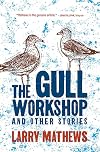
In The Gull Workshop, his second collection of short fiction, Harry Mathews offers up thirteen fiendishly inventive stories brimming with irreverence and comic energy. Mathews generally sets these tales of modern angst in a here-and-now that closely resembles the world as we know it, but often with a playful twist of weirdness that can catch the reader off guard or leave his characters scratching their head. A prime example is the title story, in which a small group of older men from the show more community have signed up for a “Gull Workshop,” even though they don’t know what it entails and are none the wiser after a lengthy discussion with their enigmatic facilitator on precisely that question. In “The Death of Arthur Rimbaud,” the renown French poet has without explanation turned up in a small community in rural Canada, where he’s renting a house and living on his own. The narrator reports this in breezy, matter-of-fact terms, even though some of the details, as he readily admits—such as Rimbaud’s birth date of 1854 making him over 150 years old—are “hard to swallow.” Other stories tackle obsessive behaviours. In “Brick,” Vince and Isabel (“Canadian snowbirds”) regularly winter in Florida, and all is going well until one morning Vince discovers a patio brick out of alignment at the edge of the property, repositioned in a way that can only mean one thing: human intervention. Over subsequent days and weeks, as the same brick is repeatedly tampered with, Vince engages in a battle of wills with his unseen tormentor. But Mathews is wily, and just when we think we’re reading a story about a man spiralling into madness over a triviality, he broadens the scope of the narrative to plausibly include a shooting at the airport in Fort Lauderdale and Vince’s Christian beliefs. Other stories take a sardonic perspective on family tensions (“Brother,” “Garabandal”) and knotty male-female relationships (“The Apocalypse Theme Park,” “What My Wife Says”). The collection ends with three delightfully ironic linked stories that skewer academia, among other things, in which our hapless hero, Hanrahan, confronts his intellectual limitations and lack of ambition while searching for a career and something that resembles meaning amidst life’s random chaos. Anyone who’s tried it knows that comic writing is much more difficult than writing for dramatic effect. Mathews carries it off with grace and confidence, seemingly without effort, again and again. And yet, he never seems to be showing off. The Gull Workshop—wise, insightful, wryly observant regarding humanity’s copious foibles and infinite capacity for misunderstanding—is classic Harry Mathews. show less
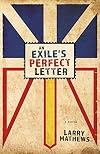
Life for English Professor Hugh Norman is always eventful and never less than interesting. In Larry Mathews’ entertaining and often hilarious follow-up to An Artificial Newfoundlander, Hugh, now sixty-two and contemplating retirement from teaching, finds himself rudely awakened to the possibility of his own mortality. Hugh is living in St. John’s with Maureen, a poet and the love of his life. His own intellectual interests are going strong, but he is more than fed up with departmental show more politics, weary of the petty disputes holding sway in the halls of learning, and indifferent to the impenetrable lines of inquiry that his intrepid young colleagues are pursuing and which the department encourages. Shortly before Maureen leaves to attend a poetry workshop, Hugh learns that his childhood friend Cliff MacIntyre has died. The news causes him great consternation: Hugh and Cliff were the same age and Cliff’s death resulted from sudden and unexpected physical decline. Hugh is assailed by guilt as well because he had allowed Cliff, who moved west and settled in Edmonton, to drift out of his life. With Maureen out of town, Hugh buckles down to work on his study of the short stories of the sadly neglected author Richard Karp. But he is distracted by troubling memories and boggled by a request from Cliff’s widow to write a reminiscence of her husband that can be read out at the memorial service. Then, while walking in a local park, he stumbles across a dead body, and after reporting his discovery, finds himself a focus of police interest. Moreover, he is thrown for a loop by an unlikely, and yet indisputable, coincidence linking his discovery in the park to one of Karp’s early short stories. In An Exile’s Perfect Letter, Larry Mathews has written a wryly observant and animated narrative that gleefully skewers academia and takes sly pokes at the cultural tensions between Newfoundland and mainland Canada. Mathews’ hero is a man of late middle age—a devoted scholar but otherwise unremarkable—struggling to locate meaning amidst the random chaos of everyday life. Humane and self-deprecating, awareness of his own foibles has made him tolerant of the shortcomings of others—the only thing he has no time for is pretentious self-regard. Cognizant of the essential futility of the kind of intellectual endeavour to which he has dedicated his life, he combines snark and insight into a beguiling mix that grabs and holds the reader’s sympathies. In Hugh Norman, Larry Mathew has created one of the great comic originals of Canadian literature. show less
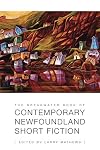
The Breakwater Book of Contemporary Newfoundland Short Fiction edited by Larry Mathews is a commendable attempt to bring together a selection of stories by Newfoundland-based writers working in the last 30 years or so. These stories by some of the more recognizable names in the Newfoundland literary landscape, along with a few by writers whose names might not be immediately familiar, are without exception vastly entertaining. All of the stories are strong, and all exhibit the kind of show more narrative urgency and imaginative wordplay that make for compelling reading. Highlights include "Fogbound in Avalon" by Elizabeth McGrath, originally published in The New Yorker and subsequently included in the 1981 edition of The Best American Short Stories. This is the story of Anne O’Neill, who, as the story opens, is escaping a rotten marriage and returning to St. John’s with her three children. Anne is a realist who believes in self-reliance and has no faith in dreams. Her life is a struggle, and her story is a tour-de-force of hardscrabble realism, ending on a wistful note as Anne realizes that, despite her affection for the island and its people, the restlessness in her nature that made her leave before is going to force her to leave again. Ramona Dearing’s "An Apology" explores the Mount Cashel sexual abuse scandal through the character of former Christian Brother Gerard Lundrigan, who has returned to St. John’s for his trial. Thoroughly unlikeable, Lundrigan has a short fuse and a distorted take on reality, living in a fog of denial, unable to face what he has done. In his mind he has built a fantasy in which he is the wronged party and everyone who is against him is either misguided or malicious. The story is powerful, because we know what he is protecting himself from and why. In the end, with his confidence eroded and his fantasy showing signs of breaking down, he seems on the cusp of self-awareness. And Lisa Moore’s "But Lovers with the Intensity I’m Talking About" is about the chance encounter of former lovers in a grocery store in the middle of a snowstorm. It is thirty-five years since Jim and Marissa engaged in a brief but all-consuming affair, the kind of idealized physical love that sucks the lovers into a vortex and blinds them to all that is going on around them. It’s also a kind of love that burns out quickly. Jim can’t remember how or why they broke up, except to say that when the time came they both knew that it was over. Moore’s narrative ranges confidently from the past to the present and back again. The swirl of Jim's emotions is matched by the swirling storm that has engulfed the city and forced him and Marissa into close quarters for the first time in years. Moore’s prose is richly detailed and offers moments of stunning emotional authenticity. It is a dazzling performance, but only one among several in this volume. This is a collection that can be enjoyed by any fan of short fiction. You don't have to also be a fan of Newfoundland to appreciate its virtues. show less
A disappointing selection for which I blame the editor, whose taste must be the polar opposite of my own.
Awards

You May Also Like
Associated Authors
Statistics
- Works
- 4
- Also by
- 6
- Members
- 21
- Popularity
- #570,575
- Rating
- 3.1
- Reviews
- 7
- ISBNs
- 8