
Jeremy Reed (2)
Author of Delirium: An Interpretation of Arthur Rimbaud
For other authors named Jeremy Reed, see the disambiguation page.
Works by Jeremy Reed
Anna Kavan: An Illustrated Catalogue 2 copies
Altered Balance: A Tribute to Coil 2 copies
Red carpets and the gutter 1 copy
Soho Johnny 1 copy
Marc (For Marc Almond) 1 copy
nothing shocking 1 copy
Associated Works
On Entering the Sea: The Erotic and Other Poetry of Nizar Qabbani (1995) — Translator, some editions — 42 copies
Tagged
Common Knowledge
There is no Common Knowledge data for this author yet. You can help.
Members
Reviews

Reed was addicted to Valium and Ativan for many years, and it's the hallucinations caused by withdrawal from them, as well as the panic attacks worsened by his kicking, that are the springboard for what is really a long reflective essay on what lurks in the unconscious and on the breakdown of defenses against recognising those hidden things, and more specifically how certain writers have deliberately or inadvertantly knocked down the barrier between inner and outer and used what they show more discovered inside in their works.
The writing that interests Reed is modern and in opposition to social realism and to 'the anaesthetized regionalism that suffocates most late twentieth-century British fiction'. Michaux and Kavan are discussed at some length; Proust, Cocteau, Trakl, and Breton are some of the other inner cosmonauts whom he contemplates. (But you needn't have read any of them to follow what Reed says.) The book isn't tightly organised, and that's all to the good: Wending from dreams to drugs to death and back again, interspersing the personal with acounts of other writers, observing rather than arguing, not only seem suited to the subject matter but to me give a stronger sense of what the author's saying than a more conventional treatment would have.
And Reed's style isn't a straitened one, either, and that too is all to the good here. As well, the book has some marvellous turns of phrase--'He smokes a cigarette with the elegance of someone choreographing the escaped smoke'--and beautifully atmospheric passages:
[on the Lonely Street of'Heartbreak Hotel'] ' . . . you just find yourself there and later on piece together the fragments of the mosaic leading to your arrival. It is usually raining. A blue rain. Sometimes the people have faces without features. Dogs pick through garbage in the streets. Soggy books, rubies and old photographs litter the pavements. . . The taxi that crawls down the street has no driver behind the wheel. . . You are too tired ever to sleep again. There is only one place to go: the blue, neon-lit hotel. But when you arrive in the entrance hall the desk-clerk is slumped over with a bullet-hole through his right temple. The stairs have been demolished. Spiders run in zigzag spirals across the fissured floor.'
A book that was hard to put down, that had me yearning to turn down page-corners despite its being a pristine hardback, and that has me annoyed now because when I finished it there were so many bits I wanted to re-read and I'd no dog-ears to help me find them. show less
The writing that interests Reed is modern and in opposition to social realism and to 'the anaesthetized regionalism that suffocates most late twentieth-century British fiction'. Michaux and Kavan are discussed at some length; Proust, Cocteau, Trakl, and Breton are some of the other inner cosmonauts whom he contemplates. (But you needn't have read any of them to follow what Reed says.) The book isn't tightly organised, and that's all to the good: Wending from dreams to drugs to death and back again, interspersing the personal with acounts of other writers, observing rather than arguing, not only seem suited to the subject matter but to me give a stronger sense of what the author's saying than a more conventional treatment would have.
And Reed's style isn't a straitened one, either, and that too is all to the good here. As well, the book has some marvellous turns of phrase--'He smokes a cigarette with the elegance of someone choreographing the escaped smoke'--and beautifully atmospheric passages:
[on the Lonely Street of'Heartbreak Hotel'] ' . . . you just find yourself there and later on piece together the fragments of the mosaic leading to your arrival. It is usually raining. A blue rain. Sometimes the people have faces without features. Dogs pick through garbage in the streets. Soggy books, rubies and old photographs litter the pavements. . . The taxi that crawls down the street has no driver behind the wheel. . . You are too tired ever to sleep again. There is only one place to go: the blue, neon-lit hotel. But when you arrive in the entrance hall the desk-clerk is slumped over with a bullet-hole through his right temple. The stairs have been demolished. Spiders run in zigzag spirals across the fissured floor.'
A book that was hard to put down, that had me yearning to turn down page-corners despite its being a pristine hardback, and that has me annoyed now because when I finished it there were so many bits I wanted to re-read and I'd no dog-ears to help me find them. show less
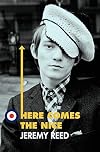
I finally finished this sucker and I have to admit, at least for me, the last third was the most compelling for me. It seemed to me to be a really great novel about The Face, a Mod icon, interspersed with a very flawed, well let's just say weak, novel about the futuristic Paul researching the Mod era.
The science fictiony thing just didn't work and Reed's prose about a near dystopian future just did not have the emotional punch it needed to carry the Paul plotline. On the other hand, the show more prose in The Face portions of the book, the ones set primarily in the 1960's, was marvellous and you could really feel the energy and liveliness of someone who had lived in that era and place writing.
This plotline, I mean The Face one, was quite poignant and moving in the end and said as much as a novel much better known, [b:The Sense of an Ending|10746542|The Sense of an Ending|Julian Barnes|https://d.gr-assets.com/books/1311704453s/10746542.jpg|15657664]. It gave a real sense of having to leave our youth behind and of time passing, even for The Face. It also said a great deal about how truly revolutionary art (music, fashion, design, etc.) gets assimilated by our culture and becomes part of the accepted mainstream forms of entertainment and style. What we are left with is nostalgia, parody, imitation, and pastiche, not originality. That's not to say some of what comes later isn't good and fun as entertainment, but it will never have the impact or verve of the first time around. It is always driving while looking in the rear view mirror too often.
Reed's grasp of the excitement of the Mod and British Invasion era is palpable and his use of metaphor exquisite. His perception of Mod style as the beginning of later, more visible, gay style and culture, are probably right on since most of the Glam Rockers of the 70's got their inspiration from the Mod era in England in the 60's. And on and on these things go.
In the end I felt like a really exciting and literary novel about the Swinging Sixties era and its evolution and devolution, through the eyes of the one iconic character, was marred by the bolting on of the whole sci-fi dystopian world parts of the narrative in order for the whole thing to make a more "believable" whole. show less
The science fictiony thing just didn't work and Reed's prose about a near dystopian future just did not have the emotional punch it needed to carry the Paul plotline. On the other hand, the show more prose in The Face portions of the book, the ones set primarily in the 1960's, was marvellous and you could really feel the energy and liveliness of someone who had lived in that era and place writing.
This plotline, I mean The Face one, was quite poignant and moving in the end and said as much as a novel much better known, [b:The Sense of an Ending|10746542|The Sense of an Ending|Julian Barnes|https://d.gr-assets.com/books/1311704453s/10746542.jpg|15657664]. It gave a real sense of having to leave our youth behind and of time passing, even for The Face. It also said a great deal about how truly revolutionary art (music, fashion, design, etc.) gets assimilated by our culture and becomes part of the accepted mainstream forms of entertainment and style. What we are left with is nostalgia, parody, imitation, and pastiche, not originality. That's not to say some of what comes later isn't good and fun as entertainment, but it will never have the impact or verve of the first time around. It is always driving while looking in the rear view mirror too often.
Reed's grasp of the excitement of the Mod and British Invasion era is palpable and his use of metaphor exquisite. His perception of Mod style as the beginning of later, more visible, gay style and culture, are probably right on since most of the Glam Rockers of the 70's got their inspiration from the Mod era in England in the 60's. And on and on these things go.
In the end I felt like a really exciting and literary novel about the Swinging Sixties era and its evolution and devolution, through the eyes of the one iconic character, was marred by the bolting on of the whole sci-fi dystopian world parts of the narrative in order for the whole thing to make a more "believable" whole. show less
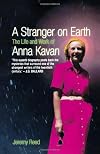
I'd like to have liked this book – Anna Kavan certainly had a life that screams out for a biography – but this isn't quite the biography I wanted. Huge swathes of her life are passed over entirely unexamined: the biography seems to kick off when she's about twenty, and we learn in passing, that she had a son, and we find out that he's dead twenty years later, but there's little to no examination of what that experience might have meant to her or how it might have influenced her books. show more (Or, if it didn't, why it didn't, which would be an equally interesting question.) The author who chooses to rename herself after one of her own characters is obviously an interesting subject – one could write a whole book about that situation – but that isn't particularly dwelt on.
Possibly the problem is that there isn't a lot of primary material on Kavan's life; possible because of this, much of the analysis seems to be considering her life as depicted in her novels, which seems like a questionable procedure. There is a fair amount of reference to a previously unseen diary covering her life during WWII, which is certainly interesting, and the reminiscences of people who knew her, but nothing's referenced in anything like a scholarly manner, which makes it difficult to go look for more information. (There are a number of interesting details that aren't followed up on: from the bibliography at the end, fore example, we learn that Kavan published a book with the Themersons' Gaberbocchus Press, but none of Kavan's interactions with their circle are described in the main text.) Most of Kavan's novels are given reasonably lengthy readings; most of these aren't substantively more than recountings of the plots, and I would have liked to see more close reading.
The problem of Reed's uncritical reading spills over into his discussion of her painting late in the book. (We're told she was showing paintings in fashionable London galleries in the 1930s; when discussion of her painting appears again, she's in her 60s.) Reed clearly isn't an art critic, and most of Kavan's paintings lack dates or histories, but that doesn't stop him from slapping psychology on them and declaring them to be great. Context might be useful: certainly most of the readers approaching this bio are likely to know Kavan's writing rather than her art, but it's hard to tell where (or if) Kavan's art fits into the history of British painting.
The most serious problem with the biography, to my mind, is Reed's attitude towards Kavan. Reed lionizes Kavan and her work; she's referred to by her first name throughout, which is odd for someone as standoffish as she appears to have been. Offhandedly he declares her to have been as important a writer as Virginia Woolf or Sylvia Plath (among others): this is a provocative assertion, and an argument that would be worth hearing out, but Reed doesn't elaborate on this. Reed groups her late work with that of the 60s "counterculture" (and finds her to be inherently important for this reason), but I'm not sure that this is convincing. I would have liked to see her influence traced out. Perhaps this is more important in the United States, where Kavan is largely unknown.
I haven't read D. A. Callard's biography of Kavan, though I'd be curious to see how that compares. show less
Possibly the problem is that there isn't a lot of primary material on Kavan's life; possible because of this, much of the analysis seems to be considering her life as depicted in her novels, which seems like a questionable procedure. There is a fair amount of reference to a previously unseen diary covering her life during WWII, which is certainly interesting, and the reminiscences of people who knew her, but nothing's referenced in anything like a scholarly manner, which makes it difficult to go look for more information. (There are a number of interesting details that aren't followed up on: from the bibliography at the end, fore example, we learn that Kavan published a book with the Themersons' Gaberbocchus Press, but none of Kavan's interactions with their circle are described in the main text.) Most of Kavan's novels are given reasonably lengthy readings; most of these aren't substantively more than recountings of the plots, and I would have liked to see more close reading.
The problem of Reed's uncritical reading spills over into his discussion of her painting late in the book. (We're told she was showing paintings in fashionable London galleries in the 1930s; when discussion of her painting appears again, she's in her 60s.) Reed clearly isn't an art critic, and most of Kavan's paintings lack dates or histories, but that doesn't stop him from slapping psychology on them and declaring them to be great. Context might be useful: certainly most of the readers approaching this bio are likely to know Kavan's writing rather than her art, but it's hard to tell where (or if) Kavan's art fits into the history of British painting.
The most serious problem with the biography, to my mind, is Reed's attitude towards Kavan. Reed lionizes Kavan and her work; she's referred to by her first name throughout, which is odd for someone as standoffish as she appears to have been. Offhandedly he declares her to have been as important a writer as Virginia Woolf or Sylvia Plath (among others): this is a provocative assertion, and an argument that would be worth hearing out, but Reed doesn't elaborate on this. Reed groups her late work with that of the 60s "counterculture" (and finds her to be inherently important for this reason), but I'm not sure that this is convincing. I would have liked to see her influence traced out. Perhaps this is more important in the United States, where Kavan is largely unknown.
I haven't read D. A. Callard's biography of Kavan, though I'd be curious to see how that compares. show less
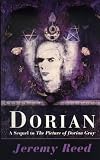
This book has not proved to be very popular, and that is with very good reason. It's an unimaginative re-imagining of the Picture of Dorian Gray as occurring in contemporary times, complete with the beautiful, immortal Dorian as the center of attention in a gay BDSM club. The very premise of the book, that Dorian survived whilst his secret brother died in his place, is implausible enough. Then comes the 20th century trappings and the assumption that Sibyl Vane is Dorian's half-sister (which show more is unfounded). The overbearing narrative style contrasts the ever-so-subtle one utilized by Wilde, especially in terms of sexuality and the relationship between Wotton and Gray. Overall, a novel best left ignored and forgotten. show less
Lists
You May Also Like
Associated Authors
Statistics
- Works
- 81
- Also by
- 5
- Members
- 512
- Popularity
- #48,443
- Rating
- 4.0
- Reviews
- 7
- ISBNs
- 100
- Languages
- 4