

Carol Diggory Shields
Author of Saturday Night at the Dinosaur Stomp
About the Author
Disambiguation Notice:
Not the same as the Carol Shields who wrote the Stone Diaries. (See publisher weblink).
Image credit: candlewickpress.com
Works by Carol Diggory Shields
Associated Works
Tagged
Common Knowledge
- Canonical name
- Shields, Carol Diggory
- Gender
- female
- Occupations
- children's librarian
children's book author - Nationality
- USA
- Places of residence
- Prunedale, California, USA
- Disambiguation notice
- Not the same as the Carol Shields who wrote the Stone Diaries. (See publisher weblink).
- Associated Place (for map)
- California, USA
Members
Reviews

"Six woolly wombats, walking one by one, / Passed a golden wattle blooming in the sun. / The last little wombat, whose name was Clive, / Stopped to smell the flowers... then there were FIVE." And so it goes as six wombats go walkabout in this Australian-themed rhyming counting book, finding their numbers thinned by a hungry dingo. Eventually the last two wombats realize what is going on, and manage to cleverly turn the tables on their canine adversary...
Winsome words - the rollicking rhythm show more makes the text here just roll off the tongue - are paired with adorable artwork in Wombat Walkabout, making this picture-book a wonderful story-hour selection for younger children. Part counting book, part poetry selection, part story of prey turning the tables on their predator, it is an entertaining book with plenty of humor, both textual and visual. As always, Sophie Blackall's artwork is immensely appealing, capturing the chubby charm of its phascolomian cast perfectly. As someone who loved Jackie French's Diary of a Wombat, I was probably always going to enjoy Shields and Blackall's work here, but I was surprised by just how adorable I found it! Recommended to fellow wombat lovers, as well as to anyone looking for fun counting books and/or humorous rhyming texts. show less
Winsome words - the rollicking rhythm show more makes the text here just roll off the tongue - are paired with adorable artwork in Wombat Walkabout, making this picture-book a wonderful story-hour selection for younger children. Part counting book, part poetry selection, part story of prey turning the tables on their predator, it is an entertaining book with plenty of humor, both textual and visual. As always, Sophie Blackall's artwork is immensely appealing, capturing the chubby charm of its phascolomian cast perfectly. As someone who loved Jackie French's Diary of a Wombat, I was probably always going to enjoy Shields and Blackall's work here, but I was surprised by just how adorable I found it! Recommended to fellow wombat lovers, as well as to anyone looking for fun counting books and/or humorous rhyming texts. show less
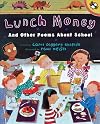
This is one of my all-time favorite poetry books. All of the poems are related to school, but are unique and funny. Some of the topics include trading lunches, arriving late to school, taking a dinosaur to school instead of a bus, among other silly things. The entire theme of this book is relatable for children, even when though some of the topics are a silly little. The illustrations on each page enhance each poem with their vivid colors and animated style. Each poem has a different rhythm, show more however they are all easy to follow and enjoyable for children. In all, this is a great example of how to make poetry fun for children. show less
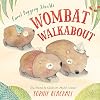
This title is absolutely freaking adorable; it's really a perfect storytime title. The book is large format with big illustrations spanning both pages. The text is a minimalist counting rhyme about six wombats outsmarting a wily dingo.
The book introduces some new vocabulary as well as some basic information about the wildlife in Australia. The wombats, with their unique outfits, cute half-moon eyes, and rolypoly bodies will win over toddlers jaded by bear/rabbit/turtle/etc. tales.
The book introduces some new vocabulary as well as some basic information about the wildlife in Australia. The wombats, with their unique outfits, cute half-moon eyes, and rolypoly bodies will win over toddlers jaded by bear/rabbit/turtle/etc. tales.
Favorite Book:
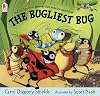
In The Bugliest Bug by Carol Diggory Shields, a damselfly named Dilly rounds up all kinds of bugs to enter a contest to see who will be the bugliest bug of them all! This book is made for grades k-3 and is very reader-friendly. The story is written in verse and contains end rhyme. The narrator describes the different kinds of bugs that are entering the contest. Shields writes, "from tiny no-see-ums to fat termite queens. / Some had great pincers, some had proud horns, / Some show more looked like branches, or flowers, or thorns." As all the bugs arrive, they realized that they have been tricked and the judges are not quite who they seem to be. I loved this book because while entertaining, it allowed for the audience to get a feel for what does (or in the judges case) does not constitute as an insect or bug. The accuracy of the science content was correct as well. When categorizing bugs/insects there are a general set of crtieria that we use. This is displayed in Shield's story and is a great way to introduce these criteria. This book would also go great within a science lesson. As a pre-service teacher I would engage the class by reading the book and then do some activities and practice with categorizing seeming insects into a bug or no bug category. Overall a great book and one of my favorites! show less
In The Bugliest Bug by Carol Diggory Shields, a damselfly named Dilly rounds up all kinds of bugs to enter a contest to see who will be the bugliest bug of them all! This book is made for grades k-3 and is very reader-friendly. The story is written in verse and contains end rhyme. The narrator describes the different kinds of bugs that are entering the contest. Shields writes, "from tiny no-see-ums to fat termite queens. / Some had great pincers, some had proud horns, / Some show more looked like branches, or flowers, or thorns." As all the bugs arrive, they realized that they have been tricked and the judges are not quite who they seem to be. I loved this book because while entertaining, it allowed for the audience to get a feel for what does (or in the judges case) does not constitute as an insect or bug. The accuracy of the science content was correct as well. When categorizing bugs/insects there are a general set of crtieria that we use. This is displayed in Shield's story and is a great way to introduce these criteria. This book would also go great within a science lesson. As a pre-service teacher I would engage the class by reading the book and then do some activities and practice with categorizing seeming insects into a bug or no bug category. Overall a great book and one of my favorites! show less
Lists
Awards


You May Also Like


Associated Authors
Statistics
- Works
- 29
- Also by
- 1
- Members
- 2,998
- Popularity
- #8,508
- Rating
- 4.0
- Reviews
- 146
- ISBNs
- 99
- Languages
- 4