
Shel Silverstein (1930–1999)
Author of The Giving Tree
About the Author
The most popular current writer of humorous verse for children, Shel Silverstein was born in Chicago, Illinois, has been married and divorced, has one daughter, and currently lives in Brooklyn, New York. His career includes composing popular songs, drawing cartoons, writing many adult articles show more (several for Playboy), and acting. However, he is best known for his self-illustrated children's poetry. His first such book was Uncle Shelby's Story of Lafcadio, the Lion Who Shot Back (1963), the humorous tale of a lion who turns the tables on hunters. It was followed by The Giving Tree (1964), a story of a parentlike tree that gives endlessly and is endlessly used by its son. Several other such picture books followed, including The Missing Piece (1976), about a circle that goes in search of a missing piece, and its sequel, The Missing Piece Meets the Big O (1981). However, two collections of poetry are probably his best-loved work: Where the Sidewalk Ends: The Poems and Drawings of Shel Silverstein (1974), and A Light in the Attic (1981). All of Silverstein's poetry for children employs the language play common to Lewis Carroll and Edward Lear. Silverstein is probably the best of the contemporary nonsense poets for children. (Bowker Author Biography) show less
Series
Works by Shel Silverstein
Hamlet as Told on the Street 9 copies
Shel Silverstein 4 Book Set- Where the Sidewalk Ends, a Light in the Atic, Falling Up, and Runny Babbit (1974) 9 copies
I'm Checkin' Out 3 copies
Uncle Shelby's Scout Handbook 3 copies
My Enemy 2 copies
The Smoke-Off 2 copies
Uncle Shelby's Kiddie Corner 2 copies
It's the World's Gone Crazy 2 copies
Rosalie's Good Eats Cafe 2 copies
The Guilty Party 2 copies
For What She Had Done 2 copies
Eight Balloons 1 copy
The Devil and Billy Markham 1 copy
“Sick” 1 copy
New St. Nick 1 copy
Bunny Rabbit 1 copy
Giving Tree,The 1 copy
The End 1 copy
The Farmer and the Queen 1 copy
Me and My Giant 1 copy
Distortion {comic strip} 1 copy
Jimmy Jet and His TV Set 1 copy
Listen to the Mustn'ts 1 copy
Poems and Drawings 1 copy
Top Cat 1 copy
The Enemy 1 copy
Unknown Book 10306599 1 copy
For Rachel 1 copy
The Crocodile's Toothache 1 copy
גותון אל זיתון 1 copy
Associated Works
Good Morning To You, Valentine: Poems For Valentine's Day (1976) — Contributor — 91 copies, 5 reviews
The Village Voice Reader: A Mixed Bag from the Greenwich Village Newspaper (1963) — Illustrator — 29 copies, 1 review
Tider skal komme : 15 langtidsvarsler : en science fiction-antologi — Contributor — 5 copies
Tagged
Common Knowledge
- Canonical name
- Silverstein, Shel
- Legal name
- Silverstein, Sheldon Allan
- Other names
- Uncle Shelby
- Birthdate
- 1930-09-25
- Date of death
- 1999-05-10
- Gender
- male
- Education
- Chicago Academy of Fine Arts
University of Illinois
Theodore Roosevelt High School
Chicago College of Performing Arts at Roosevelt University - Occupations
- writer
poet
composer
cartoonist
hot dog seller (Comiskey Park, Chicago, IL, USA)
children's author (show all 8)
songwriter
playwright - Organizations
- United States Army
- Awards and honors
- Chicago Literary Hall of Fame (2014)
Grammy (1970)
Grammy (1984)
Nashville Songwriters Hall of Fame (2002) - Relationships
- Nordstrom, Ursula (editor)
- Cause of death
- heart attack
- Nationality
- USA
- Birthplace
- Chicago, Illinois, USA
- Places of residence
- Logan Square, Chicago, Illinois, USA
Sausalito, California, USA (houseboat)
Martha's Vineyard, Massachusetts, USA
Greenwich Village, Manhattan, New York, New York, USA
Key West, Florida, USA
Brooklyn, New York, New York, USA - Place of death
- Key West, Florida, USA
- Burial location
- Westlawn Cemetery, Chicago, Illinois, USA
- Map Location
- Illinois, USA
Members
Reviews
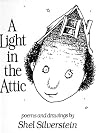
I LOVED this book. I still love it. I have my original copy from when I was a kid. I used to hide it under my pillow at night, so after my parents tucked me in and closed the door I could keep reading into the night. It has severely affected me. I love poetry. I love dark humor. I love how things don't always work out. It's wicked. It's delightful. And the drawings are so peculiar but approachable, if that's the right way to describe it. Hooray for A Light in the Attic.
"The baby bat show more screamed out in fright 'Turn on the dark I'm afraid of the light!'"
:D show less
"The baby bat show more screamed out in fright 'Turn on the dark I'm afraid of the light!'"
:D show less
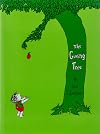
Shel Silverstein's "The Giving Tree" showcases the themes of love, sacrifice, and human relationships. The story follows a tree that selflessly gives everything to the boy. Her apples, shade, branches, and even her trunk. Silverstein's repetitive phrasing, specifically "And the tree was happy" evoke both warmth and sorrow, emphasizing the contrast between unconditional giving and quiet loss. The illustrations, done in Silverstein’s signature black-and-white line art, contribute to the show more story’s emotional weight. The lack of color allows the focus to remain on the characters and their relationship. The tree’s gradual diminishment visually parallels the passage of time and the extent of its sacrifice, making the illustrations a critical part of the storytelling rather than an embellishment. Although the book is often seen as a touching story of unconditional love, it has also sparked debate about its underlying message. I've seen that some interpret the tree's self-sacrifice as a cautionary tale about toxic relationships or the dangers of self-neglect. While others still view it as a story about generosity and the purest form of giving. I think that this debate between the underlying message between the story being true or not is a perfect example of why picture books can still be for older kids/adults. As a kid reading this book, I remember just feeling sad for the tree because she gave everything to the boy, and he took it without hesitation. Granted as a kid I probably didn't know what a toxic relationship was, but now rereading this as an adult I can definitely see that there could be a dual message to this story. show less

The sixth grade class loved this, especially the parts about their parents and teacher. Never before had I heard kids blurt out "Noooo! Don't do that!" so many times while reading a book. There was also much laughing and looking back at the teacher with an expression of "Do you dare me?"
The only letter I didn't read was G, even though most of the class probably knew the word. I told them to get their own copy of the book if they want to know what that letter is for. I also fudged J and said show more J is for a joke from the sixties that isn't funny nowadays. They found that pretty funny. By the end they were analyzing the meaning behind the words and trying to outguess each other on what the next page would be about. show less
The only letter I didn't read was G, even though most of the class probably knew the word. I told them to get their own copy of the book if they want to know what that letter is for. I also fudged J and said show more J is for a joke from the sixties that isn't funny nowadays. They found that pretty funny. By the end they were analyzing the meaning behind the words and trying to outguess each other on what the next page would be about. show less
A children’s tale glorifying an abusive relationship with all the subtlety of a sledgehammer
Shel Silverstein’s “The Giving Tree” is often celebrated as a classic of children’s literature, yet, reading it now, I struggle to see the appeal. Where contemporaries in the genre – such as Maurice Sendak’s “Where the Wild Things Are” – bring subtext, wit, and magic, Silverstein’s approach here is relentlessly didactic.
The narrative, centring on a boy’s lifelong (abusive) show more relationship with a perpetually self-sacrificing tree, bludgeons the reader with its message of unconditional giving to the point of tedium. “The Giving Tree” has all the subtlety of a sledgehammer.
The story’s moral simplicity feels not only outdated but, frankly, rather joyless. One leaves the tale with a sense of manipulation, not enlightenment. This might suffice for those in search of finger-wagging parables, but for those yearning for depth or nuance, there are far better options in the children’s canon.
One star out of five.
Blog | Goodreads | Hardcover | Facebook | Twitter | Mastodon | Instagram | Threads | StoryGraph | LibraryThing | Medium | Matrix | Tumblr
Ceterum censeo Putin esse delendam show less
Shel Silverstein’s “The Giving Tree” is often celebrated as a classic of children’s literature, yet, reading it now, I struggle to see the appeal. Where contemporaries in the genre – such as Maurice Sendak’s “Where the Wild Things Are” – bring subtext, wit, and magic, Silverstein’s approach here is relentlessly didactic.
The narrative, centring on a boy’s lifelong (abusive) show more relationship with a perpetually self-sacrificing tree, bludgeons the reader with its message of unconditional giving to the point of tedium. “The Giving Tree” has all the subtlety of a sledgehammer.
The story’s moral simplicity feels not only outdated but, frankly, rather joyless. One leaves the tale with a sense of manipulation, not enlightenment. This might suffice for those in search of finger-wagging parables, but for those yearning for depth or nuance, there are far better options in the children’s canon.
One star out of five.
Blog | Goodreads | Hardcover | Facebook | Twitter | Mastodon | Instagram | Threads | StoryGraph | LibraryThing | Medium | Matrix | Tumblr
Ceterum censeo Putin esse delendam show less
Lists
1980s (1)
Funny Books (1)
Youth: Poetry (1)
Childhood books (1)
Favourite Books (1)
ORCID Book list (1)
Children's Humor (4)
4th Grade Books (3)
Five star books (1)
Poetry Corner (2)
BitLife (2)
1970s (2)
Awards


You May Also Like


Associated Authors
Statistics
- Works
- 100
- Also by
- 25
- Members
- 85,891
- Popularity
- #127
- Rating
- 4.3
- Reviews
- 2,755
- ISBNs
- 377
- Languages
- 28
- Favorited
- 156

