
Steven L. Davis
Author of Dallas 1963
About the Author
Steven L. Davis currently serves as the assistant curator of the Southwestern Writers Collection at Texas State University-San Marcus, which houses the literary papers of Bud Shrake, Larry L. King, Billy Lee Brammer, and Gary Cartwright.
Works by Steven L. Davis
The Most Dangerous Man in America: Timothy Leary, Richard Nixon and the Hunt for the Fugitive King of LSD (2018) 102 copies, 7 reviews
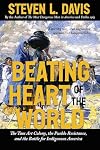
Beating Heart of the World: The Taos Art Colony, the Pueblo Resistance, and the Battle for Indigenous America (2026) 15 copies, 5 reviews
Tagged
Common Knowledge
There is no Common Knowledge data for this author yet. You can help.
Members
Reviews
Beating Heart of the World: The Taos Art Colony, the Pueblo Resistance, and the Battle for Indigenous America by Steven L. Davis
Will the American people not come to our rescue now, when it is proposed to take away our very souls.
from Beating Heart of the World by Steven L. Davis
I love a story where artists change the world.
A century ago, the Taos Pueblo faced losing their spiritual homeland to development, which would end their religious practices and way of life.
The federal government was run by business men and white supremists. Native Americans accepted the education brought to them, but resisted a loss of show more culture, tradition, and faith. But the white man’s agenda was to privatize their lands and resources and to destroy their culture.
The Taos Pueblo found champions among the artists who came to capture their people and land in paint. The artist colony grew when a wealthy white woman fell in love with the place—and a Native man. Instead of ‘saving’ the ‘Indians,” they changed her life. Taos influenced the work of Georgia O’Keefe, Ansel Adams, and writer D. H. Lawrence.
As people came to know and understand the Taos Pueblo, they were impressed by the wisdom of their ways. Even Carl Jung told a Taos man about their beliefs, “Everyone can see that you speak the truth”.
The political machinations and the legal battle for Native rights to their traditional land spooled out over decades until an unlikely Republican government acted.
The book begins with a banging good story and kept my interest throughout. A fantastic history on issues that are still with us to this day.
Thanks to High Road Books for a free book through LibraryThing Early Reviewers. show less
from Beating Heart of the World by Steven L. Davis
I love a story where artists change the world.
A century ago, the Taos Pueblo faced losing their spiritual homeland to development, which would end their religious practices and way of life.
The federal government was run by business men and white supremists. Native Americans accepted the education brought to them, but resisted a loss of show more culture, tradition, and faith. But the white man’s agenda was to privatize their lands and resources and to destroy their culture.
The Taos Pueblo found champions among the artists who came to capture their people and land in paint. The artist colony grew when a wealthy white woman fell in love with the place—and a Native man. Instead of ‘saving’ the ‘Indians,” they changed her life. Taos influenced the work of Georgia O’Keefe, Ansel Adams, and writer D. H. Lawrence.
As people came to know and understand the Taos Pueblo, they were impressed by the wisdom of their ways. Even Carl Jung told a Taos man about their beliefs, “Everyone can see that you speak the truth”.
The political machinations and the legal battle for Native rights to their traditional land spooled out over decades until an unlikely Republican government acted.
The book begins with a banging good story and kept my interest throughout. A fantastic history on issues that are still with us to this day.
Thanks to High Road Books for a free book through LibraryThing Early Reviewers. show less
 This review was written for LibraryThing Early Reviewers.
"Dallas 1963 is not meant to address the many conspiracy theories surrounding the murder of President Kennedy". This from the Author's Note. In the years since Kennedy's death more than 2,000 books have been written about the assassination, many of which espouse one or more conspiracy theories. That's fine. I doubt I will ever tire of reading them. Among all that noise, this recent contribution manages to be unique by ignoring any conspiracy theories while painting a picture of a city so show more awash in Kennedy-loathing, racism, and hyper-conservatism as to be a hotbed of conspiracy potential. Dimensions to this include General Walker fomenting hostile and reactionary demonstrations largely against the U.N. and integration while apparently being in the closet; segregationist preacher Billy James Hargis; Dallas oilman H.L. Hunt preaching oilman elitism, plutocracy, his genetic supremacy, and quirky health cures; Minding the Store author Stanley Marcus trying to server the affluent at the Dallas retailer while being both innovative and segregated.
After reading this, was it recklessness or hubris that brought JFK to Dallas? show less
After reading this, was it recklessness or hubris that brought JFK to Dallas? show less
I grew up in Dallas. I was there in 1963 when John F. Kennedy was murdered on its streets. I've read extensively about the assassination, followed all the events from that day in November forward to the wildly varying conclusions that have arisen. But this book isn't about that period. It's about the three years prior to the assassination and about the social and political life of the city in which the assassination occurred. It is one of the most eye-opening things I have ever read, and it show more utterly astonished me with facts and insights about the town I thought I knew. Of course, I was a child when these events were occurring, so it's not completely surprising that I didn't grasp all the nuances. But the not-so-underground life of Dallas as the very heart of right-wing extremism in the 1960s almost completely escaped me until reading this book. The authors bend so far over backwards trying to be objective they almost come full circle. Yet for all that massive effort to impartiality, one is reminded of the old saying that facts have a liberal bent. Only the furthest right of the furthest right can look at the political climate in Dallas in the early 1960s and believe anything but that the city was a bubbling cauldron of hate and fear. In what other city in American history have high government officials been spat on and battered on television as ambassador Stevenson was during an official visit? In what other place in this country could the sitting Vice President of the United States and his wife be physically abused, intimidated, and spat on by a riotous mob of wealthy mink-clad women? That the passions of so many extreme conservatives in one place were tacitly encouraging violence to the American president is, in the end, an extraordinary irony in view of the apparent fact that it was a left-winger who gunned him down. What DALLAS 1963 does is make it crystal clear that the climate of hatred in the city was so intrinsic and deeply rooted that it actually made the assassination almost inevitable, regardless of the political position of the actual shooter. And ultimately, what is most astonishing is that the city fathers who hated Kennedy, the comparatively few high-level figures in the city who loved him, the president's staff and administrative colleagues, and even the president himself saw clearly that Dallas posed an extraordinary threat not only to his political existence and policies, but to his life itself, yet none of them heeded the alarm bells that were clanging from every direction. If there's a problem with this book, it's in a choice to tell it mostly from a present-tense framework, with inconsistent alternations with past tense. But that's a mild caveat. This is a page-turning, pulse-pounding political thriller with its conclusion already known, but with the roots that led to that conclusion now revealed in ugly glory in an innovative and riveting approach. What is perhaps most powerful in this book is the undeniable implications that the massive polarization and bitterness Americans felt toward others of different opinion in the 1960s is not dead. To paraphrase Bertolt Brecht, the bitch isn't dead. In fact, she's in heat again. show less
Beating Heart of the World: The Taos Art Colony, the Pueblo Resistance, and the Battle for Indigenous America by Steven L. Davis
This is one of the best books I've read this year. I requested it as an Early Reviewer because I had visited the Santa Fe area and wanted to know more about its history. This book opened my eyes to a part of our nation's history I only knew a little about, the workings of the various government units that had control over our Indigenous peoples. I knew that it had been full of fraud and greed but not to the extent it had been. Davis uses the history of Taos Pueblo to open up that history and show more also to really detail the people involved, both Indigenous and White, famous and not famous. His writing is well researched and easy to read. He brings all of the characters involved to life and sheds new light on some I thought I knew already. It is really a wonderful book and should be read by everyone for the insight into the history of our government's interaction with our Indigenous peoples. show less
This review was written for LibraryThing Early Reviewers.Lists
Awards


Statistics
- Works
- 7
- Members
- 371
- Popularity
- #64,991
- Rating
- 4.3
- Reviews
- 20
- ISBNs
- 36
- Languages
- 1
