
Alex Witchel
Author of Me Times Three: A Novel
About the Author
Alex Witchel is a staff writer for The New York Times Magazine.
Works by Alex Witchel
Associated Works
Tagged
Common Knowledge
- Birthdate
- 1958
- Gender
- female
- Relationships
- Rich, Frank (husband)
- Places of residence
- New York, New York, USA
- Associated Place (for map)
- New York, USA
Members
Reviews
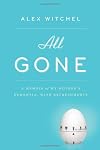
What a difficult task it must be to not only confront a loved one's illness but to share it with the world. People attempt to do it all the time but Witchel truly succeeds. Her writing is filled with tragic honesty and humor. In an effort to illustrate just how dementia has changed her mother's personality and the dynamics of the mother-child relationship Witchel dips into her childhood. Using recipes from her past Witchel uses food to bridge the gap between a healthy mother and the disease show more that has stolen her. It is difficult to watch a seemingly healthy person disappear before your very eyes and that is what happens to Witchel's mother. Going from professor to patient was not an easy transition for her.
In addition to the stress of an ailing parent Witchel confronts being the only sibling to step up and deal with the sad situation. Everyone is tied to their own family responsibilities and thinks Witchel is the logical caregiver. The attitude is, what else has she to do?
Many people will be able to relate to Witchel's predicament. Even more so, fans of her writing for The New York Times will embrace her poignant memoir enthusiastically. show less
In addition to the stress of an ailing parent Witchel confronts being the only sibling to step up and deal with the sad situation. Everyone is tied to their own family responsibilities and thinks Witchel is the logical caregiver. The attitude is, what else has she to do?
Many people will be able to relate to Witchel's predicament. Even more so, fans of her writing for The New York Times will embrace her poignant memoir enthusiastically. show less
 This review was written for LibraryThing Early Reviewers.
A nice treat to read a memoir dealing with issues of dementia that allows us to see more than a glimpse of the person behind the fog of what used to be called senility. Not all dementias are Alzheimer Disease Related. Some, like Dr. Witchel's are cardio-vascularly induced. Not all memoirs of mothers suffering from various dementias are written so warmly and honestly. Kudos to Alex Witchel for remembering her mother as a warm-blooded woman, not just a body carrying around mental illness. show more Familial relationships can be complicated, and I think Witchel struggled to be true to her experience.
Not to mention new ideas for family dinners (but I think I may skip the Frankfurter Goulash)!! show less
Not to mention new ideas for family dinners (but I think I may skip the Frankfurter Goulash)!! show less
This review was written for LibraryThing Early Reviewers.In this day and age, when anyone and everyone and her sister writes blogs and self publishes books, and everyone thinks she can write well.... it is refreshing to read a book by a *writer*... who can actually write with talent! Witchel writes about her mother with such tenderness and wit and clarity, that it didn't matter that there were no black and white photos of her Mom in the book. You get the picture perfectly. I feel like I know her mother. And if that weren't enough, Witchel includes show more recipes in her book! Ones her mother used. And what's so funny and touching is that they aren't home made natural all-from-scratch ones as you'd expect. No, her mom used Lawry's seasoning. And canned peas... and other processed stuff I wouldn't use! :-) But it's clear how Witchell loves her mom, loves the recipes she grew up with, and loves how the dishes turned out. They mean home to her and she finds great comfort in them, especially now that her mother has dementia.
Witchell's writing reminds me a lot of Jeannette Wall's. If you haven't read The Glass Castle and you like memoirs, you should read that one too. show less
Witchell's writing reminds me a lot of Jeannette Wall's. If you haven't read The Glass Castle and you like memoirs, you should read that one too. show less
You count on your mom to always be there for you. Even when you're an adult, you count on her remaining the person who once upon a time tucked you in at night, kissed away boo-boos, made your favorite dinner for your birthday, and celebrated all your accomplishments small or large. But when that mom starts to disappear into the smothering fog of dementia, you have to mourn the loss of the bed-tucking, boo-boo-kissing, dinner-cooking, celebratory mom long before she is actually gone. Alex show more Witchel's brief memoir All Gone: A Memoir of My Mother's Dementia, With Refreshments chronicles the painful way in which an adult child has to say goodbye to the mom of memory long before time and the way in which, even though that mom is trapped inside the malfunctioning synapses of her own brain, Witchel can still keep her close in her heart and in her kitchen.
Written non-linearly, this memoir deals with the present day tasks of taking care of an aging and ill parent, memories of Witchel's childhood, and a few recipes that she remembers her mother cooking. While the three are connected, they are not necessarily integrated together well. Witchel's initial denial, sorrowful acceptance, and frustration with the disease claiming her mother's past, present, and even her very personality is presented honestly and bare of embellishment. The portion of the memoir dealing with the slow slide of her mother's disappearance into dementia is the most poignant, best written of the memoir. The portions of Witchel's childhood are occasionally instructive of her relationship with her mother but often that connection is hard to make and so the bouncing between childhood and the present can feel disjointed.
The third bit of the book, and one that I expected, given the subtitle, to take more precedence deals with Witchel cooking the recipes she remembers her mother making, finding comfort in the comfort food of their family. While we all have a visceral connection to the food of our childhood, it seemed an odd way for her to conjure up the mother of her youth given that her mother seemingly didn't like to cook. Her recipes feel as if they were all culled from newspaper columns or magazine aimed at the "new working woman" and the convenience that she would desire in facing dinnertime after putting in a full day at the office, not as if they were treasured family recipes. And often the recipes are plunked at the end of the chapters with little or no tie to the content of the chapter. As a concept, the connection of food with memories of childhood and the present reality of a mother shrouded in dementia is a natural one and there are moments when Witchel gets it right. Unfortunately, there were more moments for me where she doesn't quite get there. show less
Written non-linearly, this memoir deals with the present day tasks of taking care of an aging and ill parent, memories of Witchel's childhood, and a few recipes that she remembers her mother cooking. While the three are connected, they are not necessarily integrated together well. Witchel's initial denial, sorrowful acceptance, and frustration with the disease claiming her mother's past, present, and even her very personality is presented honestly and bare of embellishment. The portion of the memoir dealing with the slow slide of her mother's disappearance into dementia is the most poignant, best written of the memoir. The portions of Witchel's childhood are occasionally instructive of her relationship with her mother but often that connection is hard to make and so the bouncing between childhood and the present can feel disjointed.
The third bit of the book, and one that I expected, given the subtitle, to take more precedence deals with Witchel cooking the recipes she remembers her mother making, finding comfort in the comfort food of their family. While we all have a visceral connection to the food of our childhood, it seemed an odd way for her to conjure up the mother of her youth given that her mother seemingly didn't like to cook. Her recipes feel as if they were all culled from newspaper columns or magazine aimed at the "new working woman" and the convenience that she would desire in facing dinnertime after putting in a full day at the office, not as if they were treasured family recipes. And often the recipes are plunked at the end of the chapters with little or no tie to the content of the chapter. As a concept, the connection of food with memories of childhood and the present reality of a mother shrouded in dementia is a natural one and there are moments when Witchel gets it right. Unfortunately, there were more moments for me where she doesn't quite get there. show less
This review was written for LibraryThing Early Reviewers.You May Also Like


Associated Authors
Statistics
- Works
- 5
- Also by
- 1
- Members
- 446
- Popularity
- #54,978
- Rating
- 3.1
- Reviews
- 27
- ISBNs
- 35
- Languages
- 4
- Favorited
- 2
