
Rudy Ruiz
Author of Valley of Shadows
Works by Rudy Ruiz
Associated Works
Going Hungry: Writers on Desire, Self-Denial, and Overcoming Anorexia (2008) — Contributor — 86 copies, 1 review
Tagged
Common Knowledge
There is no Common Knowledge data for this author yet. You can help.
Members
Reviews
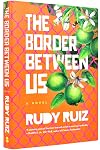
When I picked up this short novel, set on the Texas-Mexican border, I thought the ‘border’ in the title was just that, the Rio Grande River. But there is more than one kind of border that separates people from one another.
Ramón López is a high school kid who lives with his grandmother in Texas. His parents, his hardworking mother and his father, with several failed businesses, live in Mexico. Ramon also has a younger brother who suffers from physical and intellectual disabilities. show more While in high school, he is befriended by a senior named Julia and her slacker boyfriend Reeser. His time with Julia opens a different world to him, a world powered by the drug trade.
After a tragic accident, Ramón focuses on his art and is awarded a scholarship to a prestigious NY college. He leaves the border for the city. There he meets another wealthy girl, Clara, whose opulent lifestyle is funded by her wealthy father. The stark differences in their lived experiences reveals a different sort of border. What should have been Ramón’s ticket to a new life instead robs him of what he holds most dear.
For Ramón, borders are not just geographic. There’s the border between the rich and the poor. The gulf between a father and the son who doesn’t understand him. There’s the border between what is right and what is wrong and what happens if you cross it.
I really enjoyed this story of life in Southernmost Texas. The close-knit family, divided by the river, by changing values and the choices they make. I thought the story was beautifully written with evocative descriptions the tightknit Hispanic community and the challenges of growing up torn between what you have and what you think you want.
I highly recommend this thoughtful book. show less
Ramón López is a high school kid who lives with his grandmother in Texas. His parents, his hardworking mother and his father, with several failed businesses, live in Mexico. Ramon also has a younger brother who suffers from physical and intellectual disabilities. show more While in high school, he is befriended by a senior named Julia and her slacker boyfriend Reeser. His time with Julia opens a different world to him, a world powered by the drug trade.
After a tragic accident, Ramón focuses on his art and is awarded a scholarship to a prestigious NY college. He leaves the border for the city. There he meets another wealthy girl, Clara, whose opulent lifestyle is funded by her wealthy father. The stark differences in their lived experiences reveals a different sort of border. What should have been Ramón’s ticket to a new life instead robs him of what he holds most dear.
For Ramón, borders are not just geographic. There’s the border between the rich and the poor. The gulf between a father and the son who doesn’t understand him. There’s the border between what is right and what is wrong and what happens if you cross it.
I really enjoyed this story of life in Southernmost Texas. The close-knit family, divided by the river, by changing values and the choices they make. I thought the story was beautifully written with evocative descriptions the tightknit Hispanic community and the challenges of growing up torn between what you have and what you think you want.
I highly recommend this thoughtful book. show less
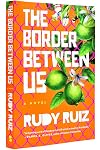
I had a mix of emotions on reading this book. I dearly loved Ramón, a young Mexican-American boy growing up in a small town in Texas along the Mexican border. However, I was so sad for the financial struggles of his parents and the difficulties of his younger brother who suffered from developmental delay. All the time I was reading this book, I just wanted to pluck Ramón and his family out of these pages and place them in a location where his dad could find reliable work, his mom could show more afford good medical care for her younger son, and Ramón could get a decent education without family financial struggles. This family seemed very real to me. Their story made me sad, but I sincerely appreciate the author’s ability to paint this picture of one family’s life that made me feel so concerned about them.
I think the message of this novel is an important one. It tells the reader to be true to oneself no matter how hard. It shows us how one teenager tried to live his dreams despite difficult circumstances. One thing he had going for him was a supportive family, even if he didn’t always think so.
This novel is a necessary look at the cultural world of a person of Mexican descent who tries to “make it” in a world of gringos. Its main focus was on the difficulty of a Mexican-American trying for the “American Dream”. We learn from this story that this dream is not equally available to everyone in the United States. This timely story deserves a reader’s deep attention. show less
I think the message of this novel is an important one. It tells the reader to be true to oneself no matter how hard. It shows us how one teenager tried to live his dreams despite difficult circumstances. One thing he had going for him was a supportive family, even if he didn’t always think so.
This novel is a necessary look at the cultural world of a person of Mexican descent who tries to “make it” in a world of gringos. Its main focus was on the difficulty of a Mexican-American trying for the “American Dream”. We learn from this story that this dream is not equally available to everyone in the United States. This timely story deserves a reader’s deep attention. show less
 This review was written for LibraryThing Early Reviewers.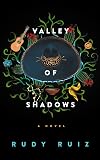
Sometimes when you start a book that you know nothing about, including what sparked your interest in the first place, you find yourself gobsmacked by a truly magnificent story. Such is the case for me with [book:Valley of Shadows|59948865], a collage of horror, fantasy, western and murder mystery with a dose of magical realism thrown in for good measure.

This novel about a teen boy growing up on the Mexico/Texas border engaged me in his lifestyle and feelings. The writing is very articulate: you can tell the author is thoughtful and has experienced this. His father believes in the American Dream, and is working hard to give his son a good education. But they live in a poor neighborhood and his son must learn to deal with bullies or gangs. When his painting of his father trying to sell a truckload of limes on the roadside won a prize, his show more father gets an insight of how his efforts are seen by outsiders and Ramon feels conflicted "Why did my inspiration have to be interpreted as an insult?" (p.132) Ramon's art does capture more than the surface, it makes me forget that the author is not this artist. Another painting "Everything about the image conveyed that these were two tough guys from the barrio, but in their eyes, one could glimpse their fear betraying them. Dante's tiny looming shadow lurked menacingly in their pupils' quivering miniature reflections." (p.149). His art teacher expresses high hopes that his skill will help any viewer, regardless of race or background, connect with the Hispanic people "if there's anything that binds us in common as humans, it is fear. We are all afraid of the day we will lose, the day we will hurt, the day we will inevitably face the ultimate challenge none of us can overcome. If we could see the fear in the eyes of those that would threaten us, what might we do? Might we rise up and fight back? Or might we give them a hug?" (P.149) Being an artist is vital to who Ramon is and he sees it as his way of seeking out the spiritual forces acting in this world. "I wanted to be a conduit for something greater than myself and my earthly desires. I longed to believe in something...because--with every fiber of my being--I simply knew it to be true...to pulsate with power that resonated in each and every one of my cells." (p.229)
Spanish phrases are mixed in and were sometimes interpreted in the ensuing conversation or were common enough that I knew the meaning. One frequent word which was never translated was 'resaca', but when I finally looked it up I learned it is common among south Texans of any background and refers to an oxbow lake (tho maybe my definition is obscure to readers who haven't grown up in the plains!).
I made note of some of what he learns from his Grandma and his father. "I think you must speak what is in your heart...your father will always be your father, but you must be you." (p.107) "Remember, son, when you get there [New York]: just because the buildings are taller that doesn't mean the people inside are any happier or more important." (p.200)
I also made note of some of his imaginative language: "I thought of the water channeling restrained within the banks...people teeming in the shoulder-high weeds at its edge yearning to cross, and I wondered if the river felt liberated when it met the sea." (p.112) "What's public school like?...It's like mud instead of sand...smoke instead of air." (p.113) The entire chapter "Coffee Port Road" is so well structured and emotionally charged that it is no wonder it won an award as a stand-alone short story.
I highly recommend this book. show less
Spanish phrases are mixed in and were sometimes interpreted in the ensuing conversation or were common enough that I knew the meaning. One frequent word which was never translated was 'resaca', but when I finally looked it up I learned it is common among south Texans of any background and refers to an oxbow lake (tho maybe my definition is obscure to readers who haven't grown up in the plains!).
I made note of some of what he learns from his Grandma and his father. "I think you must speak what is in your heart...your father will always be your father, but you must be you." (p.107) "Remember, son, when you get there [New York]: just because the buildings are taller that doesn't mean the people inside are any happier or more important." (p.200)
I also made note of some of his imaginative language: "I thought of the water channeling restrained within the banks...people teeming in the shoulder-high weeds at its edge yearning to cross, and I wondered if the river felt liberated when it met the sea." (p.112) "What's public school like?...It's like mud instead of sand...smoke instead of air." (p.113) The entire chapter "Coffee Port Road" is so well structured and emotionally charged that it is no wonder it won an award as a stand-alone short story.
I highly recommend this book. show less
This review was written for LibraryThing Early Reviewers.Awards


You May Also Like
Associated Authors
Statistics
- Works
- 6
- Also by
- 1
- Members
- 154
- Popularity
- #135,794
- Rating
- 4.2
- Reviews
- 14
- ISBNs
- 46
- Languages
- 1
