
Sarah Wynn-Williams
Author of Careless People: A Cautionary Tale of Power, Greed, and Lost Idealism
About the Author
Image credit: Sarah Wynn-Williams
Works by Sarah Wynn-Williams
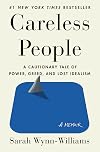
Careless People: A Cautionary Tale of Power, Greed, and Lost Idealism (2025) — Narrator, some editions — 1,351 copies, 50 reviews
Tagged
Common Knowledge
- Birthdate
- c.1980
- Gender
- female
- Education
- University of Canterbury (BA|Political Science, International Relations and Diplomacy)
Victoria University of Wellington (ML|Laws) - Occupations
- diplomat
lawyer
policy advisor - Organizations
- Oxfam International (former Head of Relations with the World Bank and IMF)
Facebook (former Director of Public Policy) - Nationality
- New Zealand
- Birthplace
- Christchurch, New Zealand
- Associated Place (for map)
- Christchurch, New Zealand
Members
Reviews
Careless People: A Cautionary Tale of Power, Greed, and Lost Idealism {audiobook} by Sarah Wynn-Williams

In 2011, as a young, idealistic diplomat from New Zealand, Sarah saw Facebook and saw the future. She thought it had the power to shape the future into something more connected and egalitarian. She convinced Facebook leadership to hire her for an international relations position that did not exist, because Facebook at the time was uninterested in world governments. Over the next several years Sarah influenced Facebook to become a global force, while also watching helplessly as it committed show more moral and legal transgressions to get there.
There are three throughlines of this book, which work in concert:
- Mark Zuckerberg, Sheryl Sandberg, and Joel Kaplan (current president of global affairs for Meta, and Sarah’s immediate boss at the time) are absolutely awful people;
- Facebook has done, and is probably still doing, some horrible and illegal shit; and
- Sarah was incredibly naive.
The first item is why you read a book like this. Truly wild stories about Zuckerberg throwing a hissy fit over losing a game of Settlers of Catan (because everyone always lets him win), Sandberg requiring young female staff to sleep in the bed with her on her private jet, Kaplan asking Sarah in a work meeting to describe her recent traumatic childbirth to him in detail while also giving her a poor performance review because she was unavailable on maternity leave. The gossip is hot, but most damning for Sandberg. Zuckerberg is a known megalomaniac and Kaplan is a known right-wing creep, but Sandberg’s berating female service workers and covering up workplace sexual harassment aren’t exactly Lean-In-Feminist.
The second item is why Facebook didn’t want this book published. Obviously at this point most people are aware of Facebook’s general bad vibes, but it is really much worse than you think. Facebook actively worked with the Trump campaign (via Kaplan, of course) in 2016 to assist them in spreading misinformation far and wide. They gave free internet access (which could only be used to access Facebook) to the entire country of Myanmar while also employing only ONE contracted moderator who spoke Burmese, and the “report” button didn’t work. And, of course, Facebook built special tools for the Chinese government to use to spy on and restrict the speech of their citizens (and potentially US citizens), culminating in testifying in Congress that they had not and would not do such a thing. It’s damning stuff, even when you think you’re expecting it.
The third item is where things get rough. It’s one thing for young Sarah to be idealistic and sweet-talk her way into a job that she thinks is going to change the world. But she absolutely should have gotten out at many different points earlier. She openly recognizes this, and how naive she was about how bad things were or how little she could change from the inside, but it still drags the narrative down a bit. Of course the book highlights all of the times things went wrong, and not the times things went fine, because that’s what’s entertaining, but I was still screaming “Just say no!” at the audiobook every time her bosses made her go to an undeveloped country while 8 months pregnant or conducted her performance evaluation over Zoom while half naked in bed. She always came up with some reason not to leave - she thought she could change things, she needed the visa, she needed the health insurance, she was going to leave right after one more project, etc. She is a lawyer with experience with embassies, the IMF, and OxFam, I have a hard time believing she couldn’t find any other job for five years. My annoyance with her choices tempered this otherwise juicy book.
It is a net good, for civilization, that these events have been documented. Despite having a gag order preventing her from promoting the book, Sarah Wynn-Williams testified before congress about its contents last week. It’s worth reading now, while it’s popular (especially the audiobook, she has a great accent). But Facebook is still pulling the same crap so I’m not convinced it’s groundbreaking. show less
There are three throughlines of this book, which work in concert:
- Mark Zuckerberg, Sheryl Sandberg, and Joel Kaplan (current president of global affairs for Meta, and Sarah’s immediate boss at the time) are absolutely awful people;
- Facebook has done, and is probably still doing, some horrible and illegal shit; and
- Sarah was incredibly naive.
The first item is why you read a book like this. Truly wild stories about Zuckerberg throwing a hissy fit over losing a game of Settlers of Catan (because everyone always lets him win), Sandberg requiring young female staff to sleep in the bed with her on her private jet, Kaplan asking Sarah in a work meeting to describe her recent traumatic childbirth to him in detail while also giving her a poor performance review because she was unavailable on maternity leave. The gossip is hot, but most damning for Sandberg. Zuckerberg is a known megalomaniac and Kaplan is a known right-wing creep, but Sandberg’s berating female service workers and covering up workplace sexual harassment aren’t exactly Lean-In-Feminist.
The second item is why Facebook didn’t want this book published. Obviously at this point most people are aware of Facebook’s general bad vibes, but it is really much worse than you think. Facebook actively worked with the Trump campaign (via Kaplan, of course) in 2016 to assist them in spreading misinformation far and wide. They gave free internet access (which could only be used to access Facebook) to the entire country of Myanmar while also employing only ONE contracted moderator who spoke Burmese, and the “report” button didn’t work. And, of course, Facebook built special tools for the Chinese government to use to spy on and restrict the speech of their citizens (and potentially US citizens), culminating in testifying in Congress that they had not and would not do such a thing. It’s damning stuff, even when you think you’re expecting it.
The third item is where things get rough. It’s one thing for young Sarah to be idealistic and sweet-talk her way into a job that she thinks is going to change the world. But she absolutely should have gotten out at many different points earlier. She openly recognizes this, and how naive she was about how bad things were or how little she could change from the inside, but it still drags the narrative down a bit. Of course the book highlights all of the times things went wrong, and not the times things went fine, because that’s what’s entertaining, but I was still screaming “Just say no!” at the audiobook every time her bosses made her go to an undeveloped country while 8 months pregnant or conducted her performance evaluation over Zoom while half naked in bed. She always came up with some reason not to leave - she thought she could change things, she needed the visa, she needed the health insurance, she was going to leave right after one more project, etc. She is a lawyer with experience with embassies, the IMF, and OxFam, I have a hard time believing she couldn’t find any other job for five years. My annoyance with her choices tempered this otherwise juicy book.
It is a net good, for civilization, that these events have been documented. Despite having a gag order preventing her from promoting the book, Sarah Wynn-Williams testified before congress about its contents last week. It’s worth reading now, while it’s popular (especially the audiobook, she has a great accent). But Facebook is still pulling the same crap so I’m not convinced it’s groundbreaking. show less
Best for:
Anyone who is still wavering on giving up Facebook and Instagram (and Threads, though does anyone use that?).
In a nutshell:
Corporations with this much power SUCK.
Worth quoting:
“It’s so ugly. What a thing to be responsible for.” Said in reference to Facebook helping elect Trump in 2016, but I think is a great statement describing the whole of Meta.
Why I chose it:
My sister-in-law mentioned she was reading it and it was interesting so I thought I’d check it out,
Review:
Oh show more Facebook. I hate how so many organizations use it for things that should be accessible elsewhere - using it as a poor substitute for an actual website. I hate that a few times I’ve had to create an account to access information, though I am happy that I was able to completely delete both Facebook and Instagram last year, and I’m not going back. Because I lived in Seattle, I’ve known a few people who have worked for Facebook, or one of their related apps. And I’ve never heard anything positive about the work environment. This things shared in this book, however, are another level.
Wynn-Williams pursued a job at Facebook. She had experience in diplomacy, and saw before most others how much Facebook would become intertwined with governments and policies. After a few tries, she was finally hired, and eventually led the Latin America and Asia (minus China) teams. She left in 2017, after being fired for ‘under performance and toxicity,’ which in the reality of this book, just means she reported her boss for sexual harassment and he retaliated by blocking her hires and undermining her work.
I think it’s been known for awhie that Marc Zuckerberg is a deeply problematic person, and Facebook is a deeply problematic company. He is rude to people who he doesn’t think can do anything for him, he’s amassed more wealth than any human should have, and it all started because he ripped off a website that rated women’s looks. That’s creepy, gross behavior, and now he gets to transfer that to whatever strikes his fancy (including exploring a run for president a few years ago). He’s shoved himself onto the world stage, and because of the power of unregulated social media that he controls, people pay attention to him.
And that kind of personality and power attracts similar people - ones who live to work, and who crave the power and control that comes with C-suite positions in multi-national corporations. In Wynn-Williams’s telling, it isn’t limited to Zuckerberg. Sheryl Sandberg, who wrote that pinnacle of white feminism “Lean In,” where she treats systemic issues as things to be sorted out by individuals, coming close to blaming the victims. During that book launch, for example, it is the women employees of Facebook who are tasked with supporting the book’s publicity. Not the men. Wynn-Williams also makes some accusations of Sandberg acting deeplyl inappropriate on a private jet flight. In general Sandberg comes across very poorly in this book.
There’s so much Wynn-Williams covers - not just about the awful policy choices Zuckerburg and company make (including Facebook’s complicity in the violence in Myanmar https://www.amnesty.org/en/latest/news/2022/09/myanmar-facebooks-systems-promote..., but about the working environment. Sexual harassment that Wynn-Williams experienced, and received retaliation for reporting. The fact that she received a negative performance review the day she returned to work from maternity leave for not being reachable on maternity leave WHILE SHE WAS IN A COMA. That’s not a joke. The utter lack of care for the lives of the staff and contractors in endemic throughout the company - including a story about a woman literally seizing on the floor and staff just carrying on working and not helping her, and others having their safety put at risk in dangerous cities (including a staffer who was arrested because the country’s government said Facebook was not complying with the law).
It sounds like hell, and it is so gross that a company that is deeply embedded into society has such horrible practices. But I think one important take-away that is not really mentioned by Wynn-Williams is that this is not unique to Facebook. Large corporations generally treat their employees like crap. Senior leadership in these vast corporations are completely out of touch, and devote all of their life to a job, a job that is actively making the world a worse place. They don’t have hobbies, they don’t spend time with their families. They work, and they amass power and money, and they treat anyone who doesn’t also have power and money like they don’t matter. They look the other way when staff are being harassed, blaming or straight up disbelieving the victims. They say things publicly that they don’t back up in practice, and they put out statements defaming and gaslighting individuals when they share their stories (as, predictably, Meta did when this book was released).
I’d love it if everyone who could stopped using Meta’s products. But I also know that there are loads of other ethically questionable companies whose products we use, and who just keep on acting like corporate asshats because there is money to be made and power to amass. I’m not sure what the solution is, but I appreciate Wynn-Williams shedding light on the shit that this particular company has spread. show less
Anyone who is still wavering on giving up Facebook and Instagram (and Threads, though does anyone use that?).
In a nutshell:
Corporations with this much power SUCK.
Worth quoting:
“It’s so ugly. What a thing to be responsible for.” Said in reference to Facebook helping elect Trump in 2016, but I think is a great statement describing the whole of Meta.
Why I chose it:
My sister-in-law mentioned she was reading it and it was interesting so I thought I’d check it out,
Review:
Oh show more Facebook. I hate how so many organizations use it for things that should be accessible elsewhere - using it as a poor substitute for an actual website. I hate that a few times I’ve had to create an account to access information, though I am happy that I was able to completely delete both Facebook and Instagram last year, and I’m not going back. Because I lived in Seattle, I’ve known a few people who have worked for Facebook, or one of their related apps. And I’ve never heard anything positive about the work environment. This things shared in this book, however, are another level.
Wynn-Williams pursued a job at Facebook. She had experience in diplomacy, and saw before most others how much Facebook would become intertwined with governments and policies. After a few tries, she was finally hired, and eventually led the Latin America and Asia (minus China) teams. She left in 2017, after being fired for ‘under performance and toxicity,’ which in the reality of this book, just means she reported her boss for sexual harassment and he retaliated by blocking her hires and undermining her work.
I think it’s been known for awhie that Marc Zuckerberg is a deeply problematic person, and Facebook is a deeply problematic company. He is rude to people who he doesn’t think can do anything for him, he’s amassed more wealth than any human should have, and it all started because he ripped off a website that rated women’s looks. That’s creepy, gross behavior, and now he gets to transfer that to whatever strikes his fancy (including exploring a run for president a few years ago). He’s shoved himself onto the world stage, and because of the power of unregulated social media that he controls, people pay attention to him.
And that kind of personality and power attracts similar people - ones who live to work, and who crave the power and control that comes with C-suite positions in multi-national corporations. In Wynn-Williams’s telling, it isn’t limited to Zuckerberg. Sheryl Sandberg, who wrote that pinnacle of white feminism “Lean In,” where she treats systemic issues as things to be sorted out by individuals, coming close to blaming the victims. During that book launch, for example, it is the women employees of Facebook who are tasked with supporting the book’s publicity. Not the men. Wynn-Williams also makes some accusations of Sandberg acting deeplyl inappropriate on a private jet flight. In general Sandberg comes across very poorly in this book.
There’s so much Wynn-Williams covers - not just about the awful policy choices Zuckerburg and company make (including Facebook’s complicity in the violence in Myanmar https://www.amnesty.org/en/latest/news/2022/09/myanmar-facebooks-systems-promote..., but about the working environment. Sexual harassment that Wynn-Williams experienced, and received retaliation for reporting. The fact that she received a negative performance review the day she returned to work from maternity leave for not being reachable on maternity leave WHILE SHE WAS IN A COMA. That’s not a joke. The utter lack of care for the lives of the staff and contractors in endemic throughout the company - including a story about a woman literally seizing on the floor and staff just carrying on working and not helping her, and others having their safety put at risk in dangerous cities (including a staffer who was arrested because the country’s government said Facebook was not complying with the law).
It sounds like hell, and it is so gross that a company that is deeply embedded into society has such horrible practices. But I think one important take-away that is not really mentioned by Wynn-Williams is that this is not unique to Facebook. Large corporations generally treat their employees like crap. Senior leadership in these vast corporations are completely out of touch, and devote all of their life to a job, a job that is actively making the world a worse place. They don’t have hobbies, they don’t spend time with their families. They work, and they amass power and money, and they treat anyone who doesn’t also have power and money like they don’t matter. They look the other way when staff are being harassed, blaming or straight up disbelieving the victims. They say things publicly that they don’t back up in practice, and they put out statements defaming and gaslighting individuals when they share their stories (as, predictably, Meta did when this book was released).
I’d love it if everyone who could stopped using Meta’s products. But I also know that there are loads of other ethically questionable companies whose products we use, and who just keep on acting like corporate asshats because there is money to be made and power to amass. I’m not sure what the solution is, but I appreciate Wynn-Williams shedding light on the shit that this particular company has spread. show less
Yikes. I mean, we done knew, but YIKES. Told in the first person as a memoir of Wynn-Williams's years as the director of global policy at Facebook, this is a pretty strong indictment of the higher ups at the company and the company as a whole. Wynn-Williams lays out a pretty compelling case that Zuckerberg, Sandberg, et al.'s inability to comprehend the big-picture implications of their company's effect on the world and their failure to care about the ramifications has resulted in a strong show more force for ill on both a personal (for their users) and a global (for us all) scale. The details of their operations in China are particularly chilling. It's unlikely I would have read, bought, or even heard about this book if Meta hadn't gone to the courts to try to get it suppressed, so yay! Streisand Effect. Worth a read for the content, and it's kind of a page-turner too. show less
I'm another one of the readers who picked this up primarily because Mark Zuckerberg et al really didn't want me to read it. Imagine, all those very smart and rich people not knowing what the Streisand Effect is or how it works!
Anyway, the people working at the upper echelons of Facebook, or Meta, or whatever it's called these days, are as venal, feckless, shallow and plain fucking weird as you might expect, albeit sometimes it plays out in ways I couldn't have imagined. Dinging a woman in a show more performance review because she wasn't responding to work emails while in a post-childbirth coma—well sure, it's an American company, American companies valorise Calvinism and don't give a refried fuck about their employees. Awful but unsurprising. Zuckerberg et al having blood on their hands as a result of what happened in Myanmar, among other places? Well, I've read the newspaper accounts. But Sheryl Sandberg buying her employees lingerie and then demanding that they nap and cuddle with her in the bed of her private jet, all while she's shilling her faux-feminist book? A senior administrator with a Harvard JD who had previously been White House Deputy Chief of Staff for Policy didn't know that Taiwan was an island! Like holy fuck! I guess I'm not entirely a ball of cynicism because that had my jaw unhinging.
I do believe that Sarah Wynn-Williams had an increasingly awful time working at Facebook, and that she was harassed while there. Do I believe that she was as naive as she presents herself here? Yes and no. Sometimes when you're in the thick of something, it's difficult to be able to step back and see the forest for the trees; if you assume that the people around you are decent and are going to react in decent ways most of the time, you will have some unexpected disappointments. But I'm not sure that I buy she was as purely initially idealistic as she painted herself to be here; or so shocked, shocked, to find gambling in this establishment; or that the only reason she stayed was because of health insurance needs and/or the mistaken belief that she could make the company better. (With the kind of CV she had, she could easily have walked into another high-paying job with great ease. She's a lawyer who's worked for the NZ government and the UN as well as FB, she's hardly lacking in connections.) Her encounters with others, as reported here, always give her the last word and/or the moral high ground. Who among us can say that?
Yet ironically, the very lack of finesse in Wynn-Williams' self-representation gives more verisimilitude to the rest of what she has to say. These are all very careless people, and one of the worst things about this book is that it's going to make no difference at all to how any of them behave. show less
Anyway, the people working at the upper echelons of Facebook, or Meta, or whatever it's called these days, are as venal, feckless, shallow and plain fucking weird as you might expect, albeit sometimes it plays out in ways I couldn't have imagined. Dinging a woman in a show more performance review because she wasn't responding to work emails while in a post-childbirth coma—well sure, it's an American company, American companies valorise Calvinism and don't give a refried fuck about their employees. Awful but unsurprising. Zuckerberg et al having blood on their hands as a result of what happened in Myanmar, among other places? Well, I've read the newspaper accounts. But Sheryl Sandberg buying her employees lingerie and then demanding that they nap and cuddle with her in the bed of her private jet, all while she's shilling her faux-feminist book? A senior administrator with a Harvard JD who had previously been White House Deputy Chief of Staff for Policy didn't know that Taiwan was an island! Like holy fuck! I guess I'm not entirely a ball of cynicism because that had my jaw unhinging.
I do believe that Sarah Wynn-Williams had an increasingly awful time working at Facebook, and that she was harassed while there. Do I believe that she was as naive as she presents herself here? Yes and no. Sometimes when you're in the thick of something, it's difficult to be able to step back and see the forest for the trees; if you assume that the people around you are decent and are going to react in decent ways most of the time, you will have some unexpected disappointments. But I'm not sure that I buy she was as purely initially idealistic as she painted herself to be here; or so shocked, shocked, to find gambling in this establishment; or that the only reason she stayed was because of health insurance needs and/or the mistaken belief that she could make the company better. (With the kind of CV she had, she could easily have walked into another high-paying job with great ease. She's a lawyer who's worked for the NZ government and the UN as well as FB, she's hardly lacking in connections.) Her encounters with others, as reported here, always give her the last word and/or the moral high ground. Who among us can say that?
Yet ironically, the very lack of finesse in Wynn-Williams' self-representation gives more verisimilitude to the rest of what she has to say. These are all very careless people, and one of the worst things about this book is that it's going to make no difference at all to how any of them behave. show less
Lists
Awards


You May Also Like
Associated Authors
Statistics
- Works
- 2
- Members
- 1,354
- Popularity
- #18,990
- Rating
- 4.0
- Reviews
- 50
- ISBNs
- 12
- Languages
- 3