
David Thomas (53) (1953–2025)
Author of The Book of Hieroglyphs
For other authors named David Thomas, see the disambiguation page.
Works by David Thomas
Baptized into the Buzz 2 copies
Tagged
Common Knowledge
- Birthdate
- 1953-06-14
- Date of death
- 2025-04-23
Members
Reviews

Thomas presents here his take on the Great American Novel, and an analog rendition of the hypertext document. To be read through in any particular order, and even better: re-read, recalled while reading other texts, listening to other music, watching other images.
Regarding the Great American Novel, a recurring reference of Thomas's when describing Pere Ubu is that they tried to fix rock and roll, as much as exemplify it or create it; so, too, with the Book of Hieroglyphs. (There's a good show more quote on this point, and it took awhile to realise apparently it doesn't occur in this book, but another of Thomas's projects. Which is fitting.) Book of Hieroglyphs is full of imagery and descriptions from Western and Southern states, sometimes overlaid with rock and roll history, sometimes not. (Cleveland is the notable exception.) The Frontier is featured throughout, and roads through it is a vital motif, but Thomas pokes at this myth, looks behind Main Street building facades as much as he builds up the myth.
As model for his hypertexted document, Thomas points not to the world wide web, nor even to the text-only internet which preceded it, but to Brian Wilson's great white whale, Smile. It was an album that didn't exist, officially, but was bootlegged in countless manifestations. Thomas collected these. What emerged from listening, inhabiting all those recordings, was an ur-document "assembled in our imaginations" which included all the variations, even the contradictory or incompatible versions, such that they "coexisted simultaneously". [7-8] Implying, then, that this published book isn't the novel, but only a fragment of it.
(That Brian Wilson realised various official versions of Smile in the 21st Century doesn't in any substantive way alter Thomas's conception, though I suspect Thomas might be a little saddened by these releases.)
Note title is not Hieroglyphics, Thomas's conception of the hieroglyph has little to do with Egyptian characters or writing. Thomas defines a Hieroglyph in architectural or syntactical terms: a layering of meaning from sounds, experiences, metaphors, and other facts. [31, 227-28] Another aspect of the analog hypertext document.
In the appendices together labeled The Backstory, Thomas writes directly of music, and sound, and hearing sound. A very different feel than the prose and verse of the preceding pages.
Geography is a language the liars can't cheat
The land and what we add to it cannot lie
It is also a mirror
Reflected, we see ourselves
Or we choose to look away. show less
Regarding the Great American Novel, a recurring reference of Thomas's when describing Pere Ubu is that they tried to fix rock and roll, as much as exemplify it or create it; so, too, with the Book of Hieroglyphs. (There's a good show more quote on this point, and it took awhile to realise apparently it doesn't occur in this book, but another of Thomas's projects. Which is fitting.) Book of Hieroglyphs is full of imagery and descriptions from Western and Southern states, sometimes overlaid with rock and roll history, sometimes not. (Cleveland is the notable exception.) The Frontier is featured throughout, and roads through it is a vital motif, but Thomas pokes at this myth, looks behind Main Street building facades as much as he builds up the myth.
As model for his hypertexted document, Thomas points not to the world wide web, nor even to the text-only internet which preceded it, but to Brian Wilson's great white whale, Smile. It was an album that didn't exist, officially, but was bootlegged in countless manifestations. Thomas collected these. What emerged from listening, inhabiting all those recordings, was an ur-document "assembled in our imaginations" which included all the variations, even the contradictory or incompatible versions, such that they "coexisted simultaneously". [7-8] Implying, then, that this published book isn't the novel, but only a fragment of it.
(That Brian Wilson realised various official versions of Smile in the 21st Century doesn't in any substantive way alter Thomas's conception, though I suspect Thomas might be a little saddened by these releases.)
Note title is not Hieroglyphics, Thomas's conception of the hieroglyph has little to do with Egyptian characters or writing. Thomas defines a Hieroglyph in architectural or syntactical terms: a layering of meaning from sounds, experiences, metaphors, and other facts. [31, 227-28] Another aspect of the analog hypertext document.
In the appendices together labeled The Backstory, Thomas writes directly of music, and sound, and hearing sound. A very different feel than the prose and verse of the preceding pages.
Geography is a language the liars can't cheat
The land and what we add to it cannot lie
It is also a mirror
Reflected, we see ourselves
Or we choose to look away. show less
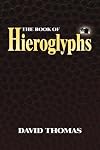
Not just a collection of Thomas' Pere Ubu lyrics, but more. The essays on his creative process, magnetic recording (mics, etc.) and more bookending the lyrics are themselves worth the money. Also fascinating (and explained herein) is the lyrics categorization: not my album but pinned to the map of an imagined America.
ISBN: 9781471728204
ISBN: 9781471728204

Not only is there technical and creative notes on each track to Pere Ubu album 'Lady From Shanghai', but the book has contextual exposition with relevant highlights from the history of Pere Ubu marking 'Mirror Man' as very important point leading up to 'Lady From Shanghai'
Statistics
- Works
- 3
- Members
- 10
- Popularity
- #908,815
- Rating
- 3.3
- Reviews
- 3
- ISBNs
- 376
- Languages
- 11