
Peter S. Baker
Author of Introduction to Old English
About the Author
Peter S. Baker is Professor of English, specializing in medieval literature and the history of the English language, at the University of Virginia. His previous books include editions of Byrhthferth's Enchiridion (with Michael Lapidge, 1995) and The Anglo-Saxon Chronicle: A Collaborative Edition.
Works by Peter S. Baker
Associated Works
Tagged
Common Knowledge
- Legal name
- Baker, Peter Stuart
- Other names
- BAKER, Peter Stuart
BAKER, Peter - Birthdate
- 1952
- Gender
- male
- Education
- Columbia University (B.A.|1974)
Yale University (Ph.D.|1978) - Occupations
- professor
Members
Reviews
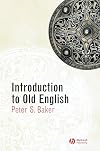
A solid introduction that can easily be used by someone with no prior knowledge of Old English. Baker’s book is well organized, easy to reference, and for the most part, clear with its explanations. I have read several books on the Old English language, and this is easily one of the best. It has different chapters on different parts of speech; he uses headings and subheadings to make it easy to go back and check something. He incorporates “minitexts” throughout, which are short, show more usually only about a paragraph in length. He has longer texts at the back. The glossary is clear and complete, telling not only a word’s meaning, but also to which category it belongs (e.g., “class 3 verb,” “weak adjective”).
The biggest problem with it is its online component. It is designed to be used side-by-side with online elements, which means that it is incomplete on its own. Sadly, of the three URLs listed, none worked. Whatever website he had intended is gone, and the university that had been hosting it seems to be no longer connected to Baker or his book. This meant that a lot was missing from my experience. Some things, such as the audio files for pronunciation, cannot exist in book form, for obvious reasons. But some of the absences irritated me. One of the chapters begins with the instruction to stop reading, go online, and print a chart that lists the different verb forms, pronouns, etc. It’s apparently just one page, a quick reference sheet. If it’s just one page, couldn’t he have put it in the book, too?
Good news, though! It looks as though the online content migrated to a different site. I’m guessing that the later editions of this book list the current URL, and that my experience would only apply to people who use the first edition. However, it seems like some of the content has changed, for both the books and the site. Some of the online things my book tells me to use aren’t there, and some of what is online is slightly confusing because it doesn’t follow the layout of the first edition book. (So Mr. Baker, if you’re reading this, maybe you could put some explanations on the site, too?) Something simple, like “The second syllable is emphasized because the first syllable is a prefix” or whatever the reason is. Don’t get me wrong; the site is great. It’s full of practice exercises, and it tells me whether my answers are right or wrong. It’s glorious! It’s like one of those educational computer games that kids play in grade school computer labs. It’s fun, like a game, but still informative. It’s a way to test yourself and see how much you understand the topic. But sometimes, even having read this book, I’m still not sure WHY some answers are what they are. (But hey! This is still miles beyond the other resources out there, so I’m not complaining!) I suspect that my confusion has less to do with the format of the site, than with the different layouts of the earlier edition of the book. I think the site is a better fit for the current edition.
I suspect that if I had the most recent edition, this would easily be 5 stars. Even without the online portion, it’s a solid 4.5. Lots of good information, and not overwhelming for a novice. I highly recommend this to anyone studying Old English. show less
The biggest problem with it is its online component. It is designed to be used side-by-side with online elements, which means that it is incomplete on its own. Sadly, of the three URLs listed, none worked. Whatever website he had intended is gone, and the university that had been hosting it seems to be no longer connected to Baker or his book. This meant that a lot was missing from my experience. Some things, such as the audio files for pronunciation, cannot exist in book form, for obvious reasons. But some of the absences irritated me. One of the chapters begins with the instruction to stop reading, go online, and print a chart that lists the different verb forms, pronouns, etc. It’s apparently just one page, a quick reference sheet. If it’s just one page, couldn’t he have put it in the book, too?
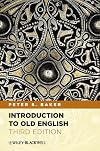
Good news, though! It looks as though the online content migrated to a different site. I’m guessing that the later editions of this book list the current URL, and that my experience would only apply to people who use the first edition. However, it seems like some of the content has changed, for both the books and the site. Some of the online things my book tells me to use aren’t there, and some of what is online is slightly confusing because it doesn’t follow the layout of the first edition book. (So Mr. Baker, if you’re reading this, maybe you could put some explanations on the site, too?) Something simple, like “The second syllable is emphasized because the first syllable is a prefix” or whatever the reason is. Don’t get me wrong; the site is great. It’s full of practice exercises, and it tells me whether my answers are right or wrong. It’s glorious! It’s like one of those educational computer games that kids play in grade school computer labs. It’s fun, like a game, but still informative. It’s a way to test yourself and see how much you understand the topic. But sometimes, even having read this book, I’m still not sure WHY some answers are what they are. (But hey! This is still miles beyond the other resources out there, so I’m not complaining!) I suspect that my confusion has less to do with the format of the site, than with the different layouts of the earlier edition of the book. I think the site is a better fit for the current edition.
I suspect that if I had the most recent edition, this would easily be 5 stars. Even without the online portion, it’s a solid 4.5. Lots of good information, and not overwhelming for a novice. I highly recommend this to anyone studying Old English. show less
A decent introduction to Old English as a language and as a translation tool. In the course in which I used the text, we did need to supplement the text with outside material - it wasn't great at explaining the reasons for things (for example, what the different cases mean in terms a present day English speaker can understand), but the publisher/author's website contained a lot of additional material that was quite helpful.

A decent introduction to Old English as a language and as a translation tool.
Lists
You May Also Like


Associated Authors
Statistics
- Works
- 5
- Also by
- 2
- Members
- 499
- Popularity
- #49,588
- Rating
- 4.0
- Reviews
- 4
- ISBNs
- 16