
James R. Delisle
Author of When Gifted Kids Don't Have All the Answers: How to Meet Their Social and Emotional Needs
About the Author
James R. Delisle, Ph.D., has taught gifted children and those who work on their behalf for more than 40 years. He retired from Kent State University after 25 years of service as a professor of special education. He is the author of more than 250 articles and 21 books, and his work has been show more translated into multiple languages and featured in both professional journals and popular media. show less
Works by James R. Delisle
When Gifted Kids Don't Have All the Answers: How to Meet Their Social and Emotional Needs (2002) 74 copies, 1 review
Growing Good Kids: 28 Activities to Enhance Self-Awareness, Compassion, and Leadership (The Free Spirited Classroom) (1996) — Author — 35 copies
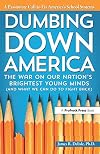
Dumbing Down America: The War on Our Nation's Brightest Young Minds (And What We Can Do to Fight Back) (2014) 28 copies, 8 reviews
The Survival Guide for Teachers of Gifted Kids: How to Plan, Manage, and Evaluate Programs for Gifted Youth K-12 (2003) 18 copies
Doing Poorly on Purpose: Strategies to Reverse Underachievement and Respect Student Dignity (2017) 16 copies
Guiding the Social and Emotional Development of Gifted Youth: A Practical Guide for Educators and Counselors (1992) 6 copies
Gifted Kids Speak Out: Hundreds of Kids Ages 6-13 Talk About School, Friends, Their Families, and the Future (1987) 6 copies
Tagged
Common Knowledge
- Gender
- male
- Nationality
- USA
- Places of residence
- Washington, D.C., USA
North Myrtle Beach, South Carolina, USA - Associated Place (for map)
- USA
Members
Reviews
Dumbing Down America: The War on Our Nation's Brightest Young Minds (And What We Can Do to Fight Back) by James Delisle Ph.D.
(While the use of the word 'gifted' for these accelerated programs is something many people dislike I use it here since it's the term that was used when I was growing up and it's used in this book. My siblings and I all went through gifted programs and I talked a lot to my mom about it while trying to get through this book.)
By page XV of the preface of this book the author shows just how un-gifted he is. I could not get past page 30 in this book, it made me so angry (not for the right show more reasons) and even sitting down to write this review has my heart beating faster than is normal.
In the preface the author states that gifted children are “our nation's most neglected minority.” While the cover of the book says this is “a passionate call to fix America's school systems” he is actually ONLY concerned with gifted programs, and states that is the most important thing to fix first. Well, no. While I understand that his dislike of the statement that gifted children will just take care of themselves, the ones IN gifted programs largely will (yes, parents have to help). It's the gifted children who are not tested, whose parents don't want them in 'special' classes, or who are already turned off by the system who are done the greater disservice.
Delisle also spends time talking about how, NO, gifted programs are not at all racist, classist, ableist, etc... Which, the idea in abstract isn't, but it's PEOPLE who run these programs. All of us in the US have issues with latent racism, misogny, and ableism just from growing up in this culture, and it's incredibly ignorant to think that teachers are immune from this (not to mention the teachers who are overtly racist, etc...). Parents often don't know the gifted programs exist in a school, and it's teachers who pick children for testing and who administer the tests. In my school I know for a fact classism featured in who the teachers paid academic attention to. There were at least three children who definitely should have been in our gifted classes but they had the misfortune of not just being poor, but poor and dirty. They always did well in class but it wasn't until middle school that a good teacher looked past their exteriors and focused on their intelligence (everyone in my gifted program was middle or upper middle class, by the way). He does not even admit the possibility of racist teachers, administrators, and counselors. I'm not sure where he's living, but it's not the US...
I am passionate about education, but fixing the 'regular' schooling will help far more gifted children than focusing on these programs will serve such a small minority (and with so many gifted children not in the program). Gifted programs need improvement as well, but it's just not that hard and those teachers usually have FAR more freedom in how and what they teach. Given the author's incredibly ignorant views about the role discrimination plays in this system, I don't see how I can give him any credence in his other views. show less
By page XV of the preface of this book the author shows just how un-gifted he is. I could not get past page 30 in this book, it made me so angry (not for the right show more reasons) and even sitting down to write this review has my heart beating faster than is normal.
In the preface the author states that gifted children are “our nation's most neglected minority.” While the cover of the book says this is “a passionate call to fix America's school systems” he is actually ONLY concerned with gifted programs, and states that is the most important thing to fix first. Well, no. While I understand that his dislike of the statement that gifted children will just take care of themselves, the ones IN gifted programs largely will (yes, parents have to help). It's the gifted children who are not tested, whose parents don't want them in 'special' classes, or who are already turned off by the system who are done the greater disservice.
Delisle also spends time talking about how, NO, gifted programs are not at all racist, classist, ableist, etc... Which, the idea in abstract isn't, but it's PEOPLE who run these programs. All of us in the US have issues with latent racism, misogny, and ableism just from growing up in this culture, and it's incredibly ignorant to think that teachers are immune from this (not to mention the teachers who are overtly racist, etc...). Parents often don't know the gifted programs exist in a school, and it's teachers who pick children for testing and who administer the tests. In my school I know for a fact classism featured in who the teachers paid academic attention to. There were at least three children who definitely should have been in our gifted classes but they had the misfortune of not just being poor, but poor and dirty. They always did well in class but it wasn't until middle school that a good teacher looked past their exteriors and focused on their intelligence (everyone in my gifted program was middle or upper middle class, by the way). He does not even admit the possibility of racist teachers, administrators, and counselors. I'm not sure where he's living, but it's not the US...
I am passionate about education, but fixing the 'regular' schooling will help far more gifted children than focusing on these programs will serve such a small minority (and with so many gifted children not in the program). Gifted programs need improvement as well, but it's just not that hard and those teachers usually have FAR more freedom in how and what they teach. Given the author's incredibly ignorant views about the role discrimination plays in this system, I don't see how I can give him any credence in his other views. show less
 This review was written for LibraryThing Early Reviewers.
Dumbing Down America: The War on Our Nation's Brightest Young Minds (And What We Can Do to Fight Back) by James Delisle Ph.D.
'Dumbing Down America' by James R. Delisle makes a compelling argument for improving the education of gifted children. Unfortunately, his enthusiasm for the subject makes it virtually impossible to appreciate his points. Delisle was not objective in the least, creating a book that is almost unbearable to read. I support gifted programs but the condescending way the author refers to everything he disagrees with was embarrassing. I wish Delisle could have made his important points in a show more different way. The best way to explain it is through a quote Delisle made about another education advocate, Alfie Kohn, which sadly, also applies to himself " (his) good points about how to improve instruction for all students get lost in his biased rhetoric that serves little purpose other than to inflame his readers" (page 60).
Delisle's condescending attitude permiates the book. From his unnecessary and ignorant statements, one can only assume he lives a sheltered life and believes all southern people to be ignorant. After chastising states for not adopting Common Core Standards, Delisle addresses the next set of standards to possibly be adopted, Next Generation Science Standards. His impression of the south is "If you think it was a maelstrom in states like South Carolina when it came to standards that dealt with Shakespeare and Pythagoras, can you imagine the hues and cries when science standards that raise the specters of climate change and evolution come up for adoption? The Luddites are likely to come out in full force when these"theories" are announced as being scientific enough in origin that our children should learn about them in school. (page 108)." I don't know what he thinks happens in schools, but these issues are discussed. This jab at the south was completely unnecessary and does nothing to help his cause. Why couldn't he have left his opinions to himself? All it does is make him sound prejudiced.
The newest teaching practice, teaching the 4 C's (Critical Thinking, Communication, Collaboration, and Creativity) seem to suit gifted students, according to the author. Insisting that the gifted child knows everything in their grade level and is bored, the best teachers can do is have the students create projects. I don't think we can make this assumption and don't know how Delisle can make it when he dislikes testing. From the text, I inferred that what he advocates is finding an area the gifted children are interested in and do projects - aka, the problem-based learning. While I think this is important, I think a base of knowledge is a neglected and just as important aspect of education. I do appreciate the author's questioning of the current obsession with STEM in education. No one seems to question it. I don't know if this is the way of the future or a fad, but as someone who adores the Humanities, I don't know why we are basically throwing them out. While math and science is important for many careers, the Humanities are important for living. To repeat a fantastic Bob Schultz quote from the book: "The Humanities teach us all how to interact with others; how to see our lives through the eyes and viewpoints of others. Philosophy allows us to grapple with big ideas and realization that some questions just don't have answers that are permanent. Theatre and visual and performing arts teach us how to communicate and express ourselves effectively. We need more than science, technology, engineering, mathematics, or medicine. We need individuals who are thinkers, tinkerers, and dreamers" (page 161).
Not only are people, cultures, and politicians objects of Delisle's disgust - corporations are, too. After presenting a plea to businesses to support gifted students with grants and money (which they do), he then chastises these companies for contributing to "math and science education, vocational education, early childhood assistance to at-risk young learners, and small-scale teacher grants to buy basic school supplies" (page 194). I don't know much about asking for help, but I'm 100% sure the way to beg isn't to tell people that poor children shouldn't receive help. I also question the author's insistence that none of these grants benefit gifted children. How do you know the math and science grants aren't used for them? Don't gifted children earn scholarships? They surely use the school supplies.
But if I were to ignore all those troublesome things, it still would not make the author's disability argument palatable. Delisle argues that we spend too much money educating disabled people. He seems to think the current practice of integrating disabled people in the classroom costs too much money - money that should be spent on gifted students. The only conclusion I can take from his argument is that disabled people - like myself - should be segregated. While my physical disability required no assistance, I fought very hard to be accepted by my peers and found these arguments incredibly disgusting. I understand the author's passion. Everyone wants money for their cause and never think it's enough, but Delisle is so obsessed with the plight of the gifted student, that he obviously did not notice his repulsive insinuations about disabled people. Maybe we should all just be put back up in the attics?
Calling this book a disappointment is an understatement. While I was looking for a well-rounded, objective book explaining the plight of gifted students and ways in which to better their situation, I found defamation and ignorance. So if you are looking for a prejudice-laden, grandstanding book which insists gifted students are the only people that matter, this book is for you, James. The rest of us educators value ALL of our students. show less
Delisle's condescending attitude permiates the book. From his unnecessary and ignorant statements, one can only assume he lives a sheltered life and believes all southern people to be ignorant. After chastising states for not adopting Common Core Standards, Delisle addresses the next set of standards to possibly be adopted, Next Generation Science Standards. His impression of the south is "If you think it was a maelstrom in states like South Carolina when it came to standards that dealt with Shakespeare and Pythagoras, can you imagine the hues and cries when science standards that raise the specters of climate change and evolution come up for adoption? The Luddites are likely to come out in full force when these"theories" are announced as being scientific enough in origin that our children should learn about them in school. (page 108)." I don't know what he thinks happens in schools, but these issues are discussed. This jab at the south was completely unnecessary and does nothing to help his cause. Why couldn't he have left his opinions to himself? All it does is make him sound prejudiced.
The newest teaching practice, teaching the 4 C's (Critical Thinking, Communication, Collaboration, and Creativity) seem to suit gifted students, according to the author. Insisting that the gifted child knows everything in their grade level and is bored, the best teachers can do is have the students create projects. I don't think we can make this assumption and don't know how Delisle can make it when he dislikes testing. From the text, I inferred that what he advocates is finding an area the gifted children are interested in and do projects - aka, the problem-based learning. While I think this is important, I think a base of knowledge is a neglected and just as important aspect of education. I do appreciate the author's questioning of the current obsession with STEM in education. No one seems to question it. I don't know if this is the way of the future or a fad, but as someone who adores the Humanities, I don't know why we are basically throwing them out. While math and science is important for many careers, the Humanities are important for living. To repeat a fantastic Bob Schultz quote from the book: "The Humanities teach us all how to interact with others; how to see our lives through the eyes and viewpoints of others. Philosophy allows us to grapple with big ideas and realization that some questions just don't have answers that are permanent. Theatre and visual and performing arts teach us how to communicate and express ourselves effectively. We need more than science, technology, engineering, mathematics, or medicine. We need individuals who are thinkers, tinkerers, and dreamers" (page 161).
Not only are people, cultures, and politicians objects of Delisle's disgust - corporations are, too. After presenting a plea to businesses to support gifted students with grants and money (which they do), he then chastises these companies for contributing to "math and science education, vocational education, early childhood assistance to at-risk young learners, and small-scale teacher grants to buy basic school supplies" (page 194). I don't know much about asking for help, but I'm 100% sure the way to beg isn't to tell people that poor children shouldn't receive help. I also question the author's insistence that none of these grants benefit gifted children. How do you know the math and science grants aren't used for them? Don't gifted children earn scholarships? They surely use the school supplies.
But if I were to ignore all those troublesome things, it still would not make the author's disability argument palatable. Delisle argues that we spend too much money educating disabled people. He seems to think the current practice of integrating disabled people in the classroom costs too much money - money that should be spent on gifted students. The only conclusion I can take from his argument is that disabled people - like myself - should be segregated. While my physical disability required no assistance, I fought very hard to be accepted by my peers and found these arguments incredibly disgusting. I understand the author's passion. Everyone wants money for their cause and never think it's enough, but Delisle is so obsessed with the plight of the gifted student, that he obviously did not notice his repulsive insinuations about disabled people. Maybe we should all just be put back up in the attics?
Calling this book a disappointment is an understatement. While I was looking for a well-rounded, objective book explaining the plight of gifted students and ways in which to better their situation, I found defamation and ignorance. So if you are looking for a prejudice-laden, grandstanding book which insists gifted students are the only people that matter, this book is for you, James. The rest of us educators value ALL of our students. show less
This review was written for LibraryThing Early Reviewers.Dumbing Down America: The War on Our Nation's Brightest Young Minds (And What We Can Do to Fight Back) by James Delisle Ph.D.
This is not the book to convince others gifted education is necessary.
Quite honestly, that's it's biggest drawback. Without convincing readers that they should want good education for gifted students, many of this audience bail out early. Delisle spends much of the book advocating for casting a wider net in the search for the gifted, bemoaning how gifted minority children and brilliant kids from low-income households aren't being pulled into the gifted programs enough....and yet people show more "can't get past page 30" because they don't think he takes these issues seriously. I don't mean that as a criticism of other reviewers; this is a failure on the author's part to engage his audience. I don't believe this book was originally written to be a layman's introduction to gifted education, but ended up being marketed as such. There were several places where the author slipped into a more casual and snarky way of speaking; while these mildly irked me, I was already on board with his main argument. A reader that wasn't would have abandoned ship.
This book focuses on how many popular approaches to handling gifted students in the classroom are inadequate and even counter-productive, and which ones actually work, with an emphasis on administration. There's a large focus on identifying gifted children that don't "look gifted," and on dispelling old wives' tales about how gifted children will do just fine if they're not challenged. As a result, it's more of a guide for administrators at the district level or higher, and for parents of gifted students wondering what they should even be looking for in a school.
Delisle makes a compelling case for disparate groups to join forces and work together to increase funding, but I think his failure to win over a skeptical audience really hampers this goal. show less
Quite honestly, that's it's biggest drawback. Without convincing readers that they should want good education for gifted students, many of this audience bail out early. Delisle spends much of the book advocating for casting a wider net in the search for the gifted, bemoaning how gifted minority children and brilliant kids from low-income households aren't being pulled into the gifted programs enough....and yet people show more "can't get past page 30" because they don't think he takes these issues seriously. I don't mean that as a criticism of other reviewers; this is a failure on the author's part to engage his audience. I don't believe this book was originally written to be a layman's introduction to gifted education, but ended up being marketed as such. There were several places where the author slipped into a more casual and snarky way of speaking; while these mildly irked me, I was already on board with his main argument. A reader that wasn't would have abandoned ship.
This book focuses on how many popular approaches to handling gifted students in the classroom are inadequate and even counter-productive, and which ones actually work, with an emphasis on administration. There's a large focus on identifying gifted children that don't "look gifted," and on dispelling old wives' tales about how gifted children will do just fine if they're not challenged. As a result, it's more of a guide for administrators at the district level or higher, and for parents of gifted students wondering what they should even be looking for in a school.
Delisle makes a compelling case for disparate groups to join forces and work together to increase funding, but I think his failure to win over a skeptical audience really hampers this goal. show less
Dumbing Down America: The War on Our Nation's Brightest Young Minds (And What We Can Do to Fight Back) by James Delisle Ph.D.
Received book edition from LibraryThing Early Reviewer program.
Hoo boy. Interesting concept, poor execution. "No Child Left Behind" really meant "No Child Gets Ahead" according to many people that I know, but this book takes that idea too far and in a fairly offensive manner. It's easy to take egalitarianism too far, but this book is not the way to argue against that tendency. Boo, don't waste your time.
An important problem that I didn't see addressed is that 'gifted' students generally have show more an easier time of autodidactism, so they don't need the same attention (and thus spending) as less-naturally-talented students. show less
Hoo boy. Interesting concept, poor execution. "No Child Left Behind" really meant "No Child Gets Ahead" according to many people that I know, but this book takes that idea too far and in a fairly offensive manner. It's easy to take egalitarianism too far, but this book is not the way to argue against that tendency. Boo, don't waste your time.
An important problem that I didn't see addressed is that 'gifted' students generally have show more an easier time of autodidactism, so they don't need the same attention (and thus spending) as less-naturally-talented students. show less
This review was written for LibraryThing Early Reviewers.You May Also Like


Statistics
- Works
- 19
- Members
- 348
- Popularity
- #68,678
- Rating
- 3.5
- Reviews
- 18
- ISBNs
- 40
