
Bo Giertz (1905–1998)
Author of The Hammer of God
About the Author
Bo Giertz (1905-1998), Bishop of Gothenburg in the Lutheran Church of Sweden, was voted the most influential Swedish church leader during the 1900s. He penned no less than thirty books. Christ's Church was his first, written at the age of thirty-three.
Image credit: Swedish wikipedia, out of copyright
Works by Bo Giertz
Christs Church: Her Biblical Roots, Her Dramatic History, Her Saving Presence, Her Glorious Future (1985) 52 copies
Den stora lögnen och den stora sanningen : femton kapitel om kristna grundsanningar (1993) 14 copies
Förklaringar till Nya testamentet. D. 2, Johannes, Apostlagärningarna, Romarbrevet, Korintierbreven (1985) 13 copies
Förklaringar till Nya testamentet. D. 1, Matteusevangeliet, Markusevangeliet, Lukasevangeliet (1984) 13 copies
The New Testament Devotional Commentary, Volume 1: Matthew, Mark, and Luke (The New Testament Devotional Commentaries) (2021) 8 copies
Kampen om människan 5 copies
The New Testament Devotional Commentary, Volume 2: John, Acts, Romans, 1 & 2 Corinthians (2022) 4 copies
Tessalonikerbreven och Pastoralbreven på modern svenska med korta förklaringar för lekmän (1981) 4 copies
Rätt och orätt i sexuallivet 3 copies
Vad säger Guds ord? 3 copies
A Year of Grace, Volume 2: Collected Sermons Covering the Season of Pentecost/Trinity (2019) 3 copies
The New Testament Devotional Commentary, Volume 3: Galatians through Revelation (The New Testament Devotional Commentaries) (2023) 2 copies
Herdabrev 2 copies
Till Bo Giertz 31 augusti 1965 2 copies
Hammer of God, Revised Edition 2 copies
Varför just Kristus? 1 copy
Gå därför åstad --- 1 copy
Að ljúka upp Biblíunni 1 copy
Jumalasta voi tietää 1 copy
Kärlekens evangelium 1 copy
Vad kyrkan lär om arvsynden 1 copy
Taistelu ihmisestä 1 copy
På biblisk grund - föredrag vid Nordiska studentmötet På biblisk grund i Örebro 4-9 juli 1946 1 copy
Í grýtta jörð : skáldsaga 1 copy
Afrikanska överraskningar 1 copy
Riddarna p ̄Rhodos 1 copy
Tagged
Common Knowledge
- Canonical name
- Giertz, Bo
- Legal name
- Giertz, Bo Harald
- Birthdate
- 1905-08-31
- Date of death
- 1998-07-12
- Gender
- male
- Occupations
- bishop
- Organizations
- Church of Sweden
- Nationality
- Sweden (birth)
- Places of residence
- Uppsala, Schweden
Linköping, Schweden
Torpa, Schwedden
Göteborg, Schweden - Associated Place (for map)
- Sweden
Members
Reviews
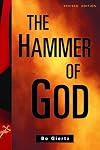
What does it mean to really follow Jesus? In some circles today that is a frequently heard question, one that implies that what may be considered the traditional forms of church and Christian belief are no longer valid and relevant. The tacit belief is that Christianity must evolve in order to have any relevance for our day. That question lies beneath the surface of each of the three novellas of Bo Giertz, published as a collection under the title The Hammer of God.
Giertz was a pastor and show more bishop in Sweden during the latter half of the 20th century. He has set the three novellas within the same church, during three separate time periods: 1808-10, 1878-80 and 1938-40. The stories also have in common that the protagonist in each novella is a young pastor on his first assignment since finishing seminary. In the first two stories the young pastor works as an associate, whom he has disdain for, albeit for very different reasons. In the last story the young pastor is feeling is way alone in a church and culture that bears a striking similarity to our own in its increasing disregard for anything that claims to assert truth as an objective claim with authority over the subjectivity of feelings .
As each story progresses the central character learns what it means to truly believe in Jesus and the word of God as written in the Bible. They learn that Christ, and Christ alone, is the only solid ground from which they can live their live. They learn the enduring value of relying on answers, expressed in the ecumenical creeds, that the church has developed to set boundaries to acceptable belief. They learn, in real and practical terms, that to follow Christ means not following along in the ways of the culture around them. And they learn these lessons through compelling storytelling, with a wide range of secondary characters and circumstances.
This is a work of fiction but from my own perspective as a pastor of a small Protestant church these novellas are permeated with the bread-and-butter concerns of ministry in the 21st century. Giertz may have written these stories in the mid-20th century however core issues the pastors face and the philosophies guiding their times remain relevant today. I found a lot in this work that echoed C.S. Lewis in The Abolition of Man, with people seeing no hazard in leaving the established moral truth that had long guided their culture for something they felt was a higher and more noble cause, to disastrous results.
In the end, from both points-of-view I held as I read, pastor and general reader, I found The Hammer of God to be a delightful book. show less
Giertz was a pastor and show more bishop in Sweden during the latter half of the 20th century. He has set the three novellas within the same church, during three separate time periods: 1808-10, 1878-80 and 1938-40. The stories also have in common that the protagonist in each novella is a young pastor on his first assignment since finishing seminary. In the first two stories the young pastor works as an associate, whom he has disdain for, albeit for very different reasons. In the last story the young pastor is feeling is way alone in a church and culture that bears a striking similarity to our own in its increasing disregard for anything that claims to assert truth as an objective claim with authority over the subjectivity of feelings .
As each story progresses the central character learns what it means to truly believe in Jesus and the word of God as written in the Bible. They learn that Christ, and Christ alone, is the only solid ground from which they can live their live. They learn the enduring value of relying on answers, expressed in the ecumenical creeds, that the church has developed to set boundaries to acceptable belief. They learn, in real and practical terms, that to follow Christ means not following along in the ways of the culture around them. And they learn these lessons through compelling storytelling, with a wide range of secondary characters and circumstances.
This is a work of fiction but from my own perspective as a pastor of a small Protestant church these novellas are permeated with the bread-and-butter concerns of ministry in the 21st century. Giertz may have written these stories in the mid-20th century however core issues the pastors face and the philosophies guiding their times remain relevant today. I found a lot in this work that echoed C.S. Lewis in The Abolition of Man, with people seeing no hazard in leaving the established moral truth that had long guided their culture for something they felt was a higher and more noble cause, to disastrous results.
In the end, from both points-of-view I held as I read, pastor and general reader, I found The Hammer of God to be a delightful book. show less
The Hammer of God was written more than half a century ago by Bo Giertz, a Swedish bishop, and is set in rural Sweden. It contains three linked stories of young pastors serving the same parish at different times – in the early 1800s, later 1800s, and the 1940s. The stories are far away in time and space, but they are gripping and relevant. They show the kind of wonky thinking that can pop up anywhere where Christian faith latches onto anything other than Jesus. The stories also show the show more dangers of taking pride in being the keeper of a more “authentic” Christianity than those around you.
More... http://thequietyell.wordpress.com/2013/01/17/the-hammer-of-god/ show less
More... http://thequietyell.wordpress.com/2013/01/17/the-hammer-of-god/ show less
I'd been wanting to get my hands on this book for a couple of years and finally borrowed it from the local Lutheran seminary. It's a collection of three novellas, set respectively in the early 1800s, late 1800s, and early WWII, about young pastors coming to grips with the power of the gospel, often out of various kinds of revivalist and rationalist formation in seminary. It wasn't so much the stories or characterization that I found compelling, though the settings in various periods of show more Scandinavian Lutheran church history were interesting. It was the unadulterated presentation of the gospel, from a robustly Lutheran perspective, that I found refreshing. It had strong similarities to my own Reformed molding in the gospel, to a degree that even surprised me, though I'm sure I could parse out points of difference if I'd been looking to read it that way. The translation from Swedish was a little bumpy at times.
I would recommend this to seminarians, young pastors in need of encouragement, and anyone who wants to know (or be reminded) why the classical Protestant articulation of the gospel remains earth-shattering to many today. There's a fullness and churchliness to it that abbreviated evangelical treatments of the gospel don't always capture, though I've read exceptions.
Learned of it here: http://thegospelcoalition.org/blogs/tullian/2011/06/30/the-whole-debt-is-paid/ show less
I would recommend this to seminarians, young pastors in need of encouragement, and anyone who wants to know (or be reminded) why the classical Protestant articulation of the gospel remains earth-shattering to many today. There's a fullness and churchliness to it that abbreviated evangelical treatments of the gospel don't always capture, though I've read exceptions.
Learned of it here: http://thegospelcoalition.org/blogs/tullian/2011/06/30/the-whole-debt-is-paid/ show less
Such a good read - well-written and thoughtful, stirring and humbling.
Lists
You May Also Like


Statistics
- Works
- 87
- Members
- 1,297
- Popularity
- #19,796
- Rating
- 4.2
- Reviews
- 9
- ISBNs
- 144
- Languages
- 6
- Favorited
- 1