
Marjorie Heins
Author of Not In Front of the Children: "Indecency," Censorship, and the Innocence of Youth
About the Author
Marjorie Heins is a former civil liberties lawyer and author of several books, among them: "Priests of Our Democracy: The Supreme Court, Academic Freedom, and the Anti-Communist Purge," which won the Hugh M. Hefner First Amendment Award in Book Publishing. Her other title's include: "Not in Front show more of the Children: Indecency, Censorship, and the Innocence of Youth" (2nd edition, 2007), which won the American Library Association's Eli Oboler Award for best published work in the field of intellectual freedom; and "Ironies and Complications of Free Speech," a collection of news and commentary from the Free Expression Policy Project, which she directed from 2001-2017. In the 1990s, she directed the Arts Censorship Project at the ACLU. She has also been a fellow at the Brennan Center for Justice, the Open Society Institute, and the Frederic Ewen Center for Academic Freedom. She lives in Manhattan and volunteers as a tour guide at the Metropolitan Museum of Art. (Bowker Author Biography) show less
Works by Marjorie Heins
Not In Front of the Children: "Indecency," Censorship, and the Innocence of Youth (2001) 146 copies, 5 reviews
Priests of Our Democracy: The Supreme Court, Academic Freedom, and the Anti-Communist Purge (2013) 11 copies
Associated Works
Tagged
Common Knowledge
- Gender
- female
- Education
- Harvard Law School (JD | 1978)
Cornell University (BA | 1967) - Occupations
- professor
journalist
lawyer - Organizations
- American Civil Liberties Union
Free Expression Policy Project (founder)
Frederic Ewen Academic Freedom Center - Awards and honors
- Open Society Institute Fellow (1998-2000)
- Nationality
- USA
- Places of residence
- New York, New York, USA
- Associated Place (for map)
- New York, USA
Members
Reviews
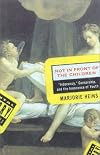
A quote:
"The ponderous, humorless over literalism of so much censorship directed at youth not only takes the fun, ambiguity, cathartic function, and irony out of the world of imagination and creativity, it reduces the difficult, complicated, joyous, and sometimes tortured experience of growing up to a sanitized combination of adult moralizing and intellectual closed doors."
This book is a legal history of censorship and intellectual freedom written by a lawyer who, when the book was written, show more is director of the Free Expression Policy Project at the National Coalition Against Censorship. It chronicles the advent and life of censorship. The book is interesting and well-written. Most importantly when dealing with a legal/academic subject for lay people, it is easy to read.
Beginning with the introduction of the concept of childhood and continuing with what that concept has done to laws, the book looks at major cases that have led to where we are now. Along with the anecdotal case, social science is critiqued and acclaimed as it was used to justify arguments in each case. Censorship all over the world, with Europe being the most covered, is also discussed. The book ends with a chapter on the social science findings and ambiguities that have come up over the years.
Not all of the concepts were new to me, although it was very interesting to read all of the different ways that censorship has been applied over the years. It is ironic that many of the things that these laws are designed to shield young people from are actually created by the youth themselves. I find it intriguing that the way we choose to protect children is by keeping knowledge and truth from them. Of course, there is a time to discover, but that time is not on a schedule. Putting an age on acquiring knowledge is short-sighted and simplistic. show less
"The ponderous, humorless over literalism of so much censorship directed at youth not only takes the fun, ambiguity, cathartic function, and irony out of the world of imagination and creativity, it reduces the difficult, complicated, joyous, and sometimes tortured experience of growing up to a sanitized combination of adult moralizing and intellectual closed doors."
This book is a legal history of censorship and intellectual freedom written by a lawyer who, when the book was written, show more is director of the Free Expression Policy Project at the National Coalition Against Censorship. It chronicles the advent and life of censorship. The book is interesting and well-written. Most importantly when dealing with a legal/academic subject for lay people, it is easy to read.
Beginning with the introduction of the concept of childhood and continuing with what that concept has done to laws, the book looks at major cases that have led to where we are now. Along with the anecdotal case, social science is critiqued and acclaimed as it was used to justify arguments in each case. Censorship all over the world, with Europe being the most covered, is also discussed. The book ends with a chapter on the social science findings and ambiguities that have come up over the years.
Not all of the concepts were new to me, although it was very interesting to read all of the different ways that censorship has been applied over the years. It is ironic that many of the things that these laws are designed to shield young people from are actually created by the youth themselves. I find it intriguing that the way we choose to protect children is by keeping knowledge and truth from them. Of course, there is a time to discover, but that time is not on a schedule. Putting an age on acquiring knowledge is short-sighted and simplistic. show less
Not in Front of the Children: ' Indecency,' Censorship, and the Innocence of Youth by Marjorie Heins
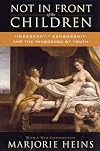
Censorship has been used throughout the years to "protect" children, women, the mentally deficient and the socially inferior classes who are simply to fragile or vulnerable to be exposed to dangerous and challenging ideas.
This book takes a look at the history of the censorship and the attempts to control the expression of ideas and thoughts using the threat to and protection of the innocent. Even if no one can ever clearly explain and prove what that threat is.
It was a bit hard to get show more through at times due to all the legalese, scientific studies and court cases that are referred to which makes for dry reading, but in between all of that was some really good, eye opening points about censorship in our country through the years.
I came into this with a pretty clear cut idea of what I thought about censorship and using it to protect children, and while my opinions on this haven't really changed I at least have a better appreciation for how complicated the issue is. show less
This book takes a look at the history of the censorship and the attempts to control the expression of ideas and thoughts using the threat to and protection of the innocent. Even if no one can ever clearly explain and prove what that threat is.
It was a bit hard to get show more through at times due to all the legalese, scientific studies and court cases that are referred to which makes for dry reading, but in between all of that was some really good, eye opening points about censorship in our country through the years.
I came into this with a pretty clear cut idea of what I thought about censorship and using it to protect children, and while my opinions on this haven't really changed I at least have a better appreciation for how complicated the issue is. show less
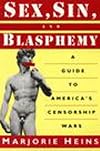
Although I am a fan of Heins's work in promoting free speech and of her other work, Not in Front of the Children, this one felt somewhat harried and incomplete. This is a good introduction and well-written as is characteristic of Heins, but it could have done quite a bit more.
Out of all the books and research I've done on censorship and First Amendment issues, this one is the most easily-digestible, comprehensive, and non-dogmatic. A must-read for Free Speech advocates.
Awards

You May Also Like


Associated Authors
Statistics
- Works
- 10
- Also by
- 1
- Members
- 238
- Popularity
- #95,269
- Rating
- 3.9
- Reviews
- 6
- ISBNs
- 15