
Judith Levine (1) (1952–)
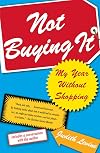
Author of Not Buying It: My Year Without Shopping
For other authors named Judith Levine, see the disambiguation page.
About the Author
Judith A. Levine is Assistant Professor of Sociology and Women's Studies at Temple University.
Image credit: Judith Levine
Works by Judith Levine
The Feminist and the Sex Offender: Confronting Sexual Harm, Ending State Violence (2020) 58 copies, 2 reviews
Associated Works
One Big Happy Family: 18 Writers Talk About Open Adoption, Mixed Marriage, Polyamory, Househusbandry, Single Motherhood, and Other Realities of Truly Modern Love (2009) — Contributor — 116 copies, 6 reviews
Tagged
Common Knowledge
Members
Reviews
Three years after reading this, I'm still pissed off about it. It was educational, but not about not shopping or our consumer culture; rather, it perfectly encapsulates a specific overprivileged mindset.
The idea is fascinating. The book is also fascinating, but only in the way a trainwreck is; the author announces she's only buying necessities, then decrees that everything is a necessity - the New York Times! Expensive haircuts! Basically, she spends the year not buying new clothes or show more dinners out. (And she manages to save $8000, which - wow, I do not spend 8k a year on new clothes and dinners out.)
That's problematic enough - seriously, I know people who never in their lives have bought even half the things she declared as essential; I know people who live on what she spends on dinners out and clothing in a year - but then there's the whining. Levine considers herself wildly underprivileged despite her two homes and three cars and new wardrobe every year, and she dedicates a lot of this book to explaining a) how she might look privileged, but she's not, because - she has to live in New York City (part of the time)! She'll die without real culture! (Which she refuses to pay for, and whines that the government should pay for, demonstrating a fascinating failure to understand where the government gets its money.) She has to have expensive clothes and glasses! They're part of her style and identity!
I just - especially now, thinking about how many of my friends have lost their jobs, and how they're really not buying it this year - I am so frustrated by this book that I could spit. I would like to see a person like Levine genuinely deconstruct her spending habits - force herself to stick to a tight budget, force herself to evaluate each item she spends. But she didn't have the guts to do it, and I'm only glad I didn't buy her book. show less
The idea is fascinating. The book is also fascinating, but only in the way a trainwreck is; the author announces she's only buying necessities, then decrees that everything is a necessity - the New York Times! Expensive haircuts! Basically, she spends the year not buying new clothes or show more dinners out. (And she manages to save $8000, which - wow, I do not spend 8k a year on new clothes and dinners out.)
That's problematic enough - seriously, I know people who never in their lives have bought even half the things she declared as essential; I know people who live on what she spends on dinners out and clothing in a year - but then there's the whining. Levine considers herself wildly underprivileged despite her two homes and three cars and new wardrobe every year, and she dedicates a lot of this book to explaining a) how she might look privileged, but she's not, because - she has to live in New York City (part of the time)! She'll die without real culture! (Which she refuses to pay for, and whines that the government should pay for, demonstrating a fascinating failure to understand where the government gets its money.) She has to have expensive clothes and glasses! They're part of her style and identity!
I just - especially now, thinking about how many of my friends have lost their jobs, and how they're really not buying it this year - I am so frustrated by this book that I could spit. I would like to see a person like Levine genuinely deconstruct her spending habits - force herself to stick to a tight budget, force herself to evaluate each item she spends. But she didn't have the guts to do it, and I'm only glad I didn't buy her book. show less
Fantastic read. Timely as I turn a bit inward (in a good way, I think), reduce my use of technology and social media and wrestle our own budget under control. I like her humanity as well. I recently tried reading a book on a similar topic and I found the author cold, judgemental, and apparently flawless in their pursuit of simplicity. It's not very motivating for me to read that.
Ms. Levine, on the other hand, still wants to buy stuff, struggles with the idea of "necessity" and shares the show more good and bad of her experience.
After reading another "1 year project" book in which it seemed the author's partner did little but belittle and ridicule her and her project, I liked how Ms. Levine's partner was. Refreshing to read a book where the author really likes the people in their lives. show less
Ms. Levine, on the other hand, still wants to buy stuff, struggles with the idea of "necessity" and shares the show more good and bad of her experience.
After reading another "1 year project" book in which it seemed the author's partner did little but belittle and ridicule her and her project, I liked how Ms. Levine's partner was. Refreshing to read a book where the author really likes the people in their lives. show less

I thought this account of an experiment in which the author buys nothing that is not a “necessity” — a rather loosely defined term, in this context — promised an insightful look at the rampant consumerism that marks our times. Instead, we get to ponder the absurdity of not buying anything while living in New York City, endure the author’s agonies over purchasing a $3 used shirt in a thrift store where the profits help homeless women (how less consumerist can you get?), and wonder show more why organic coffee is a necessity but dining out with friends is not. This book did make me think about commerce in general, about how using your dollars to support the things you value — such as local businesses, good books and independent music — is wiser than not buying anything at all, because that way, we all get to make a living. Besides, it was pretty obvious that Levine only wrote this book so she could have her entry in the nonfiction “here’s the crazy thing I tried for a while and what I learned from it” genre that was started by that woman who worked for minimum wage, and I have to kick myself for being such a sucker as to have actually bought this book. show less
A copy of this book was on the shelf in the room of an inn where we recently stayed in Vermont. Honest and funny, the idea of the story alone sucked me right in. Could I possibly give up buying books and/or going to movies for an entire year? Even though I'm a librarian with access to plenty of books, not to mention my shelves (like the authors) are loaded with unread titles, I found it hard to imagine. Levine does a wonderful job of sharing with the reader her experience, the revelations show more along the way, the ideas she struggles with around consumerism and her place in it. This is an easy read, but one that will leave you thinking for a long time after. show less
Lists
Awards

You May Also Like


Associated Authors
Statistics
- Works
- 7
- Also by
- 1
- Members
- 1,243
- Popularity
- #20,644
- Rating
- 3.3
- Reviews
- 62
- ISBNs
- 27
- Languages
- 3