

Horacio Domingues
Author of Incorruptible Vol. 2
Works by Horacio Domingues
Associated Works
Victorian Undead II : Sherlock Holmes vs Dracula (2011) — Illustrator, some editions — 42 copies, 6 reviews
Tagged
Common Knowledge
There is no Common Knowledge data for this author yet. You can help.
Members
Reviews
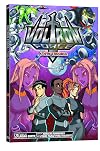
If I worried about guilty pleasure reading, which I thankfully don't, these Voltron Force comics would be on the list. Though I was introduced to the series via a previous year's CYBILs, I have continued reading them out of sheer nostalgic glee. The series wraps up with volume 6, but I would eagerly read further ones if they were ever published.
Voltron Force Volume 3: Twin Trouble by Brian Smith introduces Lotor's twin nieces. They request entry into the academy, claiming to be there with show more peaceful intentions. Their appearance opens up a can worms with characters taking sides: those for and against letting them in.
Ultimately Allura says yes, giving them the benefit of the doubt. Now given her own awkward personal history with Lotor, the cross species stalker, it was surprising to see her set aside years of experience with the hope that they were in fact telling the truth.
Now this being Voltron, there's always a moment of betrayal. It was predictable and inevitable. BUT in Volume 6 that apparent betrayal is called into question. As the series stops there, there's no real chance to revisit the twins and see where their loyalties really lie. show less
Voltron Force Volume 3: Twin Trouble by Brian Smith introduces Lotor's twin nieces. They request entry into the academy, claiming to be there with show more peaceful intentions. Their appearance opens up a can worms with characters taking sides: those for and against letting them in.
Ultimately Allura says yes, giving them the benefit of the doubt. Now given her own awkward personal history with Lotor, the cross species stalker, it was surprising to see her set aside years of experience with the hope that they were in fact telling the truth.
Now this being Voltron, there's always a moment of betrayal. It was predictable and inevitable. BUT in Volume 6 that apparent betrayal is called into question. As the series stops there, there's no real chance to revisit the twins and see where their loyalties really lie. show less

I will follow Paul Cornell anywhere, even to a Marvel limited series. Actually, this is pretty fun, with the realm of fiction coming under attack by that of nightmares. The Fantastic Four spring into action, of course, enlisting the help of the Dashwood sisters of Sense and Sensibility along the way. People who read Thursday Next (not me) will notice an influence, and Cornell acknowledges that, as the FF's ship is called The Jasper. It's hardly an original premise anyway, but it's show more well-executed with the usual Cornell flair, aside from perhaps the fourth and final chapter, where the explanations get a bit muddled. Also, Cornell manages to do some interesting and amusing things with the metafictional premise-- the protagonists' thoughts can rewrite the fictional realm, which results in one of the Dashwood sisters speaking in txt-speak, for example. What keeps this story stuck at average, however, is Horacio Domingues's art, which looks all right most of the time, but is frequently utterly baffling in terms of what is actually happening. And I'd complain that all his women pretty much look the same, but if it wasn't for the coloring, all his men probably would too. show less
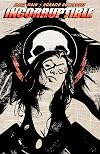
Max Damage, the supervillain-gone-good, is faced with his first serious moral dilemma that tests just how committed he is to his transformation into superhero: a former nemesis has captured Jailbait, his underage former-lover. Will his devotion to her lead him to make a deal with the devil or will he have to sacrifice Jailbait for the greater good?
I'm still intrigued by Max Damage as a character, but, unlike volume 1, this wasn't quite a 4 star read for me. Maybe more of a 3 1/2. It does show more little to advance the plot, mainly because it creates a lull to explore Max Damage's seeming invulnerability and reveals his Achilles' heel. The longer Max stays awake, the stronger he becomes. Also, the more impervious his skin and tissue is to bullets, knives, all your standard "I'm going to kill this guy" type weaponry. However, it doesn't protect him from the mental effects of sleep deprivation as he has difficulty thinking straight and forming coherent sentences. The longer he goes without rest, the more dangerous he becomes--basically, without sleep, he's like a punch-drunk armored tank.
It also provides the opportunity to swap out the real Jailbait, a 16 year old girl who is still obsessed with Max despite his declarations that they can no longer be together if he's going to be a bright and shiny superhero, with a more age appropriate and sexually incompatible (she's a lesbian) sidekick who won't offer temptation. The storyline that does this is pretty contrived, but one can see where this swap was necessary. While the interplay between Max and Jailbait was fun in volume 1, the joke of the whining teenager continuously making sexual advances on Max would have eventually become uncomfortable and called his own moral transformation into question. Even if he continued to reject her advances, what kind of good guy would allow an obviously immature, emotionally damaged kid to tag along into such dangerous circumstances--especially since his enemies are formidable and the world still sees him as a bad guy. The new Jailbait has issues of her own as she is seeking vengeance for the death of her family. Her agenda might eventually offer some conflict with Max and his desire to stay virtuous.
The art is another reason for my slight disappointment in this volume. There's a cartoonish quality to a story that deserves a more gritty realism. The tone set by the storyline and the one presented by the art don't mesh. Basically, the panels look like stills from Saturday morning cartoons in the 1990's. If the art had been more mature and more in keeping with story itself, this may have bumped it up to a 4 star rating.
All in all, this was a necessary volume as it clears up some unanswered questions in volume 1 about Max's abilities and background and, hopefully, sets the stage for some serious awesomeness in volume 3. show less
I'm still intrigued by Max Damage as a character, but, unlike volume 1, this wasn't quite a 4 star read for me. Maybe more of a 3 1/2. It does show more little to advance the plot, mainly because it creates a lull to explore Max Damage's seeming invulnerability and reveals his Achilles' heel. The longer Max stays awake, the stronger he becomes. Also, the more impervious his skin and tissue is to bullets, knives, all your standard "I'm going to kill this guy" type weaponry. However, it doesn't protect him from the mental effects of sleep deprivation as he has difficulty thinking straight and forming coherent sentences. The longer he goes without rest, the more dangerous he becomes--basically, without sleep, he's like a punch-drunk armored tank.
It also provides the opportunity to swap out the real Jailbait, a 16 year old girl who is still obsessed with Max despite his declarations that they can no longer be together if he's going to be a bright and shiny superhero, with a more age appropriate and sexually incompatible (she's a lesbian) sidekick who won't offer temptation. The storyline that does this is pretty contrived, but one can see where this swap was necessary. While the interplay between Max and Jailbait was fun in volume 1, the joke of the whining teenager continuously making sexual advances on Max would have eventually become uncomfortable and called his own moral transformation into question. Even if he continued to reject her advances, what kind of good guy would allow an obviously immature, emotionally damaged kid to tag along into such dangerous circumstances--especially since his enemies are formidable and the world still sees him as a bad guy. The new Jailbait has issues of her own as she is seeking vengeance for the death of her family. Her agenda might eventually offer some conflict with Max and his desire to stay virtuous.
The art is another reason for my slight disappointment in this volume. There's a cartoonish quality to a story that deserves a more gritty realism. The tone set by the storyline and the one presented by the art don't mesh. Basically, the panels look like stills from Saturday morning cartoons in the 1990's. If the art had been more mature and more in keeping with story itself, this may have bumped it up to a 4 star rating.
All in all, this was a necessary volume as it clears up some unanswered questions in volume 1 about Max's abilities and background and, hopefully, sets the stage for some serious awesomeness in volume 3. show less
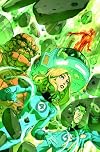
This is a great read for people who are into both comics and classics. Nightmare breaks into the world of fiction and begins to make people melancholy by destroying what gives them comfort. The Fantastic Four get into the world of fiction through their postman and you get an interesting look at how literature effects them and how they affect the literature the books they are moving through. I loved their interactions with the Dashwood sisters from Sense and Sensibility, and now I really want show more to read Ivanhoe because I never realized that Robin Hood was a corruption of that story. show less
You May Also Like
Associated Authors
Statistics
- Works
- 9
- Also by
- 2
- Members
- 318
- Popularity
- #74,347
- Rating
- 3.4
- Reviews
- 28
- ISBNs
- 14
- Languages
- 2