
Jeremy Robert Johnson
Author of The Loop
About the Author
Image credit: Photo by Lorelei Shannon
Works by Jeremy Robert Johnson
A Flood of Harriers 1 copy
Associated Works
In Heaven, Everything Is Fine: Fiction Inspired by David Lynch (2013) — Contributor — 56 copies, 1 review
Tagged
Common Knowledge
- Canonical name
- Johnson, Jeremy Robert
- Birthdate
- 1977-09-21
- Gender
- male
- Agent
- Molly Glick
- Nationality
- USA
- Places of residence
- Portland, Oregon, USA
- Associated Place (for map)
- Oregon, USA
Members
Reviews
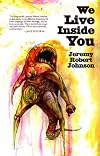
From the cover it would be easy to dismiss We Live Inside You as a collection of parasitic body horror. But that would be a big mistake. Yes, there are three stories in which parasites appear but only in one of them, "When Susurrus Stirs", is it the focus of the story. In the other two, "Cathedral Mother" and "Laws of Virulence", the parasite's presence is secondary, a means to an end. The former is the story of how a young woman went from free love hippie to hardened anti-human show more ecoterrorist. The latter is the confession of how a guy who couldn't quit partying screwed up his last chance to salvage his marriage.
We Live Inside You is really about the emotions, needs, and ideologies that drive us and rule our lives. And in these stories they typically lead to terrible outcomes. The loneliness of a socially awkward orphan turns him into a thrill seeking cat burglar ("Persistence Hunting"). A father's mounting healthcare bills drive a daughter to stealing from drug dealers ("The Gravity of Benham Falls"). Ashamed of his father's weakness for alcohol, a young man joins a survivalist cult that believes the weak need to be culled from the human race ("Trigger Variation"). How people deal with the loss of a loved one is explored in "The Encore" and "States of Glass". A car accident doesn't faze a social Darwinist in "Consumerism". In fact, it solidifies his ideology. Tired of human suffering, a group of Buddhist monks decide to impose Nirvana (the state of mind, not the band) on the human race ("The Oarsman").
I'm trying not to spoil these stories for you. I couldn't even write anything about the emotional pain that lies in "Cortical Reorganization" without giving the story away. I'm trying to show that JRJ didn't write a bunch gross out stories; but the emotional monsters he throws at you are, in their own way, just as horrific as the physical ones burrowing underneath your skin. show less
We Live Inside You is really about the emotions, needs, and ideologies that drive us and rule our lives. And in these stories they typically lead to terrible outcomes. The loneliness of a socially awkward orphan turns him into a thrill seeking cat burglar ("Persistence Hunting"). A father's mounting healthcare bills drive a daughter to stealing from drug dealers ("The Gravity of Benham Falls"). Ashamed of his father's weakness for alcohol, a young man joins a survivalist cult that believes the weak need to be culled from the human race ("Trigger Variation"). How people deal with the loss of a loved one is explored in "The Encore" and "States of Glass". A car accident doesn't faze a social Darwinist in "Consumerism". In fact, it solidifies his ideology. Tired of human suffering, a group of Buddhist monks decide to impose Nirvana (the state of mind, not the band) on the human race ("The Oarsman").
I'm trying not to spoil these stories for you. I couldn't even write anything about the emotional pain that lies in "Cortical Reorganization" without giving the story away. I'm trying to show that JRJ didn't write a bunch gross out stories; but the emotional monsters he throws at you are, in their own way, just as horrific as the physical ones burrowing underneath your skin. show less
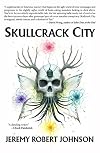
It's been five years since I read We Live Inside You, JRJ's second collection of short stories. I'd forgotten how much he can get under your skin—I won't go any further with that metaphor. He has this wonderful ability to get you to care about his characters (with exceptions of course), be silent witness to their suffering, and re-assure them that they're still human no matter what.
One could say that Skullcrack City is an outgrowth of "The League of Zeroes," the opening short story in show more JRJ's first short story collection, Angel Dust Apocalypse. But while the body modification elements of "The League of Zeroes" factor into Skullcrack City (it's not a novel for the squeamish), the novel is so much bigger. "The League of Zeroes" is actually the origin story for Buddy the Brain, a minor character in the novel—the two doctors from the novel appear in a limited fashion in the short story.
JRJ's writing style shifts fluidly in Skullcrack City as the protagonist, S.P. Doyle, changes. The Doyle we meet in the Prologue struck me as sinister. He hardly seemed like the guy we were supposed to be rooting for. But then the story proper starts and we meet the Hex-addicted Doyle. The guy is a total mess, spiraling out of control with paranoid fantasies, and it shows up in the narrative. You're not sure what's real and what's hallucination as one sentence runs head on into the next. And just when you think he can't go any further, he crashes as his paranoid fears are confirmed. But we're only a third of the way through the book.
In the middle third, the Hex is purged from his system, but Doyle struggles like a newly hatched chick as his body returns to normal and he awkwardly tries to grow into the would-be hero role. The narrative slows down to a manageable pace with periods of introspection, letting the reader catch their breath. But it's also punctuated by episodes of violence to prevent reader complacency and prod Doyle out of episodes of navel gazing.
In the final third, Doyle is forced to adapt or die. His struggle to survive forces him to shed the awkward persona and stand for something. As certainty of purpose kicks in, a calm settles over Doyle. There's a sense of purpose now. As the world teeters on the edge of insanity and terrible monstrosities, it is Doyle who's now the rational one. We recognize the guy from the Prologue as the story has come full circle.
While this is standalone novel that eliminates any chance of sequels, I'd still like to make a request for more JRJ novels. Please. show less
One could say that Skullcrack City is an outgrowth of "The League of Zeroes," the opening short story in show more JRJ's first short story collection, Angel Dust Apocalypse. But while the body modification elements of "The League of Zeroes" factor into Skullcrack City (it's not a novel for the squeamish), the novel is so much bigger. "The League of Zeroes" is actually the origin story for Buddy the Brain, a minor character in the novel—the two doctors from the novel appear in a limited fashion in the short story.
JRJ's writing style shifts fluidly in Skullcrack City as the protagonist, S.P. Doyle, changes. The Doyle we meet in the Prologue struck me as sinister. He hardly seemed like the guy we were supposed to be rooting for. But then the story proper starts and we meet the Hex-addicted Doyle. The guy is a total mess, spiraling out of control with paranoid fantasies, and it shows up in the narrative. You're not sure what's real and what's hallucination as one sentence runs head on into the next. And just when you think he can't go any further, he crashes as his paranoid fears are confirmed. But we're only a third of the way through the book.
In the middle third, the Hex is purged from his system, but Doyle struggles like a newly hatched chick as his body returns to normal and he awkwardly tries to grow into the would-be hero role. The narrative slows down to a manageable pace with periods of introspection, letting the reader catch their breath. But it's also punctuated by episodes of violence to prevent reader complacency and prod Doyle out of episodes of navel gazing.
In the final third, Doyle is forced to adapt or die. His struggle to survive forces him to shed the awkward persona and stand for something. As certainty of purpose kicks in, a calm settles over Doyle. There's a sense of purpose now. As the world teeters on the edge of insanity and terrible monstrosities, it is Doyle who's now the rational one. We recognize the guy from the Prologue as the story has come full circle.
While this is standalone novel that eliminates any chance of sequels, I'd still like to make a request for more JRJ novels. Please. show less
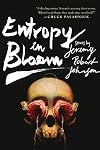
Prepare to be disgusted, amazed, occasionally confused, and constantly entertained by this diverse set of science fiction, horror, and things that are combinations of both or something else entirely. As I read story after story, I was amazed at the author's imagination, even when he took me places I definitely did not want to go. Trying to explain these stories, which involve everything from attacking people for fun to doing things to your own body that I don't want to think about, would show more probably make you steer away from it--but don't. This is a case where the author seems capable of taking any subject matter and making it compelling. As the introduction says, no matter how outrageous the premise, Johnson treats it with seriousness and carries it to its conclusion--most of which are convincing, and none of which are predictable. Highly highly recommended. show less
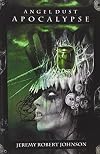
Back in the 80's, Stephen King proclaimed, "I have seen the future of horror... and his name is Clive Barker." Well, there was some good stuff there (Books of Blood, The Inhuman Condition) but I lost interest after The Damnation Game, not that it wasn't a good book. I didn't have any money for any books other than textbooks back then. My friend Paul called him a "weenie" after he blew off a speaking engagement back in college without notice. But I digress....
I think that King was a bit show more premature in naming his successor. Now that 20 years have passed, he might reconsider that pronouncement and check out Jeremy Robert Johnson. Maybe he can refer to JRJ as the "next generation" of horror so that Clive can keep his title.
I found out about Angel Dust Apocalypse from Girl on Demands' blog POD-dy Mouth. She nominated it for a 2005 "Needle Award", her best-of-the-POD's award (POD stands for Print On Demand, a popular means of self-publishing for individuals and small presses). After reading her review, I checked out what others said about it on Amazon. All good. I was convinced that it was worth checking out and I was not disappointed.
ADA, published by Eraserhead Press, is an excellent collection of short stories. JRJ has an uncanny way of getting inside the heads of his characters to reveal just how screwed up they are. I'm reminded of Lovecraft, not in an imitative way like Derleth, but more evocative in that his essence seeps into the way JRJ narrates from the main character's POV. Whereas Lovecraft dealt in cyclopean horrors and things-that-should-not-be, JRJ shows us the horrors of pharmacopeia, biotech, and neurological damage. He brings us inside the minds of these damaged (well, most of them were) individuals and show us, quite rationally, the method to their madness.
The opening story, "The League of Zeroes", extrapolates a future where body piercing and cosmetic surgery come together to make your daughter's eyebrow piercing seem quaint.
"Dissociative Skills" redefines "self-discovery" with the help of Special K and a scalpel.
"Working At Home" makes you wonder what's really going on in those biotech companies. Squeamish readers will wish JRJ hadn't thought about it. It reminded me of a certain King short stor about worms from space, though JRJ's are genetically engineered.
Nuclear holocaust is visited in the hauntingly beautiful "Snowfall", the darkly humorous "The Sharp Dressed Man at the End of the Line," and the literary "Last Thoughts Drifting Down."
The book ends with "Wall of Sound", a trio of ill-fated drug tales where the main characters push the limits of drug exposure. JRJ doesn't glorify their experiences. He straps us in to their minds as we ride rollercoasters of synaptic overload. He may not be preaching "Just Say No, Kiddies", but anyone reading these tales of rave drug use gone bad will reconsider popping that pill or placing that tab on their tongue.
I'm purposely leaving out many other good stories (like "Luminary") so that I don't spoil it any further for you. He's good! If you like horror, or even bizarre fiction, you should check him out. show less
I think that King was a bit show more premature in naming his successor. Now that 20 years have passed, he might reconsider that pronouncement and check out Jeremy Robert Johnson. Maybe he can refer to JRJ as the "next generation" of horror so that Clive can keep his title.
I found out about Angel Dust Apocalypse from Girl on Demands' blog POD-dy Mouth. She nominated it for a 2005 "Needle Award", her best-of-the-POD's award (POD stands for Print On Demand, a popular means of self-publishing for individuals and small presses). After reading her review, I checked out what others said about it on Amazon. All good. I was convinced that it was worth checking out and I was not disappointed.
ADA, published by Eraserhead Press, is an excellent collection of short stories. JRJ has an uncanny way of getting inside the heads of his characters to reveal just how screwed up they are. I'm reminded of Lovecraft, not in an imitative way like Derleth, but more evocative in that his essence seeps into the way JRJ narrates from the main character's POV. Whereas Lovecraft dealt in cyclopean horrors and things-that-should-not-be, JRJ shows us the horrors of pharmacopeia, biotech, and neurological damage. He brings us inside the minds of these damaged (well, most of them were) individuals and show us, quite rationally, the method to their madness.
The opening story, "The League of Zeroes", extrapolates a future where body piercing and cosmetic surgery come together to make your daughter's eyebrow piercing seem quaint.
"Dissociative Skills" redefines "self-discovery" with the help of Special K and a scalpel.
"Working At Home" makes you wonder what's really going on in those biotech companies. Squeamish readers will wish JRJ hadn't thought about it. It reminded me of a certain King short stor about worms from space, though JRJ's are genetically engineered.
Nuclear holocaust is visited in the hauntingly beautiful "Snowfall", the darkly humorous "The Sharp Dressed Man at the End of the Line," and the literary "Last Thoughts Drifting Down."
The book ends with "Wall of Sound", a trio of ill-fated drug tales where the main characters push the limits of drug exposure. JRJ doesn't glorify their experiences. He straps us in to their minds as we ride rollercoasters of synaptic overload. He may not be preaching "Just Say No, Kiddies", but anyone reading these tales of rave drug use gone bad will reconsider popping that pill or placing that tab on their tongue.
I'm purposely leaving out many other good stories (like "Luminary") so that I don't spoil it any further for you. He's good! If you like horror, or even bizarre fiction, you should check him out. show less
Lists
Awards


You May Also Like


Associated Authors
Statistics
- Works
- 14
- Also by
- 11
- Members
- 974
- Popularity
- #26,440
- Rating
- 3.7
- Reviews
- 24
- ISBNs
- 25
- Languages
- 2
- Favorited
- 5