
Howard Koch (1902–1995)
Author of Casablanca [1942 film]
Works by Howard Koch
The Panic Broadcast: The Whole Story of Orson Welles' Legendary Radio Show Invasion from Mars (1970) 114 copies, 3 reviews
The War of the Worlds [Orson Welles's Original 1938 Radio Adaptation] (1938) — Adaptor — 88 copies, 5 reviews
War of the Worlds The Invasion From Mars (L.A. Theatre Works Audio Theatre Collection) (1994) — Adapter — 39 copies, 5 reviews
Invasion from Mars [script] 2 copies
Woodrow Wilson 2 copies
Casablanca [screenplay] 1 copy
Associated Works
Tagged
Common Knowledge
- Canonical name
- Koch, Howard
- Legal name
- Koch, Howard E.
- Other names
- Howard, Peter
- Birthdate
- 1902-12-02
- Date of death
- 1995-08-17
- Gender
- male
- Education
- Bard College
Columbia University - Law - Occupations
- playwright
screenwriter - Nationality
- USA
- Birthplace
- New York, New York, USA
- Places of residence
- New York, USA
UK - Place of death
- Kingston, New York, USA
- Associated Place (for map)
- New York, USA
Members
Reviews
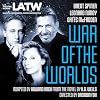
Road trippin' between my daughter's new home in Madison and my home in Omaha. Time for an audiobook!
I became aware of this production through a mention in William Shatner's Leonard: My Fifty-Year Friendship with a Remarkable Man, an audio book I listened to on a previous road trip. This is a new staging of the classic radio play adapted by Howard Koch and made infamous by Orson Wells and his Mercury Theatre broadcast featuring Leonard Nimoy and several other actors who have appeared on Star show more Trek shows. It's short length -- just over an hour -- was perfect to fill a gap at the very end of my trip after my other audio book concluded.
Unfortunately, I have never liked H. G. Wells' The War of the Worlds, and even Nimoy's wonderful and familiar voice cannot save this morose story of death and destruction from an ill-fated alien invasion. It was almost interesting while the first half was presented like real-time radio reports from invasion eye-witnesses and frontline combatants, but then the back end becomes a dreary monologue of a survivor wandering the marred landscape and then listening to the ranting of a delusional survivor.
I might have been better off turning on the radio or streaming my own musical playlists. show less
I became aware of this production through a mention in William Shatner's Leonard: My Fifty-Year Friendship with a Remarkable Man, an audio book I listened to on a previous road trip. This is a new staging of the classic radio play adapted by Howard Koch and made infamous by Orson Wells and his Mercury Theatre broadcast featuring Leonard Nimoy and several other actors who have appeared on Star show more Trek shows. It's short length -- just over an hour -- was perfect to fill a gap at the very end of my trip after my other audio book concluded.
Unfortunately, I have never liked H. G. Wells' The War of the Worlds, and even Nimoy's wonderful and familiar voice cannot save this morose story of death and destruction from an ill-fated alien invasion. It was almost interesting while the first half was presented like real-time radio reports from invasion eye-witnesses and frontline combatants, but then the back end becomes a dreary monologue of a survivor wandering the marred landscape and then listening to the ranting of a delusional survivor.
I might have been better off turning on the radio or streaming my own musical playlists. show less
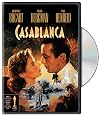
“And what in heaven's name brought you to Casablanca?” — Renault
“My health. I came to Casablanca for the waters.” — Rick
“The waters? What waters? We’re in the desert!” — Renault
“I was misinformed.” — Rick
Any film buff watching this screen classic today will certainly get a sense of having seen this formula over and over. Howard Hawks remade it in a fashion — and actually improved upon it in some ways by putting his distinct spin on it — in To Have and Have show more Not. While it often gets overpraised because it is a beloved favorite of critics, it also doesn’t receive the credit due it. The four strongest performances here, namely Bogart, Rains, Lorre, and Joy Page, who rarely even gets a mention, didn't get the Academy Award. It can be argued that any solid studio director from this period could have made a great film out of the terrific screenplay from Howard Koch and Julius and Philip Epstein, and the fine cast assembled. But it is a film which is more than the sum of its parts, and the reason why it has been copied so often over the years.
Bogart is Rick Blaine, doing okay running Rick’s Cafe Americain in Casablanca, in French Morocco. Everyone must go through Casablanca to get to Lisbon, and freedom from the turmoil brought about by the War’s ever expanding boundaries. Rick runs his cafe and gambling house unencumbered by politics, looking out only for himself and a few close and loyal employees like Sam (Dooley Wilson) and Carl (S.Z. Sakall). Peter Lorre is marvelous as the criminal who worships Rick, and seeks his approval. It is really what happens to Ugarte (Lorre) which turns Rick in favor of the French Resistance; though it won't become evident until the film is nearly over. It is perhaps, the most interesting relationship in the film, made more so due to Lorre’s small amount of screen time.
Ugarte leaves Rick a letter of transit which can't even be questioned, when in pops Rick’s reason for hiding out in Casablanca — Ilsa Lund (Ingrid Bergman). Rick's bitter disillusionment with love all goes back to what happened in Paris, where Ilsa left him holding his heart in his hands. The flashback montages were in part directed by Don Siegel, who would direct Mitchum and Greer in The Big Steal, and later become well known for Dirty Harry with Clint Eastwood. Ilsa isn't alone, however, bringing along her husband, Victor Laszlo (Paul Henreid). He is the lead figure behind the movement to rid the French of the Germans, who would prefer he never make it to Lisbon.
Caught in between is the pragmatic Captain Renault — Claude Rains in a splendid turn, full of larceny and humor. It is never clear exactly which side he is on. Ilsa wants her husband Victor to escape with his life but Rick isn't so ready to hand over those transit papers; not without some graveling and an explanation for the way he was burned by her.
Bergman proved a good second choice for Ilsa. The viewer knows she’s messed Rick up, and wants it to be righted, while at the same time sensing those two don’t belong together. Her casting opposite Bogart makes the ending easier to take than had someone with more natural chemistry with Bogart been cast in the role. Don’t get me wrong, they are good together in a timeless classic, but that bit of ‘unbelievability’ in their pairing works in the film’s favor at the legendary ending to this film. Howard Hawks had Bogart and Bacall, for example, go off together at the end of To Have and Have Not, which was his own take on Casablanca.
Before we get to the famous ending of Casablanca, however, there are some terrific moments from Joy Page as a young wife fleeing Bulgaria, desperate to get she and her husband out of Casablanca. What Rick does to help her out, and get around her making a mistake with Renault, highlights the effect Ugarte’s killing had on Rick, who at heart is a romantic. Once he knows the reason behind what happened in Paris, he'll come to the same decision the viewer has about where Isla belongs.
Casablanca won the Academy Award for Best Picture, Screenplay, and Direction (Michael Curtiz). Bogart would have won for Best Actor, Rains for Supporting Actor, and Joy Page for Best Supporting Actress in a different time and place. While this isn’t quite the romantic noir masterpiece of Preminger’s Laura, it is one amazingly smooth blend of genres — including noir — which pleases every film buff, and makes it one of the great films of all time. Silent film fans might can even catch a glimpse of star Monte Blue as an uncredited American. Bogart and Bergman fans can enjoy watching this one over and over, as it is one of those films almost universally cherished by movie lovers. show less
“My health. I came to Casablanca for the waters.” — Rick
“The waters? What waters? We’re in the desert!” — Renault
“I was misinformed.” — Rick
Any film buff watching this screen classic today will certainly get a sense of having seen this formula over and over. Howard Hawks remade it in a fashion — and actually improved upon it in some ways by putting his distinct spin on it — in To Have and Have show more Not. While it often gets overpraised because it is a beloved favorite of critics, it also doesn’t receive the credit due it. The four strongest performances here, namely Bogart, Rains, Lorre, and Joy Page, who rarely even gets a mention, didn't get the Academy Award. It can be argued that any solid studio director from this period could have made a great film out of the terrific screenplay from Howard Koch and Julius and Philip Epstein, and the fine cast assembled. But it is a film which is more than the sum of its parts, and the reason why it has been copied so often over the years.
Bogart is Rick Blaine, doing okay running Rick’s Cafe Americain in Casablanca, in French Morocco. Everyone must go through Casablanca to get to Lisbon, and freedom from the turmoil brought about by the War’s ever expanding boundaries. Rick runs his cafe and gambling house unencumbered by politics, looking out only for himself and a few close and loyal employees like Sam (Dooley Wilson) and Carl (S.Z. Sakall). Peter Lorre is marvelous as the criminal who worships Rick, and seeks his approval. It is really what happens to Ugarte (Lorre) which turns Rick in favor of the French Resistance; though it won't become evident until the film is nearly over. It is perhaps, the most interesting relationship in the film, made more so due to Lorre’s small amount of screen time.
Ugarte leaves Rick a letter of transit which can't even be questioned, when in pops Rick’s reason for hiding out in Casablanca — Ilsa Lund (Ingrid Bergman). Rick's bitter disillusionment with love all goes back to what happened in Paris, where Ilsa left him holding his heart in his hands. The flashback montages were in part directed by Don Siegel, who would direct Mitchum and Greer in The Big Steal, and later become well known for Dirty Harry with Clint Eastwood. Ilsa isn't alone, however, bringing along her husband, Victor Laszlo (Paul Henreid). He is the lead figure behind the movement to rid the French of the Germans, who would prefer he never make it to Lisbon.
Caught in between is the pragmatic Captain Renault — Claude Rains in a splendid turn, full of larceny and humor. It is never clear exactly which side he is on. Ilsa wants her husband Victor to escape with his life but Rick isn't so ready to hand over those transit papers; not without some graveling and an explanation for the way he was burned by her.
Bergman proved a good second choice for Ilsa. The viewer knows she’s messed Rick up, and wants it to be righted, while at the same time sensing those two don’t belong together. Her casting opposite Bogart makes the ending easier to take than had someone with more natural chemistry with Bogart been cast in the role. Don’t get me wrong, they are good together in a timeless classic, but that bit of ‘unbelievability’ in their pairing works in the film’s favor at the legendary ending to this film. Howard Hawks had Bogart and Bacall, for example, go off together at the end of To Have and Have Not, which was his own take on Casablanca.
Before we get to the famous ending of Casablanca, however, there are some terrific moments from Joy Page as a young wife fleeing Bulgaria, desperate to get she and her husband out of Casablanca. What Rick does to help her out, and get around her making a mistake with Renault, highlights the effect Ugarte’s killing had on Rick, who at heart is a romantic. Once he knows the reason behind what happened in Paris, he'll come to the same decision the viewer has about where Isla belongs.
Casablanca won the Academy Award for Best Picture, Screenplay, and Direction (Michael Curtiz). Bogart would have won for Best Actor, Rains for Supporting Actor, and Joy Page for Best Supporting Actress in a different time and place. While this isn’t quite the romantic noir masterpiece of Preminger’s Laura, it is one amazingly smooth blend of genres — including noir — which pleases every film buff, and makes it one of the great films of all time. Silent film fans might can even catch a glimpse of star Monte Blue as an uncredited American. Bogart and Bergman fans can enjoy watching this one over and over, as it is one of those films almost universally cherished by movie lovers. show less
The Panic Broadcast: The Whole Story of Orson Welles' Legendary Radio Show Invasion from Mars by Howard Koch

Fascinating and pleasant jaunt into a bite-sized slice of history: the Orson Welles radio show "Invasion from Mars." Author Howard Koch is also the writer of the infamous radio script, and this sort-of-memoir was published thirty years after the show's airing. In addition to the complete script, it includes copied pages of newspaper articles (both fact and opinion), satirical cartoons, black-and-white photos of Grover's Mill, NJ (where the "invasion" took place).
Two notable chapters are show more "The Aftermath," which details the response of both the public at large and of individuals who were listening to the presentation, and "A Martian Visits the Scene of His Crime," in which Mr. Koch and his wife travel to Grover's Mill to hear first-hand accounts of the townspeople who have lived in a place he accidentally made legendary. The final two chapters are dated now as they include speculation on colonizing Mars (by the 1980s, predicts Arthur C. Clarke in the book's introduction!) and an enthusiastic thumbs-up to "today's youth," namely the Woodstock generation, who Koch watched grow up and who he hopes might bring about permanent world peace sometime. The latter feels like a rabbit trail from the book's purpose (psychedelic cover notwithstanding), but on the whole this obscure little collection of archives and musings is well worth reading for anyone interested in the main topic. show less
Two notable chapters are show more "The Aftermath," which details the response of both the public at large and of individuals who were listening to the presentation, and "A Martian Visits the Scene of His Crime," in which Mr. Koch and his wife travel to Grover's Mill to hear first-hand accounts of the townspeople who have lived in a place he accidentally made legendary. The final two chapters are dated now as they include speculation on colonizing Mars (by the 1980s, predicts Arthur C. Clarke in the book's introduction!) and an enthusiastic thumbs-up to "today's youth," namely the Woodstock generation, who Koch watched grow up and who he hopes might bring about permanent world peace sometime. The latter feels like a rabbit trail from the book's purpose (psychedelic cover notwithstanding), but on the whole this obscure little collection of archives and musings is well worth reading for anyone interested in the main topic. show less
War of the Worlds The Invasion From Mars (L.A. Theatre Works Audio Theatre Collection) by H. G. Wells

A production of the classic radio play adaptation of H.G. Wells by Orson Welles. Directed by John De Lancie, the production is full of cast members from Star Trek and Star Trek: The Next Generation, which adds an extra layer of delight to this well done production. Of course, being familiar with the panic caused by the original production, it's interesting to listen to this version and very easily grasp how it could have been taken as the real thing in an era when news was distributed show more primarily in print and on the radio. Also, having not read Wells original novel, it's a fascinating way to experience the outlines of his narrative. show less
Lists
Awards


You May Also Like


Associated Authors
Statistics
- Works
- 19
- Also by
- 10
- Members
- 1,943
- Popularity
- #13,242
- Rating
- 4.2
- Reviews
- 39
- ISBNs
- 70
- Languages
- 3
- Favorited
- 1