

Jonathan Rogers
Author of The Bark of the Bog Owl
About the Author
Image credit: via Amazon.com
Series
Works by Jonathan Rogers
The World According to Narnia: Christian Meaning in C. S. Lewis's Beloved Chronicles (2005) 182 copies, 3 reviews
The Terrible Speed of Mercy: A Spiritual Biography of Flannery O'Connor (2012) 114 copies, 5 reviews
Take a Closer Look for Teens: Uncommon & Unexpected Insights That Are Real, Relevant & Ready to Change Your Life (2007) 10 copies
The 365 Most Important Bible Passages for You: Daily Readings and Meditations on Experiencing God's Richest Blessings in Your Life (2011) 7 copies
Tagged
Common Knowledge
- Birthdate
- 1969-08-01
- Gender
- male
- Occupations
- writer
teacher - Short biography
- Jonathan Rogers grew up in Georgia, where he spent many happy hours in the swamps and riverbottoms on which the wild places of The Wilderking are based. He received his undergraduate degree from Furman University in South Carolina and holds a Ph.D. in seventeenth-century English literature from Vanderbilt University. The Wilderking Trilogy has already found a receptive audience among Jonathan’s own six children. The Rogers clan lives in Nashville, Tennessee, where Jonathan makes a living as a freelance writer.
- Places of residence
- Nashville, Tennessee, USA
- Associated Place (for map)
- Tennessee, USA
Members
Reviews
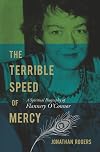
Few 20th century writers, or at least those writers taken seriously by literary scholars and taught in college classrooms, have been as committed to conveying the Christian understanding of grace and redemption as Flannery O'Connor. Yet her stories are so dark, so violent, so grotesque that few readers readily grasp what they are really about.
O'Connor, a devout Catholic who tried to attend Mass every day, made no secret about what her goals were in her fiction, yet most of those who read her show more novels and short stories see something else in them. She hated reading reviews of her books because reviewers so rarely understood them.
Brad Gooch wrote an excellent biography in 2009, “Flannery: A Life of Flannery O'Connor,” so perhaps another biography wasn't necessary so soon after, yet the much shorter “The Terrible Speed of Mercy: A Spiritual Biography of Flannery O'Connor” by Jonathan Rogers (2012) serves a different end. Rogers, while giving a good summary of her life and making good use of Gooch's book in the process, has another goal in mind. He seeks to discover what made O'Connor tick, what she believed and how those beliefs shaped her fiction.
"My audience are the people who think God is dead. At least these are the people I am conscious of writing for," O'Conner once wrote in a letter. These, in fact, may have been the people who liked her stories best. Christians, especially those who were her neighbors in Milledgeville, Ga., either didn't read her books or didn't like them if they did. They were proud of her literary accomplishments but just wished she would write a different kind of fiction, something a bit nicer.
Rogers writes, "For O'Connor, the real horror was never violence or deformity, but damnation." Even her morally worst characters usually find sudden grace by the end of her stories, that "terrible speed of mercy" brought home.
O'Connor suffered from lupus for much of her short life. She was just 39 when she died. She left behind two novels and numerous short stories that will be read, and perhaps occasionally understood, for years to come. show less
O'Connor, a devout Catholic who tried to attend Mass every day, made no secret about what her goals were in her fiction, yet most of those who read her show more novels and short stories see something else in them. She hated reading reviews of her books because reviewers so rarely understood them.
Brad Gooch wrote an excellent biography in 2009, “Flannery: A Life of Flannery O'Connor,” so perhaps another biography wasn't necessary so soon after, yet the much shorter “The Terrible Speed of Mercy: A Spiritual Biography of Flannery O'Connor” by Jonathan Rogers (2012) serves a different end. Rogers, while giving a good summary of her life and making good use of Gooch's book in the process, has another goal in mind. He seeks to discover what made O'Connor tick, what she believed and how those beliefs shaped her fiction.
"My audience are the people who think God is dead. At least these are the people I am conscious of writing for," O'Conner once wrote in a letter. These, in fact, may have been the people who liked her stories best. Christians, especially those who were her neighbors in Milledgeville, Ga., either didn't read her books or didn't like them if they did. They were proud of her literary accomplishments but just wished she would write a different kind of fiction, something a bit nicer.
Rogers writes, "For O'Connor, the real horror was never violence or deformity, but damnation." Even her morally worst characters usually find sudden grace by the end of her stories, that "terrible speed of mercy" brought home.
O'Connor suffered from lupus for much of her short life. She was just 39 when she died. She left behind two novels and numerous short stories that will be read, and perhaps occasionally understood, for years to come. show less

No one has ever come home from the Feechiefen Swamp. What makes Aidan think he can?
It looks like a fool's errand. A jealous and vindictive King Darrow sends Aidan Errolson on a seemingly impossible quest into the depths of the Feechiefen Swamp. Darrow thinks he's sending Corenwald's young deliverer to certain death. No one, after all, comes back from the Feechiefen. He doesn't know that Aidan has friends and allies among the feechiefolk, who know him as the hero Pantherbane.
But even the show more feechiefolk may not be able to deliver Aidan from the enemy who waits in the swamp's deepest recesses - an enemy who threatens not just Aidan, but all of Corenwald. show less
It looks like a fool's errand. A jealous and vindictive King Darrow sends Aidan Errolson on a seemingly impossible quest into the depths of the Feechiefen Swamp. Darrow thinks he's sending Corenwald's young deliverer to certain death. No one, after all, comes back from the Feechiefen. He doesn't know that Aidan has friends and allies among the feechiefolk, who know him as the hero Pantherbane.
But even the show more feechiefolk may not be able to deliver Aidan from the enemy who waits in the swamp's deepest recesses - an enemy who threatens not just Aidan, but all of Corenwald. show less
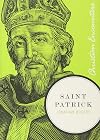
Most people recognize the name of St. Patrick on account of the holiday on March 17, and most people are familiar with his connection with Ireland. But how many know the story of St. Patrick himself? Christian Encounters: St. Patrick, by Jonathan Rogers, represents a short introduction to St. Patrick's life and work.
The author tells many of the legends that are associated with Patrick and works to uncover the truth of the story. There are only two works that seem to come from his hand-- his show more Confessions and Letter to Coroticus (translations of which are provided in appendices to the book). Rogers uses these, along with later biographies and accounts of Britain and Ireland of the day, to tell the story of Patrick.
While Patrick was most likely not the miracle worker proclaimed by the legends surrounding him, what he did accomplish was no less amazing. Born in Britain during the tempestuous end of Roman control of that area, he was captured and enslaved by Irish raiders at the age of 16. After escaping and entering the priesthood, Patrick voluntarily returned and went about teaching Christianity to the Irish. He was doing what was thought to be impossible during those days-- the conversion of the pagan heathen, taking Christianity beyond the boundaries of the Roman Empire. Despite opposition, both from within and without the Church, he was largely successful in his endeavor. Ireland was won for "Catholic" Christianity, and whereas it had been barbaric, it would prove to be the savior of civilization during the upcoming Dark Ages.
The book is short and readily accessible and does well at presenting the story of Patrick as honestly as can be expected. Gaps in knowledge and difficulties in understanding are admitted. Overall it is a great resource for understanding Patrick, his times, and his role in promoting Christianity in Ireland. show less
The author tells many of the legends that are associated with Patrick and works to uncover the truth of the story. There are only two works that seem to come from his hand-- his show more Confessions and Letter to Coroticus (translations of which are provided in appendices to the book). Rogers uses these, along with later biographies and accounts of Britain and Ireland of the day, to tell the story of Patrick.
While Patrick was most likely not the miracle worker proclaimed by the legends surrounding him, what he did accomplish was no less amazing. Born in Britain during the tempestuous end of Roman control of that area, he was captured and enslaved by Irish raiders at the age of 16. After escaping and entering the priesthood, Patrick voluntarily returned and went about teaching Christianity to the Irish. He was doing what was thought to be impossible during those days-- the conversion of the pagan heathen, taking Christianity beyond the boundaries of the Roman Empire. Despite opposition, both from within and without the Church, he was largely successful in his endeavor. Ireland was won for "Catholic" Christianity, and whereas it had been barbaric, it would prove to be the savior of civilization during the upcoming Dark Ages.
The book is short and readily accessible and does well at presenting the story of Patrick as honestly as can be expected. Gaps in knowledge and difficulties in understanding are admitted. Overall it is a great resource for understanding Patrick, his times, and his role in promoting Christianity in Ireland. show less

As far back as he can remember, the orphan Grady has tramped from village to village with a huckster named Floyd, pulling a variety of hoaxes and flimflams on the good citizens of the Corenwald frontier. It's a hard way to make a living, made harder by the memory of fatter times when audiences thronged to see Grady perform as "The Wild Man of the Feechiefen Swamp". But what can they do? No one believes in feechies anymore.
Unless Floyd and Grady can make them believe.
Armed with the tricks of show more their trade, the charlatan and his boy set out to create another Great Feechie Scare, which Floyd swears will make them rich. But while Grady longs for the days when he played the feechie, he can't stop wondering if, after a life of lies, he'll ever know who he really is. show less
Unless Floyd and Grady can make them believe.
Armed with the tricks of show more their trade, the charlatan and his boy set out to create another Great Feechie Scare, which Floyd swears will make them rich. But while Grady longs for the days when he played the feechie, he can't stop wondering if, after a life of lies, he'll ever know who he really is. show less
Awards


You May Also Like


Associated Authors
Statistics
- Works
- 15
- Members
- 2,481
- Popularity
- #10,334
- Rating
- 4.1
- Reviews
- 44
- ISBNs
- 41
- Favorited
- 1