
About the Author
Susan Roy is assistant professor of history at the University of Waterloo.
Image credit: Photo credit: Fred R. Conrad/The New York Times
Works by Susan Roy
Bomboozled: How the U.S. Government Misled Itself and Its People into Believing They Could Survive a Nuclear Attack (2011) 15 copies, 2 reviews
These Mysterious People: Shaping History and Archaeology in a Northwest Coast Community (Mcgill-Queen's Native and Nothern) (2007) 15 copies
These mysterious people shaping history and archaeology in a Northwest Coast community (2010) 3 copies
Young Imagination 1 copy
Young imagination 1 copy
Tagged
Common Knowledge
- Gender
- female
Members
Reviews
Bomboozled: How the U.S. Government Misled Itself and Its People into Believing They Could Survive a Nuclear Attack by Susan Roy
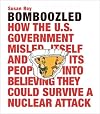
Inspired by the author’s thesis on family fallout shelters for her master’s degree in architectural history, Bomboozled presents the U.S. cold war civil-defense program as a smokescreen of “emotion management” where activities were used to distract Americans from the horrors of nuclear war. Specifically, it’s about selling the idea of domestic fallout shelters to Americans, and the shelter's evolution from simple concrete bunker to un.be.lieve.able underground home (see photos of show more target="_top">one such shelter; note the HVAC vents in the “sky”). It calls to mind today’s program of terrorism preparedness, and the final two pages do directly make the comparison.
The book’s strengths are its coffee-table format, heavily illustrated with period images and clips from ads, newspapers and government pamphlets, and its tight focus on the home fallout shelter. Slight weaknesses include areas of superficial research* and few examples of actual shelters in people’s homes.
I read it on the heels of Lauren Redniss's Radioactive and several volumes of Keiji Nakazawa's Barefoot Gen series, so I was hungry for more about the bomb and the cold-war period in general; that led to a lot of exploring online. I watched the 1951 Survival Under Atomic Attack, a short-film version of the official government pamphlet (obviously and necessarily sugar-coated; note the more likely speed and scale of destruction in the last minute of this BBC video). I watched the fascinating 1982 The Atomic Café, a documentary composed of archival propaganda, disturbing images, and unintentional humor. And in keeping with the pop-culture tone of Bomboozled, I watched the 1961 Twilight Zone episode, “The Shelter” (split into parts 1; 2; 3; and an interview with Rod Serling that contains episode spoilers).
*I came to this book knowing it was about domestic fallout shelters, and that seems to be the author’s compelling interest. Perhaps it’s the publisher whose interest is conspiracy, and thus the book’s title. Readers who come for the thesis in the title will find it superficially explored. show less
The book’s strengths are its coffee-table format, heavily illustrated with period images and clips from ads, newspapers and government pamphlets, and its tight focus on the home fallout shelter. Slight weaknesses include areas of superficial research* and few examples of actual shelters in people’s homes.
I read it on the heels of Lauren Redniss's Radioactive and several volumes of Keiji Nakazawa's Barefoot Gen series, so I was hungry for more about the bomb and the cold-war period in general; that led to a lot of exploring online. I watched the 1951 Survival Under Atomic Attack, a short-film version of the official government pamphlet (obviously and necessarily sugar-coated; note the more likely speed and scale of destruction in the last minute of this BBC video). I watched the fascinating 1982 The Atomic Café, a documentary composed of archival propaganda, disturbing images, and unintentional humor. And in keeping with the pop-culture tone of Bomboozled, I watched the 1961 Twilight Zone episode, “The Shelter” (split into parts 1; 2; 3; and an interview with Rod Serling that contains episode spoilers).
*I came to this book knowing it was about domestic fallout shelters, and that seems to be the author’s compelling interest. Perhaps it’s the publisher whose interest is conspiracy, and thus the book’s title. Readers who come for the thesis in the title will find it superficially explored. show less
Bomboozled: How the U.S. Government Misled Itself and Its People into Believing They Could Survive a Nuclear Attack by Susan Roy
This book tells its story mainly through illustrations taken from a variety of books and pamphlets from the Cold War period. I found this delightful. The book does have a few pages dedicated to text, but the images really tell the story. I really liked the contrast between pictures of simple dugouts that were intended for families that couldn't afford the massive cost of a true shelter compared to the massive underground homes complete with pools, fake trees and programmable weather.
There show more was a glaring error made on page four, that was not corrected anywhere else in the text. The author shows a picture of the Fat Man and Little Boy atomic bombs. The descriptive text states that Fat Man was dropped on Hiroshima, and Little Boy was dropped on Nagasaki. (It should be the other way around.) Despite this, I really enjoyed the book. It would be good for the causal reader, or Cold War enthusiast. show less
There show more was a glaring error made on page four, that was not corrected anywhere else in the text. The author shows a picture of the Fat Man and Little Boy atomic bombs. The descriptive text states that Fat Man was dropped on Hiroshima, and Little Boy was dropped on Nagasaki. (It should be the other way around.) Despite this, I really enjoyed the book. It would be good for the causal reader, or Cold War enthusiast. show less
Statistics
- Works
- 7
- Members
- 38
- Popularity
- #383,441
- Rating
- 4.0
- Reviews
- 2
- ISBNs
- 8