
Craig Dilouie
Author of Episode Thirteen
About the Author
Craig DiLouie, principal of ZING Communications, Inc. (www.zinginc.com), is a journalist, educator and marketing consultants specializing in the lighting industry. As a journalist, he writes about lighting regularly in his blog at lightnow-blog.com and magazines such as Electrical Contractor, The show more Electrical Distributor (TED), Illuminate, Architectural SSL, LMM and others. As an educator, he supports technical education conducted by organizations such as the Department of Energy, Illuminating Engineering Society, Lighting Controls Association, National Electrical Manufacturers Association, interNational Association of Lighting Management Companies and others. And as a marketing consultant, he provides technical writing and marketing services to manufactures such as Acuity Brands, Cooper lighting, Litecontrol, Peerless and others. show less
Series
Works by Craig Dilouie
Advanced Lighting Controls: Energy Savings, Productivity, Technology and Applications (2005) 7 copies
Pandemic (The Retreat, #1) 6 copies
Silent Running (Crash Dive, #2) 5 copies
Hara-Kiri (Crash Dive, #5) 1 copy
Tagged
Common Knowledge
- Birthdate
- 1967
- Gender
- male
- Agent
- David Fugate
- Relationships
- Marrs, Chris (partner)
- Nationality
- Canada
- Associated Place (for map)
- Canada
Members
Reviews
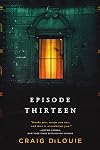
It’s been a while since I’ve read a good ghost story, and there’s a reason for that. The genre has become so defined by its tropes that it’s formed its own subgenre of reality TV, which itself has tropes. Genres evolve, but between evolutions, they fall out of favor, the proverbial haunted house going inactive during the daylight hours.
Now, I’m loving what Mike Flanagan is doing with ghost stories on film. He seems to be progressing the genre into character-driven territory in show more which the horror is driven by environment instead of gorey thrills. As above, so below, what Flanagan brings to film, Craig DiLouie is bringing to literature.
His latest, Episode Thirteen is a further evolution to the ghost story genre, taking a ghost hunting reality TV show and fictionalizing one particular hunt where the show maybe gets a little too real.
The Episode Thirteen pitch goes something like this: An ensemble cast of characters producing a ghost hunting TV show (called Fade to Black) have had a successful debut season but are searching for a place to shoot their finale, which could give them the best chance of being renewed for another go-around. At Foundation House, in rural Virginia, where a team of paranormal scientists once conducted torturous experiments and then disappeared, our heroes may have found what they were looking for. The ghost hunters try their playbook at Foundation House, but as pressure from the studio increases and bizarre encounters and discoveries occur, they start to suspect they’re going to need some new tools for this one.
One of the things I find interesting about Craig’s work, in general, is he’s always trying something new. His novels aren’t challenging, per se, to the reader, but he’s challenging himself in ways many writers don’t. Instead of playing it safe and simply sticking to what he’s good at, Craig seems to be working his way down a literary bucket list, and for my money, he nails every one. Supernatural ghost thriller Episode Thirteen is another testament to his ability to try new things and execute well on the first try.
Written in epistolary form, Episode Thirteen presents itself as a story told through found documents. The intent here is apparently to model itself off of a found-footage film, but a book obviously can’t replicate that (that’s just physics). Cleverly, Craig works in a kind of ghost character who performs the role of the narrator, a meta-fictional “editor,” who opens the book with a note. This character has transcribed the found footage and occasionally breaks in to offer context, description, and even some insight. What I appreciated about this is the narrator has a presence in the story, something I’ve been thinking a lot about recently (the narrator as character). It’s subtle, but sometimes Episode Thirteen’s narrator breaks through with a quip, observation, or flash judgment. He appears to be totally objective, but his subjectivity sometimes breaks through just enough to give the narration some seasoning so as not to be bland, something that can trouble reported stories in epistolary form.
What always gets me about Craig’s novels is they are incredibly well focused, and that is true in Episode Thirteen. It seems to me, as a faithful reader, the writer knows precisely the story he’s telling me, something so many writers seem to struggle with. Ask almost any writer what they’re story is about, and they’ll almost invariably fumble. At least when reading the finished product, Craig’s books never seem that way to me. There are two things that are very important about this: 1). As I get older, my patience with literature is waning, so meandering stories sometimes feel like they are wasting my time. It isn’t that I can’t appreciate the journey; it’s that I want to know we have a destination. 2). Trust.
Trust is something I’m not sure we talk about enough with regard to the writer-reader relationship. Too many authors take my interest for granted, assuming since I picked up their book, I must be willing to follow them unquestioningly wherever they go. I never feel that way about Craig’s books, not even the ones you might describe as a “slow burn.” Intent is always apparent, and Episode Thirteen’s pitch all but bakes that in as the story unfolds in ways that maybe aren’t terribly surprising but are no less satisfying and fulfilling.
More to the point regarding the reading experience, I thought the allure of it all was infectious. Craig made me feel for the story what the characters feel for their investigation. That kind of parity is something I think every author chases with every story they tell, but so few of us actually achieve it. There’s empathy, and then there’s transcendence and transfer, empathy triggering something greater. I was utterly immersed in and engaged with Episode Thirteen. The whole thing is a marvelous meta experience in what draws us to the dark, and there’s a really fascinating revelation to be had at the end of this one. Maybe, Episode Thirteen suggests, we’re drawn to the darkness with the promise of illumination.
Yep, that’s a metaphor for knowledge. As I’ve been thinking about that a lot lately (why I’m compelled toward dark fantasy and horror), Episode Thirteen provided the right epiphany at the right time for me.
Beyond the grand scale, one of the most fascinating aspects of Episode Thirteen is the characters in the book are all identifiably pieces of a singular human identity. Don’t mistake that as a suggestion that they’re stereotypes. They are never stereotypes. But we do see spotlights shined on finer points of them, the stuff that’s important for the story Craig is telling. Fundamentally, the Greeks pondering about rhetoric might have classified some of these characters in a certain way: We have logos, the character who approaches hauntings through science and reason. We have pathos, the character who infuses the investigation with their passion and open-mindedness, the one who gets us to care about a question we may never be able to answer. We have ethos, the veteran who’s tangled with the darkness before and lends some credibility to phenomena. We also have the audience incarnate in the cameraman, and maybe this idea falls apart with the fifth character, an actress who may actually be the most reasonable of the ensemble and who has the greatest personal stake in a son she needs to get back to. There was a time while reading I thought she would be our avatar, the one person in the story who would do what we would all hope we’d do. Maybe she’s the context or the purpose of the rhetorical situation.
But anyways, examining Episode Thirteen this way, we can view these characters as pieces of ourselves (
As criticisms go, the book handles one of my biggest ones: the stakes. The team here has had a good first season, but their odds of renewal seem long. The trouble with that was I didn’t understand why I should care. Three of our five main characters aren’t particularly invested in the show, and the other two seem like they will continue ghost hunting regardless of whether they're filming (one of them seems to actually prefer the cameras to be off). The team’s leader, however, is so likable that he was enough to get me invested at least for the time it takes for the question of, well, are there ghosts in Foundation House? to present itself. The book evolves and raises the stakes as you hope and expect, so no worries there. If you pick this one up and feel the drag through the first act, stick with it. Trust Craig.
Episode Thirteen isn’t a book that offered me some grand insight into humanity that will stick with me for years. It’s too subtle for that. There’s an idea that’s quite compelling regarding knowing the impossible, and it rears its ghostly little head later in the book. Thing is, Episode Thirteen could get oppressively philosophical with that idea very quickly (either a bug or a feature of my own writing that I continue to struggle with), but I think Craig is too disciplined and focused for that. The novel gives you just enough to chew on so that you can take it with you if you want, but it doesn’t force that upon you by any means.
What will stick with me, though, is the experience. Utterly engaged, I felt for this book what the characters felt for their investigation, and in a book comprising literal documentation, I find that an accomplishment worthy of appreciation. The trouble with the epistolary form is it can so often fall to the extremes: either mind-numbingly boring and distant or awkwardly intimate and raw to the point of violation. Episode Thirteen never wavers toward either side. It may sometimes approach the edge and peek over it, but perhaps as a product of the trust Craig builds with the reader, there’s never a hint of vertigo.
If you’re looking for a ghost story, something like the Blair Witch meets Mike Flanagan’s The Haunting of Hill House in book form, I whole-heartedly recommend this one. show less
Now, I’m loving what Mike Flanagan is doing with ghost stories on film. He seems to be progressing the genre into character-driven territory in show more which the horror is driven by environment instead of gorey thrills. As above, so below, what Flanagan brings to film, Craig DiLouie is bringing to literature.
His latest, Episode Thirteen is a further evolution to the ghost story genre, taking a ghost hunting reality TV show and fictionalizing one particular hunt where the show maybe gets a little too real.
The Episode Thirteen pitch goes something like this: An ensemble cast of characters producing a ghost hunting TV show (called Fade to Black) have had a successful debut season but are searching for a place to shoot their finale, which could give them the best chance of being renewed for another go-around. At Foundation House, in rural Virginia, where a team of paranormal scientists once conducted torturous experiments and then disappeared, our heroes may have found what they were looking for. The ghost hunters try their playbook at Foundation House, but as pressure from the studio increases and bizarre encounters and discoveries occur, they start to suspect they’re going to need some new tools for this one.
One of the things I find interesting about Craig’s work, in general, is he’s always trying something new. His novels aren’t challenging, per se, to the reader, but he’s challenging himself in ways many writers don’t. Instead of playing it safe and simply sticking to what he’s good at, Craig seems to be working his way down a literary bucket list, and for my money, he nails every one. Supernatural ghost thriller Episode Thirteen is another testament to his ability to try new things and execute well on the first try.
Written in epistolary form, Episode Thirteen presents itself as a story told through found documents. The intent here is apparently to model itself off of a found-footage film, but a book obviously can’t replicate that (that’s just physics). Cleverly, Craig works in a kind of ghost character who performs the role of the narrator, a meta-fictional “editor,” who opens the book with a note. This character has transcribed the found footage and occasionally breaks in to offer context, description, and even some insight. What I appreciated about this is the narrator has a presence in the story, something I’ve been thinking a lot about recently (the narrator as character). It’s subtle, but sometimes Episode Thirteen’s narrator breaks through with a quip, observation, or flash judgment. He appears to be totally objective, but his subjectivity sometimes breaks through just enough to give the narration some seasoning so as not to be bland, something that can trouble reported stories in epistolary form.
What always gets me about Craig’s novels is they are incredibly well focused, and that is true in Episode Thirteen. It seems to me, as a faithful reader, the writer knows precisely the story he’s telling me, something so many writers seem to struggle with. Ask almost any writer what they’re story is about, and they’ll almost invariably fumble. At least when reading the finished product, Craig’s books never seem that way to me. There are two things that are very important about this: 1). As I get older, my patience with literature is waning, so meandering stories sometimes feel like they are wasting my time. It isn’t that I can’t appreciate the journey; it’s that I want to know we have a destination. 2). Trust.
Trust is something I’m not sure we talk about enough with regard to the writer-reader relationship. Too many authors take my interest for granted, assuming since I picked up their book, I must be willing to follow them unquestioningly wherever they go. I never feel that way about Craig’s books, not even the ones you might describe as a “slow burn.” Intent is always apparent, and Episode Thirteen’s pitch all but bakes that in as the story unfolds in ways that maybe aren’t terribly surprising but are no less satisfying and fulfilling.
More to the point regarding the reading experience, I thought the allure of it all was infectious. Craig made me feel for the story what the characters feel for their investigation. That kind of parity is something I think every author chases with every story they tell, but so few of us actually achieve it. There’s empathy, and then there’s transcendence and transfer, empathy triggering something greater. I was utterly immersed in and engaged with Episode Thirteen. The whole thing is a marvelous meta experience in what draws us to the dark, and there’s a really fascinating revelation to be had at the end of this one. Maybe, Episode Thirteen suggests, we’re drawn to the darkness with the promise of illumination.
Yep, that’s a metaphor for knowledge. As I’ve been thinking about that a lot lately (why I’m compelled toward dark fantasy and horror), Episode Thirteen provided the right epiphany at the right time for me.
Beyond the grand scale, one of the most fascinating aspects of Episode Thirteen is the characters in the book are all identifiably pieces of a singular human identity. Don’t mistake that as a suggestion that they’re stereotypes. They are never stereotypes. But we do see spotlights shined on finer points of them, the stuff that’s important for the story Craig is telling. Fundamentally, the Greeks pondering about rhetoric might have classified some of these characters in a certain way: We have logos, the character who approaches hauntings through science and reason. We have pathos, the character who infuses the investigation with their passion and open-mindedness, the one who gets us to care about a question we may never be able to answer. We have ethos, the veteran who’s tangled with the darkness before and lends some credibility to phenomena. We also have the audience incarnate in the cameraman, and maybe this idea falls apart with the fifth character, an actress who may actually be the most reasonable of the ensemble and who has the greatest personal stake in a son she needs to get back to. There was a time while reading I thought she would be our avatar, the one person in the story who would do what we would all hope we’d do. Maybe she’s the context or the purpose of the rhetorical situation.
But anyways, examining Episode Thirteen this way, we can view these characters as pieces of ourselves (
As criticisms go, the book handles one of my biggest ones: the stakes. The team here has had a good first season, but their odds of renewal seem long. The trouble with that was I didn’t understand why I should care. Three of our five main characters aren’t particularly invested in the show, and the other two seem like they will continue ghost hunting regardless of whether they're filming (one of them seems to actually prefer the cameras to be off). The team’s leader, however, is so likable that he was enough to get me invested at least for the time it takes for the question of, well, are there ghosts in Foundation House? to present itself. The book evolves and raises the stakes as you hope and expect, so no worries there. If you pick this one up and feel the drag through the first act, stick with it. Trust Craig.
Episode Thirteen isn’t a book that offered me some grand insight into humanity that will stick with me for years. It’s too subtle for that. There’s an idea that’s quite compelling regarding knowing the impossible, and it rears its ghostly little head later in the book. Thing is, Episode Thirteen could get oppressively philosophical with that idea very quickly (either a bug or a feature of my own writing that I continue to struggle with), but I think Craig is too disciplined and focused for that. The novel gives you just enough to chew on so that you can take it with you if you want, but it doesn’t force that upon you by any means.
What will stick with me, though, is the experience. Utterly engaged, I felt for this book what the characters felt for their investigation, and in a book comprising literal documentation, I find that an accomplishment worthy of appreciation. The trouble with the epistolary form is it can so often fall to the extremes: either mind-numbingly boring and distant or awkwardly intimate and raw to the point of violation. Episode Thirteen never wavers toward either side. It may sometimes approach the edge and peek over it, but perhaps as a product of the trust Craig builds with the reader, there’s never a hint of vertigo.
If you’re looking for a ghost story, something like the Blair Witch meets Mike Flanagan’s The Haunting of Hill House in book form, I whole-heartedly recommend this one. show less
This was something right up the "ghost story junkie's" alley...a haunted house story recommended by a good friend who I'm sure must eat ghost stories for three meals a day and a snack:) I had never read anything by this author, but I will be finding more. From the very first...I was hooked. The house was playing games. At first, it was little things, like objects being moved, electrical fluctuations, and other anomalies. Soon though, the residents discover the house has a lot more planned show more for them, and its powers are beyond anything they can, or could ever imagine. I wouldn’t say this book scared me, I've read to many ghost and haunted house stories to be very scared, but it had its moments that could produce a good case of goosebumps. Mostly its strengths are in the atmosphere of the story. I couldn't stop reading...I simply devoured it because the entire thing was simply...addictive. Things moved...no pun intended... at a quick pace and there were never any slowdowns. Episode Thirteen was a lot like Shirly Jackson's The Haunting of Hill House. You knew that something was in the house that had taken up residence and had no desires or expectations of leaving. It was a fun story if you are a ghost story enthusiast...a gripping read that will absolutely leave a lasting impression. Craig Delouie has masterfully built an atmosphere of dread and unease from page one but also develops the characters into fully fleshed and relatable figures that you just want to help or at least warn. If you are also a "ghost story junkie" and you love ghost and haunted house stories...and don't mind looking over your shoulder a few hundred times while reading...then I highly recommend this one. show less
Having not gotten to the two Fracassi books in my TBR pile yet, I'll go on record for now stating this is easily my favourite horror novel of the year (and yes, I'm quite aware that we're not even through February as yet).
I'll state one thing right up front...the first big "event" (no spoilers) in the book made me really question whether I wanted to go on. It's trumpeted by the characters as "solid proof" and I was over here thinking, nope, that's clown shoes, kids. There's a bunch of very show more unsupernatural reasons that could have happened and it made me question how good the rest of this novel was actually going to be.
When I got to the next event, that's when I realized that DiLouie was messing with us, giving us a false sense of security before he whacked us over the head.
The rest of this book is just unbelievably fantastic. Someone else says it's the cross of Hell House and House of Leaves, with a little bit of Event Horizon tossed in. And that's actually a really good set of comparisons.
It starts as a decent haunted house story, with the weirdness of the hippie scientists from 1972 (and captured really well, by the way) but then slips into this far weirder and scarier thing. While I compare it to those other novels, I must point out that this is unlike any other novel I've ever read. This is one of those rare haunted house novels (along with the aforementioned Hell House , Jackson's The Haunting of Hill House, and of course, King's The Shining) that both set up the promise, then actually deliver on it and do it well. I can't think of any others that do it as well.
I know some are complaining about the epistolary format, but honestly, I actually quite enjoy that, so it worked really well for me. Individual results may vary.
This is the first DiLouie novel I've read, but it won't be my last, if he can pump out brilliance like this. show less
I'll state one thing right up front...the first big "event" (no spoilers) in the book made me really question whether I wanted to go on. It's trumpeted by the characters as "solid proof" and I was over here thinking, nope, that's clown shoes, kids. There's a bunch of very show more unsupernatural reasons that could have happened and it made me question how good the rest of this novel was actually going to be.
When I got to the next event, that's when I realized that DiLouie was messing with us, giving us a false sense of security before he whacked us over the head.
The rest of this book is just unbelievably fantastic. Someone else says it's the cross of Hell House and House of Leaves, with a little bit of Event Horizon tossed in. And that's actually a really good set of comparisons.
It starts as a decent haunted house story, with the weirdness of the hippie scientists from 1972 (and captured really well, by the way) but then slips into this far weirder and scarier thing. While I compare it to those other novels, I must point out that this is unlike any other novel I've ever read. This is one of those rare haunted house novels (along with the aforementioned Hell House , Jackson's The Haunting of Hill House, and of course, King's The Shining) that both set up the promise, then actually deliver on it and do it well. I can't think of any others that do it as well.
I know some are complaining about the epistolary format, but honestly, I actually quite enjoy that, so it worked really well for me. Individual results may vary.
This is the first DiLouie novel I've read, but it won't be my last, if he can pump out brilliance like this. show less
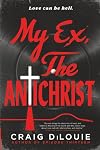
I enjoyed this one, and DiLouie impressed me with how well he slid along that razor's edge between serious horror and the possibility of falling into slapstick ridiculousness. He came damn close a few times to the slapstick, but never quite got over the line, which was good.
It's another end-of-the-world rock 'n' roll story, drawing from the same well as Hendrix's WE SOLD OUR SOULS, Brom's EVIL IN ME, a little bit of Hill's HEART SHAPED BOX, and the grandaddy of them all (in my opinion) show more George R. R. Martin's often-forgotten ARMAGEDDON RAG (the only book of his I've ever enjoyed).
Anyway, I will say I actually avoided even reading this novel for the longest time because, quite frankly, I hate the title. Yes, it's bang on for the book, but it sucks as a title.
Thankfully, the book is good, and does a great job of actually selling the rock music. DiLouie describes it really well, and I could almost hear the songs. And no, they weren't the crappy attempts that the audiobook snuck in there. That was awful. If you're going to namecheck Saint Joan (Jett) then at least get someone who can snarl with the same attitude.
Overall, though, enjoyable, fun read, with great characters. show less
It's another end-of-the-world rock 'n' roll story, drawing from the same well as Hendrix's WE SOLD OUR SOULS, Brom's EVIL IN ME, a little bit of Hill's HEART SHAPED BOX, and the grandaddy of them all (in my opinion) show more George R. R. Martin's often-forgotten ARMAGEDDON RAG (the only book of his I've ever enjoyed).
Anyway, I will say I actually avoided even reading this novel for the longest time because, quite frankly, I hate the title. Yes, it's bang on for the book, but it sucks as a title.
Thankfully, the book is good, and does a great job of actually selling the rock music. DiLouie describes it really well, and I could almost hear the songs. And no, they weren't the crappy attempts that the audiobook snuck in there. That was awful. If you're going to namecheck Saint Joan (Jett) then at least get someone who can snarl with the same attitude.
Overall, though, enjoyable, fun read, with great characters. show less
Lists
Epistolary Books (1)
Overdue Podcast (1)
Awards


You May Also Like


Associated Authors
Statistics
- Works
- 58
- Members
- 2,464
- Popularity
- #10,403
- Rating
- 3.7
- Reviews
- 100
- ISBNs
- 115
- Languages
- 5