
Lucan A. Way
Author of Competitive Authoritarianism: Hybrid Regimes after the Cold War
About the Author
Lucan Way is an associate professor of political science at the University of Toronto. He is the coauthor of Competitive Authoritarianism: Hybrid Regimes after the Cold War.
Works by Lucan A. Way
Revolution and Dictatorship: The Violent Origins of Durable Authoritarianism (2022) 40 copies, 2 reviews
Tagged
Common Knowledge
- Gender
- male
- Education
- Harvard University
University of California, Berkeley - Occupations
- professor
- Organizations
- University of Toronto
Members
Reviews

I have read many books in social and political theory which make a mockery of theoretical explanation. They use abstract terminology without explaining what their terms mean or how they are interrelated. They present arguments as perfect certainties, but the content of their arguments is so vague that it can only be challenged with equally vague verbiage. And the weakness of the underlying thought is disguised with hundreds of unnecessary pages which only add weight in the literal sense.
I show more liked this book because it's the precise opposite of bad social theory. The theoretical framework fits into a small figure (page 202) and can be easily understood from the text. The argument is sensible and the authors themselves evaluate it critically by analyzing case studies which conform to their theory, and also ones that don't! Finally, they say what they have to say and close shop without unnecessary loitering and repetition.
The argument of this book is that authoritarian political systems can become very durable if (1) they originate in a social revolution, (2) the revolutionaries pursue a radical political agenda which (3) leads to a strong counterrevolutionary reaction from somewhere, and if (4) the revolutionaries successfully unite as a cohesive elite group which overcomes the counterrevolution by eliminating alternative power centers and building a united military. Not all revolutionary systems pass through all stages, but the ones that do seem to have the tools to continue autocratic rulership for a long time.
As I already mentioned, the authors illustrate this argument with a number of case studies. The book also includes a list of all authoritarian regimes that ruled any nation in the world in the time period between 1900 and 2015, with a brief explanation why they were or were not included in this study. This degree of clarity and transparency is very admirable. After reading this book, the only question I had is this: the list of regimes that were not discussed in this book includes some that were durable, while others were not. How can these additional cases of durable authoritarianism be explained? If they can be cracked as clearly and elegantly as the ones studied in this book, I very much look forward to reading the sequel. show less
I show more liked this book because it's the precise opposite of bad social theory. The theoretical framework fits into a small figure (page 202) and can be easily understood from the text. The argument is sensible and the authors themselves evaluate it critically by analyzing case studies which conform to their theory, and also ones that don't! Finally, they say what they have to say and close shop without unnecessary loitering and repetition.
The argument of this book is that authoritarian political systems can become very durable if (1) they originate in a social revolution, (2) the revolutionaries pursue a radical political agenda which (3) leads to a strong counterrevolutionary reaction from somewhere, and if (4) the revolutionaries successfully unite as a cohesive elite group which overcomes the counterrevolution by eliminating alternative power centers and building a united military. Not all revolutionary systems pass through all stages, but the ones that do seem to have the tools to continue autocratic rulership for a long time.
As I already mentioned, the authors illustrate this argument with a number of case studies. The book also includes a list of all authoritarian regimes that ruled any nation in the world in the time period between 1900 and 2015, with a brief explanation why they were or were not included in this study. This degree of clarity and transparency is very admirable. After reading this book, the only question I had is this: the list of regimes that were not discussed in this book includes some that were durable, while others were not. How can these additional cases of durable authoritarianism be explained? If they can be cracked as clearly and elegantly as the ones studied in this book, I very much look forward to reading the sequel. show less
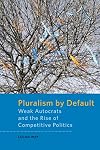
Although the tone of this book is a bit academic, it's still a worthwhile read even for a layman. The author argues that weak state institutions may often be a more important precondition for pluralistic politics than a strong civil society. If the person at the top of the political system does not hold command over an effective party and a united army, and if he cannot easily appropriate state income for his private aims, then politics will become pluralistic "by default".
The author show more discusses this argument in light of political developments in the Ukraine, Moldova and Belarus after the breakup of the Soviet Union. He maintains that national identity is a key variable. The Ukraine saw much more political plurality than Belarus because a much larger proportion of Ukraine's population had a strong national identity than in Belarus (where identities were strongly Russian).
Nevertheless, pluralism has not exactly yielded functioning democracies in the former Soviet republics where it emerged by default. Corruption may be even greater in countries where warring political factions alternately hold power than under autocratic leaders. The author adopts a somewhat detached perspective and refrains from discussing what benefits default pluralism has over authoritarianism. He also seems to have a pessimistic outlook on democratic grass-roots activism and international pressure for democratization. Most citizens are motivated by feelings of group identity rather than democratic ideals. Power-holders can often exploit this fact when they control the resources of the state.
An additional thought which came to mind when reading this book was that it would be interesting to compare the Ukraine and Belarus to Latin American countries which have also shifted between democracy and autocracy. To what extent has pluralism emerged by default there? show less
The author show more discusses this argument in light of political developments in the Ukraine, Moldova and Belarus after the breakup of the Soviet Union. He maintains that national identity is a key variable. The Ukraine saw much more political plurality than Belarus because a much larger proportion of Ukraine's population had a strong national identity than in Belarus (where identities were strongly Russian).
Nevertheless, pluralism has not exactly yielded functioning democracies in the former Soviet republics where it emerged by default. Corruption may be even greater in countries where warring political factions alternately hold power than under autocratic leaders. The author adopts a somewhat detached perspective and refrains from discussing what benefits default pluralism has over authoritarianism. He also seems to have a pessimistic outlook on democratic grass-roots activism and international pressure for democratization. Most citizens are motivated by feelings of group identity rather than democratic ideals. Power-holders can often exploit this fact when they control the resources of the state.
An additional thought which came to mind when reading this book was that it would be interesting to compare the Ukraine and Belarus to Latin American countries which have also shifted between democracy and autocracy. To what extent has pluralism emerged by default there? show less
A dense survey of 20th century revolutions, yet Levitsky and Way still compose an interesting thesis of regime change sweetspots.

This article in Foreign Affairs Magazine presents a clear and concise analysis of the Trump administration, its views, what it hopes to accomplish, and the impact this will have on both the national and global economy; in addition to the dangerous effects on American Democracy.
You May Also Like
Associated Authors
Statistics
- Works
- 7
- Members
- 117
- Popularity
- #168,596
- Rating
- 4.2
- Reviews
- 5
- ISBNs
- 13