
Wolfram Eberhard (1909–1989)
Author of Dictionary of Chinese Symbols: Hidden Symbols in Chinese Life and Thought (Routledge Dictionaries)
About the Author
Works by Wolfram Eberhard
Dictionary of Chinese Symbols: Hidden Symbols in Chinese Life and Thought (Routledge Dictionaries) (1983) 234 copies, 4 reviews
Studies in Chinese Folklore and Related Essays (Indiana University Folklore Institute Monograph Series, Vol. 23) (1970) 2 copies
Tagged
Common Knowledge
- Canonical name
- Eberhard, Wolfram
- Birthdate
- 1909-03-17
- Date of death
- 1989-08-15
- Gender
- male
- Education
- Berlin University
Seminar for Oriental Languages - Occupations
- sinologist
ethnologist - Organizations
- University of California, Berkeley
Berlin Anthropological Museum - Nationality
- Germany
- Birthplace
- Potsdam, German Empire
- Place of death
- El Cerrito, California, USA
- Associated Place (for map)
- El Cerrito, California, USA
Members
Reviews
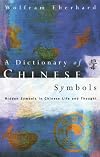
Delightful: This is a noteworthy volume from someone who for five decades had been one of the worlds preeminent Sinologists. The late Wolfram Eberhard, a former instructor at Peking National University, unfolds the story behind over 400 Chinese characters giving the reader a vivid insight to Chinese life and thought.The book starts with a ten-page introduction to Chinese symbolism and how the Chinese conception of words differ from views held by the West. The remainder of the book is an show more alphabetical listing of important symbols written in the form of an English-Chinese dictionary. Each entry contains the English word for a particular symbol, the Chinese equivalent (using both Chinese characters and Peking romanization) and an explanation as to why the ideas behind the symbol are important. Many entries are multiple paragraphs long and are accompanied by black-and-white illustrations from Chinese texts. Among the entries are numbers, colors, plants and animals, mythological characters, the cardinal directions, body parts, bodily functions, and several concepts that are uniquely Chinese. While the title implies the book is a dictionary this is a bit of a misnomer. Eberhard uses the dictionary format as a vehicle to introduce the reader to the cultural symbolism that lies behind selected Chinese characters. You will not find any detail on radicals, stroke order, stroke counts, or pronunciation as you might in a more typical language-oriented Chinese dictionary.
It would be impossible to comprehensively survey even the most common elements of Chinese symbology. The author himself states that his selections follow from a few basic themes such as health, happiness, and longevity. For a volume of its size and given the level of detail that it contains, Eberhard's work is about as comprehensive as one can get. The only real detraction is the lack of an index. Language students might also be disappointed by the lack of pin-yin romanization. The book is wonderful as a stand-alone primer on Chinese culture or as an adjunct text for students of the Chinese language who desire an intimate knowledge of the latent symbology that accompanies many Chinese words. show less
Lexikon chinesischer Symbole : geheime Sinnbilder in Kunst und Literatur, Leben und Denken der Chinesen by Wolfram Eberhard
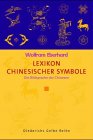
Rijk geïllustreerd overzicht van zo’n 400 nog steeds door de Chinezen gebruikte symbolen. Chinese karakters bij de hoofdlemma’s, niet bij de overige in de tekst genoemde Chinese termen en namen (zwak punt). De Duitse editie bevat nog een aantal kleurenplaten. Geen index; beknopte bibliografie. Moeilijk bruikbaar omdat veel termen alleen onder de vertaling worden behandeld en bij gebrek aan een index niet in hun Chinese versie kunnen worden opgezocht. Wel verwijzingen in een lemma zelf show more naar andere relevante termen. [BtH] show less
This unique and authoritative guide describes more than 400 important Chinese symbols, explaining their esoteric meanings and connections. Their use and development in Chinese literature and in Chinese custom and attitudes to life are traced lucidly and precisely. Source: Publisher

You May Also Like


Associated Authors
Statistics
- Works
- 28
- Members
- 481
- Popularity
- #51,316
- Rating
- 4.0
- Reviews
- 4
- ISBNs
- 56
- Languages
- 4