
Kate Riley (4)
Author of Ruth
For other authors named Kate Riley, see the disambiguation page.
Works by Kate Riley
Tagged
Common Knowledge
There is no Common Knowledge data for this author yet. You can help.
Members
Reviews
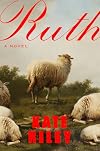
Ruth is a fascinating book which depicts the perspective of a woman who lives in an Amish like Christian community, where money and food are shared commodities and self-sufficiency is paramount. The backstory of the author Kate Riley is as interesting as the novel itself. Born a New Yorker, Riley at 25 decided to leave the city to experience this Christian community in Virginia to find out if living as a community was a better way to live a life. She began writing emails to her friend Molly show more Young who is a New York Times book critic and these emails eventually turned into this novel.
In the novel itself, we are told the story of Ruth, who was born into this Hutterite community and through her eyes we experienced the way life is constructed for a community of committed believers. “Unlike Riley, the protagonist, Ruth Della Scholl, is a lifer, born within the brotherhood in 1963 Gracefield, Michigan. Possessions and money are shared, food meted out by committee depending on family size, clothing prescribed by those in charge of sewing. Questions like “Should children pray?” are discussed at three-hour sessions in the Meeting Hall, and major decisions are made by a set of elders headed by someone called the Servant and his wife, seemingly benign authority figures who appear to know what’s best for everyone.”(interview from The Cut)
But our protagonist is unsettled throughout her life; her humor and her philosophical wonderings go against some parameters of the community. “Saturday morning chores rarely rewarded Ruth’s particular gifts, as the Dorf needed cleaning more than wit.“
She finds a husband and has children but never seems satisfied or particularly happy with those roles. At times, she is funny and it is through her eyes that we get to see the pros and cons of the community.
I will add that for me the book seem to trail off for the second half. I guess I was looking for some revelation that would send her to explore her own freedom, but overall I was happy to glimpse this portrait of a life so unfamiliar to my own.
Lines:
Growing up, Ruth surmised, was the process by which one became opaque to God, and this was why nobody could read her mother’s mind, or the elders’. Ruth thought of egg whites, clouding in a frying pan, and wondered whether she would still have evil thoughts when no one else could see them.
Ruth’s mother spoke to her in Hutterisch at home, and consequently Ruth never learned whether the language had application beyond scolding.
Esther often accused Ruth of buddling, a singular sin from the Western Colonies. To buddle was to waste time on little jobs; to fuss, to fiddle, to sit in a corner skinning twigs with the edge of a spoon instead of tidying up. Buddling connoted no mischief, only diversion. As with lactation, boys would not or could not buddle.
Like all good and mysterious things, presents grew in the dark and appeared in the morning, evidence that the world conspired toward delight.
Each floor shared a kitchenette, a cleaning closet, and two bathrooms, their communal use and maintenance a constant opportunity for sisters to sin. Domestic crimes—an oven light left blazing overnight, tidal scum in a bathtub—tempted women to furor the way women tempted men to lust.
“There must never be talk, either in open remarks or in insinuation, against a brother or a sister, against their individual characteristics—under no circumstances behind the person’s back. Talking in one’s own family is no exception.”
The only solution for anger at your husband is to bake him a pie. Ruth heard it first from her own mother, and understood: daily acts of love were the best way to express anger.
Now, instead of remaining with their own parents until marriage or orphanage, young people would be assigned to serve another family, and to rotate around the Dorf as practical and spiritual gaps demanded. This new way of life would provide the structure of kinship while precluding festering intimacy.
the presence of a Pisanki egg in a doorframe indicated that the household included a young woman.
and whenever Tolstoy was mentioned she was known to observe that, for a follower of Christ, he seemed to care awfully about the downy upper lips of Russian princesses.
Kurt was built honorable: a cedar barn of a young man with no cause or capacity for deception.
They spoke of the nearness of eternity as though it were a weather condition.
Colleen’s beauty was an embarrassment to the community, and from Dorf to Dorf she required vigilant censorship to protect others from lust.
Dorf bathrooms were equipped with round hand-mirrors in which it was impossible to fit all facial features at once, because, though always an attractive hazard, mirrors were least dangerous when they were too small to drown in.
The single camera possessed by each Dorf was locked in the Steward’s office and released only to document those things already known and endorsed by God: babies, baptisms, weddings. Couples were photographed in their first week of marriage and then again after twenty-five years, appearing in the interim as hands or laps, landscape for children.
Once engaged, a couple was pursued by a floral arch until marriage. It framed them at every community meal, disappearing in between for misting and repairs in the storage closet off the dining hall.
She would be married in a moment to the man holding her hand for the third time in their lives. They answered the marriage questions, ate peppermint cookies, and led the shivaree into the icy new year.
Like rising bread, seedlings, and world news, babies were dull as dun to watch for any length of time. Couldn’t she just check in on his implausible development every few days?
She was confoundingly agreeable, forfeiting toys with all faith in bounty, and returned Jamie’s frequent treachery with love. Ruth was discomfited to see her marriage performed in miniature.
Ruth’s sighs were the whetstone against which he sharpened his arguments.
At every burial God was thanked for fulfilling his own definition through the incomprehensible giving and taking of souls. Forced ponderance of eternity was a gift. show less
In the novel itself, we are told the story of Ruth, who was born into this Hutterite community and through her eyes we experienced the way life is constructed for a community of committed believers. “Unlike Riley, the protagonist, Ruth Della Scholl, is a lifer, born within the brotherhood in 1963 Gracefield, Michigan. Possessions and money are shared, food meted out by committee depending on family size, clothing prescribed by those in charge of sewing. Questions like “Should children pray?” are discussed at three-hour sessions in the Meeting Hall, and major decisions are made by a set of elders headed by someone called the Servant and his wife, seemingly benign authority figures who appear to know what’s best for everyone.”(interview from The Cut)
But our protagonist is unsettled throughout her life; her humor and her philosophical wonderings go against some parameters of the community. “Saturday morning chores rarely rewarded Ruth’s particular gifts, as the Dorf needed cleaning more than wit.“
She finds a husband and has children but never seems satisfied or particularly happy with those roles. At times, she is funny and it is through her eyes that we get to see the pros and cons of the community.
I will add that for me the book seem to trail off for the second half. I guess I was looking for some revelation that would send her to explore her own freedom, but overall I was happy to glimpse this portrait of a life so unfamiliar to my own.
Lines:
Growing up, Ruth surmised, was the process by which one became opaque to God, and this was why nobody could read her mother’s mind, or the elders’. Ruth thought of egg whites, clouding in a frying pan, and wondered whether she would still have evil thoughts when no one else could see them.
Ruth’s mother spoke to her in Hutterisch at home, and consequently Ruth never learned whether the language had application beyond scolding.
Esther often accused Ruth of buddling, a singular sin from the Western Colonies. To buddle was to waste time on little jobs; to fuss, to fiddle, to sit in a corner skinning twigs with the edge of a spoon instead of tidying up. Buddling connoted no mischief, only diversion. As with lactation, boys would not or could not buddle.
Like all good and mysterious things, presents grew in the dark and appeared in the morning, evidence that the world conspired toward delight.
Each floor shared a kitchenette, a cleaning closet, and two bathrooms, their communal use and maintenance a constant opportunity for sisters to sin. Domestic crimes—an oven light left blazing overnight, tidal scum in a bathtub—tempted women to furor the way women tempted men to lust.
“There must never be talk, either in open remarks or in insinuation, against a brother or a sister, against their individual characteristics—under no circumstances behind the person’s back. Talking in one’s own family is no exception.”
The only solution for anger at your husband is to bake him a pie. Ruth heard it first from her own mother, and understood: daily acts of love were the best way to express anger.
Now, instead of remaining with their own parents until marriage or orphanage, young people would be assigned to serve another family, and to rotate around the Dorf as practical and spiritual gaps demanded. This new way of life would provide the structure of kinship while precluding festering intimacy.
the presence of a Pisanki egg in a doorframe indicated that the household included a young woman.
and whenever Tolstoy was mentioned she was known to observe that, for a follower of Christ, he seemed to care awfully about the downy upper lips of Russian princesses.
Kurt was built honorable: a cedar barn of a young man with no cause or capacity for deception.
They spoke of the nearness of eternity as though it were a weather condition.
Colleen’s beauty was an embarrassment to the community, and from Dorf to Dorf she required vigilant censorship to protect others from lust.
Dorf bathrooms were equipped with round hand-mirrors in which it was impossible to fit all facial features at once, because, though always an attractive hazard, mirrors were least dangerous when they were too small to drown in.
The single camera possessed by each Dorf was locked in the Steward’s office and released only to document those things already known and endorsed by God: babies, baptisms, weddings. Couples were photographed in their first week of marriage and then again after twenty-five years, appearing in the interim as hands or laps, landscape for children.
Once engaged, a couple was pursued by a floral arch until marriage. It framed them at every community meal, disappearing in between for misting and repairs in the storage closet off the dining hall.
She would be married in a moment to the man holding her hand for the third time in their lives. They answered the marriage questions, ate peppermint cookies, and led the shivaree into the icy new year.
Like rising bread, seedlings, and world news, babies were dull as dun to watch for any length of time. Couldn’t she just check in on his implausible development every few days?
She was confoundingly agreeable, forfeiting toys with all faith in bounty, and returned Jamie’s frequent treachery with love. Ruth was discomfited to see her marriage performed in miniature.
Ruth’s sighs were the whetstone against which he sharpened his arguments.
At every burial God was thanked for fulfilling his own definition through the incomprehensible giving and taking of souls. Forced ponderance of eternity was a gift. show less
Lists
Cults (1)
Awards


You May Also Like
Associated Authors
Statistics
- Works
- 1
- Members
- 101
- Popularity
- #188,709
- Rating
- 3.6
- Reviews
- 1
- ISBNs
- 11