
E. D. Hirsch
Author of Cultural Literacy: What Every American Needs to Know
About the Author
Hirsch is a conservative critic best known for his repudiation of critical approaches to literature (chiefly poststructuralism and New Criticism) that assume that the author's intentions do not determine readings. He argues that any such methodology is guilty of "the organic fallacy," the belief show more that the text leads a life of its own. For Hirsch, the author's authority is the key to literary interpretation: The critic's job is to reproduce textual meaning by recovering the author's consciousness, which guarantees the validity of an interpretation. In his two most important books, Validity in Interpretation (1967) and its sequel, The Aims of Interpretation (1976), Hirsch warns against the "critical anarchy" that follows from the "cognitive atheism" of both relativism and subjectivism. For him, these result from a corollary of the organic fallacy, the thesis that meaning is ultimately indeterminate because it changes over time or with the differing interests and values of different readers. According to Hirsch, meaning does not change; only value or significance does, as readers relate a text's fixed meaning to their cultures. If there is more than one valid interpretation of a text, it is because literature may be reduced to more than one "intrinsic genre" or meaning type---the particular set of conventions governing ways of seeing and of making meaning at the time the author was writing. Many critics suggest that the intentions Hirsch recovers in intrinsic genres are really his own, rather than those of the author, because no one, including Hirsch, can escape his or her historically conditioned frame of reference when developing interpretations of literature. Hirsch's recent books, including Cultural Literacy (1987), are seen as proof of those flaws by those who are troubled by the history and values of the dominant culture that Hirsch insists is the only culture. Hirsch argues that "common knowledge" is being denied minority students and others by feminists and other "radicals" who have undermined the authority of its great texts. (Bowker Author Biography) show less
Image credit: Timothy Greenfield-Sanders
Core Knowledge Foundation
Core Knowledge Foundation
Series
Works by E. D. Hirsch
The New Dictionary of Cultural Literacy: What Every American Needs to Know (2002) 849 copies, 9 reviews
What Your Third Grader Needs to Know (Revised Edition): Fundamentals of a Good Third-Grade Education (Core Knowledge Series) (1992) 634 copies, 4 reviews
What Your Sixth Grader Needs to Know: Fundamentals of a Good Sixth-Grade Education (Core Knowledge Series : Resource Books for Grades One Through Six,) (1993) 480 copies, 1 review
Books to Build On: A Grade-by-Grade Resource Guide for Parents and Teachers (Core Knowledge Series) (1996) 267 copies, 1 review
What Your Preschooler Needs to Know: Get Ready for Kindergarten (The Core Knowledge Series) (2008) 201 copies, 2 reviews
The Knowledge Deficit: Closing the Shocking Education Gap for American Children (2006) 172 copies, 6 reviews
How to Educate a Citizen: The Power of Shared Knowledge to Unify a Nation (2020) 76 copies, 2 reviews
Why Knowledge Matters: Rescuing Our Children from Failed Educational Theories (2016) 69 copies, 1 review
Realms of Gold 7 copies
Multicultural Literacy 2 copies
What Your Year 1 Child Needs to Know: Preparing Your Child for a Lifetime of Learning (Core Knowledge UK) (2011) 1 copy
Immigration and citizenship 1 copy
Ancient Greece 1 copy
Associated Works
Tagged
Common Knowledge
- Canonical name
- Hirsch, E. D.
- Legal name
- Hirsch, Eric Donald
- Other names
- Hirsch, E. D., Jr.
- Birthdate
- 1928-03-22
- Gender
- male
- Education
- Cornell University (BA|1950)
Yale University (Ph.D|1957) - Occupations
- professor
literary critic
literature scholar - Organizations
- University of Virginia
Core Knowledge Foundation
Hoover Institution (1999-2006)
Yale University - Awards and honors
- Thomas B. Fordham Prize for Excellence in Education (2003)
American Academy of Arts and Sciences (1977)
Explicator Prize (1965) - Agent
- Marly Rusoff
- Nationality
- USA
- Birthplace
- Memphis, Tennessee, USA
- Places of residence
- Charlottesville, Virginia, USA
- Associated Place (for map)
- USA
Members
Reviews
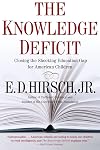
This book changed how I approach education.
I began this book agreeing with some of Hirsch's precepts, and vehemently disagreeing with others. For instance, I have always opposed the "national curriculum" approach, and supported the ideal of each local school district being a world unto itself and having a duty to reflect the beliefs of the local community. E.D. Hirsch, in this book, lays out, step-by-step, how this is at best inefficient, and shows how it is children from low-income families show more that will disproportionately pay the price under such a system. Reading this book clarified something for me I couldn't previously explain: my school experience was extremely fragmented and repetitive, and for much of those years I am convinced I learned nothing at all in class, yet I always scored very highly on all standardized tests and comprehension was never what I struggled with in school. I may not have had a great school experience, but I was raised in a highly-literate middle-class home, and this environment was able to provide the education school did not. And what I saw in school, just as Hirsch predicted, is my less-fortunate peers falling further and further behind and struggling to understand even simple passages that I thought were boringly simple.
My educational successes do not reflect how great our current educational approach is, it shows only that I succeeded in spite of the monumental waste of time and resources. Many others did not. I strongly recommend this book to anyone wishing to learn more about the effectiveness of these different "educational approaches" found in schools today. show less
I began this book agreeing with some of Hirsch's precepts, and vehemently disagreeing with others. For instance, I have always opposed the "national curriculum" approach, and supported the ideal of each local school district being a world unto itself and having a duty to reflect the beliefs of the local community. E.D. Hirsch, in this book, lays out, step-by-step, how this is at best inefficient, and shows how it is children from low-income families show more that will disproportionately pay the price under such a system. Reading this book clarified something for me I couldn't previously explain: my school experience was extremely fragmented and repetitive, and for much of those years I am convinced I learned nothing at all in class, yet I always scored very highly on all standardized tests and comprehension was never what I struggled with in school. I may not have had a great school experience, but I was raised in a highly-literate middle-class home, and this environment was able to provide the education school did not. And what I saw in school, just as Hirsch predicted, is my less-fortunate peers falling further and further behind and struggling to understand even simple passages that I thought were boringly simple.
My educational successes do not reflect how great our current educational approach is, it shows only that I succeeded in spite of the monumental waste of time and resources. Many others did not. I strongly recommend this book to anyone wishing to learn more about the effectiveness of these different "educational approaches" found in schools today. show less
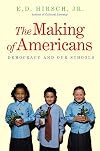
E D Hirsch is a voice crying out in the wilderness. Although he has seen his Core Knowledge curriculum gain a beachhead on the vast and desolate shores of American schooling, he’s getting well on in years, and his tone in this his latest book is more urgent than ever.
Hirsch’s project is straightforward, coherent, and sensible. He believes that the decline in American educational standards, especially in reading, can be traced to the early 20th-century abandoning of a content-rich, show more democracy-nourishing curriculum in schools, in favor of a child-centered, anti-content program focused on process. This impoverished and counterproductive approach now dominates American schools, and is dogma in university education programs, with doubters labeled as heretics and almost ritually cast out.
The result is bad schools in which children are expected to become educated via a kind of magical indirect osmosis as they engage in endless process-based activities and drills. How will Junior learn how to find Mozambique on a map? Oh, he’ll pick that up when he’s collaborating in a group activity designing a tribal mask . . . .
So Hirsch has been down this road before – see both Cultural Literacy and The Schools We Need and Why We Don’t Have Them – but it’s still worth the time reading this book. Hirsch develops philosophical foundations for his program at much greater depth here, looking back to the American founders, and stating with power and elegance why a common linguistic and cultural base is not just important for the ongoing health of a democracy, but decisive.
It’s almost sad, however, to read the passages in The Making of Americans in which Hirsch tries to convince his many liberal/left critics that he’s really on their side. He argues (utterly persuasively to me, but I’m a conservative) that equipping all children with the same cultural knowledge is the surest path to equality of opportunity, but throughout his career this plea has fallen on deaf ears – not only in the education establishment, but among liberals in general. Hirsch admits that although he’s a life-long political liberal, the only people who will entertain his ideas are conservatives.
I think Hirsch underestimates – or at least tries to ignore – the hostility of the American left to the kind of education he has devoted his considerable talents and energies to promoting. In one telling example, he asks, plaintively, that wouldn’t it be great if following a core knowledge curriculum could reduce the achievement gap between white and Asian students on side, and Black and Hispanic students on the other, and thereby eliminate the need for affirmative action? But to much of the left, that would be a disaster. Affirmative action is the lifeblood of their political program; the maintenance of the achievement gap is an unacknowledged feature, not a bug.
So give Hirsch unending credit for storming those heavily-fortified beaches one more time. His quest may be quixotic, but it’s certainly inspiring. And since Hirsch is so obviously right, perhaps his day will yet come. I hope he will still be with us to enjoy it. show less
Hirsch’s project is straightforward, coherent, and sensible. He believes that the decline in American educational standards, especially in reading, can be traced to the early 20th-century abandoning of a content-rich, show more democracy-nourishing curriculum in schools, in favor of a child-centered, anti-content program focused on process. This impoverished and counterproductive approach now dominates American schools, and is dogma in university education programs, with doubters labeled as heretics and almost ritually cast out.
The result is bad schools in which children are expected to become educated via a kind of magical indirect osmosis as they engage in endless process-based activities and drills. How will Junior learn how to find Mozambique on a map? Oh, he’ll pick that up when he’s collaborating in a group activity designing a tribal mask . . . .
So Hirsch has been down this road before – see both Cultural Literacy and The Schools We Need and Why We Don’t Have Them – but it’s still worth the time reading this book. Hirsch develops philosophical foundations for his program at much greater depth here, looking back to the American founders, and stating with power and elegance why a common linguistic and cultural base is not just important for the ongoing health of a democracy, but decisive.
It’s almost sad, however, to read the passages in The Making of Americans in which Hirsch tries to convince his many liberal/left critics that he’s really on their side. He argues (utterly persuasively to me, but I’m a conservative) that equipping all children with the same cultural knowledge is the surest path to equality of opportunity, but throughout his career this plea has fallen on deaf ears – not only in the education establishment, but among liberals in general. Hirsch admits that although he’s a life-long political liberal, the only people who will entertain his ideas are conservatives.
I think Hirsch underestimates – or at least tries to ignore – the hostility of the American left to the kind of education he has devoted his considerable talents and energies to promoting. In one telling example, he asks, plaintively, that wouldn’t it be great if following a core knowledge curriculum could reduce the achievement gap between white and Asian students on side, and Black and Hispanic students on the other, and thereby eliminate the need for affirmative action? But to much of the left, that would be a disaster. Affirmative action is the lifeblood of their political program; the maintenance of the achievement gap is an unacknowledged feature, not a bug.
So give Hirsch unending credit for storming those heavily-fortified beaches one more time. His quest may be quixotic, but it’s certainly inspiring. And since Hirsch is so obviously right, perhaps his day will yet come. I hope he will still be with us to enjoy it. show less
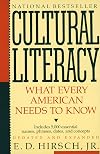
This book is more notable, in my opinion, for all the many omissions than for what it does include. The sections on history are especially lacking. There are actually not entries for slavery (although the slave trade gets a mention), pogroms, or genocide, for example. “Literature in English” is another section that doesn’t do justice to actual literature in English, especially with respect to children’s literature. Dr. Seuss actually has an entry, but where is Maurice Sendak, show more Margaret Wise Brown, C.S. Lewis, or Ludwig Bemelmans, to name a very few of the excluded?
Other sections, which include the Bible, Mythology and Folklore, World Literature, Fine Arts, Geography, and sciences, inter alia, are similarly lacking. With resources on the World Wide Web at our disposal, I really don’t see a reason to have this book. show less
Other sections, which include the Bible, Mythology and Folklore, World Literature, Fine Arts, Geography, and sciences, inter alia, are similarly lacking. With resources on the World Wide Web at our disposal, I really don’t see a reason to have this book. show less
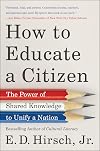
This was the first book written by Hirsch that I have read. It will not be the last. Hirsch's wisdom regarding our educational system's need for changes is very illuminating. Although the book starts out a bit slow, it builds later on into a clear evidential case for change, with clear and convincing data that demonstrates what has happened in the US and in foreign countries that have moved to child-centered classrooms versus knowledge centered classrooms. The empirical evidence is clear for show more pursing knowledge based education, but the so-called "experts" (professors in our educational institutions) refuse to accept it, but instead choose to ignore it, in my opinion, for political reasons. In their mindset, pursuing child centered education makes it easier to push the agenda that disadvantaged groups will be left behind. unfortunately, Hirsch puts forth the evidence that knowledge based education clearly leads to better outcome for all. How sad our US system has strayed so far into their failed ideology that it is questionable it can ever be changed. show less
Lists
Awards


You May Also Like


Associated Authors
Statistics
- Works
- 63
- Also by
- 3
- Members
- 10,961
- Popularity
- #2,157
- Rating
- 3.9
- Reviews
- 64
- ISBNs
- 155
- Languages
- 2