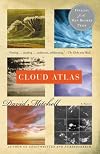
Cloud Atlas's six 'nested' stories represent an interesting experiment in narrative form, and some parts of the book are enjoyable. I was amused by the Timothy Cavendish elder-rogue segments, and the Somni sci-fi story was competently executed, if derivative.
But some of the book's other stories are rather flat, and I thought David Mitchell worked far too hard to shove his writerly virtuosity in his readers' faces. Yes, yes, very clever structure, David, but might I suggest in this case the book's parts are less than their sum? That is, Cloud Atlas's overarching concept overshadows the actual execution of its constituent stories. As I progressed through the book's movements, I found myself constantly wondering if I would be bothering with reading the story at hand if it were not interlinked with the others; my answer was generally 'no'. And since this is quite a long book, I find it difficult to recommend wholeheartedly; it's asking too much of the reader to plow through frequently mediocre storytelling in order to experience what is in essence a fairly straightforward narrative trick.
But some of the book's other stories are rather flat, and I thought David Mitchell worked far too hard to shove his writerly virtuosity in his readers' faces. Yes, yes, very clever structure, David, but might I suggest in this case the book's parts are less than their sum? That is, Cloud Atlas's overarching concept overshadows the actual execution of its constituent stories. As I progressed through the book's movements, I found myself constantly wondering if I would be bothering with reading the story at hand if it were not interlinked with the others; my answer was generally 'no'. And since this is quite a long book, I find it difficult to recommend wholeheartedly; it's asking too much of the reader to plow through frequently mediocre storytelling in order to experience what is in essence a fairly straightforward narrative trick.
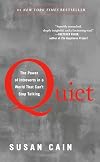
Susan Cain is an introvert. Quiet therefore speaks with the voice of experience. As a fellow introvert, much of this introduction to the introverted personality rang true. I appreciated Cain's countercultural stance on numerous issues, especially the uses (or lack thereof) of group work and collaboration, and the power of solitary thinking and curiosity.
And yet I was less pleased with this book in the end than I initially thought I would be. Cain writes very well, and achieves a reasonable mix of anecdotal and research information, but a disappointing number of her examples were shallow and conventional. Al Gore as a model introvert? Come on! I got the feeling that Cain pulled punches and dropped names with her TED talk and the lecture circuit firmly in mind. Can't really blame her for knowing and acknowledging how bread gets buttered, but the book suffers for this.
I also wanted to hear more from and about other types of introverts. I did watch Cain's TED talk, and she comes across as a 'conventional' sort of introvert, i.e. she projects a quiet and ethereal persona. I'm a quite different sort of introvert -- I can project a more 'extroverted' persona that includes confident public speaking and group participation -- but I fit other introverted criteria, especially those related to the cost in energy and effort maintaining this persona requires. I think there are many, many introverts like me, and I found Cain's coverage of this phenomenon inadequate.
On the whole, show more though, I'd recommend Quiet -- to introverts, sure, but perhaps even more to extroverted managers, teachers and others who would benefit from better understanding the introverts around them. show less
And yet I was less pleased with this book in the end than I initially thought I would be. Cain writes very well, and achieves a reasonable mix of anecdotal and research information, but a disappointing number of her examples were shallow and conventional. Al Gore as a model introvert? Come on! I got the feeling that Cain pulled punches and dropped names with her TED talk and the lecture circuit firmly in mind. Can't really blame her for knowing and acknowledging how bread gets buttered, but the book suffers for this.
I also wanted to hear more from and about other types of introverts. I did watch Cain's TED talk, and she comes across as a 'conventional' sort of introvert, i.e. she projects a quiet and ethereal persona. I'm a quite different sort of introvert -- I can project a more 'extroverted' persona that includes confident public speaking and group participation -- but I fit other introverted criteria, especially those related to the cost in energy and effort maintaining this persona requires. I think there are many, many introverts like me, and I found Cain's coverage of this phenomenon inadequate.
On the whole, show more though, I'd recommend Quiet -- to introverts, sure, but perhaps even more to extroverted managers, teachers and others who would benefit from better understanding the introverts around them. show less
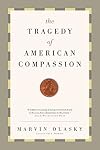
I cannot recall where I came across a reference to this book -- but I am very, very glad I did.
Although this comprehensive and remarkably illuminating history of American charity and social service is now over 20 years old, it could not be more apposite, as fresh record highs for the number of people depending on government largesse seem to be set weekly in Obama's America.
Marvin Olasky surveys the provisions for the poor and needy from colonial America through the 1980s. He traces the devolution of these efforts from personal, hands-on, discriminating (in the positive sense) religious charity to the entitlement state of the 1960s and beyond. This is a history rarely told, as the many advocates of the welfare state would prefer you believe that before Uncle Sam started collecting from the productive to redistribute to the 'poor', the latter simply starved in the gutters.
Nothing of the sort is true. Conversely, the 19th century in particular saw a web of charitable organizations upholding the common good, with largely volunteer workers applying the 'seven marks of compassion' -- affiliation, bonding, categorization, discernment, employment, freedom and God -- in distributing charity to the truly needy, while providing chances for work for those who were able. The goal was the transformation of lives, not establishing entitlements that sap initiative and ultimately undermine the humanity of those who come to expect and depend on them. Olasky shows how this true compassion show more was far more generous than the 'stingy' entitlement state: the former intimately involved the giver and those who received; the latter absolves the taxpayer from any other personal costs, and enslaves and demeans those on the dole.
This book should be required reading in every sociology and social work program in the USA. show less
Although this comprehensive and remarkably illuminating history of American charity and social service is now over 20 years old, it could not be more apposite, as fresh record highs for the number of people depending on government largesse seem to be set weekly in Obama's America.
Marvin Olasky surveys the provisions for the poor and needy from colonial America through the 1980s. He traces the devolution of these efforts from personal, hands-on, discriminating (in the positive sense) religious charity to the entitlement state of the 1960s and beyond. This is a history rarely told, as the many advocates of the welfare state would prefer you believe that before Uncle Sam started collecting from the productive to redistribute to the 'poor', the latter simply starved in the gutters.
Nothing of the sort is true. Conversely, the 19th century in particular saw a web of charitable organizations upholding the common good, with largely volunteer workers applying the 'seven marks of compassion' -- affiliation, bonding, categorization, discernment, employment, freedom and God -- in distributing charity to the truly needy, while providing chances for work for those who were able. The goal was the transformation of lives, not establishing entitlements that sap initiative and ultimately undermine the humanity of those who come to expect and depend on them. Olasky shows how this true compassion show more was far more generous than the 'stingy' entitlement state: the former intimately involved the giver and those who received; the latter absolves the taxpayer from any other personal costs, and enslaves and demeans those on the dole.
This book should be required reading in every sociology and social work program in the USA. show less
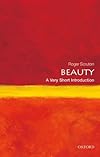
Roger Scruton's introduction to beauty is indeed very short, but its importance is vast. Scruton cogently analyses several traditional western approaches to identifying, apprehending, and learning from the beautiful, and crisply diagnoses the aesthetic disease of the postmodern west: we veer toward two extremes -- kitsch and desecration -- that both keep us from understanding, producing and learning from real beauty. And this sickness goes deep; it reveals our inability to live lives that reach beyond the mundane into the sacred and sacrificial realms in which we are created and called to live:
"That is why art matters. Without the conscious pursuit of beauty we risk falling into a world of addictive pleasures and routine desecration, a world in which the worthwhileness of human life is no longer perceivable."
This is a nearly perfect little book, marred only by repeated, and odd, errors in punctuation. I find it difficult to believe Scruton himself does not grasp apposition, so I suspect his editors at Oxford University Press are to blame.
But this is a minor flaw. Scruton has written an illuminating, provocative, and -- may I say it -- occasionally beautiful book.
"That is why art matters. Without the conscious pursuit of beauty we risk falling into a world of addictive pleasures and routine desecration, a world in which the worthwhileness of human life is no longer perceivable."
This is a nearly perfect little book, marred only by repeated, and odd, errors in punctuation. I find it difficult to believe Scruton himself does not grasp apposition, so I suspect his editors at Oxford University Press are to blame.
But this is a minor flaw. Scruton has written an illuminating, provocative, and -- may I say it -- occasionally beautiful book.
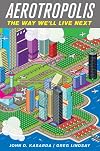
Aerotropolis is the kind of book I normally love – it’s written in a lively, engaging style; it covers a topic I find fascinating, i.e. a kind of behind-the-scenes analysis of a typically-overlooked phenomenon (i.e. the effects big airports have on the societies that build them); and it makes a valiant attempt to try to understand that phenomenon using a broad, multidisciplinary approach.
And yet . . . . what seems to be a highly-combustible combination never really ignites. Aerotropolis’s chapters drag at times, repetition starts to filter in, and the reader (at least this one) loses interest. There’s not enough solid insight here to justify the reading effort.
And yet . . . . what seems to be a highly-combustible combination never really ignites. Aerotropolis’s chapters drag at times, repetition starts to filter in, and the reader (at least this one) loses interest. There’s not enough solid insight here to justify the reading effort.
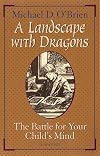
Michael O’Brien’s A Landscape with Dragons is an unusual and interesting book. O’Brien, the author of numerous works of Christian fiction (e.g. the superlative Father Elijah) and non-fiction, is also an expert on fantasy literature, especially for children. That genre is the ostensible subject here, but in fact O’Brien ranges widely, fitting together essays on the formation of the Christian imagination with readings of works from authors O’Brien recommends (e.g. Tolkien, C S Lewis and George MacDonald) as well as those he believes are fundamentally disordered and therefore off-limits for Christian parents looking to regulate their children’s reading.
Perhaps most interesting are O’Brien’s comments on works that fall somewhere in the gray area between obviously wholesome and utterly without merit. O’Brien assigns several prominent fantasy authors (whom many Christians find unobjectionable) into this ‘Read with extreme caution’ category, e.g. Ursula Le Guin and Madeleine L’Engle. O’Brien's standards are very strict indeed: any suggestion that powers or points of view associated with witchcraft or the occult can be used for the good are assigned a serious red flag. This means a ‘good witch’ is an oxymoron in O’Brien’s reckoning, and that dragons can never, ever be tamed.
I have a great deal of sympathy with O’Brien’s seriousness, and with his almost desperate urge to convince readers that the formation of a child’s imagination is show more crucial in raising that child in a godly way. But – and I suppose you sensed a ‘but’ was coming at this point – I wonder if O’Brien worries just a bit too much. Children are plastic and fragile, indeed, but they are also resilient and not stupid. I feared by the end of the book that O’Brien was granting mere storybooks vast, unwarranted powers over the fates of children. I realize this is not his intention – he is looking at the broad scope of the input into a child’s imagination over years – but again and again he suggests that a single exposure to a disordered story can scar and warp a child’s imagination, and even threaten her very soul.
This book was written in the late 1990s, just before the Harry Potter books became a global phenomenon. It’s no surprise that O’Brien quickly emerged thereafter as one of J K Rowling’s most prominent Christian critics. For O’Brien, no story that features witches and wizards can be a good story; this is inverting the Biblical order, and children cannot be trusted to realize that in our real world no one is born a witch with the power to choose to use magical gifts for good or ill.
But in this book I see O’Brien (rightly) laud Tolkien’s work, which features a wizard, one Gandalf the Grey, and I wonder where exactly lies the line that separates him from young Mr Potter. O’Brien anticipates this, and tries to divert the argument by suggesting that Gandalf doesn’t really employ the magical powers of a typical wizard, that he is more a moral and spiritual guide. But O’Brien – who is clearly a reader of great sensitivity and subtlety – must realize this is a convenient sidestep at best. I seem to recall Gandalf regularly hurling spells in open warfare against beings of his own kind or much similar, and carrying a staff that is simply Harry Potter’s wand writ large.
So I will agree to disagree with O’Brien on some points, but on the whole this is a book still highly worth reading. Of particular value is its last section, in which O’Brien lists out hundreds of books for children and young people of all ages that are sure to be solid food for forming Christian imaginations. Any Christian parent will benefit from access to these suggestions, and from the very powerful foundation for following them O’Brien provides. show less
Perhaps most interesting are O’Brien’s comments on works that fall somewhere in the gray area between obviously wholesome and utterly without merit. O’Brien assigns several prominent fantasy authors (whom many Christians find unobjectionable) into this ‘Read with extreme caution’ category, e.g. Ursula Le Guin and Madeleine L’Engle. O’Brien's standards are very strict indeed: any suggestion that powers or points of view associated with witchcraft or the occult can be used for the good are assigned a serious red flag. This means a ‘good witch’ is an oxymoron in O’Brien’s reckoning, and that dragons can never, ever be tamed.
I have a great deal of sympathy with O’Brien’s seriousness, and with his almost desperate urge to convince readers that the formation of a child’s imagination is show more crucial in raising that child in a godly way. But – and I suppose you sensed a ‘but’ was coming at this point – I wonder if O’Brien worries just a bit too much. Children are plastic and fragile, indeed, but they are also resilient and not stupid. I feared by the end of the book that O’Brien was granting mere storybooks vast, unwarranted powers over the fates of children. I realize this is not his intention – he is looking at the broad scope of the input into a child’s imagination over years – but again and again he suggests that a single exposure to a disordered story can scar and warp a child’s imagination, and even threaten her very soul.
This book was written in the late 1990s, just before the Harry Potter books became a global phenomenon. It’s no surprise that O’Brien quickly emerged thereafter as one of J K Rowling’s most prominent Christian critics. For O’Brien, no story that features witches and wizards can be a good story; this is inverting the Biblical order, and children cannot be trusted to realize that in our real world no one is born a witch with the power to choose to use magical gifts for good or ill.
But in this book I see O’Brien (rightly) laud Tolkien’s work, which features a wizard, one Gandalf the Grey, and I wonder where exactly lies the line that separates him from young Mr Potter. O’Brien anticipates this, and tries to divert the argument by suggesting that Gandalf doesn’t really employ the magical powers of a typical wizard, that he is more a moral and spiritual guide. But O’Brien – who is clearly a reader of great sensitivity and subtlety – must realize this is a convenient sidestep at best. I seem to recall Gandalf regularly hurling spells in open warfare against beings of his own kind or much similar, and carrying a staff that is simply Harry Potter’s wand writ large.
So I will agree to disagree with O’Brien on some points, but on the whole this is a book still highly worth reading. Of particular value is its last section, in which O’Brien lists out hundreds of books for children and young people of all ages that are sure to be solid food for forming Christian imaginations. Any Christian parent will benefit from access to these suggestions, and from the very powerful foundation for following them O’Brien provides. show less
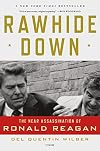
Rawhide Down is a detailed account of that fateful day in 1981 when John Hinckley gunned down President Ronald Reagan and several members of his party outside a hotel in Washington DC.
This was of course a momentous day, but it seems in recent years it’s faded quite drastically into the cultural background. ‘Oh yeah, that’s right – Reagan got shot just after he took office . . .’. Reagan’s two terms were so eventful that this early incident seems far in the past indeed, and since Reagan seemed to recover so rapidly, it’s easy to forget how very close he came to dying.
This book brings back the memories of that day, vividly, and adds a great deal of fascinating detail and insight. It’s not a macabre book at all, though – in fact, strangely enough, it’s almost a ‘feel-good’ read. Not only did the President himself show remarkable bravery and savoir-faire, the medical team that saved his life was extraordinary. The sequences in the book that highlight, almost minute by minute, this team’s actions in saving Reagan’s life are gripping and often moving.
Most of the rest of the book focuses on the goings-on in the White House, as shocked members of the administration scrambled, sometimes ineffectively, to say and do the right things in the face of the great uncertainty and confusion that accompanies a threat to the life a world leader. Wilber recounts Vice-President Bush’s flight back from Texas to Washington, and the behind-the-scenes White House show more meetings that culminated in Al Haig’s bizarre announcement to the press. I found these parts of the book more interesting than compelling. At this historical distance – it’s over 30 years ago, now – I was more interested in what was happening to Reagan himself than to the ephemeral machinations of his administration.
But that is no criticism of Rawhide Down. Wilber’s account deserves to read by anyone interested in American history, in the life of one of our greatest presidents, and in human drama in general. show less
This was of course a momentous day, but it seems in recent years it’s faded quite drastically into the cultural background. ‘Oh yeah, that’s right – Reagan got shot just after he took office . . .’. Reagan’s two terms were so eventful that this early incident seems far in the past indeed, and since Reagan seemed to recover so rapidly, it’s easy to forget how very close he came to dying.
This book brings back the memories of that day, vividly, and adds a great deal of fascinating detail and insight. It’s not a macabre book at all, though – in fact, strangely enough, it’s almost a ‘feel-good’ read. Not only did the President himself show remarkable bravery and savoir-faire, the medical team that saved his life was extraordinary. The sequences in the book that highlight, almost minute by minute, this team’s actions in saving Reagan’s life are gripping and often moving.
Most of the rest of the book focuses on the goings-on in the White House, as shocked members of the administration scrambled, sometimes ineffectively, to say and do the right things in the face of the great uncertainty and confusion that accompanies a threat to the life a world leader. Wilber recounts Vice-President Bush’s flight back from Texas to Washington, and the behind-the-scenes White House show more meetings that culminated in Al Haig’s bizarre announcement to the press. I found these parts of the book more interesting than compelling. At this historical distance – it’s over 30 years ago, now – I was more interested in what was happening to Reagan himself than to the ephemeral machinations of his administration.
But that is no criticism of Rawhide Down. Wilber’s account deserves to read by anyone interested in American history, in the life of one of our greatest presidents, and in human drama in general. show less
A Pattern Language: Towns, Buildings, Construction (Cess Center for Environmental) by Christopher Alexander
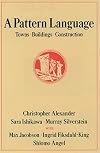
I have never read a book anything like A Pattern Language, and it is very unlikely I shall ever read its likes again.
It’s not often that one comes across a work so fresh, so singular, so perspective-shattering, so powerful in its ability to shape the very way one engages a significant facet of one’s world.
It’s a very simple book to summarize. Alexander and his co-authors prepared a list of 253 elements of human living, ranging from the broadest geographical layout of an entire country, down to the positions of doors, windows and potted plants in individual rooms in a family home, and including almost every aspect of cities, neighborhoods and buildings in between. For each of these patterns, they isolate characteristics they believe are common across cultures and times, and which make that pattern comfortable, usable, and beautiful. Photographs and line drawing are included frequently for illustration.
There is very little other explanatory material in this book, other than occasional brief introductory sections. So reading A Pattern Language is a bit strange; since the patterns seem independent, reading about them on by one seems initially like working through a reference book. But I found that before too long a narrative of line and form and light and shape emerged; I found myself anticipating, almost intuitively, what upcoming patterns would look like, and it became easier and easier to progress through the book.
As I approached the book’s end, I could see the show more overall pattern behind Alexander’s vision coalescing and clarifying, telling a profound story about living a beautiful life, at least in terms of how and where one’s body resides.
This book is a potent antidote to the poison soulless modernist architecture has injected into the very bones of the industrialized world. I realize it’s now an aging work – it’s over 30 years old – but I hope as more and more people become aware of the vague but increasingly toxic effects of ugly buildings and the dis-ease of living in them, Alexander’s time in the sun will come.
One final note: A Pattern Language may appear to the casual observer to be a book about architecture, and that's true. But the scale of Alexander's project is far, far broader. Within the descriptions of the patterns are embedded repeated and often remarkable insights into how people really live, think and feel. Occasionally there's a bit of a Utopian tinge that reminds you Alexander couldn't wholly escape the 70s zeitgeist in which he's writing, but on the whole there is more good sense about human nature between these two covers than you will find in whole programs of study in anthropology or sociology in most contemporary universities.
Highly, highly recommended. show less
It’s not often that one comes across a work so fresh, so singular, so perspective-shattering, so powerful in its ability to shape the very way one engages a significant facet of one’s world.
It’s a very simple book to summarize. Alexander and his co-authors prepared a list of 253 elements of human living, ranging from the broadest geographical layout of an entire country, down to the positions of doors, windows and potted plants in individual rooms in a family home, and including almost every aspect of cities, neighborhoods and buildings in between. For each of these patterns, they isolate characteristics they believe are common across cultures and times, and which make that pattern comfortable, usable, and beautiful. Photographs and line drawing are included frequently for illustration.
There is very little other explanatory material in this book, other than occasional brief introductory sections. So reading A Pattern Language is a bit strange; since the patterns seem independent, reading about them on by one seems initially like working through a reference book. But I found that before too long a narrative of line and form and light and shape emerged; I found myself anticipating, almost intuitively, what upcoming patterns would look like, and it became easier and easier to progress through the book.
As I approached the book’s end, I could see the show more overall pattern behind Alexander’s vision coalescing and clarifying, telling a profound story about living a beautiful life, at least in terms of how and where one’s body resides.
This book is a potent antidote to the poison soulless modernist architecture has injected into the very bones of the industrialized world. I realize it’s now an aging work – it’s over 30 years old – but I hope as more and more people become aware of the vague but increasingly toxic effects of ugly buildings and the dis-ease of living in them, Alexander’s time in the sun will come.
One final note: A Pattern Language may appear to the casual observer to be a book about architecture, and that's true. But the scale of Alexander's project is far, far broader. Within the descriptions of the patterns are embedded repeated and often remarkable insights into how people really live, think and feel. Occasionally there's a bit of a Utopian tinge that reminds you Alexander couldn't wholly escape the 70s zeitgeist in which he's writing, but on the whole there is more good sense about human nature between these two covers than you will find in whole programs of study in anthropology or sociology in most contemporary universities.
Highly, highly recommended. show less
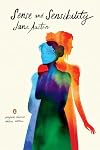
My household is besotted with Jane Austen. My wife, daughter and I were lured, hooked and landed by Pride and Prejudice, both in book form and in the excellent BBC TV adaptation.
We also watched both the Emma Thompson/Hugh Grant movie adaptation, and the more recent Dan Stevens-starring TV adaptation of Sense and Sensibility. I decided, therefore, that I’d better reread this earlier Austen classic, as I’d hardly remembered a word after reading it as an undergraduate English major.
Although heresy it might be, I must state outright that I found S&S a less pleasurable reading experience than P&P. Its main characters – the Dashwood sisters, Elinor and Marianne; and their ‘beaux’, i.e. Edward Ferrars, John Willoughby and Colonel Christopher Brandon – are all well-drawn and believable. Elinor in particular is a great character; she is a model of self-control and reticence, and although today she’d no doubt be dumped forthwith into self-esteem therapy, I find her admirable and attractive. Marianne also rings true as a type of young woman who still thrives in myriad contemporary exemplars; she is ruled – and almost consumed – by her emotions, bending all light shone her way through the distorted lens of feelings, feelings, feelings.
The changes in these characters, and others, shape the progress of this story. But here it is that I find some fault: after a very good opening, and a rapid, convincing escalation in the intensities of the girls’ marital prospects, show more there are roadblocks on the highway to marital bliss. The girls crash into these barriers in memorable fashion, but then the whole caravan slows to a crawl as the story becomes bogged down in a very long section recounting the girls’ bitter disappointment. Set in the social season in London, this part of the story may have been of great interest to Austen’s contemporary readers, but I found it hard going. It’s only when the Dashwoods return to their Devonshire cottage that the story’s momentum is restored, and the highly satisfactory ending comes into view.
This is, of course, a quibble. Although it’s not my favorite among Austen’s works, S&S still deserves nothing but the highest recommendation. Time spent reading even Austen’s dullest page is time well-redeemed, if compared with squandering it on the vast majority of today’s ‘cultural’ productions. show less
We also watched both the Emma Thompson/Hugh Grant movie adaptation, and the more recent Dan Stevens-starring TV adaptation of Sense and Sensibility. I decided, therefore, that I’d better reread this earlier Austen classic, as I’d hardly remembered a word after reading it as an undergraduate English major.
Although heresy it might be, I must state outright that I found S&S a less pleasurable reading experience than P&P. Its main characters – the Dashwood sisters, Elinor and Marianne; and their ‘beaux’, i.e. Edward Ferrars, John Willoughby and Colonel Christopher Brandon – are all well-drawn and believable. Elinor in particular is a great character; she is a model of self-control and reticence, and although today she’d no doubt be dumped forthwith into self-esteem therapy, I find her admirable and attractive. Marianne also rings true as a type of young woman who still thrives in myriad contemporary exemplars; she is ruled – and almost consumed – by her emotions, bending all light shone her way through the distorted lens of feelings, feelings, feelings.
The changes in these characters, and others, shape the progress of this story. But here it is that I find some fault: after a very good opening, and a rapid, convincing escalation in the intensities of the girls’ marital prospects, show more there are roadblocks on the highway to marital bliss. The girls crash into these barriers in memorable fashion, but then the whole caravan slows to a crawl as the story becomes bogged down in a very long section recounting the girls’ bitter disappointment. Set in the social season in London, this part of the story may have been of great interest to Austen’s contemporary readers, but I found it hard going. It’s only when the Dashwoods return to their Devonshire cottage that the story’s momentum is restored, and the highly satisfactory ending comes into view.
This is, of course, a quibble. Although it’s not my favorite among Austen’s works, S&S still deserves nothing but the highest recommendation. Time spent reading even Austen’s dullest page is time well-redeemed, if compared with squandering it on the vast majority of today’s ‘cultural’ productions. show less
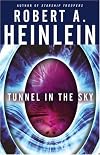
Robert Heinlein's Tunnel in the Sky is a delight. This story of a group of young people forced to deal with sudden isolation from society is in many ways the photographic negative of William Golding’s Lord of the Flies.
Tunnel in the Sky follows Rod Walker, our young protagonist, as he and a group of his classmates take a field trip through a matter transfer gate into an unknown, primordial planet where they are intended to undergo a survival course something like a high-stakes Outward Bound. As you might expect, there’s a hitch in their transport, and it turns out this group of students is stranded on a new world, and find that they must survive on their own for far longer than they had expected. Much of the book recounts their efforts to organize, defend and provide for themselves.
One particularly interesting aspect of Tunnel in the Sky is how Heinlein is so forward-looking in some ways, and yet so rooted in his own era’s values in others. For example, several of the key events in the story involve the young students pairing off and marrying. This need to observe a cornerstone of traditional society draws firm boundaries around the new culture the class develops in its lost world, and it also adds shape and meaning to the story. This is in great contrast to similar novels that might be written today in which it would be taken for granted that healthy young people would pair off casually and switch sexual partners with impunity.
Although Heinlein intended Tunnel in show more the Sky to be a young adult novel, I’d recommended it to all science-fiction fans. show less
Tunnel in the Sky follows Rod Walker, our young protagonist, as he and a group of his classmates take a field trip through a matter transfer gate into an unknown, primordial planet where they are intended to undergo a survival course something like a high-stakes Outward Bound. As you might expect, there’s a hitch in their transport, and it turns out this group of students is stranded on a new world, and find that they must survive on their own for far longer than they had expected. Much of the book recounts their efforts to organize, defend and provide for themselves.
One particularly interesting aspect of Tunnel in the Sky is how Heinlein is so forward-looking in some ways, and yet so rooted in his own era’s values in others. For example, several of the key events in the story involve the young students pairing off and marrying. This need to observe a cornerstone of traditional society draws firm boundaries around the new culture the class develops in its lost world, and it also adds shape and meaning to the story. This is in great contrast to similar novels that might be written today in which it would be taken for granted that healthy young people would pair off casually and switch sexual partners with impunity.
Although Heinlein intended Tunnel in show more the Sky to be a young adult novel, I’d recommended it to all science-fiction fans. show less

Equator, by Thurston Clarke, is all about going around the world the hard way. That is, instead of doing a Michael Palin and tracing Phineas Fogg's northern hemisphere traverse of the globe, Clarke attempts to circumnavigate the earth by following its widest point, i.e. the equator itself. Clarke is a genial and entertaining tour guide as he takes us from northern South America, across the heart of Africa, through Singapore and Indonesia, and eventually to a couple of remote Pacific islands.
More specifically, Clarke begins his journey in Guyana, a country that few of us know much about. In fact Clarke spends too much time there as this initial section of the book drags just a bit. Things pick up, however, when he crosses the Atlantic and sets off of into the Congo, Rwanda, and Somalia. This part of the book moves quickly and is especially vivid. It’s also of some historical interest as Clarke experiences these countries just before the horrific events that have befallen all three in the years since.
I’d recommend this book to all fans of good travel writing, and anyone interested in the day-to-day life of tropical cultures.
More specifically, Clarke begins his journey in Guyana, a country that few of us know much about. In fact Clarke spends too much time there as this initial section of the book drags just a bit. Things pick up, however, when he crosses the Atlantic and sets off of into the Congo, Rwanda, and Somalia. This part of the book moves quickly and is especially vivid. It’s also of some historical interest as Clarke experiences these countries just before the horrific events that have befallen all three in the years since.
I’d recommend this book to all fans of good travel writing, and anyone interested in the day-to-day life of tropical cultures.
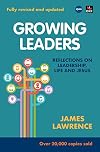
Growing leaders by James Lawrence is a systematic, carefully-considered study of Christian leadership.
Lawrence begins by defining Christian leadership and differentiating it from worldly ideas of the same. He then digs deep into the practical realities of Christian leadership, systematically setting out a framework for leadership, and the steps Christian leaders can take to grow and develop the ways they exercise their leadership in their Christian communities.
Lawrence deals well with the typical problems Christian leaders encounter, the traps they’re likely to fall into, and the ways that they can find their way back out onto a godly path. Lawrence occasionally uses his own personal anecdotes to illustrate his points, as he is of course a Christian leader himself, but this is not a ‘here’s how I did it’ kind of book like so many you’ll find on the shelves of Christian bookstores. Instead, Lawrence keeps his focus squarely on the Biblical record of Jesus’ and the disciples’ own roles as leaders.
Recommended.
Lawrence begins by defining Christian leadership and differentiating it from worldly ideas of the same. He then digs deep into the practical realities of Christian leadership, systematically setting out a framework for leadership, and the steps Christian leaders can take to grow and develop the ways they exercise their leadership in their Christian communities.
Lawrence deals well with the typical problems Christian leaders encounter, the traps they’re likely to fall into, and the ways that they can find their way back out onto a godly path. Lawrence occasionally uses his own personal anecdotes to illustrate his points, as he is of course a Christian leader himself, but this is not a ‘here’s how I did it’ kind of book like so many you’ll find on the shelves of Christian bookstores. Instead, Lawrence keeps his focus squarely on the Biblical record of Jesus’ and the disciples’ own roles as leaders.
Recommended.
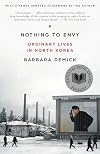
Nothing to Envy is a heartbreaking work in which Los Angeles Times journalist Barbara Demick recounts the results of her interviews with numerous North Koreans who escaped their hellish homeland. The recollections of their wretched lives under the dictatorships of Kim Il-Sung and Kim Jong-Il take us behind the astonishingly impermeable barrier that separates North Korea from the rest of the world.
It is particularly sad to read stories of young people whose brightest dream is to wangle a low-level state job that gives them the ability to barely survive – and by survive I mean have just enough basic food to avoid starvation. One of these characters is a schoolteacher whose class of children dwindles day by day, not from truancy, but from death.
Nothing to Envy is a powerful indictment of a collectivist, centrally-planned vision of society. Anyone who is still convinced Marxism can be revived and reapplied will see here the most perfect expression of the essential leftist utopia. This book bears terrible testimony of a society that elevates equality above truth, above good, and especially above freedom.
It is particularly sad to read stories of young people whose brightest dream is to wangle a low-level state job that gives them the ability to barely survive – and by survive I mean have just enough basic food to avoid starvation. One of these characters is a schoolteacher whose class of children dwindles day by day, not from truancy, but from death.
Nothing to Envy is a powerful indictment of a collectivist, centrally-planned vision of society. Anyone who is still convinced Marxism can be revived and reapplied will see here the most perfect expression of the essential leftist utopia. This book bears terrible testimony of a society that elevates equality above truth, above good, and especially above freedom.
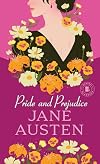
There is no need to discuss the plot or the characters of Pride and Prejudice. This warm, witty story of family, love, and promises is so well-known that a review is superfluous.
But I will say that Pride and Prejudice is a testimony to the benefit of reading the great books, even though they may be 200 years old. My wife, my nine-year-old daughter and I read Pride and Prejudice together, and it was a marvelous family experience. It is a blessing to see one’s young daughter encounter a timeless vision of a society in which marriage has real meaning, in which vows spoken cannot be easily broken, and in which actions taken have consequences that matter, sometimes desperately. These are truths that great literature such as Pride and Prejudice teaches better than any other media or didactic lesson.
I also recommend that if you are reading Pride and Prejudice for the first time, or reading it together with a younger person like I was, that you combine reading the book with viewing the excellent 1995 BBC-produced miniseries. This six-part adaptation, which stars Colin Firth as Mr. Darcy, is wonderfully done; it’s in fact the best adaptation of historical literature I’ve ever encountered. Watching it either before or after reading the book – or perhaps both – deepens, illuminates and generally enhances the experience for all involved.
Pride and Prejudiceis one of the milestones of English literature, and indeed of Western culture; its beauty; its grace; its values; and show more the lessons that it teaches should be missed by no one.
Recommended, with all the stars that can be granted. show less
But I will say that Pride and Prejudice is a testimony to the benefit of reading the great books, even though they may be 200 years old. My wife, my nine-year-old daughter and I read Pride and Prejudice together, and it was a marvelous family experience. It is a blessing to see one’s young daughter encounter a timeless vision of a society in which marriage has real meaning, in which vows spoken cannot be easily broken, and in which actions taken have consequences that matter, sometimes desperately. These are truths that great literature such as Pride and Prejudice teaches better than any other media or didactic lesson.
I also recommend that if you are reading Pride and Prejudice for the first time, or reading it together with a younger person like I was, that you combine reading the book with viewing the excellent 1995 BBC-produced miniseries. This six-part adaptation, which stars Colin Firth as Mr. Darcy, is wonderfully done; it’s in fact the best adaptation of historical literature I’ve ever encountered. Watching it either before or after reading the book – or perhaps both – deepens, illuminates and generally enhances the experience for all involved.
Pride and Prejudiceis one of the milestones of English literature, and indeed of Western culture; its beauty; its grace; its values; and show more the lessons that it teaches should be missed by no one.
Recommended, with all the stars that can be granted. show less
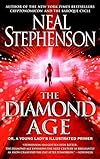
Neil Stephenson’s The Diamond Age: Or, A Young Lady's Illustrated Primer may not be in his most popular, his longest, or even his most successful book, but 50 years from now it may prove to be his most prescient. Stephenson introduces several provocative and mind-bending themes in The Diamond Age that resonate far beyond this book’s fairly narrow confines.
The first is education. I was riveted by the depiction of the eponymous Primer. It’s an almost magical book that falls into the hands of Nell, a poor, essentially orphaned young girl. The book is an educational powerhouse. Nell begins to read its initial simple stories, and as she comes across words or concepts she doesn't know, she simply asks the book to explain, and a story or illustration or movie appears to teach her. As her questions become more complex, the book cannot rely solely on prepackaged information, so it connects with Miranda, an actress playing the role of a hidden online tutor, who then takes Nell through the process of learning in the way only another live, caring human being can do. This combination of computer-aided and online education aimed at curious autonomous learners is fascinatingly close to an emerging model of online media (a la Khan Academy) coupled with tutorials or lab sessions. This model has been enabled by an Internet that was mostly a rumor when Stephenson wrote this book.
Another of the book's powerful themes is the fragmentation of its futuristic society into a number of show more autonomous, consciously-constructed, culturally-distinct enclaves. The acknowledged leader amongst these nanotechnology-driven city-states is a society modeled on British Victorians. The ‘Vickies’ swear to uphold hard-edged, stiff-upper-lip values, and eat, dress, and live in a way that Queen V herself would find genteel. Again, this is a theme that resonates more than ever as mega-constructs such as the EU (and maybe soon the USA?) totter under the burden of trying to reconcile diversity with unity by pretending both words mean nothing to real people. In The Diamond Age, people have dropped this pretence, and simply pledge their liege to the culture they believe will give them the best chance to live the kind of life they seek. It’s also significant that Stephenson predicts that a culture that specifically rejects relativism and moral laxity will lead the way.
A third major theme involves high-end information processing. Not only is Nell’s highest aim of education to learn coding, Stephenson foresees a future in which circuitry and networks can be replaced by biological processors. His vision of these bioprocessors, i.e. an undersea clan of drummers, is not successful as a plot device – it is, in fact, faintly ridiculous – but it is fascinating when looking at the possibilities for future computing.
I enthusiastically recommend reading The Diamond Age. If you are new to Neal Stephenson's work, though, this may not the book to begin with – start with Cryptonomicon or Anathem – but if you are in any way a Stephenson fan, do not overlook what may turn out to be his signature work. show less
The first is education. I was riveted by the depiction of the eponymous Primer. It’s an almost magical book that falls into the hands of Nell, a poor, essentially orphaned young girl. The book is an educational powerhouse. Nell begins to read its initial simple stories, and as she comes across words or concepts she doesn't know, she simply asks the book to explain, and a story or illustration or movie appears to teach her. As her questions become more complex, the book cannot rely solely on prepackaged information, so it connects with Miranda, an actress playing the role of a hidden online tutor, who then takes Nell through the process of learning in the way only another live, caring human being can do. This combination of computer-aided and online education aimed at curious autonomous learners is fascinatingly close to an emerging model of online media (a la Khan Academy) coupled with tutorials or lab sessions. This model has been enabled by an Internet that was mostly a rumor when Stephenson wrote this book.
Another of the book's powerful themes is the fragmentation of its futuristic society into a number of show more autonomous, consciously-constructed, culturally-distinct enclaves. The acknowledged leader amongst these nanotechnology-driven city-states is a society modeled on British Victorians. The ‘Vickies’ swear to uphold hard-edged, stiff-upper-lip values, and eat, dress, and live in a way that Queen V herself would find genteel. Again, this is a theme that resonates more than ever as mega-constructs such as the EU (and maybe soon the USA?) totter under the burden of trying to reconcile diversity with unity by pretending both words mean nothing to real people. In The Diamond Age, people have dropped this pretence, and simply pledge their liege to the culture they believe will give them the best chance to live the kind of life they seek. It’s also significant that Stephenson predicts that a culture that specifically rejects relativism and moral laxity will lead the way.
A third major theme involves high-end information processing. Not only is Nell’s highest aim of education to learn coding, Stephenson foresees a future in which circuitry and networks can be replaced by biological processors. His vision of these bioprocessors, i.e. an undersea clan of drummers, is not successful as a plot device – it is, in fact, faintly ridiculous – but it is fascinating when looking at the possibilities for future computing.
I enthusiastically recommend reading The Diamond Age. If you are new to Neal Stephenson's work, though, this may not the book to begin with – start with Cryptonomicon or Anathem – but if you are in any way a Stephenson fan, do not overlook what may turn out to be his signature work. show less
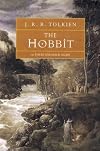
Attempting to critique The Hobbit is like reviewing Thanksgiving dinner at Grandma’s house. The subject is so familiar, so beloved, that trying to maintain critical disinterestedness is pointless.
I will therefore refrain from insulting Grandma, and will tell you just three reasons I think you and your children should read this classic story.
First, The Hobbit is a delightful tale. Bilbo the Hobbit’s placid life is upturned in an afternoon, as he finds himself tromping down the road with a wizard and a pack of dwarves, facing adventure – and danger – he never dreamed of. It’s a beautifully-written, exciting quest story that can be enjoyed by readers young and old, and that may be even better read aloud.
Second, as you might have heard, there’s a brace of high-budget, highly-anticipated films coming out rather soon, and they’re based on this book. It’s usually a good idea to read the book before you see the film, and although I don’t think that’s crucial in this case, it’s still recommended.
Third, The Hobbit is a gateway into J R R Tolkien’s marvelous world of Middle Earth. There are few great authors so considerate as to provide a brief, easily-accessible book that also happens to be the perfect place to begin reading their works. But that is just the case here. Tolkien is famous for inventing not just great characters and stories, but whole civilizations complete with languages, histories and cultures. Reading Tolkien’s works, including The Hobbit, show more is like looking down into a perfectly limpid pool of water. Your first glance catches only the pretty surface, but then your gaze is pulled down into the marvelous depths . . . .
I will close by adding a recommendation to my final point. My own exploration of Tolkien's world has been significantly enriched by the work of the ‘Tolkien Professor’, Corey Olsen. Prof. Olsen has a book on The Hobbit coming out later this year, but it’s his prolific work posting lectures and podcasts that I’ve found most helpful. In particular, he’s completed a series of polished, light-hearted lectures on The Hobbit that I guarantee will increase your understanding of the book, and very likely your enjoyment of it as well. All of this material is available at Prof. Olsen’s website. show less
I will therefore refrain from insulting Grandma, and will tell you just three reasons I think you and your children should read this classic story.
First, The Hobbit is a delightful tale. Bilbo the Hobbit’s placid life is upturned in an afternoon, as he finds himself tromping down the road with a wizard and a pack of dwarves, facing adventure – and danger – he never dreamed of. It’s a beautifully-written, exciting quest story that can be enjoyed by readers young and old, and that may be even better read aloud.
Second, as you might have heard, there’s a brace of high-budget, highly-anticipated films coming out rather soon, and they’re based on this book. It’s usually a good idea to read the book before you see the film, and although I don’t think that’s crucial in this case, it’s still recommended.
Third, The Hobbit is a gateway into J R R Tolkien’s marvelous world of Middle Earth. There are few great authors so considerate as to provide a brief, easily-accessible book that also happens to be the perfect place to begin reading their works. But that is just the case here. Tolkien is famous for inventing not just great characters and stories, but whole civilizations complete with languages, histories and cultures. Reading Tolkien’s works, including The Hobbit, show more is like looking down into a perfectly limpid pool of water. Your first glance catches only the pretty surface, but then your gaze is pulled down into the marvelous depths . . . .
I will close by adding a recommendation to my final point. My own exploration of Tolkien's world has been significantly enriched by the work of the ‘Tolkien Professor’, Corey Olsen. Prof. Olsen has a book on The Hobbit coming out later this year, but it’s his prolific work posting lectures and podcasts that I’ve found most helpful. In particular, he’s completed a series of polished, light-hearted lectures on The Hobbit that I guarantee will increase your understanding of the book, and very likely your enjoyment of it as well. All of this material is available at Prof. Olsen’s website. show less
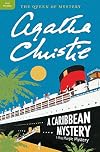
A Caribbean Mystery takes Miss Marple out of her comfortable village and off to an exotic locale.
On a trip sponsored by her nephew Raymond West, our twinkly sleuth takes it easy at a Caribbean beach resort. All seems idyllic, as the resort’s owners, the pretty, vivacious Molly and her cheery husband Tim, welcome a cast of seemingly harmless holiday-makers to paradise. But there’s no rest for our sharp-eyed septuagenarian, because a snake is loose . . . .
I enjoyed travelling with Miss Marple on an overseas adventure, and a beach resort is a good setting for a murder mystery. This story also introduces the redoubtable Mr Rafiel, who of course returns to challenge Miss Marple in Nemesis.
But although A Caribbean Mystery is a fun book, I don’t count it amongst the best of Christie’s Miss Marple novels. Too many of this fluffy but fierce spinster's charms are burned away by the remorseless sun. It’s better to visit her back where she belongs – in an English village.
Still recommended, though – you really can’t go wrong with any of the Marple novels.
On a trip sponsored by her nephew Raymond West, our twinkly sleuth takes it easy at a Caribbean beach resort. All seems idyllic, as the resort’s owners, the pretty, vivacious Molly and her cheery husband Tim, welcome a cast of seemingly harmless holiday-makers to paradise. But there’s no rest for our sharp-eyed septuagenarian, because a snake is loose . . . .
I enjoyed travelling with Miss Marple on an overseas adventure, and a beach resort is a good setting for a murder mystery. This story also introduces the redoubtable Mr Rafiel, who of course returns to challenge Miss Marple in Nemesis.
But although A Caribbean Mystery is a fun book, I don’t count it amongst the best of Christie’s Miss Marple novels. Too many of this fluffy but fierce spinster's charms are burned away by the remorseless sun. It’s better to visit her back where she belongs – in an English village.
Still recommended, though – you really can’t go wrong with any of the Marple novels.
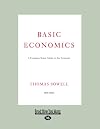
I’ve enjoyed Thomas Sowell’s work for years. In particular, his recent book on the subprime mortgage crisis is excellent.
I’ve found Sowell congenial for a couple of reasons. First, he’s a solid conservative, like me. And second, he writes clear, jargon-free prose that, unusually for a contemporary economist, does not fall back on complex mathematical explanations or graphical depictions.
I therefore thought it was time to shore up my economics knowledge by working through what is perhaps Sowell’s best-known book, Basic Economics.
And what a good choice that was. This book distills the essence of Sowell’s approach: there is not a single equation or graph or figure or diagram in the entire work. There’s just page after page, chapter after chapter, of crisply-explained, vividly-illustrated economic concepts and applications.
Sowell begins with the most basic of the basics, supply and demand, and he holds tight to this fundamental, irrefutable theme throughout the rest of the book, as he ranges over micro topics such as pricing and profits and on to macro topics such as balance of trade. He shows, over and over again, how economics is all about studying the use of scarce resources that have alternative uses. He keeps one of (to me) the great insights of economics – i.e. opportunity cost – in constant view. This is in stark contrast to the mishmash of economic idiocy one receives from the mass media and politicians.
Sowell also does a tremendous job taking on show more common economic fallacies such rent and price controls. Using examples from many countries, he shows how such policies always backfire, no matter how well-intentioned they might be.
I would recommend this book to any general readers like me who are interested simply in becoming more literate and conversant in basic economics, and perhaps especially to college or even high school students who are interested in how the world of business and money actually works. show less
I’ve found Sowell congenial for a couple of reasons. First, he’s a solid conservative, like me. And second, he writes clear, jargon-free prose that, unusually for a contemporary economist, does not fall back on complex mathematical explanations or graphical depictions.
I therefore thought it was time to shore up my economics knowledge by working through what is perhaps Sowell’s best-known book, Basic Economics.
And what a good choice that was. This book distills the essence of Sowell’s approach: there is not a single equation or graph or figure or diagram in the entire work. There’s just page after page, chapter after chapter, of crisply-explained, vividly-illustrated economic concepts and applications.
Sowell begins with the most basic of the basics, supply and demand, and he holds tight to this fundamental, irrefutable theme throughout the rest of the book, as he ranges over micro topics such as pricing and profits and on to macro topics such as balance of trade. He shows, over and over again, how economics is all about studying the use of scarce resources that have alternative uses. He keeps one of (to me) the great insights of economics – i.e. opportunity cost – in constant view. This is in stark contrast to the mishmash of economic idiocy one receives from the mass media and politicians.
Sowell also does a tremendous job taking on show more common economic fallacies such rent and price controls. Using examples from many countries, he shows how such policies always backfire, no matter how well-intentioned they might be.
I would recommend this book to any general readers like me who are interested simply in becoming more literate and conversant in basic economics, and perhaps especially to college or even high school students who are interested in how the world of business and money actually works. show less
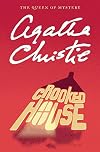
Crooked House is a dark but enjoyable ‘standalone’ murder mystery.
Its first-person narrator, Charles Hayward, has met Sophia in Egypt, and they’ve hit it off. Marriage beckons! But first he must meet her family . . . .
But even before Charles can make it to his amour’s home upon his return to England, he sees a notice in the newspaper: her grandfather, one Aristide Leonides, has died, aged 85. At first this seems ordinary enough, but it’s nothing of the sort. Murder is the air, and Charles decides that no scandal will stand in the way of his future happiness, so he insinuates himself into the Leonides’ sprawling household (and yes, the house itself is actually crooked, too).
What he finds is a circle of suspects right out of central casting – Aristide’s young and disaffected second wife, a nervous tutor who seems to have the hots for her, Aristide’s two flawed sons and their equally suspicious wives – and more.
Crooked House is not among the best of Christie’s novels (although in her autobiography she names it as one of her own favorites), but it has a creepiness and increasing sense of urgency that make for an enjoyable and memorable read.
Recommended.
Its first-person narrator, Charles Hayward, has met Sophia in Egypt, and they’ve hit it off. Marriage beckons! But first he must meet her family . . . .
But even before Charles can make it to his amour’s home upon his return to England, he sees a notice in the newspaper: her grandfather, one Aristide Leonides, has died, aged 85. At first this seems ordinary enough, but it’s nothing of the sort. Murder is the air, and Charles decides that no scandal will stand in the way of his future happiness, so he insinuates himself into the Leonides’ sprawling household (and yes, the house itself is actually crooked, too).
What he finds is a circle of suspects right out of central casting – Aristide’s young and disaffected second wife, a nervous tutor who seems to have the hots for her, Aristide’s two flawed sons and their equally suspicious wives – and more.
Crooked House is not among the best of Christie’s novels (although in her autobiography she names it as one of her own favorites), but it has a creepiness and increasing sense of urgency that make for an enjoyable and memorable read.
Recommended.
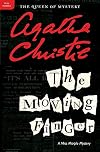
In her Autobiography, Agatha Christie names The Moving Finger as one of her favorites amongst her many novels. I can understand why – I agree it’s one of the best Miss Marple novels, and it ranks amongst the most purely enjoyable of her works.
Briefly, The Moving Finger is set during WWII. Jerry Burton, a young war hero, needs a quiet setting to rest and heal his wounds. His attractive but flighty sister Joanna decides she’ll come along. The two retire to the obscure village of Lymstock, but quickly find more excitement than they bargained for, as a poison pen campaign touches them – with murder lurking close behind.
This is not Christie’s most clever work, although the plot is more than sufficiently fiendish and twisty. It’s the characters here that really shine. Jerry and Joanna have real depth and sparkle; although they’re siblings, not a couple, they seem to me to be what Christie’s worst major characters, Tommy and Tuppence, might have been. Miss Marple appears late, but in formidable fashion. And the rest of the supporting cast is also unusually strong and memorable for a Christie novel.
The Moving Finger is one of Christie’s better explorations into human nature. She’s really at her best in the village setting, balancing the bucolic with the demonic.
Highly recommended.
Briefly, The Moving Finger is set during WWII. Jerry Burton, a young war hero, needs a quiet setting to rest and heal his wounds. His attractive but flighty sister Joanna decides she’ll come along. The two retire to the obscure village of Lymstock, but quickly find more excitement than they bargained for, as a poison pen campaign touches them – with murder lurking close behind.
This is not Christie’s most clever work, although the plot is more than sufficiently fiendish and twisty. It’s the characters here that really shine. Jerry and Joanna have real depth and sparkle; although they’re siblings, not a couple, they seem to me to be what Christie’s worst major characters, Tommy and Tuppence, might have been. Miss Marple appears late, but in formidable fashion. And the rest of the supporting cast is also unusually strong and memorable for a Christie novel.
The Moving Finger is one of Christie’s better explorations into human nature. She’s really at her best in the village setting, balancing the bucolic with the demonic.
Highly recommended.
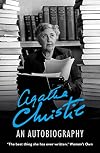
I’ve read nearly all of Agatha Christie’s novels (well, except for a couple of Tommy and Tuppence numbers – they are my Christie Kryptonite). But for some reason I’d never even considered reading her autobiography. My attitude changed after being given John Curran’s excellent Agatha Christie’s Secret Notebooks, which provided fascinating glimpses into her life and working methods.
Thus primed for more, I found the autobiography did not disappoint. It provides an excellent counterpoint to Curran’s book – or perhaps it’s better to say Curran is a good companion for this autobiography.
Christie finished this lengthy (500+ page) work when she was in her 70s, and a tone of nostalgia prevails at times. Long, lovingly-rendered passages recount her favorite childhood memories, and the adventures she got up to with her first husband, Archie. The tone mellows and grows more measured as she recounts her middle and later years with her second husband, but all along the way she rarely sugarcoats or obfuscates.
I found Christie’s voice and approach here remarkably refreshing. She was uninterested in what others thought of her cleverness (or perceived lack thereof) and sensibilities; she admits freely and amusingly that it was money that often motivated and shaped her work; she never talks down to the reader, or tries to impress. Her tone is unfailingly honest and down-to-earth.
An Autobiography is in fact a joy to read, and should be at the top of the list for any show more Christie fan who’s not read it. show less
Thus primed for more, I found the autobiography did not disappoint. It provides an excellent counterpoint to Curran’s book – or perhaps it’s better to say Curran is a good companion for this autobiography.
Christie finished this lengthy (500+ page) work when she was in her 70s, and a tone of nostalgia prevails at times. Long, lovingly-rendered passages recount her favorite childhood memories, and the adventures she got up to with her first husband, Archie. The tone mellows and grows more measured as she recounts her middle and later years with her second husband, but all along the way she rarely sugarcoats or obfuscates.
I found Christie’s voice and approach here remarkably refreshing. She was uninterested in what others thought of her cleverness (or perceived lack thereof) and sensibilities; she admits freely and amusingly that it was money that often motivated and shaped her work; she never talks down to the reader, or tries to impress. Her tone is unfailingly honest and down-to-earth.
An Autobiography is in fact a joy to read, and should be at the top of the list for any show more Christie fan who’s not read it. show less
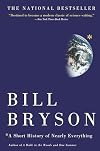
I majored in English in college. I’m not ashamed of that, especially since I did my degree just before pomo and victim studies ruined the field, but I have occasionally felt a bit light on general scientific knowledge.
I’ve tried at times to remedy this lack by tackling deeply worthy tomes such as Stephen Hawking’s impenetrable A Brief History of Time. But now that I’m settling into middle age, I don’t care much about impressing anyone anymore, or about reading the ‘right’ books.
Enter Bill Bryson, and A Short History of Nearly Everything. Bryson’s a kindred spirit, although he’s a bit older than me, in being both an English major type and a fellow Iowan. And he’s done a delightful job here in helping curious but dilettantish readers like me gain useful but always enjoyable knowledge about matters scientific.
Bryson explores the known universe from both micro and macro perspectives, touching on many current fields of scientific research and endeavor. No matter how arcane the subject, however, A Short History of Nearly Everything is always readable and fun, as Bryson exercises his uncanny gift for mixing crisp exposition with personal anecdotes and background tidbits on the scientists involved.
I recommend this book highly, and also suggest following it up with Bryson’s equally delightful At Home.
I’ve tried at times to remedy this lack by tackling deeply worthy tomes such as Stephen Hawking’s impenetrable A Brief History of Time. But now that I’m settling into middle age, I don’t care much about impressing anyone anymore, or about reading the ‘right’ books.
Enter Bill Bryson, and A Short History of Nearly Everything. Bryson’s a kindred spirit, although he’s a bit older than me, in being both an English major type and a fellow Iowan. And he’s done a delightful job here in helping curious but dilettantish readers like me gain useful but always enjoyable knowledge about matters scientific.
Bryson explores the known universe from both micro and macro perspectives, touching on many current fields of scientific research and endeavor. No matter how arcane the subject, however, A Short History of Nearly Everything is always readable and fun, as Bryson exercises his uncanny gift for mixing crisp exposition with personal anecdotes and background tidbits on the scientists involved.
I recommend this book highly, and also suggest following it up with Bryson’s equally delightful At Home.
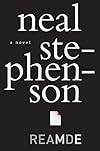
Reading Reamde was a strangely resonant experience for me. This massive action/thriller begins at a family reunion in northwest Iowa – which is just where I was born and raised. Several of the book’s main characters hail from an extended clan that meet at Thanksgiving to share food, fellowship, and firearms (the latter of which figure very prominently thereafter).
A string of unlikely but not implausible events then embroils one of the family elders (a retired dope smuggler who’s made a fortune as an online gaming inventor) and his niece in a wild, globe-trotting, digital cloaks-n-daggers plot involving Russian gangsters, Chinese gamers, al-Qaeda terrorists, the MI6, and more.
Much of the book’s action takes place in an unlikely setting: Xiamen, a medium-sized city on the coast of China’s Fujian Province. Coincidentally, just as I reached the point in Reamde when the action shifts to the far East, I set off on a holiday to – Xiamen. I therefore paused in reading the book (since it spans 1044 pages, I also didn’t want to carry it along!) and picked it up again upon my return. I can attest, with first-hand knowledge, that Stephenson does a credible job of portraying Xiamen’s layout and feel.
The remainder of the story spins out back in North America. It’s an extended adventure tale at this point, with lots of wilderness trekking, heroic derring-do – oh, and firearms.
So: the question any interested potential reader is asking at this point is obvious: show more sounds fun, but is it worth 1,044 pages’ worth of my time? Answer: yes.
It’s true, of course, that any document as long as this one likely could have been made shorter, and possibly be better for it. The action sequences that comprise most of the latter half of Reamde are well-structured and exciting, but you also won’t wish for more of them by the time you reach the book’s end.
But Reamde’s strengths far outweigh this minor flaw. Here, as always, Stephenson is masterly in grabbing and holding reader interest no matter how esoteric the topic. He also draws vivid, memorable characters, and his descriptive powers remain formidable. I also give him much credit for writing a thriller in 2011 that includes a group of terrorists who are actually representative of terrorism in our time – i.e. jihadis joined up with al Qaeda, instead of the tiresome neo-Nazis or other politically-correct but utterly implausible villains so favored by Hollywood and some other writers I could name.
Reamde is not Stephenson’s best book. I favor Cryptonomicon for this honor; others may prefer his sci-fi works such as Anathem, or his Baroque Cycle. But for high-quality entertainment that leaves you feeling just a bit smarter than you were before, there’s no one right now better than Neal Stephenson, and you can’t go wrong in reading this book. show less
A string of unlikely but not implausible events then embroils one of the family elders (a retired dope smuggler who’s made a fortune as an online gaming inventor) and his niece in a wild, globe-trotting, digital cloaks-n-daggers plot involving Russian gangsters, Chinese gamers, al-Qaeda terrorists, the MI6, and more.
Much of the book’s action takes place in an unlikely setting: Xiamen, a medium-sized city on the coast of China’s Fujian Province. Coincidentally, just as I reached the point in Reamde when the action shifts to the far East, I set off on a holiday to – Xiamen. I therefore paused in reading the book (since it spans 1044 pages, I also didn’t want to carry it along!) and picked it up again upon my return. I can attest, with first-hand knowledge, that Stephenson does a credible job of portraying Xiamen’s layout and feel.
The remainder of the story spins out back in North America. It’s an extended adventure tale at this point, with lots of wilderness trekking, heroic derring-do – oh, and firearms.
So: the question any interested potential reader is asking at this point is obvious: show more sounds fun, but is it worth 1,044 pages’ worth of my time? Answer: yes.
It’s true, of course, that any document as long as this one likely could have been made shorter, and possibly be better for it. The action sequences that comprise most of the latter half of Reamde are well-structured and exciting, but you also won’t wish for more of them by the time you reach the book’s end.
But Reamde’s strengths far outweigh this minor flaw. Here, as always, Stephenson is masterly in grabbing and holding reader interest no matter how esoteric the topic. He also draws vivid, memorable characters, and his descriptive powers remain formidable. I also give him much credit for writing a thriller in 2011 that includes a group of terrorists who are actually representative of terrorism in our time – i.e. jihadis joined up with al Qaeda, instead of the tiresome neo-Nazis or other politically-correct but utterly implausible villains so favored by Hollywood and some other writers I could name.
Reamde is not Stephenson’s best book. I favor Cryptonomicon for this honor; others may prefer his sci-fi works such as Anathem, or his Baroque Cycle. But for high-quality entertainment that leaves you feeling just a bit smarter than you were before, there’s no one right now better than Neal Stephenson, and you can’t go wrong in reading this book. show less
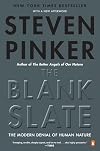
Stephen Pinker has written two-thirds of a classic.
What do I mean? Pinker’s goal here is to demolish three myths springing from modernists’ fundamental misunderstanding of human nature: that we are born tabula rasa, and are wholly socially-constructed into who and what we are (i.e. the eponymous blank slate); that there exist, or have existed ‘pure’ societies that live in blissful harmony, and in balance with Nature (i.e. the Noble Savage); and that we possess some quality of consciousness – call it soul, perhaps – that makes us special (i.e. the Ghost in the Machine).
Pinker succeeds admirably in demonstrating the implausibility, indeed outright ridiculousness, of the myths of the blank slate and noble savage. He also (quite bravely, given his position in American academia) follows out many of the policy implications of trying to engage in the inevitable social engineering these views inspire.
But he fails, I think, in debunking the third of his myths, i.e. the ghost in the machine. He argues for a kind of computational brain whose hardware encompasses and produces its software, i.e. what we perceive as consciousness, but I didn’t find his appeals to neuroscience here convincing.
And this leads to what is perhaps Pinker’s greatest failing: if we reject the modernist view of human nature, with what do we replace it? Yes, it’s clear enough that some significant proportion of both individual and group personality and behavior is genetically-determined, and show more that trying to deny this leads to unpleasant consequences. But how then do we temper and form human nature in ways that seem to run against evolutionary fitness? How do we make the kids play nice and the grown-ups be good? Here I find Pinker on thin ground. Give him credit for raising the issues – for example, why shouldn’t men engage in violence such as rape in order to spread their genes? – but take points away for his answer, which seems to boil down to an assertion that we humans can simply ban actions that we (at least most of us) believe should be banned. It’s the kind of faintly smug circular reasoning made popular by Richard Rorty and other humanist thinkers, and it’s in fact a retreat back into a socially-constructed safe haven that runs against the rest of Pinker’s arguments.
The real problem, of course, is that a conception of humanity minus a Creator and a soul will always fail to satisfy.
Still, this is an important and well-reasoned book, and is recommended. show less
What do I mean? Pinker’s goal here is to demolish three myths springing from modernists’ fundamental misunderstanding of human nature: that we are born tabula rasa, and are wholly socially-constructed into who and what we are (i.e. the eponymous blank slate); that there exist, or have existed ‘pure’ societies that live in blissful harmony, and in balance with Nature (i.e. the Noble Savage); and that we possess some quality of consciousness – call it soul, perhaps – that makes us special (i.e. the Ghost in the Machine).
Pinker succeeds admirably in demonstrating the implausibility, indeed outright ridiculousness, of the myths of the blank slate and noble savage. He also (quite bravely, given his position in American academia) follows out many of the policy implications of trying to engage in the inevitable social engineering these views inspire.
But he fails, I think, in debunking the third of his myths, i.e. the ghost in the machine. He argues for a kind of computational brain whose hardware encompasses and produces its software, i.e. what we perceive as consciousness, but I didn’t find his appeals to neuroscience here convincing.
And this leads to what is perhaps Pinker’s greatest failing: if we reject the modernist view of human nature, with what do we replace it? Yes, it’s clear enough that some significant proportion of both individual and group personality and behavior is genetically-determined, and show more that trying to deny this leads to unpleasant consequences. But how then do we temper and form human nature in ways that seem to run against evolutionary fitness? How do we make the kids play nice and the grown-ups be good? Here I find Pinker on thin ground. Give him credit for raising the issues – for example, why shouldn’t men engage in violence such as rape in order to spread their genes? – but take points away for his answer, which seems to boil down to an assertion that we humans can simply ban actions that we (at least most of us) believe should be banned. It’s the kind of faintly smug circular reasoning made popular by Richard Rorty and other humanist thinkers, and it’s in fact a retreat back into a socially-constructed safe haven that runs against the rest of Pinker’s arguments.
The real problem, of course, is that a conception of humanity minus a Creator and a soul will always fail to satisfy.
Still, this is an important and well-reasoned book, and is recommended. show less
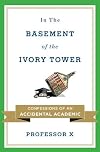
Our anonymous author Professor X is a low-level writing teacher, adjuncting away in the unhealthy bowels of the bloated American highed ed system. He’s also the poor sap who must lower the boom on unqualified students, i.e. he must flunk them out after they’ve been sold a bill of goods implying they are college material and are destined for nice upper-middle-class lives as degree-holders.
This book is well-written, wry and often poignant. The author doesn’t despise his misplaced ‘students’; he sympathizes with them, as he reveals his own struggles trying to build a reasonable academic life while being denied access to the ivory tower's higher floors.
The point is, the whole higher-ed establishment is a steaming mess. One book like this is just a data-point, but recognition of the higher-ed bubble is spreading rapidly. Something is going to give, and when it does, it’s not going to be pretty. At least Professor X will be able to say ‘I told you so’, although he may be out of a job.
Recommended.
This book is well-written, wry and often poignant. The author doesn’t despise his misplaced ‘students’; he sympathizes with them, as he reveals his own struggles trying to build a reasonable academic life while being denied access to the ivory tower's higher floors.
The point is, the whole higher-ed establishment is a steaming mess. One book like this is just a data-point, but recognition of the higher-ed bubble is spreading rapidly. Something is going to give, and when it does, it’s not going to be pretty. At least Professor X will be able to say ‘I told you so’, although he may be out of a job.
Recommended.
This is an unusual and powerful book. It’s subtitled ‘An Apocalypse’, and Michael O'Brien is not kidding. The events recounted here are indeed a looking-forward to the Last Days, and I’ve not encountered a more moving and plausible vision (excepting the Revelation of John, of course!).
O'Brien’s eponymous protagonist is a fascinating character. He’s a Holocaust survivor and Christian convert called out of monastic peace in the desert to undertake a harrowing mission: to speak the Word to the man who may be the Antichrist.
Although there is plenty of globetrotting action in this story, O'Brien does a tremendous job of illustrating how this ‘surface’ activity is just a proxy for the spiritual battle than is taking place all around. It’s fair to say, in fact, that the main character here is not really Father Elijah, but rather the Holy Spirit Himself. Not meaning to be flip, a spirit of holiness pervades this book.
End-times fiction has a bad name that’s unfortunately been warranted by some second-rate books over the years. This stellar novel helps turn the tide.
Highly recommended.
O'Brien’s eponymous protagonist is a fascinating character. He’s a Holocaust survivor and Christian convert called out of monastic peace in the desert to undertake a harrowing mission: to speak the Word to the man who may be the Antichrist.
Although there is plenty of globetrotting action in this story, O'Brien does a tremendous job of illustrating how this ‘surface’ activity is just a proxy for the spiritual battle than is taking place all around. It’s fair to say, in fact, that the main character here is not really Father Elijah, but rather the Holy Spirit Himself. Not meaning to be flip, a spirit of holiness pervades this book.
End-times fiction has a bad name that’s unfortunately been warranted by some second-rate books over the years. This stellar novel helps turn the tide.
Highly recommended.
It’s tough sometimes for us conservatives. We try and try and try again to point out the rank hypocrisies of our liberal betters – did you see the size of that house Al Gore just bought – only to be poo-poo’ed by our listeners, and to see our attempts muffled by a liberal-compliant mainstream media.
The problem is, then we sometimes get angry, and our tone gets perhaps a bit strident, and then we’re open to yet more opprobrium for being hateful haters who hate.
These temptations/pitfalls must have haunted Peter Schweizer as he grazed the vast buffet of liberal hypocrites available to him to expose and castigate. But he keeps his head, chooses wisely (he skewers such liberal leading lights as Ralph Nader, Noam Chomsky, the Colossus of double-speak that is Michael Moore, Barbra Streisand, the Clintons, and more), and writes it all up in the calmest, most even tone imaginable. There’s not an intemperate word in this book – just page after page after chapter of clearly-recorded, utterly infuriating hypocrisies from people who make it their life’s mission to hector the rest of us.
Schweizer is to be commended for this work. It’s a pity it’s not better-known and, incidentally, that it’s so ill-served by its rather lurid cover.
Highly recommended.
The problem is, then we sometimes get angry, and our tone gets perhaps a bit strident, and then we’re open to yet more opprobrium for being hateful haters who hate.
These temptations/pitfalls must have haunted Peter Schweizer as he grazed the vast buffet of liberal hypocrites available to him to expose and castigate. But he keeps his head, chooses wisely (he skewers such liberal leading lights as Ralph Nader, Noam Chomsky, the Colossus of double-speak that is Michael Moore, Barbra Streisand, the Clintons, and more), and writes it all up in the calmest, most even tone imaginable. There’s not an intemperate word in this book – just page after page after chapter of clearly-recorded, utterly infuriating hypocrisies from people who make it their life’s mission to hector the rest of us.
Schweizer is to be commended for this work. It’s a pity it’s not better-known and, incidentally, that it’s so ill-served by its rather lurid cover.
Highly recommended.
I'm with Stupid: One Man. One Woman. 10,000 Years of Misunderstanding Between the Sexes Cleared Right Up by Gene Weingarten
After reading this delightful, innovative, and very funny combined effort from Gene Weingarten and Gina Barreca, I’m surprised it’s not better-known.
Our two authors collaborate in a back-and-forth dialogue, each taking the side of his or her sex, trying to make the case that the members of the opposition are clearly at fault for all of those trivial arguments, and are maybe also insane. Although I believe Weingarten gets the better of most exchanges (well, as a man, I would), both writers hit many high points.
Topics range widely, but the humor never fails – this is a snappy, entertaining, and sometimes even thought-provoking study of human nature(s). The book is also cleverly edited and laid out, giving the impression of a real conversation in which wit can sparkle.
Recommended.
Our two authors collaborate in a back-and-forth dialogue, each taking the side of his or her sex, trying to make the case that the members of the opposition are clearly at fault for all of those trivial arguments, and are maybe also insane. Although I believe Weingarten gets the better of most exchanges (well, as a man, I would), both writers hit many high points.
Topics range widely, but the humor never fails – this is a snappy, entertaining, and sometimes even thought-provoking study of human nature(s). The book is also cleverly edited and laid out, giving the impression of a real conversation in which wit can sparkle.
Recommended.
Andrew Ferguson’s Crazy U is an end-to-end winner.
Faced with the daunting task of getting a seemingly unfocused and lackadaisical son into a ‘good college’, Ferguson takes us along for the very funny ride through college rankings, applications, campus visits, wild-eyed parents rapidly losing their minds, and all the accoutrements of the overblown, overpriced, over-rated empire that is American higher education.
Although Crazy U is mostly for fun, there is plenty here to stop concerned readers (i.e. other parents with kids coming up to college age) right in their tracks. It’s actually a very useful, palatable introduction to the whole sordid process.
Recommended.
Faced with the daunting task of getting a seemingly unfocused and lackadaisical son into a ‘good college’, Ferguson takes us along for the very funny ride through college rankings, applications, campus visits, wild-eyed parents rapidly losing their minds, and all the accoutrements of the overblown, overpriced, over-rated empire that is American higher education.
Although Crazy U is mostly for fun, there is plenty here to stop concerned readers (i.e. other parents with kids coming up to college age) right in their tracks. It’s actually a very useful, palatable introduction to the whole sordid process.
Recommended.
Sorry, John Sandford, but this time you’ve pushed a story right off the rails and into a wreck.
I quite enjoyed the previous installment in this series, i.e. Rough Country. Sandford’s protagonist, the easy-going but deceptively clear-thinking Virgil Flowers, is a fun character, and a somewhat light-hearted tone pervaded.
Here, however, Sandford seems determined to undermine his strengths. The plot is bizarre, disturbing, and consistently over-the-top. Briefly, the Minnesota branch of a long-standing religious cult are killing each other off to cover up horrific sexual abuse. None of this rings even remotely true, and Sandford’s graphic descriptions are frequently repulsive. Although Sandford has shown a weakness for silly, off-the-wall plotting in some of his other books, this time it’s gratuitous and counterproductive.
All of this aside, Bad Blood isn’t even a particularly well-constructed mystery/thriller. The action all comes early in the book, the culprits are exactly who they seem likely to be, and the rest of the book is a fairly tedious slog to an inevitable conclusion.
Not recommended.
I quite enjoyed the previous installment in this series, i.e. Rough Country. Sandford’s protagonist, the easy-going but deceptively clear-thinking Virgil Flowers, is a fun character, and a somewhat light-hearted tone pervaded.
Here, however, Sandford seems determined to undermine his strengths. The plot is bizarre, disturbing, and consistently over-the-top. Briefly, the Minnesota branch of a long-standing religious cult are killing each other off to cover up horrific sexual abuse. None of this rings even remotely true, and Sandford’s graphic descriptions are frequently repulsive. Although Sandford has shown a weakness for silly, off-the-wall plotting in some of his other books, this time it’s gratuitous and counterproductive.
All of this aside, Bad Blood isn’t even a particularly well-constructed mystery/thriller. The action all comes early in the book, the culprits are exactly who they seem likely to be, and the rest of the book is a fairly tedious slog to an inevitable conclusion.
Not recommended.