
Professor X
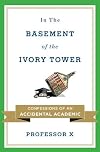
Author of In the Basement of the Ivory Tower: Confessions of an Accidental Academic
About the Author
Works by Professor X
In the Basement of the Ivory Tower: Confessions of an Accidental Academic (2011) 187 copies, 14 reviews
Tagged
Common Knowledge
- Gender
- male
Members
Reviews
This book both surprised and profoundly disappointed me. As an extended discussion of the writer's experiences surrounding a decade long adjunct teaching career, it effectively details a lot of the problems of academia. I strongly agree that the current university system merits heavy critique, but I also feel that the problems in the university system are symptoms of several larger social problems. The reliance on adjuncts is unethical and exploitative. Much like the growing gap between the show more working class and wealthy (the disappearance of the middle class, if you will), the chasm between adjunct work and tenured professors (who often teach the SAME COURSES) grows.
I also feel that our K-12 system succeeds at indoctrinating students, but fails to provide opportunities to actually learn. The writer of this book observes that employers look for some college in employees for jobs that don't actually require college experience, it is just a way to winnow through applicants. American culture also fails to value the kinds of work that don't require a university education, and that is reprehensible. It isn't so much that college isn't for everyone as it is that we have confused what one is "supposed" to get out of college. Universities rely on adjuncts to function as social gatekeepers and pay them a pittance with no benefits, no health insurance and no job security to do so. That is exploitation.
However.
The writer seems to miss the ways that ideologies he seeks to critique inform many of the perspectives he champions. His reliance and verbose support of out dated and ineffective pedagogy models is insistent (one wonders if he is aware of their inefficacy which leads him to protest so much) and offensive at times. In chapter 4 he actually discusses comments his original article to the Atlantic Monthly garnered from cutting edge professionals in the field of composition. The writer uses the book here as space for a personal tirade on how insipid he finds the suggestions of Mike Rose and Alex Reid that his students' work is not "garbage" or "trash" or "illiterate" (all of which he uses to describe his students' writing), but that academic writing has particular expectations and is one context among many for which people write.
Additionally, research suggests that students are able to transfer very little of the "skills" they "learn" in first year composition courses to other places. The field is currently looking for ways to address this problem, which this Professor X (and please, do we really think this is not a self indulgent reference to the X-men hero?) has no interest in engaging.
Amidst many invectives about how awful his students' writing is, and discussions of how ethereal and transcendent "good" writing is, and how there is only "good" and "bad" writing and nothing in between, our author completely fails to communicate what criteria constitute these categories. Resisting the insight of people who are also concerned with the academic system and its many injustices (which include cultural homogenization) is both short sighted and ineffective.
The writer is also blatantly sexist. He says outright that he doesn't think a female home inspector can do the job. In describing his fellow adjuncts, we get information about an older, seasoned adjunct who seems experienced at teaching his accounting course. But about the instructor's female colleague, we get a critique of her clothing choices (mustard colored tights that are piling) and that she wears no ring on her left hand. What exactly is it that we are supposed to infer from this? That she is unmarried with no prospects and forced to wear ugly clothing and take bad adjuncting jobs? She is described as the "typical adjuncting type." Perhaps she and her partner choose not to participate in patriarchal practices, or not to wear their rings, or maybe they couldn't get married legally. There are a lot of possibilities here that our writer shuts down in favor of sexist cliches that are both trite and offensive.
When faced with the statistic that 49.2 percent of college teachers are women, our intrepid author suggests that their presence, "coupled with our discovery of the postmodern narrative," has feminized the college environment. This is responsible for grade inflation, and the learner centered teaching model that encourages students to make sense of the texts for themselves rather than regurgitating instructor's lectures on THE CORRECT interpretation for a text. He bemoans how difficult it is to grade fairly after a full paragraph about how women are more empathetic, more compassionate, and therefore unable to grade "fairly." Not that he manages to explain what he means by "fair."
I don't care that "Professor X" felt his masculinity was compromised because he couldn't participate in 9-11. He seems to have this gender identity crisis throughout, actually. And while I do believe that certain gender scripts are outdated and that masculinity is being revised, our author fails to see his own sexism as part of this process. He endorses using essays in class that comically compare "fat people" and "skinny people," referring to them as ephemera that nevertheless are mildly amusing. I'm so glad that he finds participating in indoctrination and ideological hegemony a good time. The lack of self awareness is disturbing, particularly in the face of his draconian pedagogy that serves only to further entrench the systems with which he claims to take issue.
In all, this book was written to shed light on the ugly underside of academia; I wish more attention had actually been paid to that purpose and that less space had been granted to arrogant and sexist self indulgence that bemoans how unfashionable megalomaniacal pedagogy has become. show less
I also feel that our K-12 system succeeds at indoctrinating students, but fails to provide opportunities to actually learn. The writer of this book observes that employers look for some college in employees for jobs that don't actually require college experience, it is just a way to winnow through applicants. American culture also fails to value the kinds of work that don't require a university education, and that is reprehensible. It isn't so much that college isn't for everyone as it is that we have confused what one is "supposed" to get out of college. Universities rely on adjuncts to function as social gatekeepers and pay them a pittance with no benefits, no health insurance and no job security to do so. That is exploitation.
However.
The writer seems to miss the ways that ideologies he seeks to critique inform many of the perspectives he champions. His reliance and verbose support of out dated and ineffective pedagogy models is insistent (one wonders if he is aware of their inefficacy which leads him to protest so much) and offensive at times. In chapter 4 he actually discusses comments his original article to the Atlantic Monthly garnered from cutting edge professionals in the field of composition. The writer uses the book here as space for a personal tirade on how insipid he finds the suggestions of Mike Rose and Alex Reid that his students' work is not "garbage" or "trash" or "illiterate" (all of which he uses to describe his students' writing), but that academic writing has particular expectations and is one context among many for which people write.
Additionally, research suggests that students are able to transfer very little of the "skills" they "learn" in first year composition courses to other places. The field is currently looking for ways to address this problem, which this Professor X (and please, do we really think this is not a self indulgent reference to the X-men hero?) has no interest in engaging.
Amidst many invectives about how awful his students' writing is, and discussions of how ethereal and transcendent "good" writing is, and how there is only "good" and "bad" writing and nothing in between, our author completely fails to communicate what criteria constitute these categories. Resisting the insight of people who are also concerned with the academic system and its many injustices (which include cultural homogenization) is both short sighted and ineffective.
The writer is also blatantly sexist. He says outright that he doesn't think a female home inspector can do the job. In describing his fellow adjuncts, we get information about an older, seasoned adjunct who seems experienced at teaching his accounting course. But about the instructor's female colleague, we get a critique of her clothing choices (mustard colored tights that are piling) and that she wears no ring on her left hand. What exactly is it that we are supposed to infer from this? That she is unmarried with no prospects and forced to wear ugly clothing and take bad adjuncting jobs? She is described as the "typical adjuncting type." Perhaps she and her partner choose not to participate in patriarchal practices, or not to wear their rings, or maybe they couldn't get married legally. There are a lot of possibilities here that our writer shuts down in favor of sexist cliches that are both trite and offensive.
When faced with the statistic that 49.2 percent of college teachers are women, our intrepid author suggests that their presence, "coupled with our discovery of the postmodern narrative," has feminized the college environment. This is responsible for grade inflation, and the learner centered teaching model that encourages students to make sense of the texts for themselves rather than regurgitating instructor's lectures on THE CORRECT interpretation for a text. He bemoans how difficult it is to grade fairly after a full paragraph about how women are more empathetic, more compassionate, and therefore unable to grade "fairly." Not that he manages to explain what he means by "fair."
I don't care that "Professor X" felt his masculinity was compromised because he couldn't participate in 9-11. He seems to have this gender identity crisis throughout, actually. And while I do believe that certain gender scripts are outdated and that masculinity is being revised, our author fails to see his own sexism as part of this process. He endorses using essays in class that comically compare "fat people" and "skinny people," referring to them as ephemera that nevertheless are mildly amusing. I'm so glad that he finds participating in indoctrination and ideological hegemony a good time. The lack of self awareness is disturbing, particularly in the face of his draconian pedagogy that serves only to further entrench the systems with which he claims to take issue.
In all, this book was written to shed light on the ugly underside of academia; I wish more attention had actually been paid to that purpose and that less space had been granted to arrogant and sexist self indulgence that bemoans how unfashionable megalomaniacal pedagogy has become. show less
This book both surprised and profoundly disappointed me. As an extended discussion of the writer's experiences surrounding a decade long adjunct teaching career, it effectively details a lot of the problems of academia. I strongly agree that the current university system merits heavy critique, but I also feel that the problems in the university system are symptoms of several larger social problems. The reliance on adjuncts is unethical and exploitative. Much like the growing gap between the show more working class and wealthy (the disappearance of the middle class, if you will), the chasm between adjunct work and tenured professors (who often teach the SAME COURSES) grows.
I also feel that our K-12 system succeeds at indoctrinating students, but fails to provide opportunities to actually learn. The writer of this book observes that employers look for some college in employees for jobs that don't actually require college experience, it is just a way to winnow through applicants. American culture also fails to value the kinds of work that don't require a university education, and that is reprehensible. It isn't so much that college isn't for everyone as it is that we have confused what one is "supposed" to get out of college. Universities rely on adjuncts to function as social gatekeepers and pay them a pittance with no benefits, no health insurance and no job security to do so. That is exploitation.
However.
The writer seems to miss the ways that ideologies he seeks to critique inform many of the perspectives he champions. His reliance and verbose support of out dated and ineffective pedagogy models is insistent (one wonders if he is aware of their inefficacy which leads him to protest so much) and offensive at times. In chapter 4 he actually discusses comments his original article to the Atlantic Monthly garnered from cutting edge professionals in the field of composition. The writer uses the book here as space for a personal tirade on how insipid he finds the suggestions of Mike Rose and Alex Reid that his students' work is not "garbage" or "trash" or "illiterate" (all of which he uses to describe his students' writing), but that academic writing has particular expectations and is one context among many for which people write.
Additionally, research suggests that students are able to transfer very little of the "skills" they "learn" in first year composition courses to other places. The field is currently looking for ways to address this problem, which this Professor X (and please, do we really think this is not a self indulgent reference to the X-men hero?) has no interest in engaging.
Amidst many invectives about how awful his students' writing is, and discussions of how ethereal and transcendent "good" writing is, and how there is only "good" and "bad" writing and nothing in between, our author completely fails to communicate what criteria constitute these categories. Resisting the insight of people who are also concerned with the academic system and its many injustices (which include cultural homogenization) is both short sighted and ineffective.
The writer is also blatantly sexist. He says outright that he doesn't think a female home inspector can do the job. In describing his fellow adjuncts, we get information about an older, seasoned adjunct who seems experienced at teaching his accounting course. But about the instructor's female colleague, we get a critique of her clothing choices (mustard colored tights that are piling) and that she wears no ring on her left hand. What exactly is it that we are supposed to infer from this? That she is unmarried with no prospects and forced to wear ugly clothing and take bad adjuncting jobs? She is described as the "typical adjuncting type." Perhaps she and her partner choose not to participate in patriarchal practices, or not to wear their rings, or maybe they couldn't get married legally. There are a lot of possibilities here that our writer shuts down in favor of sexist cliches that are both trite and offensive.
When faced with the statistic that 49.2 percent of college teachers are women, our intrepid author suggests that their presence, "coupled with our discovery of the postmodern narrative," has feminized the college environment. This is responsible for grade inflation, and the learner centered teaching model that encourages students to make sense of the texts for themselves rather than regurgitating instructor's lectures on THE CORRECT interpretation for a text. He bemoans how difficult it is to grade fairly after a full paragraph about how women are more empathetic, more compassionate, and therefore unable to grade "fairly." Not that he manages to explain what he means by "fair."
I don't care that "Professor X" felt his masculinity was compromised because he couldn't participate in 9-11. He seems to have this gender identity crisis throughout, actually. And while I do believe that certain gender scripts are outdated and that masculinity is being revised, our author fails to see his own sexism as part of this process. He endorses using essays in class that comically compare "fat people" and "skinny people," referring to them as ephemera that nevertheless are mildly amusing. I'm so glad that he finds participating in indoctrination and ideological hegemony a good time. The lack of self awareness is disturbing, particularly in the face of his draconian pedagogy that serves only to further entrench the systems with which he claims to take issue.
In all, this book was written to shed light on the ugly underside of academia; I wish more attention had actually been paid to that purpose and that less space had been granted to arrogant and sexist self indulgence that bemoans how unfashionable megalomaniacal pedagogy has become. show less
I also feel that our K-12 system succeeds at indoctrinating students, but fails to provide opportunities to actually learn. The writer of this book observes that employers look for some college in employees for jobs that don't actually require college experience, it is just a way to winnow through applicants. American culture also fails to value the kinds of work that don't require a university education, and that is reprehensible. It isn't so much that college isn't for everyone as it is that we have confused what one is "supposed" to get out of college. Universities rely on adjuncts to function as social gatekeepers and pay them a pittance with no benefits, no health insurance and no job security to do so. That is exploitation.
However.
The writer seems to miss the ways that ideologies he seeks to critique inform many of the perspectives he champions. His reliance and verbose support of out dated and ineffective pedagogy models is insistent (one wonders if he is aware of their inefficacy which leads him to protest so much) and offensive at times. In chapter 4 he actually discusses comments his original article to the Atlantic Monthly garnered from cutting edge professionals in the field of composition. The writer uses the book here as space for a personal tirade on how insipid he finds the suggestions of Mike Rose and Alex Reid that his students' work is not "garbage" or "trash" or "illiterate" (all of which he uses to describe his students' writing), but that academic writing has particular expectations and is one context among many for which people write.
Additionally, research suggests that students are able to transfer very little of the "skills" they "learn" in first year composition courses to other places. The field is currently looking for ways to address this problem, which this Professor X (and please, do we really think this is not a self indulgent reference to the X-men hero?) has no interest in engaging.
Amidst many invectives about how awful his students' writing is, and discussions of how ethereal and transcendent "good" writing is, and how there is only "good" and "bad" writing and nothing in between, our author completely fails to communicate what criteria constitute these categories. Resisting the insight of people who are also concerned with the academic system and its many injustices (which include cultural homogenization) is both short sighted and ineffective.
The writer is also blatantly sexist. He says outright that he doesn't think a female home inspector can do the job. In describing his fellow adjuncts, we get information about an older, seasoned adjunct who seems experienced at teaching his accounting course. But about the instructor's female colleague, we get a critique of her clothing choices (mustard colored tights that are piling) and that she wears no ring on her left hand. What exactly is it that we are supposed to infer from this? That she is unmarried with no prospects and forced to wear ugly clothing and take bad adjuncting jobs? She is described as the "typical adjuncting type." Perhaps she and her partner choose not to participate in patriarchal practices, or not to wear their rings, or maybe they couldn't get married legally. There are a lot of possibilities here that our writer shuts down in favor of sexist cliches that are both trite and offensive.
When faced with the statistic that 49.2 percent of college teachers are women, our intrepid author suggests that their presence, "coupled with our discovery of the postmodern narrative," has feminized the college environment. This is responsible for grade inflation, and the learner centered teaching model that encourages students to make sense of the texts for themselves rather than regurgitating instructor's lectures on THE CORRECT interpretation for a text. He bemoans how difficult it is to grade fairly after a full paragraph about how women are more empathetic, more compassionate, and therefore unable to grade "fairly." Not that he manages to explain what he means by "fair."
I don't care that "Professor X" felt his masculinity was compromised because he couldn't participate in 9-11. He seems to have this gender identity crisis throughout, actually. And while I do believe that certain gender scripts are outdated and that masculinity is being revised, our author fails to see his own sexism as part of this process. He endorses using essays in class that comically compare "fat people" and "skinny people," referring to them as ephemera that nevertheless are mildly amusing. I'm so glad that he finds participating in indoctrination and ideological hegemony a good time. The lack of self awareness is disturbing, particularly in the face of his draconian pedagogy that serves only to further entrench the systems with which he claims to take issue.
In all, this book was written to shed light on the ugly underside of academia; I wish more attention had actually been paid to that purpose and that less space had been granted to arrogant and sexist self indulgence that bemoans how unfashionable megalomaniacal pedagogy has become. show less
In the Basement of the Ivory Tower was both more and less than I expected.
I didn't expect "Professor X" to recount so much of his life outside the classroom, and I was surprised to find that I related as much to his personal as to his academic story. Unlike other reviewers, I believe this personal dimension adds something to his analysis. Professor X is on the opposite side of podium, but he has much in common with his students: his own education was unfocused and did little to prepare him show more for his "day job"; burdensome debt, albeit a result of the housing bubble rather than the education bubble, led him to take on a second job, so he spends less time with his family than he would like; and the effects of bad choices earlier in his life can't simply be edited away. Perhaps this is the source of the compassion he clearly feels for the men and women who struggle through his classes.
Nor did I expect to enjoy Professor X's writing for its own sake. True, his style is (perhaps understandably) self-conscious, and he often overreaches. But a decade in the trenches hasn't killed the obvious pleasure he takes in crafting an apt turn of phrase. When he succeeds, his joy is contagious. Likewise, I was surprised to learn that, despite his circumstances, Professor X does enjoy teaching. He seems to get much more than a paycheck from his time in classroom. (Those who find the early chapters too depressing should skip ahead to chapter 8 ("The Good Stuff") or chapter 15 ("Resonance").)
What I did expect from this book was a clear-eyed assessment of the state of higher education in the US, and I was not disappointed. Professor X sticks primarily to his own experiences and facts about general trends, but his observations ring true. His experiences will sound familiar to anyone who has taught at a community college or in the continuing education program of a state university; they will also sound familiar to many who have taught at more selective institutions, even if the crisis there is not so acute. Professor X's students are trapped between the proverbial rock and the proverbial hard place: they are woefully unprepared for college-level work, but without a college degree of some kind their employment prospects are nearly hopeless. Most of his students will ultimately fail to complete a degree, or indeed learn much of anything during their college experience, wasting both public and private resources. Many of those who do graduate will have trouble recouping their investment--in pecuniary terms or in broader satisfaction with life. Professor X concludes that many of today's college students should not attend college at all, and that the US educational system should instead provide more post-secondary vocational training. This isn't an unreasonable lesson to draw from his experience, though I'm not sure that economic research provides unequivocal support for this policy. Certainly, the "Mexican standoff" between students, instructors, industry, colleges, and policy-makers is untenable.
But in 250-odd pages, the elephant in the room goes unremarked: Professor X seems to give little thought to why his students arrive so unprepared for his classes. He does tell us that even the students who aren't functionally illiterate have read very little before starting college, and that it's practically impossible for them to make up for this deficit and develop an ear for good writing in just one semester. He also tells us that grammar is a dirty word in today's middle schools, and that today's high school graduates aren't even capable of the kind of writing that everyone--not just college students pondering the themes of great literature--needs to master. Is it possible that fewer US workers would need to attend college to gain these basic skills, or signal that they possess them, if a high school diploma meant something? Is it possible that the students who fail to complete college today aren't intrinsically incapable of college-level work, but could have succeeded if given the tools to do so in the first eighteen years of their life? Professor X doesn't attempt to answer these questions; he doesn't even ask them.
In the end, I'm not sure that In the Basement of the Ivory Tower adds much to the debate over America's educational priorities. But it may be eye-opening for those who've never taught a college class. And it may be enjoyable--truly enjoyable, not just as schadenfreude--for those who have. show less
I didn't expect "Professor X" to recount so much of his life outside the classroom, and I was surprised to find that I related as much to his personal as to his academic story. Unlike other reviewers, I believe this personal dimension adds something to his analysis. Professor X is on the opposite side of podium, but he has much in common with his students: his own education was unfocused and did little to prepare him show more for his "day job"; burdensome debt, albeit a result of the housing bubble rather than the education bubble, led him to take on a second job, so he spends less time with his family than he would like; and the effects of bad choices earlier in his life can't simply be edited away. Perhaps this is the source of the compassion he clearly feels for the men and women who struggle through his classes.
Nor did I expect to enjoy Professor X's writing for its own sake. True, his style is (perhaps understandably) self-conscious, and he often overreaches. But a decade in the trenches hasn't killed the obvious pleasure he takes in crafting an apt turn of phrase. When he succeeds, his joy is contagious. Likewise, I was surprised to learn that, despite his circumstances, Professor X does enjoy teaching. He seems to get much more than a paycheck from his time in classroom. (Those who find the early chapters too depressing should skip ahead to chapter 8 ("The Good Stuff") or chapter 15 ("Resonance").)
What I did expect from this book was a clear-eyed assessment of the state of higher education in the US, and I was not disappointed. Professor X sticks primarily to his own experiences and facts about general trends, but his observations ring true. His experiences will sound familiar to anyone who has taught at a community college or in the continuing education program of a state university; they will also sound familiar to many who have taught at more selective institutions, even if the crisis there is not so acute. Professor X's students are trapped between the proverbial rock and the proverbial hard place: they are woefully unprepared for college-level work, but without a college degree of some kind their employment prospects are nearly hopeless. Most of his students will ultimately fail to complete a degree, or indeed learn much of anything during their college experience, wasting both public and private resources. Many of those who do graduate will have trouble recouping their investment--in pecuniary terms or in broader satisfaction with life. Professor X concludes that many of today's college students should not attend college at all, and that the US educational system should instead provide more post-secondary vocational training. This isn't an unreasonable lesson to draw from his experience, though I'm not sure that economic research provides unequivocal support for this policy. Certainly, the "Mexican standoff" between students, instructors, industry, colleges, and policy-makers is untenable.
But in 250-odd pages, the elephant in the room goes unremarked: Professor X seems to give little thought to why his students arrive so unprepared for his classes. He does tell us that even the students who aren't functionally illiterate have read very little before starting college, and that it's practically impossible for them to make up for this deficit and develop an ear for good writing in just one semester. He also tells us that grammar is a dirty word in today's middle schools, and that today's high school graduates aren't even capable of the kind of writing that everyone--not just college students pondering the themes of great literature--needs to master. Is it possible that fewer US workers would need to attend college to gain these basic skills, or signal that they possess them, if a high school diploma meant something? Is it possible that the students who fail to complete college today aren't intrinsically incapable of college-level work, but could have succeeded if given the tools to do so in the first eighteen years of their life? Professor X doesn't attempt to answer these questions; he doesn't even ask them.
In the end, I'm not sure that In the Basement of the Ivory Tower adds much to the debate over America's educational priorities. But it may be eye-opening for those who've never taught a college class. And it may be enjoyable--truly enjoyable, not just as schadenfreude--for those who have. show less
Our anonymous author Professor X is a low-level writing teacher, adjuncting away in the unhealthy bowels of the bloated American highed ed system. He’s also the poor sap who must lower the boom on unqualified students, i.e. he must flunk them out after they’ve been sold a bill of goods implying they are college material and are destined for nice upper-middle-class lives as degree-holders.
This book is well-written, wry and often poignant. The author doesn’t despise his misplaced show more ‘students’; he sympathizes with them, as he reveals his own struggles trying to build a reasonable academic life while being denied access to the ivory tower's higher floors.
The point is, the whole higher-ed establishment is a steaming mess. One book like this is just a data-point, but recognition of the higher-ed bubble is spreading rapidly. Something is going to give, and when it does, it’s not going to be pretty. At least Professor X will be able to say ‘I told you so’, although he may be out of a job.
Recommended. show less
This book is well-written, wry and often poignant. The author doesn’t despise his misplaced show more ‘students’; he sympathizes with them, as he reveals his own struggles trying to build a reasonable academic life while being denied access to the ivory tower's higher floors.
The point is, the whole higher-ed establishment is a steaming mess. One book like this is just a data-point, but recognition of the higher-ed bubble is spreading rapidly. Something is going to give, and when it does, it’s not going to be pretty. At least Professor X will be able to say ‘I told you so’, although he may be out of a job.
Recommended. show less
You May Also Like


Statistics
- Works
- 6
- Members
- 218
- Popularity
- #102,473
- Rating
- 3.2
- Reviews
- 15
- ISBNs
- 7