
Mark C. Taylor
Author of Critical Terms for Religious Studies
About the Author
Mark C. Taylor is professor of religion at Columbia University and the Cluett Professor of Humanities Emeritus at Williams College. He is the founding editor of the Religion and Postmodernism series published by the University of Chicago Press and is the author of many books, including Abiding show more Grace: Time, Modernity, Death. show less
Image credit: via The Institute for Philosophy in Public Life
Works by Mark C. Taylor
Crisis on Campus: A Bold Plan for Reforming Our Colleges and Universities (2010) 93 copies, 1 review
Rewiring the Real: In Conversation with William Gaddis, Richard Powers, Mark Danielewski, and Don DeLillo (2013) 27 copies, 1 review
Erring: A Postmodern A/theology 2 copies
Tagged
Common Knowledge
- Canonical name
- Taylor, Mark C.
- Birthdate
- 1945-12-13
- Gender
- male
- Education
- Wesleyan University (BA|1968)
University of Copenhagen (Doktorgrad|Philosophy|1981)
Harvard University (PhD|Religion|1973) - Occupations
- professor
theologian
religion critic
cultural critic
philosopher - Organizations
- Columbia University
Williams College - Nationality
- USA
- Associated Place (for map)
- USA
Members
Reviews
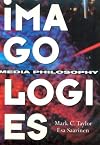
Published in 1994, thirty years later this book is dated, and doesn't feel as ultimately insightful as the authours certainly initially hoped. Time reveals what may have been lacking from the start, but offers a fair warning for all of us who want to understand and penetrate the world clouding around us in our time: whatever new features of culture we imagine influential or overarching in their scope today, being avant-garde and innovative can easily come to smack of pretension, and that show more impulse produces something that suffers from acetic fermentation on the page. That is especially so should I imagine that my own innovations license me to coin phrases that sound like something someone really profound would say.
This book is a little drunk on its own dream of ingenuity, and that plays out in splattered images on pages with single phrases or paragraphs - as though the words written there are supposed to be mind altering and transformative. "In Simcult, excess becomes excessive" . . . "Simcult presupposes the commodification of commodification" . . . "Simcult engenders an air of information." A young drunk, while sad, and despite our better angels or reason, can yet suggest something tragically titillating. God help us. Add a few decades, though, and no one laughs, plays along, or hopes to take her home. If you've read Baudrillard, you'll recognize the tone and literary strategy.
Unlike someone like Paul Ricoeur, Imagologies also has a hegemonic quality in its insistence on what the culture of the day was. To be fair, at the time of writing, reeling from the quick evolution of media technology right at the birth of the internet, its no surprise Taylor and Saarinen tried to stake a philosophical claim to terms and definitions that could have framed the emerging day, but probably reached too far. They were insightful at the time, but humility might have proved more affable.
On reflection today, the use of images and text do not correlate in a way that suggests something meaningful, but rather chaotic, and what might feel clever to the artsy is rather exhausting to try and read through. This is fettered further by the overlay of letters between the authours spaced out through the text. On the one hand, the authours' discussions of navigating technology are strangely real and dissonant from the grand philosophical declarations of Simcult and the Mediatrix. But overall, the effect is a bit alienating, with me as a reader wondering if there really is something clever going on, and I'm just too slow to get it.
Happy for you if that is the case and you're among the gifted few! But in a day where reality has disappeared, the longing for communication that gives you something to hold on to is not illegitimate. A man awash in a world that is like a 'boudoir where the doors are never closed' may not be truly helped by curtains or private retreats, but he certainly doesn't need a more of what is already unending. It turns out, thirty years on, that touch, person-hood, truth, and intimacy are more treasured than ever. This book revels in the cultural disaster that was at hand, but description is hardly prescriptive or prophetic, and so the book offers little hope.
Lots to look at, but sadly a step away from the "communicative intellect" that is "active, practical, and engaged." It turns out that when praxis precedes theory, there's not that much to think about or understand. A 'society of spectacle' sparkles away, and goes dark. show less
This book is a little drunk on its own dream of ingenuity, and that plays out in splattered images on pages with single phrases or paragraphs - as though the words written there are supposed to be mind altering and transformative. "In Simcult, excess becomes excessive" . . . "Simcult presupposes the commodification of commodification" . . . "Simcult engenders an air of information." A young drunk, while sad, and despite our better angels or reason, can yet suggest something tragically titillating. God help us. Add a few decades, though, and no one laughs, plays along, or hopes to take her home. If you've read Baudrillard, you'll recognize the tone and literary strategy.
Unlike someone like Paul Ricoeur, Imagologies also has a hegemonic quality in its insistence on what the culture of the day was. To be fair, at the time of writing, reeling from the quick evolution of media technology right at the birth of the internet, its no surprise Taylor and Saarinen tried to stake a philosophical claim to terms and definitions that could have framed the emerging day, but probably reached too far. They were insightful at the time, but humility might have proved more affable.
On reflection today, the use of images and text do not correlate in a way that suggests something meaningful, but rather chaotic, and what might feel clever to the artsy is rather exhausting to try and read through. This is fettered further by the overlay of letters between the authours spaced out through the text. On the one hand, the authours' discussions of navigating technology are strangely real and dissonant from the grand philosophical declarations of Simcult and the Mediatrix. But overall, the effect is a bit alienating, with me as a reader wondering if there really is something clever going on, and I'm just too slow to get it.
Happy for you if that is the case and you're among the gifted few! But in a day where reality has disappeared, the longing for communication that gives you something to hold on to is not illegitimate. A man awash in a world that is like a 'boudoir where the doors are never closed' may not be truly helped by curtains or private retreats, but he certainly doesn't need a more of what is already unending. It turns out, thirty years on, that touch, person-hood, truth, and intimacy are more treasured than ever. This book revels in the cultural disaster that was at hand, but description is hardly prescriptive or prophetic, and so the book offers little hope.
Lots to look at, but sadly a step away from the "communicative intellect" that is "active, practical, and engaged." It turns out that when praxis precedes theory, there's not that much to think about or understand. A 'society of spectacle' sparkles away, and goes dark. show less
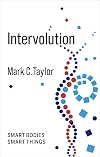
Intervolution: Smart Bodies Smart Things by Mark C Taylor is a volume (the first?) in the No Limits series. Going from Hegel and Kant through Kierkegaard and Heidegger to artificial intelligence and the Singularity Taylor discusses where our being and our environment meet and join.
Using his diabetes and reliance on an insulin pump as a jumping point to consider what exactly constitutes his body and/or whether the pump is part of him or simply attached. While he mentions Katherine Hayles he show more references an early article she wrote, but I think some of her thinking in her recent book Postprint would be useful here, primarily her concept of a cognitive assemblage. Much of what Taylor discusses here would fit into that category.
He uses the ideas of an intranet of the body, the internet of things, and the internet of the bodies to guide his thinking. This works quite well and makes many of his connections flow very well. When he gets to the area of AI and the potential Singularity, he mentions comparisons to Frankenstein, which brought to mind another recent book, Artificial Life After Frankenstein by Eileen Hunt Botting. She also addresses concerns about AI and Singularity. Where she used fictional works (political science fiction) Taylor primarily used philosophical works, yet many of the ideas were in line with each other.
While Taylor's reliance on an insulin pump presents a much clearer image of the blurring of distinction between biological and technological entities he cites many examples of ways in which we function largely as part of multiple cognitive assemblages. In other words, we are already all cyborgs. His use of Hegel to show that even then, within philosophy, the idea existed that we are made up of networks, thus his overall structure of intranet of the body, the internet of things, and the internet of bodies.
Although not directly related to the main point(s) of this book, Taylor's ideas made me think about the way we tend to think in dichotomies. He mentions some of the ones most common, body/mind, etc. I couldn't help but think about whether these dichotomies would be better thought of as complements. While different, and often seemingly in opposition, they also work together to form the whole, to make understanding of either possible. Without light it is hard to consider darkness, without health it is hard to understand disease, and so on. But anyway...
I would recommend this to anyone who might be interested in looking at how, both philosophically and technologically, our concepts of self, body, and cognition are changing. The writing is accessible though I would recommend taking it slow so you can consider his ideas and connections thoroughly.
Reviewed from a copy made available by the publisher via NetGalley. show less
Using his diabetes and reliance on an insulin pump as a jumping point to consider what exactly constitutes his body and/or whether the pump is part of him or simply attached. While he mentions Katherine Hayles he show more references an early article she wrote, but I think some of her thinking in her recent book Postprint would be useful here, primarily her concept of a cognitive assemblage. Much of what Taylor discusses here would fit into that category.
He uses the ideas of an intranet of the body, the internet of things, and the internet of the bodies to guide his thinking. This works quite well and makes many of his connections flow very well. When he gets to the area of AI and the potential Singularity, he mentions comparisons to Frankenstein, which brought to mind another recent book, Artificial Life After Frankenstein by Eileen Hunt Botting. She also addresses concerns about AI and Singularity. Where she used fictional works (political science fiction) Taylor primarily used philosophical works, yet many of the ideas were in line with each other.
While Taylor's reliance on an insulin pump presents a much clearer image of the blurring of distinction between biological and technological entities he cites many examples of ways in which we function largely as part of multiple cognitive assemblages. In other words, we are already all cyborgs. His use of Hegel to show that even then, within philosophy, the idea existed that we are made up of networks, thus his overall structure of intranet of the body, the internet of things, and the internet of bodies.
Although not directly related to the main point(s) of this book, Taylor's ideas made me think about the way we tend to think in dichotomies. He mentions some of the ones most common, body/mind, etc. I couldn't help but think about whether these dichotomies would be better thought of as complements. While different, and often seemingly in opposition, they also work together to form the whole, to make understanding of either possible. Without light it is hard to consider darkness, without health it is hard to understand disease, and so on. But anyway...
I would recommend this to anyone who might be interested in looking at how, both philosophically and technologically, our concepts of self, body, and cognition are changing. The writing is accessible though I would recommend taking it slow so you can consider his ideas and connections thoroughly.
Reviewed from a copy made available by the publisher via NetGalley. show less

I first read this book back in 1996 when it was relatively new and was really pretty groundbreaking. Re-reading it in 2018 it feels quite dated, the internet has come a long way since then! But it's still fascinating. The book is an interesting scrapbook type design with soundbites and short essays on internet and media philosophy. My favourite bits though are the emails between the 2 authors, grappling with technical problems in setting up video conferencing and international phone lines show more without the cost being prohibitive, and discussing the way their students use email. I just found it made me feel quite unnerved by how much we take for granted now that is really very recent. show less

Recovering place--a shared vision!
Stunning photography supports page after page of snapshots of thought provoking reflections.
I was simultaneously arrested by the clarity and beauty of Taylor's photography and captivated by his soliloquies.
Taylor's thoughts about 'globalization' and 'localization', about 'space' and 'place' are a simple yet stunning revelation, a truth that modern man in the hustle and bustle has forgotten. And that Taylor has reconnected with 'place' in his journey at Stone show more Hill. We vicariously connect through the beauty and insights Taylor presents.
Taylor talks about working on a multiplicity of levels and of Hegel referencing disciplines as presenting the same truths in different ways. But Taylor goes beyond the static and leads us to the vividly alive window onto his world, uncovering his recovering place. The place he shares with us through visual design and reflection. As Taylor says, 'As I became more deeply involved with art media and technology, I began to appreciate the importance of design for conveying insights'
Taylor further states that, 'art helps us envision the future that we might realize. The task of reflection is to apprehend what thought cannot comprehend in figures that only the imagination can trace.'
Certainly this handsome volume culminates as a rewardingly aesthetic approach to ideas enmeshed in design and gives the reader the opportunity to soar in thought aided by reflective imagination.
A sincere and thoughtful work, an artistic presentation to delight in, and a gift to treasure!
A NetGalley ARC show less
Stunning photography supports page after page of snapshots of thought provoking reflections.
I was simultaneously arrested by the clarity and beauty of Taylor's photography and captivated by his soliloquies.
Taylor's thoughts about 'globalization' and 'localization', about 'space' and 'place' are a simple yet stunning revelation, a truth that modern man in the hustle and bustle has forgotten. And that Taylor has reconnected with 'place' in his journey at Stone show more Hill. We vicariously connect through the beauty and insights Taylor presents.
Taylor talks about working on a multiplicity of levels and of Hegel referencing disciplines as presenting the same truths in different ways. But Taylor goes beyond the static and leads us to the vividly alive window onto his world, uncovering his recovering place. The place he shares with us through visual design and reflection. As Taylor says, 'As I became more deeply involved with art media and technology, I began to appreciate the importance of design for conveying insights'
Taylor further states that, 'art helps us envision the future that we might realize. The task of reflection is to apprehend what thought cannot comprehend in figures that only the imagination can trace.'
Certainly this handsome volume culminates as a rewardingly aesthetic approach to ideas enmeshed in design and gives the reader the opportunity to soar in thought aided by reflective imagination.
A sincere and thoughtful work, an artistic presentation to delight in, and a gift to treasure!
A NetGalley ARC show less
Lists
Awards


You May Also Like


Associated Authors
Statistics
- Works
- 36
- Members
- 1,450
- Popularity
- #17,720
- Rating
- 3.4
- Reviews
- 9
- ISBNs
- 92
- Languages
- 3
- Favorited
- 3