
Howard Moss (1) (1922–1987)
Author of Instant Lives
For other authors named Howard Moss, see the disambiguation page.
Works by Howard Moss
Associated Works
Literature: An Introduction to Fiction, Poetry, and Drama (1995) — Contributor, some editions — 1,011 copies, 7 reviews
Fierce Pajamas: An Anthology of Humor Writing from The New Yorker (2001) — Contributor — 787 copies, 5 reviews
The Sophisticated Cat: A Gathering of Stories, Poems, and Miscellaneous Writings About Cats (1992) — Contributor — 112 copies, 1 review
New World Writing: Third Mentor Selection - Poetry, Fiction, Drama, Criticism (1953) — Contributor — 8 copies
Fiction, Volume 2, Number 3 — Contributor — 1 copy
Antaeus No. 34, Summer 1979 — Contributor — 1 copy
Tagged
Common Knowledge
- Birthdate
- 1922-01-22
- Date of death
- 1987-09-16
- Gender
- male
- Education
- University of Michigan
- Occupations
- poet
editor
critic
playwright - Organizations
- American Academy of Arts and Letters (Literature ∙ 1971)
The New Yorker - Awards and honors
- Fellowship of the Academy of American Poets (1986)
American Academy of Arts and Letters Academy Award (Literature, 1968) - Cause of death
- cardiac arrest
- Nationality
- USA
- Birthplace
- New York, New York, USA
- Place of death
- New York, New York, USA
- Associated Place (for map)
- New York, New York, USA
Members
Reviews

[Instant Lives] is an entertainment. It's short, just 84 pages, embellished with 25 pen-and-ink drawings by Edward Gorey. Howard Moss, poetry editor for The New Yorker for nearly forty years, authored these short pieces satirizing famous artistic persons of the 19th and early 20th centuries. Many mimic the unmistakable voice of the subject, for example, Henry James:
He took a dim view, if, indeed, a view, in all consciousness, could be considered one, when the very act of its perception was, show more by definition, barely discernible, of biography, that addiction to "truth-seeking" that so often cloaked, when it did not, more accurately, mask, a predilection for poking into corners best left un-poked, for lifting up stones heavy enough, one would have thought, to crush existence itself out of the low and wriggling forms of life that secreted themselves, ever so hopefully, ever so persistently, in pursuit of a safety indubitably not to be vouchsafed, beneath the mossy sides of their seemingly permanent shelters…That he, the author of What Maisie Knew, should be asked to offer sacrifices at the altar of a God he did not worship, neither as communicant nor convert, to act, doubly the slave, as the servitor of Mammon, a "deal"—as the American traders, ever hot in the pursuit of profit, might say—seemed to him not only to rub salt into an old wound but to be a special form of affront, as insulting as if, laid hands on by the misinformed, a first edition were to be used merely for the swatting of flies. He would not, no…
Or James Joyce:
Being a broth of a poi, cod-lei but Chile, to whom Doubloom seized to half charm, eggs isle seemed puf-ferable. He Christ the Iris zei, he crossed the Ingres flannel and maid his weigh a broad. Zoo rich! Elps! EEEEEEEEEEk! Them Swiss miss misses me. Watch out, Montaignes, and them Edel (Weiss) Leon? Ted? Price? Ah, my Tyne is come, said the looney.
Here is Mary Shelley:
…There was a pounding at the door. My God! Could it be Percy Bysshe? If he found out she'd been "experimenting" again, it would kill him.
"Just one moment, please," she said, trying to shove the monster back into the darkness of the attic.
"Get back into a recess . . . back! . . . back!" Mary whispered hoarsely.
The monster looked at her. "That's easier Sade than Donne . . ."
Even in this intolerable moment of panic, Mary could not resist a tiny rush of pride. Whatever she had created, it was far more literate than she had guessed . . .
show less
He took a dim view, if, indeed, a view, in all consciousness, could be considered one, when the very act of its perception was, show more by definition, barely discernible, of biography, that addiction to "truth-seeking" that so often cloaked, when it did not, more accurately, mask, a predilection for poking into corners best left un-poked, for lifting up stones heavy enough, one would have thought, to crush existence itself out of the low and wriggling forms of life that secreted themselves, ever so hopefully, ever so persistently, in pursuit of a safety indubitably not to be vouchsafed, beneath the mossy sides of their seemingly permanent shelters…That he, the author of What Maisie Knew, should be asked to offer sacrifices at the altar of a God he did not worship, neither as communicant nor convert, to act, doubly the slave, as the servitor of Mammon, a "deal"—as the American traders, ever hot in the pursuit of profit, might say—seemed to him not only to rub salt into an old wound but to be a special form of affront, as insulting as if, laid hands on by the misinformed, a first edition were to be used merely for the swatting of flies. He would not, no…
Or James Joyce:
Being a broth of a poi, cod-lei but Chile, to whom Doubloom seized to half charm, eggs isle seemed puf-ferable. He Christ the Iris zei, he crossed the Ingres flannel and maid his weigh a broad. Zoo rich! Elps! EEEEEEEEEEk! Them Swiss miss misses me. Watch out, Montaignes, and them Edel (Weiss) Leon? Ted? Price? Ah, my Tyne is come, said the looney.
Here is Mary Shelley:
…There was a pounding at the door. My God! Could it be Percy Bysshe? If he found out she'd been "experimenting" again, it would kill him.
"Just one moment, please," she said, trying to shove the monster back into the darkness of the attic.
"Get back into a recess . . . back! . . . back!" Mary whispered hoarsely.
The monster looked at her. "That's easier Sade than Donne . . ."
Even in this intolerable moment of panic, Mary could not resist a tiny rush of pride. Whatever she had created, it was far more literate than she had guessed . . .
show less

The Gorey illustrations are, of course, fabulous. The depiction of Proust was exceptionally entertaining. The prose was a bit dodgy in places; the brief bios of Emily Dickinson, Debussy, and the Brontë sisters were great, but some of the others were rather impenetrable.
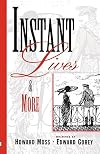
Incredibly wordy, often inscrutable, always hilarious satirical sketches about famous artists. A personal favourite.
Thirty-one brief biographies of famous people. Tho brief, readers will learn new information missed by other authors. The illustrations are intrinsic to each essay.
Lists
Awards


You May Also Like
Associated Authors
Statistics
- Works
- 26
- Also by
- 15
- Members
- 495
- Popularity
- #49,935
- Rating
- 3.8
- Reviews
- 5
- ISBNs
- 36