

Maryann Dobeck
Author of The Party
About the Author
Works by Maryann Dobeck
Anna Allen Faces the White Dragon (Houghton Mifflin Reading Leveled Readers, Level 5.1.2) (2004) 68 copies
What Is Very Long? (Fountas and Pinnell Leveled Literacy Intervention Books, Orange System, Level C, Book 53) (2009) 42 copies
Home Sweet Home; Leveled Literacy Intervention My Take-Home 6 Pak Books, same title (Book 92 Level G, Fiction) Green System,Grade 1 (2009) 36 copies
A Birthday Gift for a Cub Scout (Spotlight Books, Phonics Books Grade 1, Level 5 Unit 2) (1997) 11 copies
Goat's New Hat 6 copies
City Hawks 5 copies
An Airplane for Pig 3 copies
A Builder's Dream 3 copies
Pig Loves Rain! 2 copies
When You Estimate 2 copies
Stan's Pigs 2 copies
About How Many? 2 copies
The Van 1 copy
A Box of Butterflies Teacher's Guide (Language Support Edition) (Houghton Mifflin Leveled Readers, Book 3.4.1) (2004) 1 copy
Little Cat and Big Cat 1 copy
Tagged
Common Knowledge
- Gender
- female
Members
Reviews

A dragon comes and terrifies a small Polish village in this early-reader retelling of a traditional folktale. Fortunately, a brave and clever man named Krakus leads the villagers in their efforts to be rid of the beast, baking a cake with such spicy ingredients that the dragon flees before him. In gratitude, the villagers make Krakus their king, and their village is renamed Krakow after him...
The tale of King Krakus and the dragon is well attested in Polish folklore, and can be found in show more Richard Monte's The Dragon of Krakow and Other Polish Stories, as well as Janina Domanska's picture-book, King Krakus and the Dragon. In both of those tellings, Krakus is already a king, and the dragon is defeated with the help of a clever shoemaker. I'm not sure if this telling, in which Krakus becomes a king through defeating the dragon, and utilizes a baker rather than a shoemaker, represents a traditional variant of the tale, or if it is an adaptation unique to author Maryann Dobeck. Either way, I think I prefer the telling of Monte and Domanska to this one.
It's interesting to note that this early reader, intended for students in the third grade, was published in the same year (2004) and by the same publisher (Houghton Mifflin) as The Dragon of Krakow: A Polish Folktale, which was also written by Dobeck and illustrated by Krystyna Stasiak. I read the two side by side, and they are essentially the same book - the same cover image, the same page layout, the same illustrations, the same story - save for very slight differences in text. I'm at a loss to understand the simultaneous publication of the two titles. At first I thought that they must be intended for slightly different age groups, as The Dragon of Krakow has slightly more complicated vocabulary, and more complex sentence structures, but WorldCat lists them both as being suitable for Grade 3. It's a puzzle! Leaving that aside, I can't say I enjoyed this one very much, especially in light of the far better retellings of this tale that I have read, and I would probably have given it a single star, if I hadn't enjoyed Stasiak's colorful folk-style illustrations. Recommended primarily to fans of the artist. show less
The tale of King Krakus and the dragon is well attested in Polish folklore, and can be found in show more Richard Monte's The Dragon of Krakow and Other Polish Stories, as well as Janina Domanska's picture-book, King Krakus and the Dragon. In both of those tellings, Krakus is already a king, and the dragon is defeated with the help of a clever shoemaker. I'm not sure if this telling, in which Krakus becomes a king through defeating the dragon, and utilizes a baker rather than a shoemaker, represents a traditional variant of the tale, or if it is an adaptation unique to author Maryann Dobeck. Either way, I think I prefer the telling of Monte and Domanska to this one.
It's interesting to note that this early reader, intended for students in the third grade, was published in the same year (2004) and by the same publisher (Houghton Mifflin) as The Dragon of Krakow: A Polish Folktale, which was also written by Dobeck and illustrated by Krystyna Stasiak. I read the two side by side, and they are essentially the same book - the same cover image, the same page layout, the same illustrations, the same story - save for very slight differences in text. I'm at a loss to understand the simultaneous publication of the two titles. At first I thought that they must be intended for slightly different age groups, as The Dragon of Krakow has slightly more complicated vocabulary, and more complex sentence structures, but WorldCat lists them both as being suitable for Grade 3. It's a puzzle! Leaving that aside, I can't say I enjoyed this one very much, especially in light of the far better retellings of this tale that I have read, and I would probably have given it a single star, if I hadn't enjoyed Stasiak's colorful folk-style illustrations. Recommended primarily to fans of the artist. show less

A dragon comes and terrifies a small Polish village in this early-reader retelling of a traditional folktale. Fortunately, a brave and clever man named Krakus leads the villagers in their efforts to be rid of the beast, baking a cake with such spicy ingredients that the dragon flees before him. In gratitude, the villagers make Krakus their king, and their village is renamed Krakow after him...
The tale of King Krakus and the dragon is well attested in Polish folklore, and can be found in show more Richard Monte's The Dragon of Krakow and Other Polish Stories, as well as Janina Domanska's picture-book, King Krakus and the Dragon. In both of those tellings, Krakus is already a king, and the dragon is defeated with the help of a clever shoemaker. I'm not sure if this telling, in which Krakus becomes a king through defeating the dragon, and utilizes a baker rather than a shoemaker, represents a traditional variant of the tale, or if it is an adaptation unique to author Maryann Dobeck. Either way, I think I prefer the telling of Monte and Domanska to this one.
It's interesting to note that this early reader, intended for students in the third grade, was published in the same year (2004) and by the same publisher (Houghton Mifflin) as Krakus and the Dragon: A Polish Folktale, which was also written by Dobeck and illustrated by Krystyna Stasiak. I read the two side by side, and they are essentially the same book - the cover image, the same page layout, the same illustrations, the same story - save for very slight differences in text. I'm at a loss to understand the simultaneous publication of the two titles. At first I thought that they must be intended for slightly different age groups, as The Dragon of Krakow has slightly more complicate vocabulary, and more complex sentence structures, but WorldCat lists them both as being suitable for Grade 3. It's a puzzle! Leaving that aside, I can't say I enjoyed this one very much, especially in light of the far better retellings of this tale that I have read, and I would probably have given it a single star, if I hadn't enjoyed Stasiak's colorful folk-style illustrations. Recommended primarily to fans of the artist. show less
The tale of King Krakus and the dragon is well attested in Polish folklore, and can be found in show more Richard Monte's The Dragon of Krakow and Other Polish Stories, as well as Janina Domanska's picture-book, King Krakus and the Dragon. In both of those tellings, Krakus is already a king, and the dragon is defeated with the help of a clever shoemaker. I'm not sure if this telling, in which Krakus becomes a king through defeating the dragon, and utilizes a baker rather than a shoemaker, represents a traditional variant of the tale, or if it is an adaptation unique to author Maryann Dobeck. Either way, I think I prefer the telling of Monte and Domanska to this one.
It's interesting to note that this early reader, intended for students in the third grade, was published in the same year (2004) and by the same publisher (Houghton Mifflin) as Krakus and the Dragon: A Polish Folktale, which was also written by Dobeck and illustrated by Krystyna Stasiak. I read the two side by side, and they are essentially the same book - the cover image, the same page layout, the same illustrations, the same story - save for very slight differences in text. I'm at a loss to understand the simultaneous publication of the two titles. At first I thought that they must be intended for slightly different age groups, as The Dragon of Krakow has slightly more complicate vocabulary, and more complex sentence structures, but WorldCat lists them both as being suitable for Grade 3. It's a puzzle! Leaving that aside, I can't say I enjoyed this one very much, especially in light of the far better retellings of this tale that I have read, and I would probably have given it a single star, if I hadn't enjoyed Stasiak's colorful folk-style illustrations. Recommended primarily to fans of the artist. show less
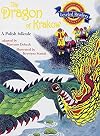
Short, as is not surprising for a leveled reader, but also surprisingly charming. I'd love to see 'real' picture-books by Dobeck and/or Stasiak.

You May Also Like


Associated Authors
Statistics
- Works
- 77
- Members
- 2,149
- Popularity
- #11,968
- Rating
- 2.6
- Reviews
- 4
- ISBNs
- 113