
Emil Spring
Author of Incunabula
Works by Emil Spring
Tagged
Common Knowledge
There is no Common Knowledge data for this author yet. You can help.
Members
Reviews
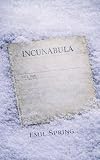
Professor Aaron Mercer witnesses one night that someone carries a heavy bundle through university grounds. On the next day, one of his students is missing. While he tries to find out what happened with the help of bibliomancer Eldric, he starts questioning the university bureaucracy machine and his own role in it.
Using short sentences and a language completely devoid of emotions, Emil Spring creates an oppressive atmosphere that vividly brings to mind “the institution”—the university show more administration—as an inhuman machine. I didn’t have to wait for it to be mentioned in the book before Kafka’s The Trial came to my mind. In very precise words, the author describes the less obvious motives behind administrative processes, their uncanny effectiveness, and the importance and effects of the language used.
The atmosphere of the book held me captivated. Always dark, lonesome, there never seems to be any real connection between the people involved.
Well done! Highly recommended to readers who enjoy well-written, thought-provoking, intellectually stimulating, and—not least—dark literature. show less
Using short sentences and a language completely devoid of emotions, Emil Spring creates an oppressive atmosphere that vividly brings to mind “the institution”—the university show more administration—as an inhuman machine. I didn’t have to wait for it to be mentioned in the book before Kafka’s The Trial came to my mind. In very precise words, the author describes the less obvious motives behind administrative processes, their uncanny effectiveness, and the importance and effects of the language used.
The atmosphere of the book held me captivated. Always dark, lonesome, there never seems to be any real connection between the people involved.
Well done! Highly recommended to readers who enjoy well-written, thought-provoking, intellectually stimulating, and—not least—dark literature. show less
 This review was written for LibraryThing Early Reviewers.
I received *Incunabula* by Emil Spring as a LibraryThing Early Reviewer copy offered for a non-biased review.
*Incunabula* is less a campus mystery than a work of institutional noir, a bleakly funny and increasingly sinister study of how systems erase people while insisting they are merely following procedure. Spring’s narrator, Professor Aaron Mercer, has the sour precision of a man who has spent too long watching language become a tool of concealment. His observations are dry, severe, and show more often very funny, but the humor has teeth. A missing student, a university eager to manage appearances, and a strange alliance with the grubby, unnervingly perceptive Eldric turn the novel into something between academic satire, conspiracy fiction, and existential horror.
The book’s strongest quality is its voice. Spring writes in clipped, aphoristic sentences that make bureaucracy feel almost supernatural. The university itself becomes the real antagonist: not one villain, but a machine of policies, emails, cameras, committees, and carefully laundered concern. That gives the novel its best moments, especially when the prose turns ordinary administrative language into a kind of menace.
The tradeoff is that the style can feel airless. Dare I say, sometimes so much so that a reader may want to give up. Mercer’s relentless interpretive intelligence is compelling, but it sometimes leaves little room for emotional messiness or surprise. The novel’s coolness is clearly intentional, though readers who want a more conventional thriller rhythm may find it oblique.
Still, *Incunabula* is smart, grim, and unusually controlled. It lingers because its horror is not that the institution is hiding something impossible. It is that the institution is behaving exactly as designed. show less
*Incunabula* is less a campus mystery than a work of institutional noir, a bleakly funny and increasingly sinister study of how systems erase people while insisting they are merely following procedure. Spring’s narrator, Professor Aaron Mercer, has the sour precision of a man who has spent too long watching language become a tool of concealment. His observations are dry, severe, and show more often very funny, but the humor has teeth. A missing student, a university eager to manage appearances, and a strange alliance with the grubby, unnervingly perceptive Eldric turn the novel into something between academic satire, conspiracy fiction, and existential horror.
The book’s strongest quality is its voice. Spring writes in clipped, aphoristic sentences that make bureaucracy feel almost supernatural. The university itself becomes the real antagonist: not one villain, but a machine of policies, emails, cameras, committees, and carefully laundered concern. That gives the novel its best moments, especially when the prose turns ordinary administrative language into a kind of menace.
The tradeoff is that the style can feel airless. Dare I say, sometimes so much so that a reader may want to give up. Mercer’s relentless interpretive intelligence is compelling, but it sometimes leaves little room for emotional messiness or surprise. The novel’s coolness is clearly intentional, though readers who want a more conventional thriller rhythm may find it oblique.
Still, *Incunabula* is smart, grim, and unusually controlled. It lingers because its horror is not that the institution is hiding something impossible. It is that the institution is behaving exactly as designed. show less
This review was written for LibraryThing Early Reviewers.Thanks to @LibraryThing and author Spring for this free copy of "Incunabula."
How to say everything I want to say but not spoil anything from the story? Yes, author Spring introduces us to Criminology professor Aaron Mercer who notices a student has been unusually absent from class and begins to investigate.
Dishwasher Eldric, who is psychic and had audited some of Aaron's classes, helps Aaron to quietly ask questions and nudges Aaron about where to look for clues.
Character-wise, I would have show more liked more background details about Aaron and Eldric's previous encounters - their early interactions with each other were confusing for me.
The story was a very Introspective, thought-provoking, cerebral, somewhat disturbing look at academic institutions, controls that we voluntarily relinquish, and controls that are forced upon us (and that's all I'll say without hopefully not spoiling the ending). show less
How to say everything I want to say but not spoil anything from the story? Yes, author Spring introduces us to Criminology professor Aaron Mercer who notices a student has been unusually absent from class and begins to investigate.
Dishwasher Eldric, who is psychic and had audited some of Aaron's classes, helps Aaron to quietly ask questions and nudges Aaron about where to look for clues.
Character-wise, I would have show more liked more background details about Aaron and Eldric's previous encounters - their early interactions with each other were confusing for me.
The story was a very Introspective, thought-provoking, cerebral, somewhat disturbing look at academic institutions, controls that we voluntarily relinquish, and controls that are forced upon us (and that's all I'll say without hopefully not spoiling the ending). show less
This review was written for LibraryThing Early Reviewers.If you like not knowing if you are here, there, or in between; this is a book for you. It requires concentration and a dedicated time in order to read it thoroughly. An interesting premise and a challenge.
This review was written for LibraryThing Early Reviewers.Lists
Statistics
- Works
- 1
- Members
- 8
- Popularity
- #1,038,910
- Rating
- 3.3
- Reviews
- 4
