
Paula Becker
Author of Looking for Betty MacDonald: The Egg, the Plague, Mrs. Piggle-Wiggle, and I
About the Author
Paula Becker is a staff historian at HistoryLink.org. She is the author of a memoir, A House on Stilts: Mothering in the Age of Opioid Addiction, and the coauthor of The Future Remembered: The 1962 Seattle World's Fair and Its Legacy and Alaska-Yukon-Pacific Exposition: Washington's First World's show more Fair. show less
Works by Paula Becker
Looking for Betty MacDonald: The Egg, the Plague, Mrs. Piggle-Wiggle, and I (2016) 58 copies, 3 reviews
Alaska-Yukon-Pacific Exposition, Washington's First World's Fair: A Timeline History (2009) 37 copies
What I Like About You 2 copies
Associated Works
Tagged
Common Knowledge
- Gender
- female
- Occupations
- writer
historian - Places of residence
- Seattle, Washington, USA
- Associated Place (for map)
- Washington, USA
Members
Reviews
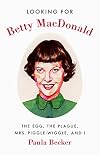
Only certain generations are going to truly appreciate this Betty MacDonald biography...the older ones. On the other hand, MacDonald comes alive on the pages as an intriguing person worth getting to know; someone not very familiar with her books will at least want to pick up "The Egg and I." A lively and appreciative treatment that hones in on the essence of who Betty MacDonald was.

ou may know Betty MacDonald from her best-selling book The Egg and I (or the movie of the same name). It was her recollection of life on a chicken ranch in Chimicum on the Olympic Peninsula. Written with MacDonald’s biting wit and rich character development, The Egg and I had readers laughing and buying books in post-World War II America. MacDonald’s enormous publishing success and its cinematic adaptions led to three more MacDonald books for adults and a series of Mrs. Piggle-Wiggle show more books that are still popular with children sixty years later.
With curiosity and affection, biographer Paula Becker explored the life of Betty MacDonald in Looking for Betty MacDonald, the new book from University of Washington Press. It’s a personal look at an author Becker first discovered as a child through Mrs. Piggle-Wiggle. Years later she found herself living in Seattle where she discovered one of MacDonald’s former houses. She began a quest for the woman behind all the written levity.
While Betty MacDonald’s writing provoked a generation of laughs, her life was often a struggle. After her father died young, MacDonald was raised by her mother in a boisterous home usually rich on social life but short on money. She survived a bad marriage to an alcoholic, divorced him in an era when divorce was not at all common, found work in Seattle, suffered from tuberculosis, and lived for a time in a Seattle hospital ward. She eventually remarried, relocated to a home on Vashon Island, raised a family, became a best-selling author, and arguably invented a new style of humor writing — one whose foundation of truth was stretched by exaggeration, spun by talented story-telling, and finished off with a fierce dose of wit.
The Egg and I was based on that rough experience living on the chicken ranch during her rocky first marriage. It was a painful chapter in her life, but she made it funny through frequent re-telling over the next decade. Becker described the transformation as serving two purposes: entertaining MacDonald’s friends and family and reclaiming those chicken ranch years on her terms.
The book was an immediate national success. Hollywood adapted the book as a movie starring Claudette Colbert and Fred McMurray. Fan mail arrived. So did money. There was enough money to make her family comfortable and her husband lost his job, but it would prove to be a diminishing revenue source. Managing money, it seemed, never came easy to people surrounding Betty MacDonald. Her humor-writing supported her family but it was always work.
More struggles came as the paychecks slowed. Her former Chimicum neighbors (upon whom the characters in her book were based) filed a lawsuit. Despite MacDonald’s giving vague locations, fictionalizing some of the scenes, and changing names to Ma and Pa Kettle (among others), the personalities and episodes rendered in the book were such that locals claimed to know who she had written about and at whose expense she was getting laughs … and money. The lawsuit and money troubles might have worn her down, but she refused to be a “saddo.” She was resilient. One friend described her as a “room of fireworks” you couldn’t ignore.
Becker narrated MacDonald’s life well. She clearly admired her subject but gave the craft of history an honest voice. She deftly navigated the lawsuit episode, giving both plaintiff and defendant their say. And though Betty MacDonald left behind four autobiographical books, Becker did not simply arrange or paraphrase them. I was surprised how little she quoted them, in fact. She instead made good use of her own historical footwork and research into the papers MacDonald and her family left behind.
Don’t skip the prologue or epilogue. A fine biography of a unique woman might be tucked in between but Becker used these fore and aft pages to get personal with her subject. She explained what motivated her to find the papers and all the houses (in five states) relating to MacDonald. Becker visited one such house minutes before it was demolished.
Shelf Appeal: Egg and I and Mrs. Piggle Wiggle fans will likely enjoy the backstory to those gems. There should be an additional audience for Paula Becker’s biography among those who have never even read a word of Betty MacDonald’s books. It’s enjoyable simply learning about this creative and outspoken woman.
-- I wrote this review for the Books section of a Washington state website: http://www.WA-List.com show less
With curiosity and affection, biographer Paula Becker explored the life of Betty MacDonald in Looking for Betty MacDonald, the new book from University of Washington Press. It’s a personal look at an author Becker first discovered as a child through Mrs. Piggle-Wiggle. Years later she found herself living in Seattle where she discovered one of MacDonald’s former houses. She began a quest for the woman behind all the written levity.
While Betty MacDonald’s writing provoked a generation of laughs, her life was often a struggle. After her father died young, MacDonald was raised by her mother in a boisterous home usually rich on social life but short on money. She survived a bad marriage to an alcoholic, divorced him in an era when divorce was not at all common, found work in Seattle, suffered from tuberculosis, and lived for a time in a Seattle hospital ward. She eventually remarried, relocated to a home on Vashon Island, raised a family, became a best-selling author, and arguably invented a new style of humor writing — one whose foundation of truth was stretched by exaggeration, spun by talented story-telling, and finished off with a fierce dose of wit.
The Egg and I was based on that rough experience living on the chicken ranch during her rocky first marriage. It was a painful chapter in her life, but she made it funny through frequent re-telling over the next decade. Becker described the transformation as serving two purposes: entertaining MacDonald’s friends and family and reclaiming those chicken ranch years on her terms.
The book was an immediate national success. Hollywood adapted the book as a movie starring Claudette Colbert and Fred McMurray. Fan mail arrived. So did money. There was enough money to make her family comfortable and her husband lost his job, but it would prove to be a diminishing revenue source. Managing money, it seemed, never came easy to people surrounding Betty MacDonald. Her humor-writing supported her family but it was always work.
More struggles came as the paychecks slowed. Her former Chimicum neighbors (upon whom the characters in her book were based) filed a lawsuit. Despite MacDonald’s giving vague locations, fictionalizing some of the scenes, and changing names to Ma and Pa Kettle (among others), the personalities and episodes rendered in the book were such that locals claimed to know who she had written about and at whose expense she was getting laughs … and money. The lawsuit and money troubles might have worn her down, but she refused to be a “saddo.” She was resilient. One friend described her as a “room of fireworks” you couldn’t ignore.
Becker narrated MacDonald’s life well. She clearly admired her subject but gave the craft of history an honest voice. She deftly navigated the lawsuit episode, giving both plaintiff and defendant their say. And though Betty MacDonald left behind four autobiographical books, Becker did not simply arrange or paraphrase them. I was surprised how little she quoted them, in fact. She instead made good use of her own historical footwork and research into the papers MacDonald and her family left behind.
Don’t skip the prologue or epilogue. A fine biography of a unique woman might be tucked in between but Becker used these fore and aft pages to get personal with her subject. She explained what motivated her to find the papers and all the houses (in five states) relating to MacDonald. Becker visited one such house minutes before it was demolished.
Shelf Appeal: Egg and I and Mrs. Piggle Wiggle fans will likely enjoy the backstory to those gems. There should be an additional audience for Paula Becker’s biography among those who have never even read a word of Betty MacDonald’s books. It’s enjoyable simply learning about this creative and outspoken woman.
-- I wrote this review for the Books section of a Washington state website: http://www.WA-List.com show less
This biography of one of America’s iconic women captures Betty MacDonald from top to bottom, from her grandparents to the relatives that survived her death. Her books shined a humorous, if sometimes critical, eye on certain aspects of living in the Pacific Northwest as one the last frontier lands in the country from the 1920s-1940s. Now Paula Becker draws the curtain back and shows us some of the things that Betty herself was reluctant to put in her semi-autobiographical novels.
After show more having listened to Betty MacDonald’s four novels, and having read her Mrs. Piggle-Wiggle books as a kid, I felt like I knew her somewhat. This biography filled in some of the blanks and had a few surprises for me as well. Getting to know more about Betty’s ancestors and her first husband was an interesting place to start. I loved that her mom was a no-nonsense kind of person and happily traveled with her husband (who worked for a mining company – if I recall correctly). This job took the family to some of the most rugged areas of the US.
Later, when Betty starts publishing novels, Becker gives a somewhat detailed account of what each one is about. While these books aren’t described one after another all in a row (but are sprinkled in among the biography along the timeline of when they were published), I did find the descriptions a little tedious. However, I have recently finished listening to them and they are still fresh in my mind. I think that if you haven’t read the books in some time (or perhaps you haven’t read all 4 of them) then this would be a good refresher for you.
For me, the most interesting parts were in the last quarter of the book – all that stuff that happens after Betty’s fourth novel, Onions in the Stew, was published. While Betty’s second marriage was evidently much happier than her first, it wasn’t untroubled. There were money problems which surprised me. Betty’s books were very well received in their day, complete with radio and TV series along with a movie. Yet success doesn’t always prepare one to manage money well, especially if one turns that responsibility over to a spouse. Betty was in the unusual position of being the breadwinner for the family and yet also feeling socially obligated to play the merry housemaker. Becker gives us details on this without falling into gossip. I really appreciate that she stuck with known facts and extracts from MacDonald letters to paint this picture of Betty’s and Don’s marriage.
While I had read on Wikipedia about Betty’s legal troubles (several people were not happy with how they were supposedly portrayed in her books), Becker gives us many details. Plenty of those complaining received a bit of fame. Some of them really seemed to enjoy it so it was hard to say that the portrayals in Betty’s books did them any harm.
I was saddened to learn of Betty’s death and this probably sounds quite odd as I’ve known since I picked up The Egg and I so many months ago that she was deceased. However, I’ve really come to enjoy her company through these books. As Becker’s biography walks us through her last months, I really felt for Betty. She died young by today’s standards but I doubt there was much more medicine could have done then. After reading her book about her lengthy stay in a tuberculosis sanatorium (The Plague and I), I can guess that she faced her final illness with the same pointed wit.
I received a free copy of this book via The Audiobookworm.
The Narration: Paula Becker narrated her own book and since this is nonfiction, it worked pretty well. She tried her hand at doing a few voices when necessary and those performances were passable. For the bulk of the book, she does a great job of maintaining an even speed and giving slight inflections here and there, letting us know that she’s just as engaged in the book as us listeners are. show less
After show more having listened to Betty MacDonald’s four novels, and having read her Mrs. Piggle-Wiggle books as a kid, I felt like I knew her somewhat. This biography filled in some of the blanks and had a few surprises for me as well. Getting to know more about Betty’s ancestors and her first husband was an interesting place to start. I loved that her mom was a no-nonsense kind of person and happily traveled with her husband (who worked for a mining company – if I recall correctly). This job took the family to some of the most rugged areas of the US.
Later, when Betty starts publishing novels, Becker gives a somewhat detailed account of what each one is about. While these books aren’t described one after another all in a row (but are sprinkled in among the biography along the timeline of when they were published), I did find the descriptions a little tedious. However, I have recently finished listening to them and they are still fresh in my mind. I think that if you haven’t read the books in some time (or perhaps you haven’t read all 4 of them) then this would be a good refresher for you.
For me, the most interesting parts were in the last quarter of the book – all that stuff that happens after Betty’s fourth novel, Onions in the Stew, was published. While Betty’s second marriage was evidently much happier than her first, it wasn’t untroubled. There were money problems which surprised me. Betty’s books were very well received in their day, complete with radio and TV series along with a movie. Yet success doesn’t always prepare one to manage money well, especially if one turns that responsibility over to a spouse. Betty was in the unusual position of being the breadwinner for the family and yet also feeling socially obligated to play the merry housemaker. Becker gives us details on this without falling into gossip. I really appreciate that she stuck with known facts and extracts from MacDonald letters to paint this picture of Betty’s and Don’s marriage.
While I had read on Wikipedia about Betty’s legal troubles (several people were not happy with how they were supposedly portrayed in her books), Becker gives us many details. Plenty of those complaining received a bit of fame. Some of them really seemed to enjoy it so it was hard to say that the portrayals in Betty’s books did them any harm.
I was saddened to learn of Betty’s death and this probably sounds quite odd as I’ve known since I picked up The Egg and I so many months ago that she was deceased. However, I’ve really come to enjoy her company through these books. As Becker’s biography walks us through her last months, I really felt for Betty. She died young by today’s standards but I doubt there was much more medicine could have done then. After reading her book about her lengthy stay in a tuberculosis sanatorium (The Plague and I), I can guess that she faced her final illness with the same pointed wit.
I received a free copy of this book via The Audiobookworm.
The Narration: Paula Becker narrated her own book and since this is nonfiction, it worked pretty well. She tried her hand at doing a few voices when necessary and those performances were passable. For the bulk of the book, she does a great job of maintaining an even speed and giving slight inflections here and there, letting us know that she’s just as engaged in the book as us listeners are. show less
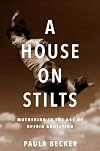
This story of a beloved son's struggle with addiction is beautiful and wrenching. I could not stop reading. It is a son's story but more than that, a mother's story. For anyone touched by America's opioid crisis—and who isn't touched by it?—A House on Stilts is a must read.
Awards

You May Also Like
Associated Authors
Statistics
- Works
- 7
- Also by
- 1
- Members
- 161
- Popularity
- #131,050
- Rating
- 4.4
- Reviews
- 5
- ISBNs
- 12