
Patrick Lin
Author of Robot Ethics: The Ethical and Social Implications of Robotics
Works by Patrick Lin
Robot Ethics: The Ethical and Social Implications of Robotics (2011) — Editor — 46 copies, 2 reviews
Tagged
Common Knowledge
There is no Common Knowledge data for this author yet. You can help.
Members
Reviews

I'm grateful for the below review by Manny, especially with the apt summary in the word "Machiavellian." I read this after discussing with an old friend who has gotten deep into CS/development the possibilities of a Terminator type development happening. My friend said that school instilled the viewpoint that this is comfortably far off; this report, too, keeps that up as a defense whenever possible horrible scenarios come of: those possibilities are far of in the future so we don't need to show more discuss them. In my view, as a millennial coming of age in a ruined world, this type of reasoning is extremely ignorant. Those who sow the seeds of these possibilities should be accountable for them, somehow, even if they happen after their death. The "it's not our problem because it'll be happen in far in the future" mindset has got to go, along with some other underlying assumptions upon which this report floats.
It was very curious how many times the fluidity of things like morality, ethics, and responsibility came up very clearly in one sentence only to be whisked away with lines suggesting that it's not to be worried about, because we're considered about our (the US military's) ethical models.
Having to leave the internet soon, I'll cut this review shorter than intended. If anyone wants my Mendeley-annotated version, send me a message, and I hope I can get a thorough blog review/critique of this reports and its very telling underlying military belief system up soon. The basic summary is this though: the military believes killbots are an inevitable development, and such a development will be fraught with many dangerous challenges, but the urge of the paper is to go ahead regardless because the US must, in their eyes, retain there hegemonic force of having the most terrifying weapons. And yes, it is mentioned that these robots are likely to enter in society.
Robotics ethics is a blooming, depressingly (to me) relevant field, and I wish to see more angles on it than the weaponized C3I style rhetoric of the military, but I'm glad I peered into this dark window to hopefully help shape the future away from this, as we all have a hand in, and I urge any roboticists/programmers to imagine farther into the future than they feel responsible for, and check their intentions and underlying metaphors for their beliefs and actions. show less
It was very curious how many times the fluidity of things like morality, ethics, and responsibility came up very clearly in one sentence only to be whisked away with lines suggesting that it's not to be worried about, because we're considered about our (the US military's) ethical models.
Having to leave the internet soon, I'll cut this review shorter than intended. If anyone wants my Mendeley-annotated version, send me a message, and I hope I can get a thorough blog review/critique of this reports and its very telling underlying military belief system up soon. The basic summary is this though: the military believes killbots are an inevitable development, and such a development will be fraught with many dangerous challenges, but the urge of the paper is to go ahead regardless because the US must, in their eyes, retain there hegemonic force of having the most terrifying weapons. And yes, it is mentioned that these robots are likely to enter in society.
Robotics ethics is a blooming, depressingly (to me) relevant field, and I wish to see more angles on it than the weaponized C3I style rhetoric of the military, but I'm glad I peered into this dark window to hopefully help shape the future away from this, as we all have a hand in, and I urge any roboticists/programmers to imagine farther into the future than they feel responsible for, and check their intentions and underlying metaphors for their beliefs and actions. show less
Robot Ethics: The Ethical and Social Implications of Robotics (Intelligent Robotics and Autonomous Agents series) by Patrick Lin
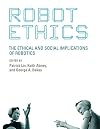
We've come a long way from the days of Elektro and Robby, ladies and gentlemen. Robots are playing a larger role in the modern world. Robots can, as of March 29, 2012, assassinate foreign enemies, jump over tall buildings, perform surgery, drive cars, and care for the elderly.
Barring some disaster, prohibitive legislation, or mass uprising of Luddites, they're going to keep developing, and change the world. Clearly, it is necessary to learn how to treat them, and what is ethical about their show more manufacture, use, and treatment. Hence, Roboethics.
This is a compilation of major essays on the issues of robotics in modern life. It starts with an introduction and survey of current trends, then moves to the ethics of design and programming, the role of cognitive sciences of mind in all further discussion, and some possible 'decision trees', or chains of formal logic by which robots could make advanced decisions. Can robots be programmed to follow a utilitarian value ethics, or a more advanced and autonomous ethical system ('right' and 'wrong')? What about the issues of always taking direct commands from humans?
The next section covers the issue of the military. Any reader of the news is aware of the recent drone strikes, and the inherent benefits and risks of military action without personnel. Can robots react in time to sabotage or ambush? Can they commit war crimes or commit murder in cold blood, or what that make as much sense as putting a gun on trial? (The Onion recently did an article on this, putting a trial for a court-martialed drone.) Who has responsibility for drones and other attack robots?
After that comes law (Is a robot a person, robotic surveillance and privacy), and psychology and sex. Don't chuckle. The South Koreans and Japanese already have 'doll sessions', which I will not go into.
There's also the surprising issue of robot care, affection, and their role in future medicine. We may have heard stories of people being overaffectionate with their Roombas, treating them like trusted pets. But the issue could potentially be much deeper. There are possible plans for robot workers to help in assisted-living facilities. It is entirely possible that the patients could anthropomorphize their caretakers, and possibly fall in unrequited love with them.
I've only brought up some of the questions discussed here, as there are many to be asked. None have easy answers. The answers that our future leaders come up with will affect society as we know it. show less
Barring some disaster, prohibitive legislation, or mass uprising of Luddites, they're going to keep developing, and change the world. Clearly, it is necessary to learn how to treat them, and what is ethical about their show more manufacture, use, and treatment. Hence, Roboethics.
This is a compilation of major essays on the issues of robotics in modern life. It starts with an introduction and survey of current trends, then moves to the ethics of design and programming, the role of cognitive sciences of mind in all further discussion, and some possible 'decision trees', or chains of formal logic by which robots could make advanced decisions. Can robots be programmed to follow a utilitarian value ethics, or a more advanced and autonomous ethical system ('right' and 'wrong')? What about the issues of always taking direct commands from humans?
The next section covers the issue of the military. Any reader of the news is aware of the recent drone strikes, and the inherent benefits and risks of military action without personnel. Can robots react in time to sabotage or ambush? Can they commit war crimes or commit murder in cold blood, or what that make as much sense as putting a gun on trial? (The Onion recently did an article on this, putting a trial for a court-martialed drone.) Who has responsibility for drones and other attack robots?
After that comes law (Is a robot a person, robotic surveillance and privacy), and psychology and sex. Don't chuckle. The South Koreans and Japanese already have 'doll sessions', which I will not go into.
There's also the surprising issue of robot care, affection, and their role in future medicine. We may have heard stories of people being overaffectionate with their Roombas, treating them like trusted pets. But the issue could potentially be much deeper. There are possible plans for robot workers to help in assisted-living facilities. It is entirely possible that the patients could anthropomorphize their caretakers, and possibly fall in unrequited love with them.
I've only brought up some of the questions discussed here, as there are many to be asked. None have easy answers. The answers that our future leaders come up with will affect society as we know it. show less
Robot Ethics: The Ethical and Social Implications of Robotics (Intelligent Robotics and Autonomous Agents series) by Patrick Lin
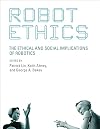
Robot Ethics As robotics technology advances, ethical concerns become more pressing: makes it all the more urgent to study their ethical, legal, and policy impacts. Military robots had received much attention in the past (and are still controversial today), the concern of a handful of scholars. Experts from different academic disciplines and geographical areas are now playing vital roles in shaping ethical, legal, and policy discussions worldwide. A PROFFESOR OF California Polytechnic State show more University, San Luis Obispo, this book is the urgent call to study the big damage to this planet with careless on biotechnology of modern science business. show less
You May Also Like
Associated Authors
Statistics
- Works
- 5
- Members
- 70
- Popularity
- #248,178
- Rating
- 3.5
- Reviews
- 3
- ISBNs
- 11