
Susan S. Adler (1) (1946–)
Author of Meet Samantha: An American Girl
For other authors named Susan S. Adler, see the disambiguation page.
Works by Susan S. Adler
Tagged
Common Knowledge
- Birthdate
- 1946-08-04
- Gender
- female
- Nationality
- USA
- Associated Place (for map)
- USA
Members
Reviews

Rating is for Book One, review is for the original six-book Samantha series published in the 1980s
Historical fiction is my all-time favorite genre, and it isn't hard for me to pinpoint when/where my love for the genre started.
At my elementary school library, I discovered chapter books in The American Girls Collection, published by what was once the Pleasant Company. My favorite series in the collection were (in the order of their eras) the ones about:
• Felicity (1774)
• Addy (1864)
• show more Samantha (1904)
• Molly (1944)
Well, I recently found out there's an upcoming novel about one of these heroines as an adult. Samantha: The Next Chapter by Fiona Davis. So, I decided to revisit the adventures of nine- then ten-year-old Samantha.
For me as a child, it was the turn-of-the-century settings of the stories, combined with the pages of rich and colorful illustrations, that most drew me into the books about Samantha's great times as well as her lessons to learn. History wise, the issue that stood out to me the most in the series was women's suffrage.
Now for me as an adult, I better recognize how much important history the series touches on, and while these relatively short tales don't go deep into character development, I can appreciate Samantha's character a little more.
She's very compassionate, and she's at her most courageous when she's helping others in need. In addition to women's rights, Samantha's stories take a young reader-appropriate but still serious look at issues like race and class. There are also instances of alcohol abuse and thievery, and Samantha begins to learn about the hardships that different families and children face, including cramped and run-down living conditions, child labor, harsh and bleak orphanages, and childhood homelessness.
And even as well-off as Samantha is, she as an orphan herself does have her somber moments when she thinks about the two parents she lost before she would be able to remember them better.
On a different note, features I didn't remember but am glad I've rediscovered about the series are the history sections following the stories, with facts and photographs adding more historical context to the world Samantha lives in—and will live in when she grows up.
Here's hoping my grown-up self will enjoy reading about grown-up Samantha as much as I enjoyed this series, whether the first time I read the books or during my revisit. show less
Historical fiction is my all-time favorite genre, and it isn't hard for me to pinpoint when/where my love for the genre started.
At my elementary school library, I discovered chapter books in The American Girls Collection, published by what was once the Pleasant Company. My favorite series in the collection were (in the order of their eras) the ones about:
• Felicity (1774)
• Addy (1864)
• show more Samantha (1904)
• Molly (1944)
Well, I recently found out there's an upcoming novel about one of these heroines as an adult. Samantha: The Next Chapter by Fiona Davis. So, I decided to revisit the adventures of nine- then ten-year-old Samantha.
For me as a child, it was the turn-of-the-century settings of the stories, combined with the pages of rich and colorful illustrations, that most drew me into the books about Samantha's great times as well as her lessons to learn. History wise, the issue that stood out to me the most in the series was women's suffrage.
Now for me as an adult, I better recognize how much important history the series touches on, and while these relatively short tales don't go deep into character development, I can appreciate Samantha's character a little more.
She's very compassionate, and she's at her most courageous when she's helping others in need. In addition to women's rights, Samantha's stories take a young reader-appropriate but still serious look at issues like race and class. There are also instances of alcohol abuse and thievery, and Samantha begins to learn about the hardships that different families and children face, including cramped and run-down living conditions, child labor, harsh and bleak orphanages, and childhood homelessness.
And even as well-off as Samantha is, she as an orphan herself does have her somber moments when she thinks about the two parents she lost before she would be able to remember them better.
On a different note, features I didn't remember but am glad I've rediscovered about the series are the history sections following the stories, with facts and photographs adding more historical context to the world Samantha lives in—and will live in when she grows up.
Here's hoping my grown-up self will enjoy reading about grown-up Samantha as much as I enjoyed this series, whether the first time I read the books or during my revisit. show less

Rating is for Book Two, review is for the original six-book Samantha series published in the 1980s
Historical fiction is my all-time favorite genre, and it isn't hard for me to pinpoint when/where my love for the genre started.
At my elementary school library, I discovered chapter books in The American Girls Collection, published by what was once the Pleasant Company. My favorite series in the collection were (in the order of their eras) the ones about:
• Felicity (1774)
• Addy (1864)
• show more Samantha (1904)
• Molly (1944)
Well, I recently found out there's an upcoming novel about one of these heroines as an adult. Samantha: The Next Chapter by Fiona Davis. So, I decided to revisit the adventures of nine- then ten-year-old Samantha.
For me as a child, it was the turn-of-the-century settings of the stories, combined with the pages of rich and colorful illustrations, that most drew me into the books about Samantha's great times as well as her lessons to learn. History wise, the issue that stood out to me the most in the series was women's suffrage.
Now for me as an adult, I better recognize how much important history the series touches on, and while these relatively short tales don't go deep into character development, I can appreciate Samantha's character a little more.
She's very compassionate, and she's at her most courageous when she's helping others in need. In addition to women's rights, Samantha's stories take a young reader-appropriate but still serious look at issues like race and class. There are also instances of alcohol abuse and thievery, and Samantha begins to learn about the hardships that different families and children face, including cramped and run-down living conditions, child labor, harsh and bleak orphanages, and childhood homelessness.
And even as well-off as Samantha is, she as an orphan herself does have her somber moments when she thinks about the two parents she lost before she would be able to remember them better.
On a different note, features I didn't remember but am glad I've rediscovered about the series are the history sections following the stories, with facts and photographs adding more historical context to the world Samantha lives in—and will live in when she grows up.
Here's hoping my grown-up self will enjoy reading about grown-up Samantha as much as I enjoyed this series, whether the first time I read the books or during my revisit. show less
Historical fiction is my all-time favorite genre, and it isn't hard for me to pinpoint when/where my love for the genre started.
At my elementary school library, I discovered chapter books in The American Girls Collection, published by what was once the Pleasant Company. My favorite series in the collection were (in the order of their eras) the ones about:
• Felicity (1774)
• Addy (1864)
• show more Samantha (1904)
• Molly (1944)
Well, I recently found out there's an upcoming novel about one of these heroines as an adult. Samantha: The Next Chapter by Fiona Davis. So, I decided to revisit the adventures of nine- then ten-year-old Samantha.
For me as a child, it was the turn-of-the-century settings of the stories, combined with the pages of rich and colorful illustrations, that most drew me into the books about Samantha's great times as well as her lessons to learn. History wise, the issue that stood out to me the most in the series was women's suffrage.
Now for me as an adult, I better recognize how much important history the series touches on, and while these relatively short tales don't go deep into character development, I can appreciate Samantha's character a little more.
She's very compassionate, and she's at her most courageous when she's helping others in need. In addition to women's rights, Samantha's stories take a young reader-appropriate but still serious look at issues like race and class. There are also instances of alcohol abuse and thievery, and Samantha begins to learn about the hardships that different families and children face, including cramped and run-down living conditions, child labor, harsh and bleak orphanages, and childhood homelessness.
And even as well-off as Samantha is, she as an orphan herself does have her somber moments when she thinks about the two parents she lost before she would be able to remember them better.
On a different note, features I didn't remember but am glad I've rediscovered about the series are the history sections following the stories, with facts and photographs adding more historical context to the world Samantha lives in—and will live in when she grows up.
Here's hoping my grown-up self will enjoy reading about grown-up Samantha as much as I enjoyed this series, whether the first time I read the books or during my revisit. show less

Rating is for Book Six, review is for the original six-book Samantha series published in the 1980s
Historical fiction is my all-time favorite genre, and it isn't hard for me to pinpoint when/where my love for the genre started.
At my elementary school library, I discovered chapter books in The American Girls Collection, published by what was once the Pleasant Company. My favorite series in the collection were (in the order of their eras) the ones about:
• Felicity (1774)
• Addy (1864)
• show more Samantha (1904)
• Molly (1944)
Well, I recently found out there's an upcoming novel about one of these heroines as an adult. Samantha: The Next Chapter by Fiona Davis. So, I decided to revisit the adventures of nine- then ten-year-old Samantha.
For me as a child, it was the turn-of-the-century settings of the stories, combined with the pages of rich and colorful illustrations, that most drew me into the books about Samantha's great times as well as her lessons to learn. History wise, the issue that stood out to me the most in the series was women's suffrage.
Now for me as an adult, I better recognize how much important history the series touches on, and while these relatively short tales don't go deep into character development, I can appreciate Samantha's character a little more.
She's very compassionate, and she's at her most courageous when she's helping others in need. In addition to women's rights, Samantha's stories take a young reader-appropriate but still serious look at issues like race and class. There are also instances of alcohol abuse and thievery, and Samantha begins to learn about the hardships that different families and children face, including cramped and run-down living conditions, child labor, harsh and bleak orphanages, and childhood homelessness.
And even as well-off as Samantha is, she as an orphan herself does have her somber moments when she thinks about the two parents she lost before she would be able to remember them better.
On a different note, features I didn't remember but am glad I've rediscovered about the series are the history sections following the stories, with facts and photographs adding more historical context to the world Samantha lives in—and will live in when she grows up.
Here's hoping my grown-up self will enjoy reading about grown-up Samantha as much as I enjoyed this series, whether the first time I read the books or during my revisit. show less
Historical fiction is my all-time favorite genre, and it isn't hard for me to pinpoint when/where my love for the genre started.
At my elementary school library, I discovered chapter books in The American Girls Collection, published by what was once the Pleasant Company. My favorite series in the collection were (in the order of their eras) the ones about:
• Felicity (1774)
• Addy (1864)
• show more Samantha (1904)
• Molly (1944)
Well, I recently found out there's an upcoming novel about one of these heroines as an adult. Samantha: The Next Chapter by Fiona Davis. So, I decided to revisit the adventures of nine- then ten-year-old Samantha.
For me as a child, it was the turn-of-the-century settings of the stories, combined with the pages of rich and colorful illustrations, that most drew me into the books about Samantha's great times as well as her lessons to learn. History wise, the issue that stood out to me the most in the series was women's suffrage.
Now for me as an adult, I better recognize how much important history the series touches on, and while these relatively short tales don't go deep into character development, I can appreciate Samantha's character a little more.
She's very compassionate, and she's at her most courageous when she's helping others in need. In addition to women's rights, Samantha's stories take a young reader-appropriate but still serious look at issues like race and class. There are also instances of alcohol abuse and thievery, and Samantha begins to learn about the hardships that different families and children face, including cramped and run-down living conditions, child labor, harsh and bleak orphanages, and childhood homelessness.
And even as well-off as Samantha is, she as an orphan herself does have her somber moments when she thinks about the two parents she lost before she would be able to remember them better.
On a different note, features I didn't remember but am glad I've rediscovered about the series are the history sections following the stories, with facts and photographs adding more historical context to the world Samantha lives in—and will live in when she grows up.
Here's hoping my grown-up self will enjoy reading about grown-up Samantha as much as I enjoyed this series, whether the first time I read the books or during my revisit. show less
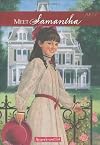
I have read the books of each AG’s series, well, the first four characters, anyway but Samantha is the one whose story I never forgot.
The AG girl who should have the most sheltered, least realistic life, is the one with the edgiest story, and a “best friend” character who lives a life completely the opposite. They are both lonely orphans, but Samantha is an heiress and Nellie, the next door neighbor’s maid.
Samantha is intellectual and adventurous but also naïve and not used to show more taking care of herself. This is an interesting contrast to Nellie, who is tough, cynical and maternal. Their relationship is a great look at the affects of privilege and social attitudes of the turn of the century. Interwoven with this story are discussions of women’s rights, and the affects of the Industrial Revolution. Aunt Cornelia is a suffragette, and Samantha is asked to write a report on how great factories are, and ends up concluding that they may not be so great after all.
I also find their story quite romantic, to be honest. Their first meetings are conducted hiding in a tunnel of lilac bushes-which is, I think, an image I never forgot. They hide in a boat house and fall asleep there, causing their families to be so shocked that you’d almost think they were doing something else in there. When Nellie is dumped in a classic abusive Victorian orphanage, Samantha risks her life to spring her. It all seems invested in a great deal more passion than other “best friend” relationships from the other AG series. I don't get the same vibe off Felicity and Elizabeth, the jury is still out on Kit and Ruthie, and Emily and Molly are not actually best friends-they were barely *friends* in the (one) book Emily was actually in. show less
The AG girl who should have the most sheltered, least realistic life, is the one with the edgiest story, and a “best friend” character who lives a life completely the opposite. They are both lonely orphans, but Samantha is an heiress and Nellie, the next door neighbor’s maid.
Samantha is intellectual and adventurous but also naïve and not used to show more taking care of herself. This is an interesting contrast to Nellie, who is tough, cynical and maternal. Their relationship is a great look at the affects of privilege and social attitudes of the turn of the century. Interwoven with this story are discussions of women’s rights, and the affects of the Industrial Revolution. Aunt Cornelia is a suffragette, and Samantha is asked to write a report on how great factories are, and ends up concluding that they may not be so great after all.
I also find their story quite romantic, to be honest. Their first meetings are conducted hiding in a tunnel of lilac bushes-which is, I think, an image I never forgot. They hide in a boat house and fall asleep there, causing their families to be so shocked that you’d almost think they were doing something else in there. When Nellie is dumped in a classic abusive Victorian orphanage, Samantha risks her life to spring her. It all seems invested in a great deal more passion than other “best friend” relationships from the other AG series. I don't get the same vibe off Felicity and Elizabeth, the jury is still out on Kit and Ruthie, and Emily and Molly are not actually best friends-they were barely *friends* in the (one) book Emily was actually in. show less
Lists
Awards

You May Also Like
Associated Authors
Statistics
- Works
- 12
- Members
- 8,498
- Popularity
- #2,833
- Rating
- 4.0
- Reviews
- 60
- ISBNs
- 65