
Patty Lovell
Author of Stand Tall, Molly Lou Melon
About the Author
Image credit: via judynewmanatscholastic.com
Series
Works by Patty Lovell
Tagged
Common Knowledge
- Gender
- female
Members
Reviews

Despite her small stature, buck-toothed smile, croaky voice (like that of a bull-frog), and tendency toward clumsiness, Molly Lou Melon was a happy, well-adjusted, self-confident little girl. After all, her Grandma has always instructed her to walk proudly, smile big, sing out clear and strong, and believe in herself. But when she moved to a new town, leaving her old school and friends behind, she found that her idiosyncrasies had made her a target for the school bully, Ronald Durkin. show more Fortunately, Molly Lou had a few tricks up her sleeve, and wasn't about to allow anyone to make her a victim...
A book that seems to have won almost universal accolades from other reviewers (so many five and four-star ratings!), Molly Lou Melon was a story that I liked more in theory, and for what the author was obviously trying to accomplish, than in reality. I agree wholeheartedly with the idea that self-confidence is an important value to instill in children, and that standing up to bullies is something that should be encouraged, but something about the way this story was formulated just didn't sit well with me, the first time I read through it. Thinking about it now, and having read it again, I realize that the issue here is the implication, however unintentional, that children can solve the problem of bullying by having a "good" attitude. It's that old chestnut, "ignore it and it will go away," but in slightly different form: "be positive and proactive, and it will change."
I think that this idea - that our attitude can effect the outcome of events, and convince others to change their behavior - is certainly true in some cases. And I can see some children finding Stand Tall, Molly Lou Melon very empowering. But for others, for the victims of chronic bullying and teasing (or of other kinds of abuse), this story simply doesn't ring true. I know, because I was one such child, and I can still vividly recall the experience of being ridiculed every single day at school, of being called various ugly names at least twenty times before I could go home, simply because I was too muscular "for a girl." (Apparently, girls shouldn't have more muscles than boys, even in early years when they are on different developmental tracks, and boy was I made to pay for not having the "right" body-type!) Nothing I did - ignoring the situation, answering back - in any way helped, and I simply wasn't equipped, personality-wise, to be be able to "win" peers over to my side. I've never been the passive type, so I always stood up for myself, and, being terribly proud, I made sure that all my crying was done in private. But in the end, it didn't help. Nothing did.
What's funny is that one of my teachers, who saw some of this unfold, commented, a few years afterword, that it had seemed to him that I handled myself very well (meaning that I had always stood up for myself). I think he was trying to compliment me on my "positive attitude," although perhaps he was just offering what comfort he could (hey, at least you didn't just accept it, right?), after the fact. In any case, I remember thinking at the time that addressing oneself to the victim's attitude is a terribly inadequate means of dealing with bullying. There's something almost cruel about stories like this, I think, in which a real and pressing problem is so easily dealt with. Not only will the child who is enduring this kind of treatment not find a real strategy for dealing with it, but they will also gain the impression (again, however unintentionally given) that if they were somehow different - if they had a better attitude, or a more positive self-image - they could stop this from happening.
Useful, perhaps, as a means of promoting good self-image, or as a story about light teasing, Stand Tall, Molly Lou Melon is utterly inadequate, in my view, when it comes to the issue of serious bullying. show less
A book that seems to have won almost universal accolades from other reviewers (so many five and four-star ratings!), Molly Lou Melon was a story that I liked more in theory, and for what the author was obviously trying to accomplish, than in reality. I agree wholeheartedly with the idea that self-confidence is an important value to instill in children, and that standing up to bullies is something that should be encouraged, but something about the way this story was formulated just didn't sit well with me, the first time I read through it. Thinking about it now, and having read it again, I realize that the issue here is the implication, however unintentional, that children can solve the problem of bullying by having a "good" attitude. It's that old chestnut, "ignore it and it will go away," but in slightly different form: "be positive and proactive, and it will change."
I think that this idea - that our attitude can effect the outcome of events, and convince others to change their behavior - is certainly true in some cases. And I can see some children finding Stand Tall, Molly Lou Melon very empowering. But for others, for the victims of chronic bullying and teasing (or of other kinds of abuse), this story simply doesn't ring true. I know, because I was one such child, and I can still vividly recall the experience of being ridiculed every single day at school, of being called various ugly names at least twenty times before I could go home, simply because I was too muscular "for a girl." (Apparently, girls shouldn't have more muscles than boys, even in early years when they are on different developmental tracks, and boy was I made to pay for not having the "right" body-type!) Nothing I did - ignoring the situation, answering back - in any way helped, and I simply wasn't equipped, personality-wise, to be be able to "win" peers over to my side. I've never been the passive type, so I always stood up for myself, and, being terribly proud, I made sure that all my crying was done in private. But in the end, it didn't help. Nothing did.
What's funny is that one of my teachers, who saw some of this unfold, commented, a few years afterword, that it had seemed to him that I handled myself very well (meaning that I had always stood up for myself). I think he was trying to compliment me on my "positive attitude," although perhaps he was just offering what comfort he could (hey, at least you didn't just accept it, right?), after the fact. In any case, I remember thinking at the time that addressing oneself to the victim's attitude is a terribly inadequate means of dealing with bullying. There's something almost cruel about stories like this, I think, in which a real and pressing problem is so easily dealt with. Not only will the child who is enduring this kind of treatment not find a real strategy for dealing with it, but they will also gain the impression (again, however unintentionally given) that if they were somehow different - if they had a better attitude, or a more positive self-image - they could stop this from happening.
Useful, perhaps, as a means of promoting good self-image, or as a story about light teasing, Stand Tall, Molly Lou Melon is utterly inadequate, in my view, when it comes to the issue of serious bullying. show less
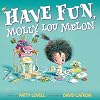
I have long been a fan of Molly Lou Melon, who is plucky and interesting and all that one hopes a child can be. I also love me a picturebook that is pro-imagination, so I am totally delighted with this new Molly Lou Melon offering. The thing that delights me most of all is that it took me most of the book to realize that new neighbor Gertie is a disabled child -- because that never matters to Molly Lou Melon, any more than it should matter to us.
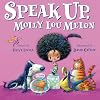
I so adored Speak Up, Molly Lou Melon that I had to come back for more! Sure, I love author Patty Lovell’s tale of the pint-sized powerhouse with a heart of gold, but it’s illustrator David Catrow who steals the show again in this sequel. I just about lost it in the scene with the tiny Molly Lou struggles with a yellow backpack bigger than she is! How I love this book!
Molly Lou’s mom reminds her that “You have a strong voice. Use it to speak up for anyone who might need your help.” show more And she does — over and over. And she sure puts that bully Bettina Bonklehead in her place — in the nicest way possible, in typical Molly Lou fashion. I wish every child everywhere could be Molly Lou Melon, and you will, too. One of those books that children and their grownups will equally treasure. show less
Molly Lou’s mom reminds her that “You have a strong voice. Use it to speak up for anyone who might need your help.” show more And she does — over and over. And she sure puts that bully Bettina Bonklehead in her place — in the nicest way possible, in typical Molly Lou fashion. I wish every child everywhere could be Molly Lou Melon, and you will, too. One of those books that children and their grownups will equally treasure. show less
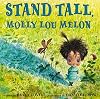
Stand Tall, Molly Lou Melon By…Patty Lovell
In my opinion, this is a very sweet, engaging, and inspirational story that teaches children to learn to stand up for themselves. The moral to the story is how Molly Lou Melon stands out as being different from everyone else but that is okay. Her grandma encourages her to stand up for herself and be resilient especially when the bully at her new school, Ronald Durkin, tries to lower her self-esteem. The author introduces Molly as a short, buck show more toothed, bullfrog sounding and clumsy young girl. Her grandma teaches her to stand up for herself and have confidence in order to avoid challenges based on her appearance. Regardless of other people’s judgments Molly Lou Melon follows her grandma’s advice to “walk as proudly as you can and the world will look up to you.” I thought the author sent a powerful message that would encourage all readers to be themselves. Although she had buck teeth, she was able to use them to stack pennies and her classmates thought that was cool.
The illustrations included are colorful and engage the reader in a way that promotes an emotional response and brings the book to life. I like how the illustrator uses a variety of colors to represent various emotions. I think students are able to connect to the characters and resonate with the authors message.
In the beginning of the story, the author sets the stage for what is going to happen. At this point, we are introduced to the characters and setting. I also really liked how the author kept a suspenseful plot that left the reader wanting more until the very last page. By the end of the book, the bully learns to accept Molly’s differences. The suspense of what would happen to Molly and Ronald’s relationship kept me wanting to read more. I loved the ending when Ronald brought Molly a penny and gave her a smile. Molly then wrote a letter to her grandma saying that her advice was exactly right. This novel broadens readers perspectives and reminds us that being different can have advantages. Overall, this book taught me to be the best person I can be and believe in myself. show less
In my opinion, this is a very sweet, engaging, and inspirational story that teaches children to learn to stand up for themselves. The moral to the story is how Molly Lou Melon stands out as being different from everyone else but that is okay. Her grandma encourages her to stand up for herself and be resilient especially when the bully at her new school, Ronald Durkin, tries to lower her self-esteem. The author introduces Molly as a short, buck show more toothed, bullfrog sounding and clumsy young girl. Her grandma teaches her to stand up for herself and have confidence in order to avoid challenges based on her appearance. Regardless of other people’s judgments Molly Lou Melon follows her grandma’s advice to “walk as proudly as you can and the world will look up to you.” I thought the author sent a powerful message that would encourage all readers to be themselves. Although she had buck teeth, she was able to use them to stack pennies and her classmates thought that was cool.
The illustrations included are colorful and engage the reader in a way that promotes an emotional response and brings the book to life. I like how the illustrator uses a variety of colors to represent various emotions. I think students are able to connect to the characters and resonate with the authors message.
In the beginning of the story, the author sets the stage for what is going to happen. At this point, we are introduced to the characters and setting. I also really liked how the author kept a suspenseful plot that left the reader wanting more until the very last page. By the end of the book, the bully learns to accept Molly’s differences. The suspense of what would happen to Molly and Ronald’s relationship kept me wanting to read more. I loved the ending when Ronald brought Molly a penny and gave her a smile. Molly then wrote a letter to her grandma saying that her advice was exactly right. This novel broadens readers perspectives and reminds us that being different can have advantages. Overall, this book taught me to be the best person I can be and believe in myself. show less
Lists
Awards


You May Also Like


Associated Authors
Statistics
- Works
- 7
- Members
- 7,066
- Popularity
- #3,471
- Rating
- 4.4
- Reviews
- 156
- ISBNs
- 31
- Languages
- 2