
Julie Kibler
Author of Calling Me Home
About the Author
Julie Kibler grew up in several towns in Kentucky, New Mexico, and Colorado. She later moved to Texas to attend college. Aside from writing she also works as a freelance editor. Her book title's include "Home for Erring and Outcast Girls" and "Calling Me Home". (Bowker Author Biography)
Works by Julie Kibler
Tagged
Common Knowledge
- Birthdate
- 20th century
- Gender
- female
- Nationality
- USA
- Places of residence
- Texas, USA
- Associated Place (for map)
- Texas, USA
Members
Reviews
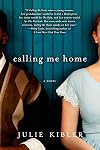
I absolutely loved this book about Isabelle - a nearly 90 year old white woman - and her friend, Dorrie - a 36 year old black woman, making a trip from Texas to Ohio for a funeral. Along the way, Isabelle tells Dorrie the story of the love of her life, Robert Prewitt, and Dorrie shares her life issues with Isabelle. Sadly, because Isabelle was white, and Robert was black, their love was forbidden. This is a story of heartbreak and love. It is beautifully handled by the author, and in her show more acknowledgements, she asks us to do better: “It’s up to you to be the change.”
In a world with so much racial division, this book reminds us that love is love, and it doesn’t care about the color of skin. If it weren’t for prejudice, Robert and Isabelle would have been free to love openly and without fear. Hopefully, one day, everyone will be able to love who they love without fear or hatred infringing upon that love. We still have a long way to go to make this a reality, but perhaps with books like this one, we can make a start.
#CallingMeHome #JulieKibler show less
In a world with so much racial division, this book reminds us that love is love, and it doesn’t care about the color of skin. If it weren’t for prejudice, Robert and Isabelle would have been free to love openly and without fear. Hopefully, one day, everyone will be able to love who they love without fear or hatred infringing upon that love. We still have a long way to go to make this a reality, but perhaps with books like this one, we can make a start.
#CallingMeHome #JulieKibler show less
It’s an irony that young people mostly see things in black and white, Dorrie. All or nothing. Sometimes, in spite of their enthusiasm for embracing change, it takes years of experience before they truly see the whole picture. Still, I don’t believe my mother ever really learned how to love me properly. Her basic needs were scarcely met as a child, and all she could do as an adult was clutch at the status she believed would save her. I really think it all boiled down to fear. She was so show more worried about what the people around us would think, she forgot about . . . me.
So says the elderly Miss Isabelle to her friend and hairdresser, Dorrie, who has agreed to drive Miss Isabelle from their hometown in Texas to “Cincy” so she can attend a mysterious funeral.
On the road trip Miss Isabelle recounts her late teen years which center on her growing love for Robert, the son of her parents' Negro housekeeper. She first ‘notices’ him when he rescues her from being raped in an alley one night when she sneaks away to a nightclub in the nearby city. She has known him all her life, it turns out, as he works for her family and is tutored by her doctor father. But now she begins to see how different he is from all the other boys and young men she knows, who are mostly tongue-tied and loutish.
During the ride Miss Isabelle tells Dorrie of her growing love for Robert, and the obstacles to it, which are many, in a Southern town in the 1940’s; a town that has signs posted warning coloreds to be out of town by sundown (yes, those sundown towns did actually exist, as hard as it is to believe now).Young Isabelle appears almost blithely unaware of the danger her infatuation for Robert could spell for him.
Meanwhile, in the present, Dorrie, a woman used to taking care of herself, but not above wanting or appreciating help, struggles to sort out her teenaged son’s issues, and her own deep-seated mistrust of men. Having been through one bad relationship with the father of her two children, she now needs to decide if she should trust a new man, who is depicted as a keeper—but she’s certain there’s a worm in the apple somewhere. Though not without interest, Dorrie’s storyline is less compelling than Robert and Isabelle’s.
For me, this novel read a bit unbelievable in some early chapters: I found it hard to believe young Isabelle wasn’t aware of the extreme and very real danger she put Robert in. And Robert’s character, while vague throughout much of the book, was portrayed as almost perfect. All the other young males are portrayed as somewhat bovine in intelligence, or crazy and violent like Isabelle’s brothers.
But regardless of those flaws, by the middle of the book I was firmly hooked and couldn’t put it down. The string of misfortunes in the last quarter of the novel are tragic, but as presented, believable—and heart-wrenching. There were moments of brilliance in this novel: the humiliating struggle to find someone to marry them; and the wedding scene, which actually gave me goosebumps it is so tender and beautifully rendered. And there are moments in the second half where the prose is lovely and precise, and cuts right to the core with crystal clarity.
Calling Me Home is Julie Kibler’s debut novel. It’s of interest to note that the author wrote this novel after discovering her grandmother had fallen in love with a young black man as a young girl, and that family story was the jumping off point for this story. I’m happy to have read this novel and enjoyed it. It will be interesting to see what this writer writes next.
Calling Me Home is 322 pages. The copy I read is an ARC, so it’s not possible to comment on editing. Thanks to St. Martin’s Press and She Reads for providing me a copy of this novel for review. show less
So says the elderly Miss Isabelle to her friend and hairdresser, Dorrie, who has agreed to drive Miss Isabelle from their hometown in Texas to “Cincy” so she can attend a mysterious funeral.
On the road trip Miss Isabelle recounts her late teen years which center on her growing love for Robert, the son of her parents' Negro housekeeper. She first ‘notices’ him when he rescues her from being raped in an alley one night when she sneaks away to a nightclub in the nearby city. She has known him all her life, it turns out, as he works for her family and is tutored by her doctor father. But now she begins to see how different he is from all the other boys and young men she knows, who are mostly tongue-tied and loutish.
During the ride Miss Isabelle tells Dorrie of her growing love for Robert, and the obstacles to it, which are many, in a Southern town in the 1940’s; a town that has signs posted warning coloreds to be out of town by sundown (yes, those sundown towns did actually exist, as hard as it is to believe now).Young Isabelle appears almost blithely unaware of the danger her infatuation for Robert could spell for him.
Meanwhile, in the present, Dorrie, a woman used to taking care of herself, but not above wanting or appreciating help, struggles to sort out her teenaged son’s issues, and her own deep-seated mistrust of men. Having been through one bad relationship with the father of her two children, she now needs to decide if she should trust a new man, who is depicted as a keeper—but she’s certain there’s a worm in the apple somewhere. Though not without interest, Dorrie’s storyline is less compelling than Robert and Isabelle’s.
For me, this novel read a bit unbelievable in some early chapters: I found it hard to believe young Isabelle wasn’t aware of the extreme and very real danger she put Robert in. And Robert’s character, while vague throughout much of the book, was portrayed as almost perfect. All the other young males are portrayed as somewhat bovine in intelligence, or crazy and violent like Isabelle’s brothers.
But regardless of those flaws, by the middle of the book I was firmly hooked and couldn’t put it down. The string of misfortunes in the last quarter of the novel are tragic, but as presented, believable—and heart-wrenching. There were moments of brilliance in this novel: the humiliating struggle to find someone to marry them; and the wedding scene, which actually gave me goosebumps it is so tender and beautifully rendered. And there are moments in the second half where the prose is lovely and precise, and cuts right to the core with crystal clarity.
Calling Me Home is Julie Kibler’s debut novel. It’s of interest to note that the author wrote this novel after discovering her grandmother had fallen in love with a young black man as a young girl, and that family story was the jumping off point for this story. I’m happy to have read this novel and enjoyed it. It will be interesting to see what this writer writes next.
Calling Me Home is 322 pages. The copy I read is an ARC, so it’s not possible to comment on editing. Thanks to St. Martin’s Press and She Reads for providing me a copy of this novel for review. show less
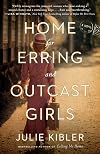
I’ve had this novel on my TBR for awhile and I am so thankful I finally had the opportunity to sit down and read it. It is such a sad, depressing, yet endearing and uplifting tale that is based on a true story, and happened a few short miles from where I grew up, making this read all the more impactful.
The Berachah Industrial Home was a real place in Arlington, Texas in the 1930’s that existed to help women who where down on their luck, lending a helping hand to those that found show more themselves pregnant out of wedlock, or in a life of prostitution, drug addiction, and other issues. It was a religious outreach that focused on second chances, and it is one that changed the lives of many women who walked through its doors. For its time this was revolutionary, but was a much-needed outreach that I found fascinating existed.
Home for Erring and Outcast Girls is a dual timeline that focuses on some of the women at The Berachah, while the future is focused on two women that are researching the history of The Berachah. As to be expected, there are twists in each timeline, along with adult subjects of all kinds that some could find triggering. There is nothing graphically depicted, but was handled in a tasteful and respectful manner, which helped me not be as triggered.
The writing is so subversive that once I picked it up I seriously could not put this novel down, and read it in mere hours. I found myself absorbed in this world, emotionally attached to these women, and craved to see the outcome, whatever that may be. After I was finished I did some research and found out that the Berachah cemetery is still in Arlington near the University of Texas in Arlington which is mere minutes from where my own grandparents are buried, so the next time I go to visit their graves I plan on going by Berachah Home Cemetery and paying my respects to those buried there.
This was n incredibly powerful read that will stick with me for a long time. It has imprinted on my heart, reminding me that all women have a fight, have a story, and are so much stronger together.
*I have voluntarily reviewed a copy of this book which I received from the publisher through NetGalley. All views and opinions expressed are completely honest, and my own. show less
The Berachah Industrial Home was a real place in Arlington, Texas in the 1930’s that existed to help women who where down on their luck, lending a helping hand to those that found show more themselves pregnant out of wedlock, or in a life of prostitution, drug addiction, and other issues. It was a religious outreach that focused on second chances, and it is one that changed the lives of many women who walked through its doors. For its time this was revolutionary, but was a much-needed outreach that I found fascinating existed.
Home for Erring and Outcast Girls is a dual timeline that focuses on some of the women at The Berachah, while the future is focused on two women that are researching the history of The Berachah. As to be expected, there are twists in each timeline, along with adult subjects of all kinds that some could find triggering. There is nothing graphically depicted, but was handled in a tasteful and respectful manner, which helped me not be as triggered.
The writing is so subversive that once I picked it up I seriously could not put this novel down, and read it in mere hours. I found myself absorbed in this world, emotionally attached to these women, and craved to see the outcome, whatever that may be. After I was finished I did some research and found out that the Berachah cemetery is still in Arlington near the University of Texas in Arlington which is mere minutes from where my own grandparents are buried, so the next time I go to visit their graves I plan on going by Berachah Home Cemetery and paying my respects to those buried there.
This was n incredibly powerful read that will stick with me for a long time. It has imprinted on my heart, reminding me that all women have a fight, have a story, and are so much stronger together.
*I have voluntarily reviewed a copy of this book which I received from the publisher through NetGalley. All views and opinions expressed are completely honest, and my own. show less
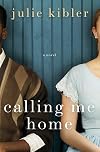
4.5 but I’m rounding up to 5
Part 'Driving Miss Daisy' and part 'The Help', the story begins when Miss Isabelle, a nearly 90 year old white woman, asks Dorrie, her 30-something black hairdresser, to drive her to a funeral in Cincinnatti. Tomorrow. I listened to this on audio and the narrators brought the book to life. I laughed and I cried as I became totally invested in this story about love, friendship, family, and race relations.
Told in alternating POV, we’re transported back to the show more early 1930s/early 40s as Miss Isabelle slowly reveals her story of forbidden love when, as a young girl, she falls in love with the black son of her housekeeper. The current day story builds upon the friendship Miss Isabella and Dorrie already enjoy. As a single mom, Dorrie has problems of her own, which she shares with Isabelle.
Their friendship is sweet and funny, and the journey changes both of them. Usually when a book changes POV between past and present I end up preferring one over the other. But with this book, I found both stories gripping and loved both characters. There is a mystery and just when you think you’ve figured it out, you find out you’re wrong. The ending delivers an emotional punch and a week later I find myself still thinking about the book. Highly recommended! show less
Part 'Driving Miss Daisy' and part 'The Help', the story begins when Miss Isabelle, a nearly 90 year old white woman, asks Dorrie, her 30-something black hairdresser, to drive her to a funeral in Cincinnatti. Tomorrow. I listened to this on audio and the narrators brought the book to life. I laughed and I cried as I became totally invested in this story about love, friendship, family, and race relations.
Told in alternating POV, we’re transported back to the show more early 1930s/early 40s as Miss Isabelle slowly reveals her story of forbidden love when, as a young girl, she falls in love with the black son of her housekeeper. The current day story builds upon the friendship Miss Isabella and Dorrie already enjoy. As a single mom, Dorrie has problems of her own, which she shares with Isabelle.
Their friendship is sweet and funny, and the journey changes both of them. Usually when a book changes POV between past and present I end up preferring one over the other. But with this book, I found both stories gripping and loved both characters. There is a mystery and just when you think you’ve figured it out, you find out you’re wrong. The ending delivers an emotional punch and a week later I find myself still thinking about the book. Highly recommended! show less
Lists
You May Also Like


Associated Authors
Statistics
- Works
- 5
- Members
- 1,078
- Popularity
- #23,855
- Rating
- 4.1
- Reviews
- 100
- ISBNs
- 47
- Languages
- 9
- Favorited
- 1
