
Anna Jean Mayhew
Author of The Dry Grass of August
About the Author
Works by Anna Jean Mayhew
A Complex Character 1 copy
Tagged
Common Knowledge
- Gender
- female
- Birthplace
- Charlotte, North Carolina, USA
- Places of residence
- Charlotte, North Carolina, USA
- Associated Place (for map)
- Charlotte, North Carolina, USA
Members
Reviews
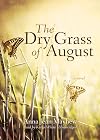
The Dry Grass of August by Anna Jean Mayhew is set in the summer of 1954 and thirteen year old June “Jubie” Watts is leaving Charlotte, North Caroline on a road trip with her mother, her two sisters, her baby brother and the colored maid, Mary. They are journeying south through the land of Jim Crow to Pensacola, Florida to visit her uncle. As they drive along, Jubie fills us in on her life and family and we learn of a father that drinks a little too much, has a wandering eye and is a show more little too quick to apply severe corporeal punishment. At first her mother appears to be distant and uninterested in her children, but as we learn of her problems and see the improvements over the course of the book, it is easier to understand her. The children, particularly Jubie, turn to Mary with most of their concerns.
Jubie is a thoughtful and observant narrator and does take note of the strong pro-segregation signs posted along the highway, and records the treatment of Mary who has to eat separately and often has to be found separate accommodations from the white family. When a horrific tragedy strikes the whole family is upset and frightened but Jubie is devastated. Yet it is her strength and integrity that shines from the pages as she seeks resolution and finds a measure of peace.
I found The Dry Grass of August to be a beautifully written and moving coming of age story. I seem to have a fondness for southern style literature and this book did remind me somewhat of both The Help and The Secret Life of Bees. This is a first novel, published after the author turned 70 yet it is the way the author brought the thirteen year old main character to life that elevates this book and keeps the reader engaged. show less
Jubie is a thoughtful and observant narrator and does take note of the strong pro-segregation signs posted along the highway, and records the treatment of Mary who has to eat separately and often has to be found separate accommodations from the white family. When a horrific tragedy strikes the whole family is upset and frightened but Jubie is devastated. Yet it is her strength and integrity that shines from the pages as she seeks resolution and finds a measure of peace.
I found The Dry Grass of August to be a beautifully written and moving coming of age story. I seem to have a fondness for southern style literature and this book did remind me somewhat of both The Help and The Secret Life of Bees. This is a first novel, published after the author turned 70 yet it is the way the author brought the thirteen year old main character to life that elevates this book and keeps the reader engaged. show less
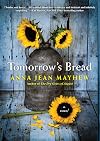
Anna Jean Mayhew's latest novel, TOMORROW'S BREAD, is a work of southern fiction that pulls quietly, persistently at the heart. The story's time is 1961, the setting an almost all black community nestled within the greater city of Charlotte, North Carolina, known as Brooklyn, a self-sufficient, thriving, close knit neighborhood where families have lived for generations.
Times are changing, progress is on the march and with it comes the idea that Brooklyn is not good for Charlotte. "Blight" show more is the word used to describe the area, yet for those who only know it as home, it is their safe haven. Houses are to be torn down, residents moved from the only place they've ever lived, and their sense of unity, belonging, is sure to be broken. It is shocking, what will they do? Where will they go? Mayhew perfectly captures the essence of how this must seem to the inhabitants with this quote at the beginning of one of her chapters. It is from Langston Hughes who said, "Misery is when you heard on the radio that the neighborhood you live in is a slum, but you always thought it was home."
From the very first page, I was eager to spend time with Loraylee Hawkins, her young, bi-racial son, Hawk, her grandmother, Bibi, and Uncle Ray, the pastor Eben Polk, and all the rest, because they were realistic, and became characters I cared about. Mayhew has given us a wonderful, original account of a time that reminded me of another place similar to Brooklyn, the small community known as Soul City in Warren County NC. Mayhew's TOMORROWS' BREAD is a story that is pertinent even today, a distinctive work at once engaging and provocative. show less
Times are changing, progress is on the march and with it comes the idea that Brooklyn is not good for Charlotte. "Blight" show more is the word used to describe the area, yet for those who only know it as home, it is their safe haven. Houses are to be torn down, residents moved from the only place they've ever lived, and their sense of unity, belonging, is sure to be broken. It is shocking, what will they do? Where will they go? Mayhew perfectly captures the essence of how this must seem to the inhabitants with this quote at the beginning of one of her chapters. It is from Langston Hughes who said, "Misery is when you heard on the radio that the neighborhood you live in is a slum, but you always thought it was home."
From the very first page, I was eager to spend time with Loraylee Hawkins, her young, bi-racial son, Hawk, her grandmother, Bibi, and Uncle Ray, the pastor Eben Polk, and all the rest, because they were realistic, and became characters I cared about. Mayhew has given us a wonderful, original account of a time that reminded me of another place similar to Brooklyn, the small community known as Soul City in Warren County NC. Mayhew's TOMORROWS' BREAD is a story that is pertinent even today, a distinctive work at once engaging and provocative. show less
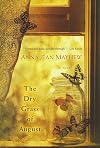
June Bentley "Jubie" Watts is 13 years old in 1954 when her mother decides to take all four of her children to visit her brother in Pensacola, Florida. As any affluent housewife of the time would do, she asks the maid to come along on the trip to help take care of them. Jubie does a lot of growing up on this trip and her eyes are opened to pervasive, ugly prejudice.
3.5 stars.
I liked Jubie, I really did. She had spunk and she questioned the attitudes that everyone else accepted and made their show more own. She still has the heart of a child and she questions why her kind, intelligent maid should be treated as inferior because of the color of her skin. But I didn't entirely trust her as a narrator and I'm not sure if I was supposed to. I guess everyone feels like their parents were harder on them than on their siblings, but it's taken to an extreme here. One part in particular was devastating to read. Jubie's dad is an alcoholic who apparently only takes his temper out on her.
It didn't seem entirely realistic to me that Jubie's story would be told almost completely through the filter of race. There is very good reason that she would have become hyper-aware of the issue through the lens of time but I didn't feel like she was looking back on these events from far in the future. They felt pretty immediate. I just felt that a 13-year-old girl would have had more distractions, I guess.
I did appreciate that the author tackled the actual violence of the times. Other books set around the Civil Rights era hint at it but then either nothing terribly bad happens or the brutality is in the background. The violence is the heart of this book and it left me so sad and disgusted. I just don't understand people who judge based on skin color and I definitely don't understand those who think it's permissable necessary to injure or kill someone because of it.
I really, really liked Mary, the maid. She had a huge, courageous heart. She bravely stands up for Jubie when Mr. Watts is on the rampage, she loves all the children in ways that their mother can't, and she is not afraid to reprimand her employers or their guests when they start making disparaging, prejudiced remarks. The world would be a better place if there were more Marys.
I was surprised to find myself respecting Mrs. Watts in the end. I don't know if I ever liked her but she comes a long way throughout the book. Her growth surprised me.
In one way, this was a quick, easy read, but in another, it was so difficult to get through. When you're feeling brave enough to confront some of the senseless ways that people hurt each other, pick this up. show less
3.5 stars.
I liked Jubie, I really did. She had spunk and she questioned the attitudes that everyone else accepted and made their show more own. She still has the heart of a child and she questions why her kind, intelligent maid should be treated as inferior because of the color of her skin. But I didn't entirely trust her as a narrator and I'm not sure if I was supposed to. I guess everyone feels like their parents were harder on them than on their siblings, but it's taken to an extreme here. One part in particular was devastating to read. Jubie's dad is an alcoholic who apparently only takes his temper out on her.
It didn't seem entirely realistic to me that Jubie's story would be told almost completely through the filter of race. There is very good reason that she would have become hyper-aware of the issue through the lens of time but I didn't feel like she was looking back on these events from far in the future. They felt pretty immediate. I just felt that a 13-year-old girl would have had more distractions, I guess.
I did appreciate that the author tackled the actual violence of the times. Other books set around the Civil Rights era hint at it but then either nothing terribly bad happens or the brutality is in the background. The violence is the heart of this book and it left me so sad and disgusted. I just don't understand people who judge based on skin color and I definitely don't understand those who think it's permissable necessary to injure or kill someone because of it.
I really, really liked Mary, the maid. She had a huge, courageous heart. She bravely stands up for Jubie when Mr. Watts is on the rampage, she loves all the children in ways that their mother can't, and she is not afraid to reprimand her employers or their guests when they start making disparaging, prejudiced remarks. The world would be a better place if there were more Marys.
I was surprised to find myself respecting Mrs. Watts in the end. I don't know if I ever liked her but she comes a long way throughout the book. Her growth surprised me.
In one way, this was a quick, easy read, but in another, it was so difficult to get through. When you're feeling brave enough to confront some of the senseless ways that people hurt each other, pick this up. show less
I read this book because I am from Charlotte,NC and close in age to Anna Jean Mayhew and I'm glad I read it because it is a beautifully written book that, like The Help, tells the truth(s) that most white people who lived through it would like to hide, from themselves most of all. It is a powerful witness to what all that stupid racism and discrimination did to stunt and shadow the lives of whites and blacks alike, and what a searing impact it had on the children. The role of the church and show more religion in this book is very interesting. I highly recommend this book; and think it's an excellent choice for book clubs/book discussion groups. show less
Lists
Awards


You May Also Like


Statistics
- Works
- 6
- Members
- 911
- Popularity
- #28,148
- Rating
- 3.8
- Reviews
- 67
- ISBNs
- 23
- Languages
- 3
- Favorited
- 1