
Thom S. Rainer
Author of Simple Church: Returning to God's Process for Making Disciples
About the Author
Thom S. Rainer is the president and CEO of LifeWay Christian Resources. He served at The Southern Baptist Theological Seminary for twelve years where he was the founding dean of the Billy Graham School of Missions and Evangelism. Rainer graduated from the University of Alabama in 1977. He earned show more his Master of Divinity and Ph.D. degrees from The Southern Baptist Theological Seminary. In addition to speaking in hundreds of venues, Rainer led Rainer Group, a church and denominational consulting firm, from 1990 to 2005. Rainer is the author of twenty-two books, including Breakout Churches, Simple Life, Simple Church, Raising Dad, The Millennials, and Essential Church. His book, I Am a Church Member, hit #1 on the CBA best-seller list. (Bowker Author Biography) show less
Works by Thom S. Rainer
I Am a Church Member: Discovering the Attitude that Makes the Difference (2013) 1,837 copies, 8 reviews
The Unchurched Next Door: Understanding Faith Stages as Keys to Sharing Your Faith (2003) 425 copies, 4 reviews
Effective Evangelistic Churches: Successful Churches Reveal What Works and What Doesn't (1996) 304 copies
The Post-Quarantine Church: Six Urgent Challenges and Opportunities That Will Determine the Future of Your Congregation (Church Answers Resources) (2020) 190 copies, 1 review
The Unexpected Journey: Conversations with People Who Turned from Other Beliefs to Jesus (2005) 183 copies, 3 reviews
Giant Awakenings: Making the Most of 9 Surprising Trends That Can Benefit Your Church (1995) 66 copies
Sharing the Gospel with Ease: How the Love of Christ Can Flow Naturally from Your Life (Church Answers Resources) (2022) 31 copies
Pray & Go: Your Invitation to Become a Great Commission Christian (Church Answers Resources) (2023) 24 copies
I Am a Christian: Discovering What It Means to Follow Jesus Together with Fellow Believers (Church Answers Resources) (2022) 22 copies, 1 review
The Anxious Generation Goes to Church: What the Research Says about What Younger Generations Need (and Want) from Your Church (Church Answers Resources) (2025) 18 copies, 1 review
I Believe: A Concise Guide to the Essentials of the Christian Faith (Church Answers Resources) (2023) 16 copies, 1 review
When the People Pray: An Invitation to Intercede for Your Pastor and Revive Your Church (Church Answers Resources) (2023) 6 copies
Where Have All the Church Members Gone?: How to Avoid the Five Traps That Silently Kill Churches (Church Answers Resources) (2024) 6 copies
Great Commission Resurgence 4 copies
Crucial Commitments: 5 Simple Decisions That Members of Healthy and Growing Churches Make (Church Answers Resources) (2026) 2 copies
Soy Miembro de la Iglesia ¿Y Ahora Qué?: I Am a Church Member, Now What? (Spanish Edition) (2015) 2 copies
I Am a Christian Participant’s Guide: Eight Sessions to Help You Discover What It Means to Follow Jesus Together with Fellow Believers (2022) 2 copies
Rainer on Evangelism 2 copies
Experiencing Personal Revival: A Guide to Renewing Your Relationship & Enlightening Your Talk with God (1996) 2 copies
Associated Works
Evangelicals Engaging Emergent: A Discussion of the Emergent Church Movement (2009) — Foreword — 104 copies
Tagged
Common Knowledge
- Other names
- 湯姆.雷納
- Birthdate
- 1955-07-16
- Gender
- male
- Organizations
- LifeWay Christian Resources
- Nationality
- USA
- Birthplace
- Union Springs, Alabama, USA
- Map Location
- Alabama, USA
Members
Reviews
The Anxious Generation Goes to Church: What the Research Says about What Younger Generations Need (and Want) from Your Church (Church Answers Resources) by Thom S. Rainer
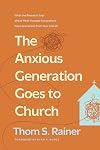
First sentence: I was well on my way to completing the research on a different book when I hit a wall.
The book I thought I was 'getting' was not the book I got. That's on me, mostly. I didn't see or pay enough attention to the subtitle. Perhaps. I have thoughts. I do. I'll try to share them when appropriate.
So what IS the book about? The book addresses from a statistical, sociological, analytical, research-oriented viewpoint how the two youngest generations--Gen Z and Gen Alpha--could show more benefit from the structure of the church and the church community. Gen Z refers to those born between 1997 and 2012. Gen Alpha refers to those born between 2013 and the present.
His inspiration for writing is DIRECTLY connected to his reading a secular book called The Anxious Generation by Jonathan Haidt. Much of his book is spent summarizing and analyzing Haidt's book and spinning or tilting it perhaps to see it from a Christian perspective. The concerns are roughly the same, I believe, but Rainer focuses on a possible solution to the 'problem.'
Rainer defines and describes each generation from The Silent Generation on through Gen Alpha. Each generation is defined in GENERALIZED terms--very wide brush strokes, if you will. It starts from a place that these sociological terms and generalizations are essentially true. He does not question these foundational blocks. [I'm not saying that is in and of itself a bad thing. It's just that almost all of the building blocks in this book, the foundation, the walls, the supports, etc., are all sociological and not in any way drawing from Scripture.] All people from a generation are lumped together despite unique, personal, individual differences. A very one-size-fits-all cookie-cutter approach to viewing humanity.
The Anxious Generations--Gen Z and Gen Alpha--are being shaped, rewired essentially by "the big four" : high speed internet, smartphones, social media, and polarization. Rainer spends time explaining the evils of the big four. Though high-speed internet, smartphones, social media, and polarization are so closely connected and intertwined, so knotted and tangled together that I'm not sure it makes sense to separate them from each other. You can probably guess what makes the big four evil without further explanation. Polarization is the only one that might perhaps need a little help. Essentially the polarization of society on every subject--mostly online but in person as well perhaps. (For example, how EVERYTHING is one baby step away from being a political issue.)
He spends the most time on describing, defining, illustrating, etc., the 'special' problems facing the Anxious Generation. He then begins with a big picture, distant approach to how the church may be able to help. Again, his technique is more on statistics, research, polls, surveys, etc. He spends a chapter introducing readers to a series of atheists--yes, atheists--sharing quotes from them that allegedly show how even atheists admit that church can be stabilizing and morally good for society. How they may reject all religions and religious doctrines, etc, but they like the structures of the community--in theory at least.
When he speaks of the church most often it is in a distant sociological research way. There's little to no theology in this one.
The book isn't so much THE ANXIOUS GENERATIONS NEED JESUS AS THEIR LORD AND SAVIOR because they are sinners in need of a Savior, as Gen Z and Gen Alpha need the structure of weekly fellowship, in-person friendships, socialization and camaraderie. They need youth groups, discipleship, mentorship, to be a part of a family. It will benefit their mental health if they attend church. It doesn't really go into spiritual needs and spiritual solutions.
He encourages the church to actively invite and welcome younger people in the church. That means, most notably, bringing someone to church--literally. Not just inviting casually. But making plans, going with them, sitting with them, sharing a meal, etc. He points out time and time again, that most are not willing to go to a church alone, but if they had someone to go with them, they'd go. He also emphasizes that "the unchurched" of all ages are not hostile to the faith, to church, to Christians, they just are waiting for us to go to them and actively care about them. (I'm not sure *where* he is getting this not hostile thing. I'm not sure which polarized view is right.) show less
The book I thought I was 'getting' was not the book I got. That's on me, mostly. I didn't see or pay enough attention to the subtitle. Perhaps. I have thoughts. I do. I'll try to share them when appropriate.
So what IS the book about? The book addresses from a statistical, sociological, analytical, research-oriented viewpoint how the two youngest generations--Gen Z and Gen Alpha--could show more benefit from the structure of the church and the church community. Gen Z refers to those born between 1997 and 2012. Gen Alpha refers to those born between 2013 and the present.
His inspiration for writing is DIRECTLY connected to his reading a secular book called The Anxious Generation by Jonathan Haidt. Much of his book is spent summarizing and analyzing Haidt's book and spinning or tilting it perhaps to see it from a Christian perspective. The concerns are roughly the same, I believe, but Rainer focuses on a possible solution to the 'problem.'
Rainer defines and describes each generation from The Silent Generation on through Gen Alpha. Each generation is defined in GENERALIZED terms--very wide brush strokes, if you will. It starts from a place that these sociological terms and generalizations are essentially true. He does not question these foundational blocks. [I'm not saying that is in and of itself a bad thing. It's just that almost all of the building blocks in this book, the foundation, the walls, the supports, etc., are all sociological and not in any way drawing from Scripture.] All people from a generation are lumped together despite unique, personal, individual differences. A very one-size-fits-all cookie-cutter approach to viewing humanity.
The Anxious Generations--Gen Z and Gen Alpha--are being shaped, rewired essentially by "the big four" : high speed internet, smartphones, social media, and polarization. Rainer spends time explaining the evils of the big four. Though high-speed internet, smartphones, social media, and polarization are so closely connected and intertwined, so knotted and tangled together that I'm not sure it makes sense to separate them from each other. You can probably guess what makes the big four evil without further explanation. Polarization is the only one that might perhaps need a little help. Essentially the polarization of society on every subject--mostly online but in person as well perhaps. (For example, how EVERYTHING is one baby step away from being a political issue.)
He spends the most time on describing, defining, illustrating, etc., the 'special' problems facing the Anxious Generation. He then begins with a big picture, distant approach to how the church may be able to help. Again, his technique is more on statistics, research, polls, surveys, etc. He spends a chapter introducing readers to a series of atheists--yes, atheists--sharing quotes from them that allegedly show how even atheists admit that church can be stabilizing and morally good for society. How they may reject all religions and religious doctrines, etc, but they like the structures of the community--in theory at least.
When he speaks of the church most often it is in a distant sociological research way. There's little to no theology in this one.
The book isn't so much THE ANXIOUS GENERATIONS NEED JESUS AS THEIR LORD AND SAVIOR because they are sinners in need of a Savior, as Gen Z and Gen Alpha need the structure of weekly fellowship, in-person friendships, socialization and camaraderie. They need youth groups, discipleship, mentorship, to be a part of a family. It will benefit their mental health if they attend church. It doesn't really go into spiritual needs and spiritual solutions.
He encourages the church to actively invite and welcome younger people in the church. That means, most notably, bringing someone to church--literally. Not just inviting casually. But making plans, going with them, sitting with them, sharing a meal, etc. He points out time and time again, that most are not willing to go to a church alone, but if they had someone to go with them, they'd go. He also emphasizes that "the unchurched" of all ages are not hostile to the faith, to church, to Christians, they just are waiting for us to go to them and actively care about them. (I'm not sure *where* he is getting this not hostile thing. I'm not sure which polarized view is right.) show less
As a pastor who has served multiple churches over the last 22 years, I can testify to the sad reality of the health of many churches. Far more churches than you would think are already dead....They just don't know it yet.
In Autopsy of a Deceased Church, church growth author Thom Rainer takes the reader down the unsettling journey of autopsying dead churches. Like a medical autopsy, Rainer is looking for the reasons that churches die. He settles in on some key threads that run through show more unhealthy churches and, left unchecked, will ultimately lead to their demise. These issues include a selfish refusal to reach out to others, elevating personal preferences over mission, failed pastoral leadership, and lack of prayer.
A short read, Autopsy of a Deceased Church can be read in one afternoon. Be forewarned though: it takes longer than one afternoon to digest. Each chapter caused me to think of churches I had served or other churches about whom I was aware. Their health is dubious. Their mission is confused. Their prayer life is anemic. And, if things don't change, death awaits them.
My prayer is that this short book will be used mightily by God to shake churches awake from their slumber. That somehow, churches who seem destined for the mortuary would become a platform for the grace of God. show less
In Autopsy of a Deceased Church, church growth author Thom Rainer takes the reader down the unsettling journey of autopsying dead churches. Like a medical autopsy, Rainer is looking for the reasons that churches die. He settles in on some key threads that run through show more unhealthy churches and, left unchecked, will ultimately lead to their demise. These issues include a selfish refusal to reach out to others, elevating personal preferences over mission, failed pastoral leadership, and lack of prayer.
A short read, Autopsy of a Deceased Church can be read in one afternoon. Be forewarned though: it takes longer than one afternoon to digest. Each chapter caused me to think of churches I had served or other churches about whom I was aware. Their health is dubious. Their mission is confused. Their prayer life is anemic. And, if things don't change, death awaits them.
My prayer is that this short book will be used mightily by God to shake churches awake from their slumber. That somehow, churches who seem destined for the mortuary would become a platform for the grace of God. show less
A book that is practical in the age it was written, Thom Rainer's Becoming a Welcoming Church reminds us that a longtime member's experience of church is nowhere close to a first time visitor, and that the church that is intentional about true hospitality should be thoughtful on every step of interaction along the way; from website to parking lot to before and after service.
I can't help but to think how later generations will find this book archaic; already we are in the age where church show more websites are becoming dinosaurs, and Rainer's insistence about graphic design signage and other items are based more in the marketing of our age(and suburban/upper class wealth) than in historic church growth. Nevertheless, the ethos of the book is one that can give us a positive way to look forward and to think about how a church stops being the holy huddle and starts being a house of hospitality. show less
I can't help but to think how later generations will find this book archaic; already we are in the age where church show more websites are becoming dinosaurs, and Rainer's insistence about graphic design signage and other items are based more in the marketing of our age(and suburban/upper class wealth) than in historic church growth. Nevertheless, the ethos of the book is one that can give us a positive way to look forward and to think about how a church stops being the holy huddle and starts being a house of hospitality. show less
Programs, programs, programs! So many churches suffer from program overload – programs that often compete with one another for limited resources (money, staff, time, etc.) and that often are not in synch with the church’s mission. Rainer and Greigor’s research indicates that full-service churches (a church with a program for everything) are not nearly as effective as simple churches – churches that can identify a clear discipleship process and only utilize programs that move church show more members along that process. Most churches need fewer programs and more clarity and focus around those programs they retain. Rainer and Greigor help church leaders cut through the buzz of the latest programming trends and narrow in on the church’s purpose: making disciples. Very helpful. A- show less
Lists
Awards

You May Also Like


Associated Authors
Statistics
- Works
- 62
- Also by
- 1
- Members
- 12,073
- Popularity
- #1,942
- Rating
- 3.8
- Reviews
- 70
- ISBNs
- 141
- Languages
- 6
- Favorited
- 3