
Jan Forsgren
Author of Messerschmitt BF 109: The Design and Operational History
Works by Jan Forsgren
The Thomas-Morse MB-3 : America's First Indigenous Fighter : A Centennial Perspective on Great War Airplanes (2021) 4 copies, 1 review
Swedish Fortresses: The Boeing F-17 Fortress in Civil and Military Service (2009) 2 copies, 1 review
Tagged
Common Knowledge
There is no Common Knowledge data for this author yet. You can help.
Members
Reviews
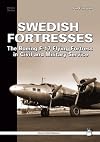
This book looks at a little-known byway of World War 2 aviation history, namely Allied aircraft that made forced landings in Sweden, and specifically the nine Boeing B-17 Flying Fortresses that landed in Sweden between July 1943 and June 1944. Allied aircraft that landed in Sweden were usually impounded by the authorities and their crews interned; after a while and following negotiations, aircraft were returned and crews were repatriated. However, Sweden was experiencing a shortage of civil show more airliners and the Swedish government negotiated the purchase of nine of the impounded B-17s for conversion to airliners.
Such conversions were unknown elsewhere; the B-17 was generally considered unsuitable for such work. However, Sweden's need was pressing, and so seven of the nine Fortresses were transferred to the Saab factory at Linköping and emerged between January 1944 and May 1946 as 14-seat airliners. (Two aircraft which made forced landings were only suitable as spare part donors.) They served with Swedish airlines for a few years until post-war deliveries of Douglas DC-4s were made, at which point most of the aircraft, being quite war-weary, were sent for scrappage. Two, however, were sold on to Danish Air Lines; one was involved in a taxiing accident on arrival at Kastrup in January 1946 and was written off, whilst the other served until 1948. It was then acquired by the Royal Danish Air Force and flew with them on survey missions, especially over Greenland, until 1954. It was then sold on to the French Institut Geographique National. It served with them until 1961; it stood out of use for some years, acting as a spare parts donor for some of the IGN's other B-17s until 1968, when it was acquired for preservation by the USAF Museum. It was stored until 1978, when it became the subject of restoration efforts which lasted for more than ten years. Now restored to its former USAAF identity as Bu.Aer. 42-32076 Shoo Shoo Shoo Baby of the 401st Bombardment Squadron, 91st Bombardment Group, the B-17 can now be seen at the National Air and Space Museum's Steven F. Udvar-Hazy Center outside Washington DC.
The book is illustrated with many high-quality photographs of the nine B-17s in Sweden, both after landing and following their conversion to airliners. A detailed history of the entire operation is given as well as individual histories of each airframe and a detailed account of the rescue and restoration of Shoo Shoo Shoo Baby. Finally, a separate folder contains eight drawing sheets, showing colour profiles of each aircraft and a set of plans of the converted airframes.
This is an unusual and specialised subject; but given Sweden's neutral status during the war, and the post-war history of both the aircraft and of Saab - this work pre-dates their venture into automotive engineering - it will interest many people beyond its obvious target audience.
(PS: the 'F-17' in the title isn't an error; the aircraft were designated F-17 in Sweden in honour of the US Air Attaché in Stockholm, Colonel Felix Hardison, who helped negotiate the deal.) show less
Such conversions were unknown elsewhere; the B-17 was generally considered unsuitable for such work. However, Sweden's need was pressing, and so seven of the nine Fortresses were transferred to the Saab factory at Linköping and emerged between January 1944 and May 1946 as 14-seat airliners. (Two aircraft which made forced landings were only suitable as spare part donors.) They served with Swedish airlines for a few years until post-war deliveries of Douglas DC-4s were made, at which point most of the aircraft, being quite war-weary, were sent for scrappage. Two, however, were sold on to Danish Air Lines; one was involved in a taxiing accident on arrival at Kastrup in January 1946 and was written off, whilst the other served until 1948. It was then acquired by the Royal Danish Air Force and flew with them on survey missions, especially over Greenland, until 1954. It was then sold on to the French Institut Geographique National. It served with them until 1961; it stood out of use for some years, acting as a spare parts donor for some of the IGN's other B-17s until 1968, when it was acquired for preservation by the USAF Museum. It was stored until 1978, when it became the subject of restoration efforts which lasted for more than ten years. Now restored to its former USAAF identity as Bu.Aer. 42-32076 Shoo Shoo Shoo Baby of the 401st Bombardment Squadron, 91st Bombardment Group, the B-17 can now be seen at the National Air and Space Museum's Steven F. Udvar-Hazy Center outside Washington DC.
The book is illustrated with many high-quality photographs of the nine B-17s in Sweden, both after landing and following their conversion to airliners. A detailed history of the entire operation is given as well as individual histories of each airframe and a detailed account of the rescue and restoration of Shoo Shoo Shoo Baby. Finally, a separate folder contains eight drawing sheets, showing colour profiles of each aircraft and a set of plans of the converted airframes.
This is an unusual and specialised subject; but given Sweden's neutral status during the war, and the post-war history of both the aircraft and of Saab - this work pre-dates their venture into automotive engineering - it will interest many people beyond its obvious target audience.
(PS: the 'F-17' in the title isn't an error; the aircraft were designated F-17 in Sweden in honour of the US Air Attaché in Stockholm, Colonel Felix Hardison, who helped negotiate the deal.) show less
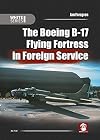
In this grab bag of captured and second-hand aircraft it turns out that I had been aware of most of the applications of these machines; particularly on maritime patrol duties, or the Israeli bombers. The biggest surprises were that more of these planes were not used as executive transports by military VIPs, or that there was extensive use of the machine in Bolivia as a meat carrier on internal routes; though the planes were civilian operated they were procured by the Bolivian government.
The Thomas-Morse MB-3 : America's First Indigenous Fighter : A Centennial Perspective on Great War Airplanes by Jan Forsgren

A short narrative, 86 pages total, print on demand, most of the space is allocated to photographs, drawings and color profiles. The monograph follows the usual Great War Aviation Centennial Series format and provides the most comprehensive treatise on the history of Thomas-Morse MB-3 (and Boeing MB-3A) known to the reviewer. The technical description is quite brief but the photographs provide a lot more information about the aircraft construction.
The monograph is readable and the most of the show more material is well presented.
There are few funny editorial glitches worth mentioning (e.g. one and the same G.A. drawing appears on pages 38, 39 and 51; a book is listed twice in the References).
Personally, I still need to find more about the aircraft and engine design variations of the MB-3/3A, including the alternative '4-aileron' wing on the McCook Field project number P260.
Summary. The book is recommended reading for those interested. show less
The monograph is readable and the most of the show more material is well presented.
There are few funny editorial glitches worth mentioning (e.g. one and the same G.A. drawing appears on pages 38, 39 and 51; a book is listed twice in the References).
Personally, I still need to find more about the aircraft and engine design variations of the MB-3/3A, including the alternative '4-aileron' wing on the McCook Field project number P260.
Summary. The book is recommended reading for those interested. show less

If you have been buying this series to this point and are interested in this aircraft there is really no good reason not to acquire this booklet; even if you're not planning on building a model of this machine.
Statistics
- Works
- 14
- Members
- 51
- Popularity
- #311,766
- Rating
- 3.6
- Reviews
- 4
- ISBNs
- 14
- Languages
- 1