
Larry Duberstein
Author of The Twoweeks
Works by Larry Duberstein
Tagged
Common Knowledge
- Birthdate
- 1944-05-18
- Gender
- male
- Nationality
- USA
- Birthplace
- Brooklyn, New York, New York, USA
- Map Location
- New York, USA
Members
Reviews
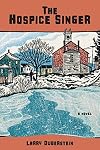
(27) This was an engaging and well-written novel about a retired New England high-school guidance counselor. His retiree volunteer work is singing in a choir to patients on hospice. Through this work he meets a young woman with a terminal illness whose serves as a catalyst for a transformation in his own life. To me this book is about the attitude towards which you approach your older age (if you are so lucky as to make it there; this book really brings home that it is NOT a given) Are you show more just waiting yet dreading dying or are you living? Our protagonist, Ian Nelson, realizes he is doing the former without even realizing it. It resonated with me in my current life circumstances though I am still a ways away from retirement.
The plot was chronologically linear more or less; but it had a shambolic, picaresque feel to it that I think the author wanted to evoke with the references to 'On the Road,' and 'Travels with Charley.' Neither of which I have read, though I have read and enjoyed the other referenced Steinbecks. The author does a commendable job with Ian's characterization and the various settings - well-drawn with seemingly effortless prose. I wish we had gotten a bit more of Polly - it seems unrealistic that she could fade from the narrative so quickly. I thought the author was going someplace else entirely re: the ending. It seemed like the narrative arc would be closed with Anita. While I liked the ending, it felt a bit anti-climactic.
Anyway, the book makes me want to hike with my dog; makes me miss New England; and makes me look forward to my upcoming trip out West. It is a quiet novel - I think it would appeal to the book club crowd. It reminds me some of recent reads of Joyce Carol Oates ('Middle Age') and Julia Glass ('The Widower's Tale' ) as well as Russo's 'Empire Falls.' Definitely recommended. show less
The plot was chronologically linear more or less; but it had a shambolic, picaresque feel to it that I think the author wanted to evoke with the references to 'On the Road,' and 'Travels with Charley.' Neither of which I have read, though I have read and enjoyed the other referenced Steinbecks. The author does a commendable job with Ian's characterization and the various settings - well-drawn with seemingly effortless prose. I wish we had gotten a bit more of Polly - it seems unrealistic that she could fade from the narrative so quickly. I thought the author was going someplace else entirely re: the ending. It seemed like the narrative arc would be closed with Anita. While I liked the ending, it felt a bit anti-climactic.
Anyway, the book makes me want to hike with my dog; makes me miss New England; and makes me look forward to my upcoming trip out West. It is a quiet novel - I think it would appeal to the book club crowd. It reminds me some of recent reads of Joyce Carol Oates ('Middle Age') and Julia Glass ('The Widower's Tale' ) as well as Russo's 'Empire Falls.' Definitely recommended. show less
 This review was written for LibraryThing Early Reviewers.
I just intended to browse the book, but the engaging intro and smooth flow of the first dozen pages told me I was going to read it all. We quickly get to the attraction of singing: "singing, making music under any circumstances, uplited those who made it."(p.10)
Duberstein mostly writes with a sly humor that makes the book a pleasure to read. I had expected there to be more story about the other hospice singers, or about the group as a whole, but then realized that the title indicates focus show more on a single singer. Ian Nelson, retired guidance counselor, was raised with a strong sense of right and wrong, and has always been described as "nice", one who can be relied on to do the right thing.
Since I knew I would be writing a review, I took notes of subjects that cross-reference. In particular, I noticed the change in Ian's presentation of happiness. At first he talks of remembering what makes you happy as a counselling technique he would use with his high school students, then as a technique he uses himself to move out of his depression. By the end of the book, he is discovering present moments that make him happy. There was a section that had me afraid that this would just be another book of an aging man complaining about his lot, but I pushed through it, as Ian also did as he found a renewed sense of happiness.
An early reference to Saroyan and to Lear's daughters worried me that this would be a book meant for literati. Most of the quotes, though, were more accessible--and made even more so by Ian not being able to remember who said it. And there are as likely to be quotes from baseball. The only references that left me totally at sea--to Wallace and Gromit (p.241), to Barry Sanders (p.243)--were from modern culture, and there was enough other description that the tale could have been told without the names. I suppose their use is another example of Duberstein's wit.
Reader forewarned: Duberstein does let slip a few references to the 45th president that make it clear his political alliances lie with Democrats.
So many of the songs that were mentioned as being sung were "old standards", but it makes me wonder whose standards? Certainly I had heard most of the titles from tales set in the 1800's in mostly protestant settings. But why would those be desired by their clients? Not all clients were elderly. Is it because this is a white-majority setting that they had no need for diversity in their selection? Speaking of the culture, Ian's friendship with Jack is at odds with his apparently more sophisticated associates. Jack's gruff exterior and life in an ice shanty are a nice contrast, though, and a foreshadowing of a bit of the freedom Ian needs.
Duberstein did not do a good job of developing his female characters; they are counterfoils to the changes Ian needs to make in his life. Anita is the only woman whose point of view he attempts to understand.
I noted two writer slip-ups. 1)He notes that all religions sing, "they all include music. For many, the music is at the heart of it, the distilled essence of their faith."(p.245) Yet Quakers typically do not sing, and he has mentioned Quakers elsewhere in the book. 2) He mentions a brief social hug (p.52) "guarded against it up to now", yet there was an earllier instance with the same significant person "he extricated himself from what was in fact was a hug" (p.39).
A single lovely alliteration: "He wished to believe that swimming through the singing sailing air, he would shed his useless surliness" (p.236-7).
An example of description which obviates the need to know the reference: "The new snow was collecting by now and called to mind a line of poetry about waking to an undisturbed 'uncompacted London snow.' The poet's name escaped him, the vivid image stayed, of God's pure bedding lying pristine at daybreak." (p.32) show less
Duberstein mostly writes with a sly humor that makes the book a pleasure to read. I had expected there to be more story about the other hospice singers, or about the group as a whole, but then realized that the title indicates focus show more on a single singer. Ian Nelson, retired guidance counselor, was raised with a strong sense of right and wrong, and has always been described as "nice", one who can be relied on to do the right thing.
Since I knew I would be writing a review, I took notes of subjects that cross-reference. In particular, I noticed the change in Ian's presentation of happiness. At first he talks of remembering what makes you happy as a counselling technique he would use with his high school students, then as a technique he uses himself to move out of his depression. By the end of the book, he is discovering present moments that make him happy. There was a section that had me afraid that this would just be another book of an aging man complaining about his lot, but I pushed through it, as Ian also did as he found a renewed sense of happiness.
An early reference to Saroyan and to Lear's daughters worried me that this would be a book meant for literati. Most of the quotes, though, were more accessible--and made even more so by Ian not being able to remember who said it. And there are as likely to be quotes from baseball. The only references that left me totally at sea--to Wallace and Gromit (p.241), to Barry Sanders (p.243)--were from modern culture, and there was enough other description that the tale could have been told without the names. I suppose their use is another example of Duberstein's wit.
Reader forewarned: Duberstein does let slip a few references to the 45th president that make it clear his political alliances lie with Democrats.
So many of the songs that were mentioned as being sung were "old standards", but it makes me wonder whose standards? Certainly I had heard most of the titles from tales set in the 1800's in mostly protestant settings. But why would those be desired by their clients? Not all clients were elderly. Is it because this is a white-majority setting that they had no need for diversity in their selection? Speaking of the culture, Ian's friendship with Jack is at odds with his apparently more sophisticated associates. Jack's gruff exterior and life in an ice shanty are a nice contrast, though, and a foreshadowing of a bit of the freedom Ian needs.
Duberstein did not do a good job of developing his female characters; they are counterfoils to the changes Ian needs to make in his life. Anita is the only woman whose point of view he attempts to understand.
I noted two writer slip-ups. 1)He notes that all religions sing, "they all include music. For many, the music is at the heart of it, the distilled essence of their faith."(p.245) Yet Quakers typically do not sing, and he has mentioned Quakers elsewhere in the book. 2) He mentions a brief social hug (p.52) "guarded against it up to now", yet there was an earllier instance with the same significant person "he extricated himself from what was in fact was a hug" (p.39).
A single lovely alliteration: "He wished to believe that swimming through the singing sailing air, he would shed his useless surliness" (p.236-7).
An example of description which obviates the need to know the reference: "The new snow was collecting by now and called to mind a line of poetry about waking to an undisturbed 'uncompacted London snow.' The poet's name escaped him, the vivid image stayed, of God's pure bedding lying pristine at daybreak." (p.32) show less
This review was written for LibraryThing Early Reviewers.
The Twoweeks by Larry Duberstein is written artfully, almost archly, in onion-like layers. The beginning and ending form the outer layer, which wraps around the book; the beginning makes a lot more sense after you’ve read to the end. It is written in experimental style, almost more like a play than a novel. We seem to be expected to be completely familiar with Cal and Lara’s current situation, although the novel doesn’t concern itself much with that. Readers listen to Cal (an actor) show more and Lara (a poet) correct and contradict each other’s memories of the Twoweeks –that shared time outside of normal life – as they read (we along with them) in the present, pages that present Lara’s perspective at the time. It’s a love story of sorts, but The Twoweeks is actually a pretty unsentimental dissection of what turned out, to everyone’s surprise, to be a grand passion.
This is a shortened version of the full review on my blog at http://baystatera.com/2012/02/28/time-capsule-of-love-the-twoweeks-by-larry-dube... show less
This is a shortened version of the full review on my blog at http://baystatera.com/2012/02/28/time-capsule-of-love-the-twoweeks-by-larry-dube... show less
This review was written for LibraryThing Early Reviewers.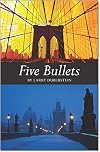
A wall separates Carl Barry from the people around him. It’s an invisible wall keeping the street’s grit and dirt on its other side, while revealing only the surface of the man. And it’s a wall that began in the hurts of World War II, in the peace of a private swimming place, and in the ceaseless death that hid behind gray smoke.
Larry Duberstein’s Five Bullets intertwines the stories of a young Jew from Prague and a successful but very private structural engineer in New York. But show more Karel Bondy and Carl Barry are the same, and passing years and pages reveal a story of tragedy and love, persistence and peril, all touched with truth to self and faithless hope.
Sweet romance, gentle humor, dialog that convinces completely, wonderful characters with space to grow from childhood to adulthood—though not all will be given the time—and a central tragedy like the elevator shaft of one of Carl’s unloved buildings; it all comes together in a tale that spans war, Holocaust, man’s cruelty to man, and the love that binds and unites us.
By the end of this novel, you too might look with damp eyes, wondering “if these were joyful tears for their love or tragic tears for all [you’ve] pretended not to know,” or maybe even tears for the randomness of it all.
Five Bullets brings to life the harrowing deaths of uncountable Jews, and the wounded futures of survivors. It holds loves and griefs of many kinds in glorious balance, makes history real, and allows the reader to see behind that wall, to the truth of true lives. It’s a truly wonderful read.
Disclosure: I was given a free copy and I offer my honest review. show less
Larry Duberstein’s Five Bullets intertwines the stories of a young Jew from Prague and a successful but very private structural engineer in New York. But show more Karel Bondy and Carl Barry are the same, and passing years and pages reveal a story of tragedy and love, persistence and peril, all touched with truth to self and faithless hope.
Sweet romance, gentle humor, dialog that convinces completely, wonderful characters with space to grow from childhood to adulthood—though not all will be given the time—and a central tragedy like the elevator shaft of one of Carl’s unloved buildings; it all comes together in a tale that spans war, Holocaust, man’s cruelty to man, and the love that binds and unites us.
By the end of this novel, you too might look with damp eyes, wondering “if these were joyful tears for their love or tragic tears for all [you’ve] pretended not to know,” or maybe even tears for the randomness of it all.
Five Bullets brings to life the harrowing deaths of uncountable Jews, and the wounded futures of survivors. It holds loves and griefs of many kinds in glorious balance, makes history real, and allows the reader to see behind that wall, to the truth of true lives. It’s a truly wonderful read.
Disclosure: I was given a free copy and I offer my honest review. show less
Statistics
- Works
- 11
- Members
- 80
- Popularity
- #224,853
- Rating
- 2.7
- Reviews
- 32
- ISBNs
- 30
