
Jess Richards
Author of Snake Ropes
About the Author
Works by Jess Richards
Tagged
Common Knowledge
- Birthdate
- 1972
- Gender
- female
- Education
- Dartington College of Arts (visual performance) (1993)
Sussex University (creative writing) (2010) - Occupations
- busker
writer in residence - Nationality
- UK
- Birthplace
- Wales, UK
- Places of residence
- Stranraer, Scotland, UK
Leeds, Yorkshire, England, UK
London, England, UK
Brighton, Sussex, England, UK
Wellington, New Zealand - Associated Place (for map)
- UK
Members
Reviews
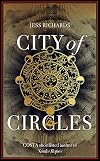
Danu Mock lives in a travelling circus with her parents. When she is fifteen, her parents die during an epidemic and she is left bereft, with the grief slowly consuming her. Morrie, a tightrope walker with whom Danu begins to perform a double act, loves her but because of the wall Danu has built around herself, can’t get close to her. When the circus troupe reach Matryoshka, the city of circles where Danu was born, Danu feels compelled to stay to try to find herself, while the rest of the show more circus move on. During her stay in the city Danu makes a startling discovery.
As you can maybe tell from the synopsis, this is a difficult book to review because, not unlike Danu, it doesn’t know what it wants. When I read the brief summary for the book in my Vine queue, it sounded a little too much of a teenage romance but I ordered it based on the strength of her writing on display in her previous two books, Snake Ropes and Cooking with Bones. While most of the book will certainly appeal to teenagers, there are also several passages that contain (in my view unnecessary) sexual content – including the c*** word! – and infrequent swearing, which makes me think that the book would be more suitable for young adults. I also feel that in some places the imagery used is so obscure as to defy the reader's figuring out its meaning, while in others it's so easy to interpret I felt as if it were thrown in the reader's face.
From the outset, before reading the story of this story that the author has helpfully placed in the appendix, I realised that this is a very personal and deeply autobiographical novel, and it’s clear that the author has written her heart and soul into the story. My main point of irritation with the novel, however, stems from the fact that this appears like a loose accumulation of ideas, with not enough plot to weave them into a cohesive whole. Themes and ideas are brought to the reader’s attention and then abandoned, and unanswered questions abound. This becomes especially apparent in the latter half of the book where the narrative literally loses the plot. The reader is told that Danu’s locket, given to her on her mother’s deathbed, contains a mystery, and that this secret, never revealed to Danu while her parents were alive, and the locket itself, along with a memento of Danu’s father’s that she wears all the time, are central to Danu’s character, and yet the author all but gives up on this promising narrative thread and instead loses herself in an abundance of details that might have a significance to the author but which I couldn’t be bothered to unravel; the thread is picked up again only very close to the end and is then rushed to its conclusion. The result is that Danu isn’t really given any room to grow and change and, rather than being viewed as someone on the slow and difficult road to self-discovery, is instead in danger of being seen as losing herself in self-pity and coming across as incredibly self-absorbed; this is ironic because by setting Danu against Loretta, a minor character who vies for Morrie’s affection and who only thinks of herself, the author tries to show that these two women are polar opposites. Though I felt sorry for Morrie for most of the book, he hasn’t been given any room for development as he only ever seems to moon over Danu, and the entire love story in the end feels incredibly unsatisfying to me. This book could have been a haunting exploration of love, grief and the sacrifices that are necessary in order to find oneself, glimpses of which are apparent throughout the book despite the torrent of ideas, but the end result fell well short of my expectations.
Like in Jess Richards’ previous two novels, there are some fantastical elements to the story, though this time less so in evidence, and as usual she excels in the use of vivid and descriptive prose: the city of Matryoshka, composed of three concentric circles that rotate against each other and which cover the sides of a volcano, is made entirely believable through the author’s skill with words, and the Outer Circle in particular is a riot of smells, sights and sounds. But the flaws in the novel’s plotting are obvious and a flawed book dressed in beautiful prose is still a flawed book, which is a shame as I really wanted to like it. A generous three stars.
Another minor note of annoyance: why have the publishers decided to place the figure of a trapeze artist on the cover when Danu is clearly a tightrope walker?
(This review was written for Amazon's Vine programme.) show less
As you can maybe tell from the synopsis, this is a difficult book to review because, not unlike Danu, it doesn’t know what it wants. When I read the brief summary for the book in my Vine queue, it sounded a little too much of a teenage romance but I ordered it based on the strength of her writing on display in her previous two books, Snake Ropes and Cooking with Bones. While most of the book will certainly appeal to teenagers, there are also several passages that contain (in my view unnecessary) sexual content – including the c*** word! – and infrequent swearing, which makes me think that the book would be more suitable for young adults. I also feel that in some places the imagery used is so obscure as to defy the reader's figuring out its meaning, while in others it's so easy to interpret I felt as if it were thrown in the reader's face.
From the outset, before reading the story of this story that the author has helpfully placed in the appendix, I realised that this is a very personal and deeply autobiographical novel, and it’s clear that the author has written her heart and soul into the story. My main point of irritation with the novel, however, stems from the fact that this appears like a loose accumulation of ideas, with not enough plot to weave them into a cohesive whole. Themes and ideas are brought to the reader’s attention and then abandoned, and unanswered questions abound. This becomes especially apparent in the latter half of the book where the narrative literally loses the plot. The reader is told that Danu’s locket, given to her on her mother’s deathbed, contains a mystery, and that this secret, never revealed to Danu while her parents were alive, and the locket itself, along with a memento of Danu’s father’s that she wears all the time, are central to Danu’s character, and yet the author all but gives up on this promising narrative thread and instead loses herself in an abundance of details that might have a significance to the author but which I couldn’t be bothered to unravel; the thread is picked up again only very close to the end and is then rushed to its conclusion. The result is that Danu isn’t really given any room to grow and change and, rather than being viewed as someone on the slow and difficult road to self-discovery, is instead in danger of being seen as losing herself in self-pity and coming across as incredibly self-absorbed; this is ironic because by setting Danu against Loretta, a minor character who vies for Morrie’s affection and who only thinks of herself, the author tries to show that these two women are polar opposites. Though I felt sorry for Morrie for most of the book, he hasn’t been given any room for development as he only ever seems to moon over Danu, and the entire love story in the end feels incredibly unsatisfying to me. This book could have been a haunting exploration of love, grief and the sacrifices that are necessary in order to find oneself, glimpses of which are apparent throughout the book despite the torrent of ideas, but the end result fell well short of my expectations.
Like in Jess Richards’ previous two novels, there are some fantastical elements to the story, though this time less so in evidence, and as usual she excels in the use of vivid and descriptive prose: the city of Matryoshka, composed of three concentric circles that rotate against each other and which cover the sides of a volcano, is made entirely believable through the author’s skill with words, and the Outer Circle in particular is a riot of smells, sights and sounds. But the flaws in the novel’s plotting are obvious and a flawed book dressed in beautiful prose is still a flawed book, which is a shame as I really wanted to like it. A generous three stars.
Another minor note of annoyance: why have the publishers decided to place the figure of a trapeze artist on the cover when Danu is clearly a tightrope walker?
(This review was written for Amazon's Vine programme.) show less
Mary shares a cottage with her fisherman father and little brother Barney on a small island just off the edge of the map after the death of her mother. Traders from the mainland visit the island regularly in their fishing boats to trade goods with the inhabitants, but then boys go missing, one of them Barney. Morgan was born on the mainland but now lives on the island with her parents and twin sisters, imprisoned in her own house with a storey-high fence. Alternating between the two voices, show more this book tells of the events that lead to those separate narratives becoming a joint one.
A masterful debut, I wager that this novel will be unlike any other you've read before. Truly original, at times it appears as if it were the brainchild of a fevered imagination, with dreamlike, almost hallucinogenic, qualities; at others, to be the essence of every dark fairy-tale you know. It is in turns atmospheric, threatening, enigmatic, puzzling, but also filled with love and hope, and extremely memorable. It exerts a grip on the reader that doesn't stop with the closing of the back cover. There are ropes that bite, keys that talk, a tunnel of eyes and, in the centre of the island, the Thrashing House, where bad deeds get punished and no one that enters it ever leaves. There are so many twisted layers to this book that it will take years of repeated reading and discussion to untangle them, it is so rich in reference and allegory. The writing is like poetry in places, with the author's love of language and stories obvious. Even if the first 50+ pages don't seem to make a lot of sense at first, I implore you to stick with it and keep reading, as a lot of the questions will be answered. There are still loose ends after the last page has been turned, but I don't think this is meant to be one of those books where everything will have a happy ending or be neatly tidied away. A reading experience - tell your friends!
(This review was originally written as part of Amazon's Vine programme.) show less
A masterful debut, I wager that this novel will be unlike any other you've read before. Truly original, at times it appears as if it were the brainchild of a fevered imagination, with dreamlike, almost hallucinogenic, qualities; at others, to be the essence of every dark fairy-tale you know. It is in turns atmospheric, threatening, enigmatic, puzzling, but also filled with love and hope, and extremely memorable. It exerts a grip on the reader that doesn't stop with the closing of the back cover. There are ropes that bite, keys that talk, a tunnel of eyes and, in the centre of the island, the Thrashing House, where bad deeds get punished and no one that enters it ever leaves. There are so many twisted layers to this book that it will take years of repeated reading and discussion to untangle them, it is so rich in reference and allegory. The writing is like poetry in places, with the author's love of language and stories obvious. Even if the first 50+ pages don't seem to make a lot of sense at first, I implore you to stick with it and keep reading, as a lot of the questions will be answered. There are still loose ends after the last page has been turned, but I don't think this is meant to be one of those books where everything will have a happy ending or be neatly tidied away. A reading experience - tell your friends!
(This review was originally written as part of Amazon's Vine programme.) show less
Amber and Maya are sisters, growing up in the utopian city of Paradon, some time in the near future after an unspecified catastrophic event. Paradon is a high-tech environment, where weather is artificially controlled so it is always summer, and the rays of the sun and moon are reflected into it by giant mirrors. Maya was genetically engineered before birth to be a formwanderer, mirroring other people’s wants. But Amber wants to run away, and though Maya is reluctant, she feels she has no show more other choice but to follow her sister, as it is Amber who wants the most of her. Since leaving Paradon, Amber has been dreaming of a cottage by the sea, which she feels is guiding her steps. When they finally arrive, the cottage shows signs of habitation, but there is no one there and only a recipe book and a note of instructions are left: Amber has to stay up during the nights, baking honey cakes to be left on the doorstep in the morning, and sleep during the day; no one is allowed near the cottage, except the person who collects the cakes each day. Kip is a child in the local village whose turn it is to do the fair, that is to collect a share of goods from each household to take to the cottage and to pick up the freshly baked honey cakes and hand them out to the villagers in return for their fair share. But then an act of violence is committed which stirs up the secrets that have been hidden for a long time.
I feel fortunate as this is already my second encounter with one of Jess Richards’ works, having read and reviewed her debut novel Snake Ropes last year. Cooking with Bones is told again from multiple points of view and written in the same style, at times resembling dark fairy tales and feverish nightmares, but this novel feels even more mature in terms of language and the tackling of sensitive subject matter. The book raises some profoundly human and philosophical questions, all written in strange and wonderful prose that often reminded me of poetry (“conversations stinging everyone’s mouths”, “spices clamouring in their jars”). A lot of contemporary issues are addressed in the book, but it also owes its existence to the ancient oral traditions of storytelling and remembering events through song. Again, like in Snake Ropes, there is no gentle introduction, and the reader is thrown headlong into the often puzzling and enigmatic narrative, turning the reader‘s expectations on their heads. I came to see it as being dropped off in unfamiliar terrain without a map; some people will enjoy the challenge and pick up clues on the way, others will protest and feel abandoned without clear directions and eventually give up. Please persist, and though the path is full of surprising twists and turns and you don‘t know where it is taking you, it will lead you home, and hopefully it will appear brighter and warmer because of what you’ve been through. In my opinion, Jess Richards is a writer of immense talent, and she gets full marks for daring originality from me. I can’t wait for her next offering where only one thing is certain: expect the unexpected.
(This review was originally written as part of Amazon's Vine programme.) show less
I feel fortunate as this is already my second encounter with one of Jess Richards’ works, having read and reviewed her debut novel Snake Ropes last year. Cooking with Bones is told again from multiple points of view and written in the same style, at times resembling dark fairy tales and feverish nightmares, but this novel feels even more mature in terms of language and the tackling of sensitive subject matter. The book raises some profoundly human and philosophical questions, all written in strange and wonderful prose that often reminded me of poetry (“conversations stinging everyone’s mouths”, “spices clamouring in their jars”). A lot of contemporary issues are addressed in the book, but it also owes its existence to the ancient oral traditions of storytelling and remembering events through song. Again, like in Snake Ropes, there is no gentle introduction, and the reader is thrown headlong into the often puzzling and enigmatic narrative, turning the reader‘s expectations on their heads. I came to see it as being dropped off in unfamiliar terrain without a map; some people will enjoy the challenge and pick up clues on the way, others will protest and feel abandoned without clear directions and eventually give up. Please persist, and though the path is full of surprising twists and turns and you don‘t know where it is taking you, it will lead you home, and hopefully it will appear brighter and warmer because of what you’ve been through. In my opinion, Jess Richards is a writer of immense talent, and she gets full marks for daring originality from me. I can’t wait for her next offering where only one thing is certain: expect the unexpected.
(This review was originally written as part of Amazon's Vine programme.) show less

When Danu Monk is fifteen she watches her parents die. They are victims of a virus which has resulted in five deaths, and affected many more, in the circus community which is her home. Even though she is taken in by her parents’ closest friends in the circus, and is surrounded by people who care about her, she feels utterly bereft and isolated. Just before she died, her mother entrusted her with a precious silver locket which holds a secret from the past and, although she is initially show more unable to open it, Danu wears it as a choker around her neck. She also wears her father’s leather bootlaces, tied tightly around her ankles, ensuring that she remains constantly, and painfully, aware of all that she has lost.
Prior to her parents’ deaths she had been a member of the circus’s troupe of clowns but soon afterwards she approaches Morrie, a charismatic, hunchback tight-rope walker, and asks him if he is prepared to teach her this skill. He is more than happy to do so and their imaginative and daring feats on the wire soon become one of the circus’s most popular acts. Morrie is in love with Danu but, as he is ten years older and she is still grieving, he puts no pressure on her to return his love. She becomes very fond of him but, because her grief has made her question whether she can either recognise, or trust, love ever again, she keeps an emotional distance from him. When the circus visits Matryoshka, the magical city of circles which was her birthplace, she discovers the name of a stranger who may hold a clue to the secret her parents kept from her. This quest for the truth is one she must follow alone and so, when the circus leaves the town, she remains behind, with the comfort of Morrie’s promise to always be there for her should she need his help (he urges her to watch for him on the ether) or eventually discover that she feels able to return his love.
This captivating story is told through the alternating voices of Danu and Morrie as they not only seek a way forward in their relationship, but also to discover a deeper meaning to their lives. Each voice is compelling and heart-breaking and I very quickly found myself wanting the trust and balance they developed in their high-wire act to be replicated in their personal relationship. However, Danu’s compelling need to discover the significance of the information contained within her mother’s locket meant that she needed to find herself before she could trust in any belief in a shared future.
The author’s exploration of grief and of a young woman’s search for herself was one of the most emotionally affecting pieces of writing I have ever read. She captured so vividly and sensitively how it is possible to feel numb and alone, even when surrounded by people who love and care for you. At one point in the story she describes fifteen words for loneliness, each depicting a different aspect of this feeling, and I found myself wondering why no other author has, in my experience, ever explored it with such clarity and pathos. Her reflections that when people die they take with them the answers to all the unasked questions which remain with the living is not a new idea but she injected it with a particular poignancy. Her choice of Matryoshka as the name of the city of circles was central to the developing story as it soon became clear that there were stories within stories, secrets within secrets, and that getting to the heart and essence of what was important required the characters to patiently explore each and every layer as it presented itself.
I quickly found myself immersed in the enchanting world of magic, runes, tarot cards and hexes, as well as the powerfully evoked atmosphere of the circus – I could almost smell the sawdust! I loved the poetic, mystical and ethereal nature of the author’s prose and frequently found myself reflecting on the ideas and observations she introduced into the story. I think this would be a good choice for reading groups because it is such an original, wonderfully fantastic story, containing so many layers of meaning which would offer fertile ground for lively discussion.
Anyone who enjoys magical realism will be in for a treat with this thought-provoking story. I haven’t read Jess Richards' previous two novels, Snake Ropes (short-listed for the 2012 Costa First Novel Award) and Cooking with Bones, but now feel keen to remedy this omission! show less
Prior to her parents’ deaths she had been a member of the circus’s troupe of clowns but soon afterwards she approaches Morrie, a charismatic, hunchback tight-rope walker, and asks him if he is prepared to teach her this skill. He is more than happy to do so and their imaginative and daring feats on the wire soon become one of the circus’s most popular acts. Morrie is in love with Danu but, as he is ten years older and she is still grieving, he puts no pressure on her to return his love. She becomes very fond of him but, because her grief has made her question whether she can either recognise, or trust, love ever again, she keeps an emotional distance from him. When the circus visits Matryoshka, the magical city of circles which was her birthplace, she discovers the name of a stranger who may hold a clue to the secret her parents kept from her. This quest for the truth is one she must follow alone and so, when the circus leaves the town, she remains behind, with the comfort of Morrie’s promise to always be there for her should she need his help (he urges her to watch for him on the ether) or eventually discover that she feels able to return his love.
This captivating story is told through the alternating voices of Danu and Morrie as they not only seek a way forward in their relationship, but also to discover a deeper meaning to their lives. Each voice is compelling and heart-breaking and I very quickly found myself wanting the trust and balance they developed in their high-wire act to be replicated in their personal relationship. However, Danu’s compelling need to discover the significance of the information contained within her mother’s locket meant that she needed to find herself before she could trust in any belief in a shared future.
The author’s exploration of grief and of a young woman’s search for herself was one of the most emotionally affecting pieces of writing I have ever read. She captured so vividly and sensitively how it is possible to feel numb and alone, even when surrounded by people who love and care for you. At one point in the story she describes fifteen words for loneliness, each depicting a different aspect of this feeling, and I found myself wondering why no other author has, in my experience, ever explored it with such clarity and pathos. Her reflections that when people die they take with them the answers to all the unasked questions which remain with the living is not a new idea but she injected it with a particular poignancy. Her choice of Matryoshka as the name of the city of circles was central to the developing story as it soon became clear that there were stories within stories, secrets within secrets, and that getting to the heart and essence of what was important required the characters to patiently explore each and every layer as it presented itself.
I quickly found myself immersed in the enchanting world of magic, runes, tarot cards and hexes, as well as the powerfully evoked atmosphere of the circus – I could almost smell the sawdust! I loved the poetic, mystical and ethereal nature of the author’s prose and frequently found myself reflecting on the ideas and observations she introduced into the story. I think this would be a good choice for reading groups because it is such an original, wonderfully fantastic story, containing so many layers of meaning which would offer fertile ground for lively discussion.
Anyone who enjoys magical realism will be in for a treat with this thought-provoking story. I haven’t read Jess Richards' previous two novels, Snake Ropes (short-listed for the 2012 Costa First Novel Award) and Cooking with Bones, but now feel keen to remedy this omission! show less
Lists
Magic Realism (2)
5 Best 5 Years (1)
Awards


Statistics
- Works
- 4
- Members
- 156
- Popularity
- #134,404
- Rating
- 3.5
- Reviews
- 15
- ISBNs
- 18
