

Marlene Dumas
Author of Marlene Dumas: Intimate Relations ( 2nd Printing )
About the Author
Image credit: The Pompidou Centre in Paris, France [credit: Wikimedia Commons user Leland]
Works by Marlene Dumas
Marlene Dumas, Maria Roosen, Marijke van Warmerdam : XLVI Biennale di Venezia, Padiglione olandese (1995) 5 copies
Marlene dumas 4 copies
Rembrandt 1606-1669 2 copies
Marlene Dumas open-end 1 copy
Associated Works
Tagged
Common Knowledge
- Birthdate
- 1953-08-03
- Gender
- female
- Education
- University of Cape Town
- Occupations
- artist
- Nationality
- South Africa (birth)
- Birthplace
- Cape Town, South Africa
- Places of residence
- Amsterdam, Netherlands
- Associated Place (for map)
- South Africa
Members
Reviews
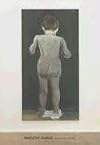
A blue-black topless woman stakes her claim on the Upper East Side. A stripper displays her behind next to six brides posing in a row. A dead man with a bound jaw asks the viewer to confront three blindfolded prisoners and three mysteriously somber children. The paintings and drawings collected here demonstrate Marlene Dumas's enduring fascination with image-making as a force for objectification, and simultaneously express her desire to pry the act of figurative painting loose from that show more history. Her lushly painted work recalls the immediacy of Expressionism in its gestures, the critical distance of Conceptual art in its idea-driven intensity, and the pleasures of eroticism in both its subjects and its lavishly applied paint. The complexity of Dumas's conceptual preoccupations is belied by her formal mastery--both command the viewer's attention, and the chemistry between them makes her one of our most important living figurative painters. show less
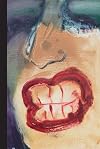
The latest from the renowned painter—Marlene Dumas’s new works respond more than ever to the uncertainty and sensuality of the painting process itself. Allowing the structure of the canvases and the materiality of the paint greater freedom to inform the development of her compositions, the artist has likened the creation of these works to the act of falling in love: an unpredictable and open-ended process that is as filled with awkwardness and anxiety as it is with bliss and show more discovery.
Myths & Mortals documents a selection of new paintings—debuted in the spring of 2018 at David Zwirner, New York—ranging from monumental nude figures to intimately scaled canvases that present details of bodily parts and facial features. Several nearly ten-foot-tall paintings focus on individual figures, including a number of male and female nudes and a seemingly solemn bride, whose expression is obscured behind a floor-length veil. Like the Greek gods and goddesses, the figures in these paintings are at once larger than life and overwhelmingly human. The smaller-scale paintings—referred to by the artist as “erotic landscapes”—present a variety of fragmentary images: eyes, lips, nipples, or lovers locked in a kiss. Evident across all of these works is the artist’s uniquely sensitive treatment of the human form and her constantly evolving experimentation with color and texture.
Alongside these new paintings, Dumas presents an expansive series of thirty-two works on paper originally created for a Dutch translation of William Shakespeare’s narrative poem Venus & Adonis (1593) by Hafid Bouazza (2016). Myths & Mortals is accompanied by new scholarship on the artist by Claire Messud and a text by Dumas herself. show less
Myths & Mortals documents a selection of new paintings—debuted in the spring of 2018 at David Zwirner, New York—ranging from monumental nude figures to intimately scaled canvases that present details of bodily parts and facial features. Several nearly ten-foot-tall paintings focus on individual figures, including a number of male and female nudes and a seemingly solemn bride, whose expression is obscured behind a floor-length veil. Like the Greek gods and goddesses, the figures in these paintings are at once larger than life and overwhelmingly human. The smaller-scale paintings—referred to by the artist as “erotic landscapes”—present a variety of fragmentary images: eyes, lips, nipples, or lovers locked in a kiss. Evident across all of these works is the artist’s uniquely sensitive treatment of the human form and her constantly evolving experimentation with color and texture.
Alongside these new paintings, Dumas presents an expansive series of thirty-two works on paper originally created for a Dutch translation of William Shakespeare’s narrative poem Venus & Adonis (1593) by Hafid Bouazza (2016). Myths & Mortals is accompanied by new scholarship on the artist by Claire Messud and a text by Dumas herself. show less

Originally published in 2010 on the occasion of Dumas' first solo presentation at David Zwirner in New York, this much sought-after exhibition catalogue―which sold out shortly after publication―has been reprinted in 2014 to coincide with the artist's European retrospective exhibition The Image as Burden, organized by Tate Modern, London in collaboration with the Stedelijk Museum, Amsterdam and the Fondation Beyeler, Basel traveling through 2015. Throughout her career, Dumas has created show more lyrically charged compositions that eulogize the frailties of the human body, probing issues of love and melancholy. At times her subjects are more topical, merging socio-political themes with personal experience and art-historical antecedents to reflect unique perspectives on the most salient and controversial issues facing contemporary society. The large-scale works included in Against the Wall are primarily based on media imagery documenting Israel and Palestine, exploring the tension between the photographic documentation of reality and the constructed space of painting. "The Wall," the painting that began the series, at first appears to present a scene at the Western Wall (also known as the Wailing Wall) in Jerusalem. However, this work is in fact based upon a photograph from a newspaper that portrayed a group of Orthodox Jews on their way to pray at Rachel's Tomb in Bethlehem. Dumas destabilizes preconceived notions about what, in fact, is being pictured―engaging the often ambiguous nature of ideas like truth or justice. "In a sense they are my first landscape paintings," Dumas further notes in the catalogue, "or should I say 'territory paintings.' That is why they are so big." The somber color plates reproduced in the publication are given context by Dumas's own musings, a text framed as a letter to David Zwirner in which she tries to tell him "about the 'why'" of this powerful series. show less
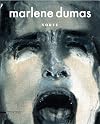
working today. Sorte attests to the artist’s ongoing interest in the dialectic between the physicality of the human body and the metaphysical themes that attend its demise. This book includes paintings from Dumas’ recent Forsaken series: her haunted, pale portraits of Amy Winehouse, her pearly and painterly crucifixions and a meditation on the relationship between father and son. The book’s 15 previously unexhibited works, however, are concerned instead with the figures of the mother show more and the child, inspired by images from the archives of an orphanage and portraits of Pier Paolo Pasolini and his mother Susanna. Also included is Dumas’ portrait of Italian film star Anna Magnani, caught in a film still from Mamma Roma, the bleached sheet of her face transforming her features into a femininized form of the crucifix. show less
You May Also Like
Associated Authors
Statistics
- Works
- 25
- Also by
- 3
- Members
- 133
- Popularity
- #152,659
- Rating
- 3.2
- Reviews
- 9
- ISBNs
- 23
- Languages
- 3
