
Ethel Pochocki
Author of Once upon a Time Saints
About the Author
Ethel Pochocki is the author of many books of stories, including The Mistletoe Girl and The Wind Harp. Having raised eight children, she now lives with eight cats in the village of Brooks, Maine, where she continues to write and garden
Works by Ethel Pochocki
Tagged
Common Knowledge
- Gender
- female
Members
Reviews
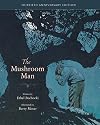
A quiet, gentle story of magical realism, for adults as well as children with lush illustrations and a sweetly unusual friendship that speaks to all friendships. Moser's introduction "The Mushroom Man and the Bean-Picker: Thoughts for the 30th Anniversary Edition contains fascinating insights into Ethel's character and his friendship with her. "...she once referred to herself as "Ethel Strazzlecherry, the Bean-Picker of Brooks, Maine." She fascinates me with her monastic ways: "Like her show more favorite saint, Francis, she took in decrepit, rundown creatures she found in her garden or on her doorstep and gave them first-aid and food. I, too, did this as a child, taking in injured birds and other small animals. My mother, a Registered Nurse, was my compatriot in these endeavors. Moser also writes: "The people who interested her most were monks, hermits, and abbesses who lived in solitude and delighted in nature and animals. Yet those monks, hermits, and abbeses were imperfect, "Like all human beings who scramble around searching for what's really important. Like goodness, and kindness, and sparkles of wonder and joy...all the good stuff that keeps us going." Similarly, I have been reading about monks, hermits and abbesses and finding much wisdom, peace, and quiet joy in their words and compassionate philosophies. Ethel infuses her monastic beliefs into The Mushroom Man. Like monastics, the Mushroom Man is often solitary, though he seeks community; "he was blessed with a cheerful disposition" like Saint Francis. Finding friends is also common among monastics, as that of St. Kevin of Glendalough and St. Ciaran of Clonmacnoise in Ireland.
One particular event in the story reminds me of my childhood as I, too, ate "peanut butter and marshmallow fluff sandwiches" and have heard anyone else speak of write of them since then. My favorite illustrations are the cover one of the mole digging up truffles beneath an oak tree for the mushroom man and the final one of the friends resplendent in their Christmas gifts; the first for its aura of mystery, darkness and night, the last for its joy.
Moser also wrote an afterword: "Designing and Illustrating the Mushroom Man" I like his exposition on imperfection, beginning with quotes. From Eudora Welty, "Nothing's perfick." From Mark Twain, "Take the story from where it is to where it ain't" as the job of designer and illustrator.
The Mushroom Man was originally published in 1993. In that year, I had moved to a new state, so that is probably why I missed this book. I am so glad to have discovered the story and Ethel Pochocki's philosophy and interests. I have always loved Barry Moser's illustrative style and this is no exception. The expressions on the faces of the jeering children are repulsive, making the point of the meanness of bullying. In contrast, the meeting between man and mole is endearing with the pink nose of the man matching the pink snout of the mole and the curiousity of both figures. The wild mushroom drawings on the back cover are scientifically accurate and beautiful; I believe them to be a meadow mushroom and a bolete (though I could be wrong!). show less
One particular event in the story reminds me of my childhood as I, too, ate "peanut butter and marshmallow fluff sandwiches" and have heard anyone else speak of write of them since then. My favorite illustrations are the cover one of the mole digging up truffles beneath an oak tree for the mushroom man and the final one of the friends resplendent in their Christmas gifts; the first for its aura of mystery, darkness and night, the last for its joy.
Moser also wrote an afterword: "Designing and Illustrating the Mushroom Man" I like his exposition on imperfection, beginning with quotes. From Eudora Welty, "Nothing's perfick." From Mark Twain, "Take the story from where it is to where it ain't" as the job of designer and illustrator.
The Mushroom Man was originally published in 1993. In that year, I had moved to a new state, so that is probably why I missed this book. I am so glad to have discovered the story and Ethel Pochocki's philosophy and interests. I have always loved Barry Moser's illustrative style and this is no exception. The expressions on the faces of the jeering children are repulsive, making the point of the meanness of bullying. In contrast, the meeting between man and mole is endearing with the pink nose of the man matching the pink snout of the mole and the curiousity of both figures. The wild mushroom drawings on the back cover are scientifically accurate and beautiful; I believe them to be a meadow mushroom and a bolete (though I could be wrong!). show less

My friend Carolyn recommended me this book in a fashion. I had showed her [b: Dr. Hedgehog's River Rescue|25969611|Dr Hedgehog and the River Rescue|Jerry Mushin|https://images.gr-assets.com/books/1437737962s/25969611.jpg|45877311], which got us on the topic of children's books and some of the stranger ones that we encountered growing up. When she mentioned the book [b: The Attic Mice|1593243|The Attic Mice|Ethel Pochocki|https://images.gr-assets.com/books/1387171501s/1593243.jpg|3032108] show more being largely told from the perspective of a chestnut I didn't exactly believe her. After settling into her new apartment and finding the book, however, she proved me wrong. This book is, indeed, largely told from the perspective of a chestnut named Little-Good-For-Nothing. Somehow, it still manages to be utterly fantastic.
[b: The Attic Mice|1593243|The Attic Mice|Ethel Pochocki|https://images.gr-assets.com/books/1387171501s/1593243.jpg|3032108] begins with the chestnut being gathered (and named) by a human family. While they soon forget about him, he ends up in the attic where the mice find a multitude of uses for him. He could be a footstool, a hockey puck, a doorstop, or a paper-weight. Briefly, they even fight over him, making him feel very important indeed. He even fulfills his life's ambition of being on a Christmas wreath! The real joy, however, comes from exploring the life of the Attic Mice. While none of them are particularly good role models (here's looking at you, Omeletta and Chester), the family itself is a beautiful thing. They understand each other, and they care about each other even though they are very different people. By the end of the book you love that little family and are cheering for them as they overcome their all too understandable disagreements.
This is a great book that teaches tolerance and love of others, however different you may be. This shows that even if you and your siblings don't get along beneath it all there is still love. Everyone has their good qualities, everyone has their own wants and needs and perspective. It's a loving little story with beautiful illustrations (and occasionally ridiculous ones) that even had me giggling at some points. It's a book I'd love to see more children read, as I do believe it is a classic in its own right.
Thank you, Carolyn! show less
[b: The Attic Mice|1593243|The Attic Mice|Ethel Pochocki|https://images.gr-assets.com/books/1387171501s/1593243.jpg|3032108] begins with the chestnut being gathered (and named) by a human family. While they soon forget about him, he ends up in the attic where the mice find a multitude of uses for him. He could be a footstool, a hockey puck, a doorstop, or a paper-weight. Briefly, they even fight over him, making him feel very important indeed. He even fulfills his life's ambition of being on a Christmas wreath! The real joy, however, comes from exploring the life of the Attic Mice. While none of them are particularly good role models (here's looking at you, Omeletta and Chester), the family itself is a beautiful thing. They understand each other, and they care about each other even though they are very different people. By the end of the book you love that little family and are cheering for them as they overcome their all too understandable disagreements.
This is a great book that teaches tolerance and love of others, however different you may be. This shows that even if you and your siblings don't get along beneath it all there is still love. Everyone has their good qualities, everyone has their own wants and needs and perspective. It's a loving little story with beautiful illustrations (and occasionally ridiculous ones) that even had me giggling at some points. It's a book I'd love to see more children read, as I do believe it is a classic in its own right.
Thank you, Carolyn! show less
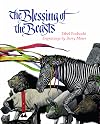
Awhile ago, I attended the blessing of the beasts at the St. John the Divine cathedral in New York City. This is held on St. Francis of Assisi day of blessing animals. Beginning with a large glass jar of alge and ending with the majestic elephant who slowly walks down the aisle after the very large doors are open to allow the entrance.
As the animals are processing, the beautiful music of Missa Gaia (Earth Mass) by (Paul Winter) playing as soaring notes of a soprano sax float throughout.
show more target="_top">https://www.youtube.com/watch?v=MbBgQ2NCBhs
This book is beautifully illustrated and tells a story of the lowest of the animals, a group of cockroaches who fear they will not be welcomed at the blessing.
And, as St. Francis of Assisi celebrated all animals, in this story, the cockroaches travel from lower Manhattan up to the cathedral where they were indeed blessed. show less
As the animals are processing, the beautiful music of Missa Gaia (Earth Mass) by (Paul Winter) playing as soaring notes of a soprano sax float throughout.
show more target="_top">https://www.youtube.com/watch?v=MbBgQ2NCBhs
This book is beautifully illustrated and tells a story of the lowest of the animals, a group of cockroaches who fear they will not be welcomed at the blessing.
And, as St. Francis of Assisi celebrated all animals, in this story, the cockroaches travel from lower Manhattan up to the cathedral where they were indeed blessed. show less
I was surprised by this story, as I did not like it at first, but I came to appreciate the character development over time. Rosebud is a precious silk sleeping garment that the owner of the house got as a present for Christmas. Because of the material she is made of, she was portrayed as a snobby, pretentious character that only talked to those she believed were worthy. Red Flannel was a regular work shirt that had been through some tough situations because he had patches on his body. Based show more on the two personalities, the reader can find differences in the characters and relate their situation to real life. I enjoyed the illustrations on each page and the personification of the characters. It was a good book to read, although I did not like it at first. show less
Awards


You May Also Like


Associated Authors
Statistics
- Works
- 37
- Members
- 1,309
- Popularity
- #19,618
- Rating
- 4.2
- Reviews
- 7
- ISBNs
- 62