
Bernd Eichinger (1949–2011)
Author of The Name of the Rose [1986 film]
Works by Bernd Eichinger
Werner - Beinhart 1 copy
Associated Works
Tagged
Common Knowledge
- Birthdate
- 1949-04-11
- Date of death
- 2011-01-24
- Gender
- male
- Occupations
- producer
screenwriter - Nationality
- Germany
- Birthplace
- Neuburg an der Donau, Germany
- Place of death
- Los Angeles, California, USA
- Associated Place (for map)
- Germany
Members
Reviews
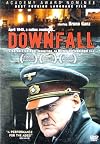
Hitler's last days, from the perspective of his secretary.
Highly-recommended. Ganz' Hitler is one of the most memorable performances you'll ever see. It's hard to put my finger on why I don't feel it deserves an A, but I think it has something to do with the cast being unreasonably ginormous. (If you're not a history buff, you probably won't know who half these people are or why we're supposed to care about them.)
Concept: B
Story: B
Characters: A
Dialog: A
Pacing: B
Cinematography: B
Special show more effects/design: A
Acting: A
Music: C
Enjoyment: B
GPA: 3.3/4 show less
Highly-recommended. Ganz' Hitler is one of the most memorable performances you'll ever see. It's hard to put my finger on why I don't feel it deserves an A, but I think it has something to do with the cast being unreasonably ginormous. (If you're not a history buff, you probably won't know who half these people are or why we're supposed to care about them.)
Concept: B
Story: B
Characters: A
Dialog: A
Pacing: B
Cinematography: B
Special show more effects/design: A
Acting: A
Music: C
Enjoyment: B
GPA: 3.3/4 show less
Superb rendition of the last days in the bunker. Non-judgemental, thoughtful and gives the story room to breathe. Some superb acting. Repays close attention, this is not a conventional 'war film'.

Amazon.com
The riveting subject of Downfall is nothing less than the disintegration of Adolf Hitler in mind, body, and soul. A 2005 Academy Award nominee for best foreign language film, this German historical drama stars Bruno Ganz (Wings of Desire) as Hitler, whose psychic meltdown is depicted in sobering detail, suggesting a fallen, pathetic dictator on the verge on insanity, resorting to suicide (along with Eva Braun and Joseph and Magda Goebbels) as his Nazi empire burns amidst chaos in show more mid-1945. While staging most of the film in the claustrophobic bunker where Hitler spent his final days, director Oliver Hirschbiegel (Das Experiment) dares to show the gentler human side of der Fuehrer, as opposed to the pure embodiment of evil so familiar from many other Nazi-era dramas. This balanced portrayal does not inspire sympathy, however: We simply see the complexity of Hitler's character in the greater context of his inevitable downfall, and a more realistic (and therefore more horrifying) biographical portrait of madness on both epic and intimate scales. By ending with a chilling clip from the 2002 documentary Blind Spot: Hitler's Secretary, this unforgettable film gains another dimension of sobering authenticity. --Jeff Shannon
From The New Yorker
The great Swiss-German actor Bruno Ganz gives a staggering performance as Adolf Hitler in this full-scale realist German production detailing the last ten days of the Third Reich. As the Red Army rampages through Berlin, Hitler and his staff have retreated to the bunker under the Reich Chancellery. They are all here-Himmler, Goebbels, Speer, the entire fascinating, loathsome crew of commanders, mad visionaries, and toadies (all brilliantly acted)-and, leading them still, a man so physically ill and constricted in movement that he looks like a broken-down puppet from a Bavarian travelling circus. The puppet comes to life, of course, in appalling self-pitying rants that are borderline funny. The entire movie teeters on the edge of sick comedy-in particular such scenes as the death of the Goebbels children, one by one, at the hands of their mother-and at times one longs for a coldly malicious ironist like Brecht or Fassbinder to come in and take over. The attempt to re-create Hitler in realistic terms has always been morally and imaginatively questionable-a compromise with the unspeakable that borders on complicity with it. Produced and written by Bernd Eichinger; directed by Oliver Hirschbiegel. In German. -David Denby
Copyright © 2006 The New Yorker show less
The riveting subject of Downfall is nothing less than the disintegration of Adolf Hitler in mind, body, and soul. A 2005 Academy Award nominee for best foreign language film, this German historical drama stars Bruno Ganz (Wings of Desire) as Hitler, whose psychic meltdown is depicted in sobering detail, suggesting a fallen, pathetic dictator on the verge on insanity, resorting to suicide (along with Eva Braun and Joseph and Magda Goebbels) as his Nazi empire burns amidst chaos in show more mid-1945. While staging most of the film in the claustrophobic bunker where Hitler spent his final days, director Oliver Hirschbiegel (Das Experiment) dares to show the gentler human side of der Fuehrer, as opposed to the pure embodiment of evil so familiar from many other Nazi-era dramas. This balanced portrayal does not inspire sympathy, however: We simply see the complexity of Hitler's character in the greater context of his inevitable downfall, and a more realistic (and therefore more horrifying) biographical portrait of madness on both epic and intimate scales. By ending with a chilling clip from the 2002 documentary Blind Spot: Hitler's Secretary, this unforgettable film gains another dimension of sobering authenticity. --Jeff Shannon
From The New Yorker
The great Swiss-German actor Bruno Ganz gives a staggering performance as Adolf Hitler in this full-scale realist German production detailing the last ten days of the Third Reich. As the Red Army rampages through Berlin, Hitler and his staff have retreated to the bunker under the Reich Chancellery. They are all here-Himmler, Goebbels, Speer, the entire fascinating, loathsome crew of commanders, mad visionaries, and toadies (all brilliantly acted)-and, leading them still, a man so physically ill and constricted in movement that he looks like a broken-down puppet from a Bavarian travelling circus. The puppet comes to life, of course, in appalling self-pitying rants that are borderline funny. The entire movie teeters on the edge of sick comedy-in particular such scenes as the death of the Goebbels children, one by one, at the hands of their mother-and at times one longs for a coldly malicious ironist like Brecht or Fassbinder to come in and take over. The attempt to re-create Hitler in realistic terms has always been morally and imaginatively questionable-a compromise with the unspeakable that borders on complicity with it. Produced and written by Bernd Eichinger; directed by Oliver Hirschbiegel. In German. -David Denby
Copyright © 2006 The New Yorker show less

C- (Meh).
A medieval monk investigates murders at an abbey.
Great atmosphere and production, awful story (despite a promising premise). It's almost worth seeing once for the library labyrinth sequence, but, on second thought, since nothing that happens in this movie ends up mattering, you could just watch that scene on its own without missing anything.
(Apr. 2025)
A medieval monk investigates murders at an abbey.
Great atmosphere and production, awful story (despite a promising premise). It's almost worth seeing once for the library labyrinth sequence, but, on second thought, since nothing that happens in this movie ends up mattering, you could just watch that scene on its own without missing anything.
(Apr. 2025)
Lists
Awards


You May Also Like
Associated Authors
Statistics
- Works
- 7
- Also by
- 5
- Members
- 791
- Popularity
- #32,199
- Rating
- 3.8
- Reviews
- 29
- ISBNs
- 9
- Languages
- 2