
Morris Rossabi
Author of Khubilai Khan: His Life and Times
About the Author
Morris Rossabi, PhD, is Distinguished Professor of History at City University of New York and Adjunct Professor at Columbia University. He is the author of several celebrated works on Asian history and has collaborated on exhibitions at the Metropolitan Museum of Art and the Cleveland Museum of Art.
Image credit: Morris Rossabi. Photo from the faculty pages of Queens College CUNY.
Works by Morris Rossabi
Voyager from Xanadu: Rabban Sauma and the First Journey from China to the West (1992) 43 copies, 1 review
LIVES OF THE MONGOL WARLORDS: KHUBILAI KHAN - TAMERLANE - GENGHIS KHAN - THREE VOLUMES IN SLIPCASE (2005) 24 copies, 1 review
Associated Works
Tagged
Common Knowledge
- Birthdate
- 1941
- Gender
- male
- Occupations
- professor
historian - Organizations
- Queens College, City University of New York
Columbia University
China Institute. School of Chinese Studies - Short biography
- Morris Rossabi is Distinguished Professor of history at the City University of New York and Columbia University. [retrieved from Amazon 1/29/2012]
Born in Alexandria, Egypt in 1941, Morris Rossabi is the author of numerous books. Visiting professor of East Asian and Central Asian History at Columbia University and Professor of History at Columbia University and Professor of History at Queens College of the City University of New York, he was formerly the director of the School of Chinese Studies at the China Institute. He conducts research in nine languages, travels extensively, and lives in New York City. [adapted from Voyager from Xanadu (1992)] - Nationality
- USA
- Birthplace
- Alexandria, Egypt
- Places of residence
- New York, New York, USA
- Associated Place (for map)
- USA
Members
Reviews
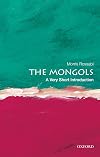
Like all of this series, this book tries to condense a big subject into a small space. It does this admirably by outlines Mongol culture, how Chinggis Khan came to power within that culture, how he conquered large parts of Asia, what his descendants did and why it all fell apart after about a century. That's a lot to cover, so the book is necessarily light on some details.
While the section on Mongol culture provides some nice context to Chinggis Khan's rise, the actual rise was more show more interesting. Rossabi shows that he was a great warrior and a great leader, but he was also a clever politician and completely devoid of scruples. He would betray anyone who was in his way, yet he was still able to get people to make alliances with him. I might have been wary of him after he stabbed a few other allies in the back, but apparently Chinggis was very persuasive.
There isn't as much about Mongol warfare as I would have liked, although the author does point out that they were very flexible and more than willing to use foreigners as a source of expertise. He does show that as Chinggis's descendants settled down, most of them lost their Mongol ways and some of their battle skills. They weren't particularly good administrators and constant warfare between Mongol khanates sapped their strength. The Golden Hoard lasted the longest, but lost its dominance of Russia within a few generations of Chinggis's death.
The Mongols' biggest influences was not intentional. The first was that they tore down the existing political structures in China, the middle east and Russia. They tried to replace them, but when Mongol power faded, each area created a new empire (some tried to be like the pre-Mongol ones), but those new empires were substantially different than those that the Mongols destroyed. Also, the Mongols provided a great deal of security for the Silk Road, making it much safer than at any time in the past. The collapse of the Mongol empires undercut that security, but it had whet the appetite in the middle east and Europe for good from east Asia. To satiate that appetite, Europeans would eventually try to find a way to China and India that cut out the middle east.
This is a great introduction to the Mongols. It isn't as thorough as others, but that is a product of the enforced brevity. I highly recommend it if you want a quick start on the subject. show less
While the section on Mongol culture provides some nice context to Chinggis Khan's rise, the actual rise was more show more interesting. Rossabi shows that he was a great warrior and a great leader, but he was also a clever politician and completely devoid of scruples. He would betray anyone who was in his way, yet he was still able to get people to make alliances with him. I might have been wary of him after he stabbed a few other allies in the back, but apparently Chinggis was very persuasive.
There isn't as much about Mongol warfare as I would have liked, although the author does point out that they were very flexible and more than willing to use foreigners as a source of expertise. He does show that as Chinggis's descendants settled down, most of them lost their Mongol ways and some of their battle skills. They weren't particularly good administrators and constant warfare between Mongol khanates sapped their strength. The Golden Hoard lasted the longest, but lost its dominance of Russia within a few generations of Chinggis's death.
The Mongols' biggest influences was not intentional. The first was that they tore down the existing political structures in China, the middle east and Russia. They tried to replace them, but when Mongol power faded, each area created a new empire (some tried to be like the pre-Mongol ones), but those new empires were substantially different than those that the Mongols destroyed. Also, the Mongols provided a great deal of security for the Silk Road, making it much safer than at any time in the past. The collapse of the Mongol empires undercut that security, but it had whet the appetite in the middle east and Europe for good from east Asia. To satiate that appetite, Europeans would eventually try to find a way to China and India that cut out the middle east.
This is a great introduction to the Mongols. It isn't as thorough as others, but that is a product of the enforced brevity. I highly recommend it if you want a quick start on the subject. show less
Admit it--you know nothing about the Mongols. I'm pretty sure almost nobody does, which makes this a great edition in the VSI series. You can tell it's written by an academic in a tiny, almost ignored sub-field (i.e., the prose is occasionally awful, because you can get away with that when only 15 people read what you write); on the other hand, it's never too bad and often quite readable. There's some repetition, but nothing too annoying. And the concluding chapter on the Mongols' 'cultural' show more legacy is (I'm sure unintentionally) hilarious.
But for a great, short, informative read about history's largest contiguous empire, and a convincing argument that we should pay more attention to that empire and its splinters than we do, you can't beat this book. It's incredible to think about how much territory the empire covered, and how it mediated between Europe, the middle east and Asia. show less
But for a great, short, informative read about history's largest contiguous empire, and a convincing argument that we should pay more attention to that empire and its splinters than we do, you can't beat this book. It's incredible to think about how much territory the empire covered, and how it mediated between Europe, the middle east and Asia. show less

Rossabi's book has a rather discursive format, with discussion of sources and their possible biases; something I normally like, but Rossabi takes it to an excess. Noting once that the Yuan Shi* has a Confucian bias is good; occasionally reminding the reader of the same doesn't hurt; but bringing it up time and again when we were reminded of it on the previous page gets tedious. Rossabi is also overly concerned with moral judgment, and moreover wishy-washy in applying it, often ending up with show more a noncommital on the one side, one the other.
These flaws are by no means fatal - while the book could have been better, I don't regret buying it and it certainly left me better informed on the subject. But it's not a book to be read for pure reading pleasure, I doubt it'll appeal to anyone not interested in the old khan and his world for their own sake.
* The official history of the Yuan - sc. Mongol - dynasty. show less
These flaws are by no means fatal - while the book could have been better, I don't regret buying it and it certainly left me better informed on the subject. But it's not a book to be read for pure reading pleasure, I doubt it'll appeal to anyone not interested in the old khan and his world for their own sake.
* The official history of the Yuan - sc. Mongol - dynasty. show less
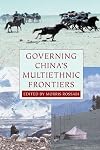
I first read this in 2010 for a class. I picked it up again in December 2019 for a refresher given the exacerbated turmoil in Xinjiang this year. Sadly this book is quite outdated and not as helpful as I had hoped. (much of the fieldwork took place in the 90s) Perhaps we will see a new edition soon.
You May Also Like


Associated Authors
Statistics
- Works
- 16
- Also by
- 2
- Members
- 628
- Popularity
- #40,131
- Rating
- 3.6
- Reviews
- 9
- ISBNs
- 54
- Languages
- 3