
Theophrastus
Author of The Characters
About the Author
Image credit: From Wikipedia
Works by Theophrastus
Theophrastus: Characters. Herodas: Mimes. Sophron and Other Mime Fragments. (2003) 75 copies, 1 review
Theophrastus: Enquiry into Plants, Volume I, Books 1-5 (Loeb Classical Library No. 70) (1916) 58 copies
Characters / Letters from fishermen, farmers, parasites and courtesans (1988) — Author — 33 copies, 1 review
Theophrastus: De Causis Plantarum, Volume I, Books 1-2 (Loeb Classical Library No. 471) (1976) 32 copies
Theophrastus: De Causis Plantarum, Volume III, Books 5-6 (Loeb Classical Library No. 475) (1990) 30 copies
Delphi Collected Works of Theophrastus (Illustrated) (Delphi Ancient Classics Book 91) (2019) 12 copies
Theophrastus On First Principles (known as his Metaphysics) (Philosophia Antiqua / Theophrastus of Eresus) (2010) 7 copies
De lapidibus 3 copies
Métaphysique 3 copies
Recherches sur les plantes: Tome I : Livres I - II. (Collection Des Universites De France Serie Grecque) (French Edition) (1988) 3 copies
Recherches sur les plantes: Tome III : Livres V - VI. (Collection Des Universites De France Serie Grecque) (French Edition) (2003) 2 copies
Theophrastus of Eresus on Winds and on Weather Signs - Translated, with an Introduction and Notes and an Appendix on the Direction, Number and Nomencl (2009) 2 copies, 1 review
Thephrastus of Eresus: Sources for his Life, Writings, Thought & Influence, Part One (2007) 2 copies
Karakters 1 copy
Characterum 1 copy
Парадоксы души 1 copy
Il libro "Sulle pietre" 1 copy
Människotyper och karaktärer 1 copy
Opera 1 copy
Theophraste 1 copy
Theophrastou Eresiou ta sōzomena : Theophrasti Eresii quae supersunt opera et excerpta librorum ... 1 copy
Recherches sur les plantes: Tome II : Livres III - IV. (Collection Des Universites De France Serie Grecque) (French Edition) (2003) 1 copy
Theophrasti Characters 1 copy
Associated Works
The Canterbury Tales [Norton Critical Edition, 2nd ed.] (2005) — Contributor — 676 copies, 5 reviews
Griekse varia : bloemlezing uit de werken van een vijftiental Griekse dichters en prozaschrijvers (1956) — Contributor — 5 copies
A Book of 'Characters' from Theophrastus, Joseph Hall, Sir Thomas Overbury, Nicolas Breton, John Earle, Thomas Fuller, (1924) — Contributor — 4 copies
Tagged
Common Knowledge
- Other names
- Θεόφραστος
Theophrastus of Eresus
Theophrastos
Théophraste
Teofrasto - Birthdate
- 371 BCE
- Date of death
- 287 BCE
- Gender
- male
- Education
- Platonic Academy
- Occupations
- philosopher
- Nationality
- Ancient Greece
- Birthplace
- Eresos, Greece
- Places of residence
- Lesbos, Greece
Athens, Greece - Place of death
- Athens, Greece
- Map Location
- Greece
Members
Reviews
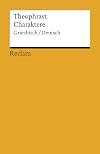
Ich muss ein schlechter Mensch sein. Davon bin ich seit der Lektüre von Theophrasts "Charaktere" überzeugt. In 30 Kapiteln beschreibt der griechische Gelehrte und Aristoteles-Schüler negative Charaktereigenschaften. So beispielsweise den Flegel, der im Theater an den falschen Stellen klatscht und in Pausen rülpst, oder den Ungelegenen, der einem gerade ausgepeitscht werdenden Sklaven erzählt, dass sein Sklave sich nach derlei Hieben erhängt hätte.
Die überspitzt dargestellten show more Charaktere in dieser Satire sind jedoch keine Figuren und stehen (von den Einleitungssätzen abgesehen) in keinerlei Zusammenhang zueinander. Aus diesem Grund fällt es leicht, sich in nahezu jeder schlechten Charaktereigenschaft selbst ein wenig wiederzufinden. Ich bin daher wohl kein schlechterer Mensch als ihr. show less
Die überspitzt dargestellten show more Charaktere in dieser Satire sind jedoch keine Figuren und stehen (von den Einleitungssätzen abgesehen) in keinerlei Zusammenhang zueinander. Aus diesem Grund fällt es leicht, sich in nahezu jeder schlechten Charaktereigenschaft selbst ein wenig wiederzufinden. Ich bin daher wohl kein schlechterer Mensch als ihr. show less

Characters. Much better than I thought it would be. Very funny. I had to take my specs off so I could wipe my eyes. Thirty satirical sketches of undesirable personality types, all delivered though gritted teeth in a tone of disbelief. Reminded me of the sort of role John Cleese might play. Some of the things Theophrastus describes are so specific I’m sure many of these characters would have been recognised by their fellow Athenians at the time. Also very interesting for the details of show more daily life that you just don’t get in more formal literary works.
The pairing with Menander is nice as you have teacher and pupil in the same volume. I’ve not read this translation as I read a different one some time go. Vellacott’s translations of Euripides are superb. Menander is worth reading if you’re interested in the history of the theatre.
Both authors have been given the Penguin Classics treatment usual at the time and smoothed out of popular consumption. Characters translates just the Ancient Greek text, but not the Byzantine interpolations that appear in the manuscripts. According to the introduction, Dyskolos was done for a radio production and some liberties have been taken with the allocation of lines. The 2nd edition (1973) has more Menander than had been discovered when the first edition came out. show less
The pairing with Menander is nice as you have teacher and pupil in the same volume. I’ve not read this translation as I read a different one some time go. Vellacott’s translations of Euripides are superb. Menander is worth reading if you’re interested in the history of the theatre.
Both authors have been given the Penguin Classics treatment usual at the time and smoothed out of popular consumption. Characters translates just the Ancient Greek text, but not the Byzantine interpolations that appear in the manuscripts. According to the introduction, Dyskolos was done for a radio production and some liberties have been taken with the allocation of lines. The 2nd edition (1973) has more Menander than had been discovered when the first edition came out. show less
Theophrastus took over the leadership of the Peripatetic school after Aristotle. This work seems to have been an introduction to a larger work, or set of works, in the genre of physics/metaphysics. It mostly consists of him ruminating on questions regarding first principles.
It is interesting that Theophrastus was not above questioning some of his master's views. He finds problems in both Plato's and Aristotle's systems when it comes to motion/movement (kinesis). With Aristotle he sees it as show more inconsistent that a first mover could set into motion bodies with disparate forms of motion, e.g. planets move differently. With Plato he finds it problematic that the forms could be both at rest and in motion apart from sensible reality.
Quite an interesting little work. I do intend to read some more of Theophrastus in the not too distant future. Many of his works are fragmentary, but he was an important figure in the tradition of Aristotelianism. show less
It is interesting that Theophrastus was not above questioning some of his master's views. He finds problems in both Plato's and Aristotle's systems when it comes to motion/movement (kinesis). With Aristotle he sees it as show more inconsistent that a first mover could set into motion bodies with disparate forms of motion, e.g. planets move differently. With Plato he finds it problematic that the forms could be both at rest and in motion apart from sensible reality.
Quite an interesting little work. I do intend to read some more of Theophrastus in the not too distant future. Many of his works are fragmentary, but he was an important figure in the tradition of Aristotelianism. show less
Theophrastus of Eresus on Winds and on Weather Signs - Translated, with an Introduction and Notes and an Appendix on the Direction, Number and Nomencl by Theophrastus
This work covers in more detail some of what was covered in Aristotle's Meteorology and in the Pseudo-Aristotelian works De Mundo and Problemata. As the title suggests, Theophrastus really deals with wind and weather phenomena mainly. Most of the ideas in here will be seen by the average reader as being at best, obsolete, and at worst, fanciful. Even at this early stage of science, thinkers were attempting to predict weather; the methods used may strike us as quite naive today. The work does show more function as a good indicator as to what was commonly discussed and believed during this era of natural philosophy. It is also interesting to see the ancient names for the types of winds; these are allied to the cardinal points, of course. It might be debatable as to whether anything in here is still applicable at all. It does serve as a document of history if nothing else. There is an explanatory appendix from the translator that is quite a valuable addition as well. show less
Lists
Awards

You May Also Like


Associated Authors
Statistics
- Works
- 80
- Also by
- 4
- Members
- 1,015
- Popularity
- #25,389
- Rating
- 4.0
- Reviews
- 15
- ISBNs
- 136
- Languages
- 18
- Favorited
- 1