
Michael Embree
Author of Bismarck's First War: The Campaign of Schleswig and Jutland 1864
About the Author
Works by Michael Embree
Tagged
Common Knowledge
- Gender
- male
Members
Reviews

This book is a comprehensive and masterful account of this small sorry affair where Austria and Germany ganged up to beat up little Denmark. The 150th anniversary of the war and the upcoming sumptuous "1864" Danish TV series (with the Borgen cast) that is to be broadcast in Denmark and at least the United Kingdom are great.reasons to pick up this book and learn about this little known conflict. A further reason is the current turmoil between Russia and Ukraine. The situation with a major show more power beating up a weaker neighbor who had the temerity to roar too much is true for both cases.
In hindsight it is clear that the Danes played with fire and were badly burned. The Congress of Vienna had awarded the Duchy of Schleswig-Holstein with a large German population to Denmark for the loss of Norway (which was bagged by Sweden). As with Austria's trade of Northern Italy for Belgium, this was a bad transaction in an age of nationalism. Perhaps the Danes might have held on to their German subjects if they had not bluntly pointed the German powers at the problem. The Danish politicians were both brash and cowardly - inviting retaliation. The Danish King also happened to die in the most inopportune moment in the midst of the crisis which froze the Danes in a "deer in the headlights" situation that the mastermind of Bismarck gladly exploited sending in a German and Austrian steamroller that flattened the brave but overwhelmed Danish defenders. How Bismarck got the Austrian to spill their blood for a war that mainly benefited the Prussians is another masterful evil side aspect of this affair. While the Austrians had already lost all chance at hegemony or even equality with Prussia in Germany, the duty to defend Germany required them to join forces with the Prussians. Two years later, in 1866, the Austrians were in turn beaten by their former comrades-in-arms.
Mike Embree (full disclosure: I know the author) has written a splendid account of this small war that gives a full survey of both the political and military situation of the war whereas the emphasis is on the military engagements with highly detailed listings of the participating forces. More detail is provided in the huge appendix of nearly one hundred pages. If one wants to find a fault in this book, it is the author's strict neutrality among the different protagonists.Viewers of the pro-Danish TV series will be in for a shock for this umpire-like cool assessment. Highly recommended. show less
In hindsight it is clear that the Danes played with fire and were badly burned. The Congress of Vienna had awarded the Duchy of Schleswig-Holstein with a large German population to Denmark for the loss of Norway (which was bagged by Sweden). As with Austria's trade of Northern Italy for Belgium, this was a bad transaction in an age of nationalism. Perhaps the Danes might have held on to their German subjects if they had not bluntly pointed the German powers at the problem. The Danish politicians were both brash and cowardly - inviting retaliation. The Danish King also happened to die in the most inopportune moment in the midst of the crisis which froze the Danes in a "deer in the headlights" situation that the mastermind of Bismarck gladly exploited sending in a German and Austrian steamroller that flattened the brave but overwhelmed Danish defenders. How Bismarck got the Austrian to spill their blood for a war that mainly benefited the Prussians is another masterful evil side aspect of this affair. While the Austrians had already lost all chance at hegemony or even equality with Prussia in Germany, the duty to defend Germany required them to join forces with the Prussians. Two years later, in 1866, the Austrians were in turn beaten by their former comrades-in-arms.
Mike Embree (full disclosure: I know the author) has written a splendid account of this small war that gives a full survey of both the political and military situation of the war whereas the emphasis is on the military engagements with highly detailed listings of the participating forces. More detail is provided in the huge appendix of nearly one hundred pages. If one wants to find a fault in this book, it is the author's strict neutrality among the different protagonists.Viewers of the pro-Danish TV series will be in for a shock for this umpire-like cool assessment. Highly recommended. show less
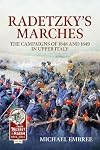
The Radetzky March, the unofficial anthem of the Habsburg Empire, traditionally ushers in the new year at the end of the Vienna Philharmonic's New Year's Concert. Few people are aware of the fact that Johann Strauss sr. composed the march in August 1848 in celebration of the monarchist victory over the national uprising in Italy, at a time of uncertainty about the Habsburg's hold on power. The Viennese had already rebelled that year and would do so again a few months later. The general who show more crushed the Vienna and Hungarian democratic uprising has his own dedicated Strauss oeuvre, the Jellacic March. Today, the military events that inspired the music have faded away from public awareness. Fortunately, this book restores, as its clever title implies, the connection of the military events of 1848 and 1849 in Italy to the famous march. While the 1848 campaign is a messy game of endurance, Radetzky's 1849 Novara campaign is world class instant k.o. masterpiece foreshadowing the Sichelschnitt of 1940.
The author of this book has made it his specialty to unearth highlights of Austrian and German military history for an English speaking audience. This book does not disappoint. It is a goldmine of illustrations, maps and information which not only covers Radetzky's campaigns but also the lesser actions and in-actions in the theater. Some of these sideshows such as the naval engagements or the short-term incursion into Tyrole receive scant or no coverage in most other accounts. The siege of Venice is also told to its completion. In contrast to what one may expect from the title, the author's account is unbiased and balanced (Overall, I think that the Italians even receive a little bit more attention than the Austrians.). The one defect of the book is its rather short introduction to the players and countries involved. This creates a steep learning curve for readers unfamiliar with Italian and Austrian history. It would have been worth mentioning that the Austrian received the Italian territories in compensation for territories lost in Belgium and Germany which came under French (and Dutch control). It is ironic that Napoléon III who would deprive the Austrians off their Italian territories in 1859 would in turn himself be deprived of the territory (Lorraine) that was part of the original bargain.
Radetzky's 1848 campaign is messy. With Vienna embroiled in revolution, the Habsburg Emperor fleeing to Tyrole, Radetzky had to hold his army of occupation together in the face of both the Italian uprising and the intervening Italian neighbors. He controlled one of the few remaining Austrian armies. Similar to the American Army of the Potomac in 1862 and 1863, Radetzky had to refrain from risking his army in battle. He had to hold back part of his forces to always ensure the survival of the Habsburg dynasty. He was extremely lucky in having so incompetent and uncoordinated opponents. Their widely different goals meant that they were unwilling to assist each other. Thus, they suffered defeat in detail by Radetzky's army in his central position in the quadrilatero, the block of four fortresses north of th Po River.
Embree's detailed operational account relies heavily on army reports. This underplays Radetzky's pointed informal leadership, delegating the tasks broadly and vaguely to his brother officers ("collect all the forces you can"). A lifetime of joint service (Radetzky was already over 80 years old!) and weak opponents allowed this lax leadership style to work. On the battlefield itself, the uncoordinated actions resulted in needless casualties that firmer orders might have prevented. Battles were often meeting engagements where the troops blundered into their opponents instead of waiting for reinforcements before engaging. Radetzky thus won the 1848 campaign thanks to the faults of his opponents.
The 1849 Novara campaign, however, is justly famous. In only a few days did Radetzky cut the Piedmontese army off its line of supply by a veritable Sichelschnitt. At the close of the battle of Novara, the Piedmontese king had to sue for peace and abdicate. Who would have thought then that Italy would be reunited only a decade later? Apart from the Radetzky March, Austria christened the frigate SMS Novara, which would undertake a famous world tour, after the battle.
Highly recommended to all fans of lesser known military campaigns and colorful units such as the Bersaglieri and the Kaiserjäger (Disclosure: My name is listed in the acknowledgments for minor legwork.). show less
The author of this book has made it his specialty to unearth highlights of Austrian and German military history for an English speaking audience. This book does not disappoint. It is a goldmine of illustrations, maps and information which not only covers Radetzky's campaigns but also the lesser actions and in-actions in the theater. Some of these sideshows such as the naval engagements or the short-term incursion into Tyrole receive scant or no coverage in most other accounts. The siege of Venice is also told to its completion. In contrast to what one may expect from the title, the author's account is unbiased and balanced (Overall, I think that the Italians even receive a little bit more attention than the Austrians.). The one defect of the book is its rather short introduction to the players and countries involved. This creates a steep learning curve for readers unfamiliar with Italian and Austrian history. It would have been worth mentioning that the Austrian received the Italian territories in compensation for territories lost in Belgium and Germany which came under French (and Dutch control). It is ironic that Napoléon III who would deprive the Austrians off their Italian territories in 1859 would in turn himself be deprived of the territory (Lorraine) that was part of the original bargain.
Radetzky's 1848 campaign is messy. With Vienna embroiled in revolution, the Habsburg Emperor fleeing to Tyrole, Radetzky had to hold his army of occupation together in the face of both the Italian uprising and the intervening Italian neighbors. He controlled one of the few remaining Austrian armies. Similar to the American Army of the Potomac in 1862 and 1863, Radetzky had to refrain from risking his army in battle. He had to hold back part of his forces to always ensure the survival of the Habsburg dynasty. He was extremely lucky in having so incompetent and uncoordinated opponents. Their widely different goals meant that they were unwilling to assist each other. Thus, they suffered defeat in detail by Radetzky's army in his central position in the quadrilatero, the block of four fortresses north of th Po River.
Embree's detailed operational account relies heavily on army reports. This underplays Radetzky's pointed informal leadership, delegating the tasks broadly and vaguely to his brother officers ("collect all the forces you can"). A lifetime of joint service (Radetzky was already over 80 years old!) and weak opponents allowed this lax leadership style to work. On the battlefield itself, the uncoordinated actions resulted in needless casualties that firmer orders might have prevented. Battles were often meeting engagements where the troops blundered into their opponents instead of waiting for reinforcements before engaging. Radetzky thus won the 1848 campaign thanks to the faults of his opponents.
The 1849 Novara campaign, however, is justly famous. In only a few days did Radetzky cut the Piedmontese army off its line of supply by a veritable Sichelschnitt. At the close of the battle of Novara, the Piedmontese king had to sue for peace and abdicate. Who would have thought then that Italy would be reunited only a decade later? Apart from the Radetzky March, Austria christened the frigate SMS Novara, which would undertake a famous world tour, after the battle.
Highly recommended to all fans of lesser known military campaigns and colorful units such as the Bersaglieri and the Kaiserjäger (Disclosure: My name is listed in the acknowledgments for minor legwork.). show less
A GREAT book on a very neglected subject, "Bismarck's First War" is the fruit of extensive research on both German and Danish sources. This book is a must-have for every military history buff. The level of detail is simply astonishing: the chapters cover every action, or skirmish, which occurred during the War of 1864 between Denmark and the Allies (Prussia and the Austrian Empire). The naval side is equally well-covered, including an highly detailed description of the very interesting show more Battle of Helgoland. The author is a master on his subject and his writing is very clear and incisive. The book is illustraded with contemporary prints, and drawings, which give a fascinating 'smell' of the mid-19th century. Highly recommended. show less

Gave up on this tedious book about half way through. There was way too much of a focus on this unit being moved to that place and tables of units involved in each fight and casualty lists. And since the author assumed the reader has perfect memory, units were referred to by their designations (EG "II/26th") and it soon got very confusing as to who was on which side. There was the occasional anecdote to break up the monotony, but it was too much of a struggle to enjoy.
Statistics
- Works
- 6
- Members
- 91
- Popularity
- #204,135
- Rating
- 4.5
- Reviews
- 7
- ISBNs
- 12